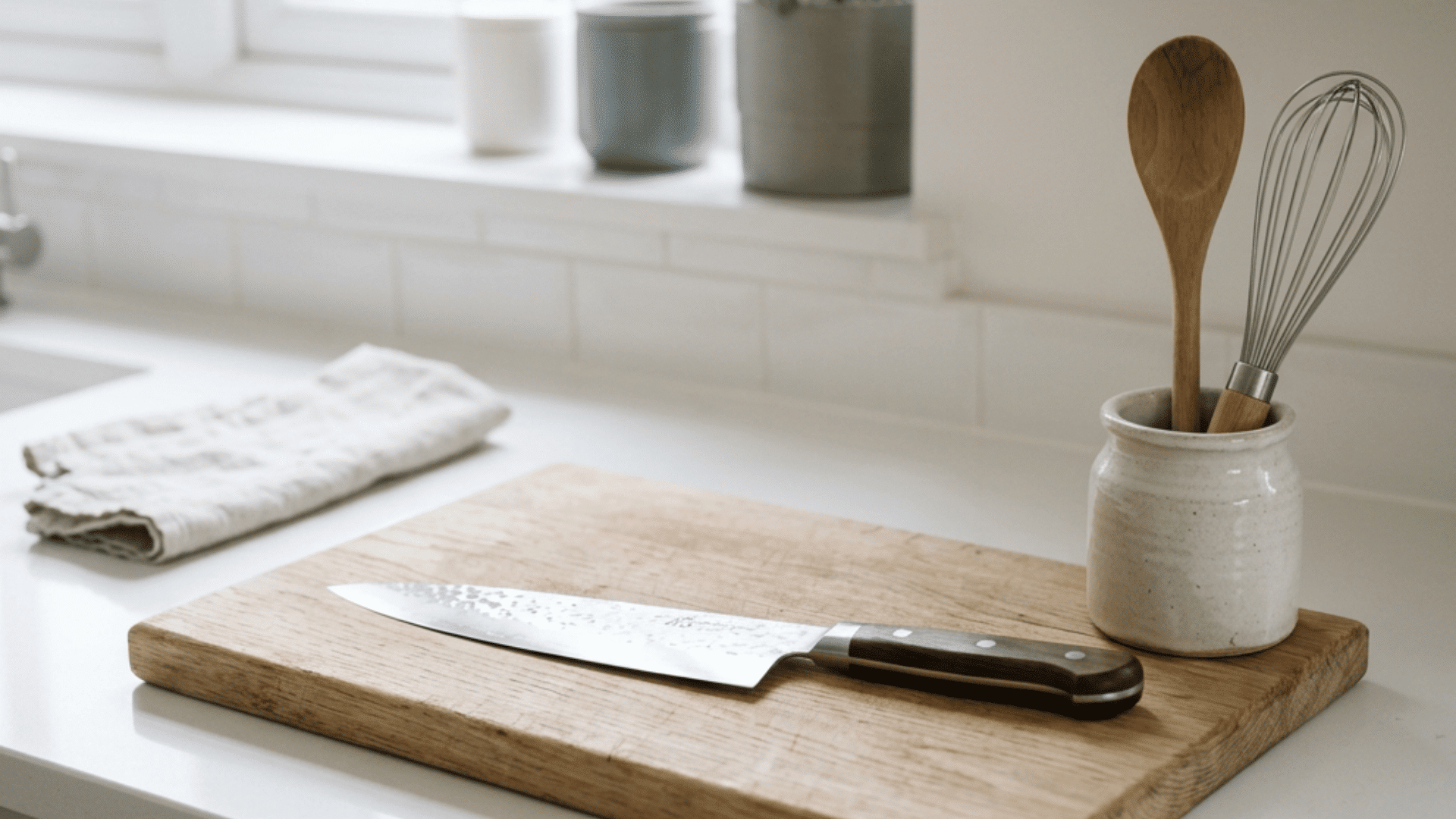
When I first looked at my kitchen with fresh eyes, I noticed how many things I owned but rarely used. Extra mugs, duplicate spatulas, bulky gadgets, and odd tools were taking up space without making cooking any easier.
That is when I started keeping only the items I reached for most. In this blog, I’ll walk you through the actual minimalist kitchen essentials that can help you cook simple meals, prep food faster, store leftovers, and keep your kitchen easier to manage.
You’ll find basic tools for cutting, cooking, baking, serving, and cleaning up, along with a few items you may not need at all. You do not need a perfect kitchen to cook well.
You just need tools that fit your space, your meals, and you everyday life.
How These Essentials Make Daily Cooking Easier
Minimalist kitchen essentials make daily cooking easier by keeping the most-used tools close, simple, and ready for real meals.
They help with chopping, mixing, cooking, baking, serving, and storing food without extra clutter getting in the way. A sharp knife and cutting board make prep faster. Pots, pans, baking sheets, and baking dishes cover most simple meals, from eggs and pasta to roasted vegetables and casseroles.
Measuring tools help recipes turn out better, especially when baking or trying something new. Cooking utensils, food containers, dish towels, and oven mitts support the small tasks that happen every day.
Download this free minimalist kitchen essentials checklist to keep your kitchen simple organized and clutter free.
Minimalist Kitchen Essentials Checklist
This checklist covers the basic tools that make daily cooking easier, cleaner, and more organized. Each item supports real-world kitchen use, so the list stays practical rather than crowded.
1. Chef’s Knife
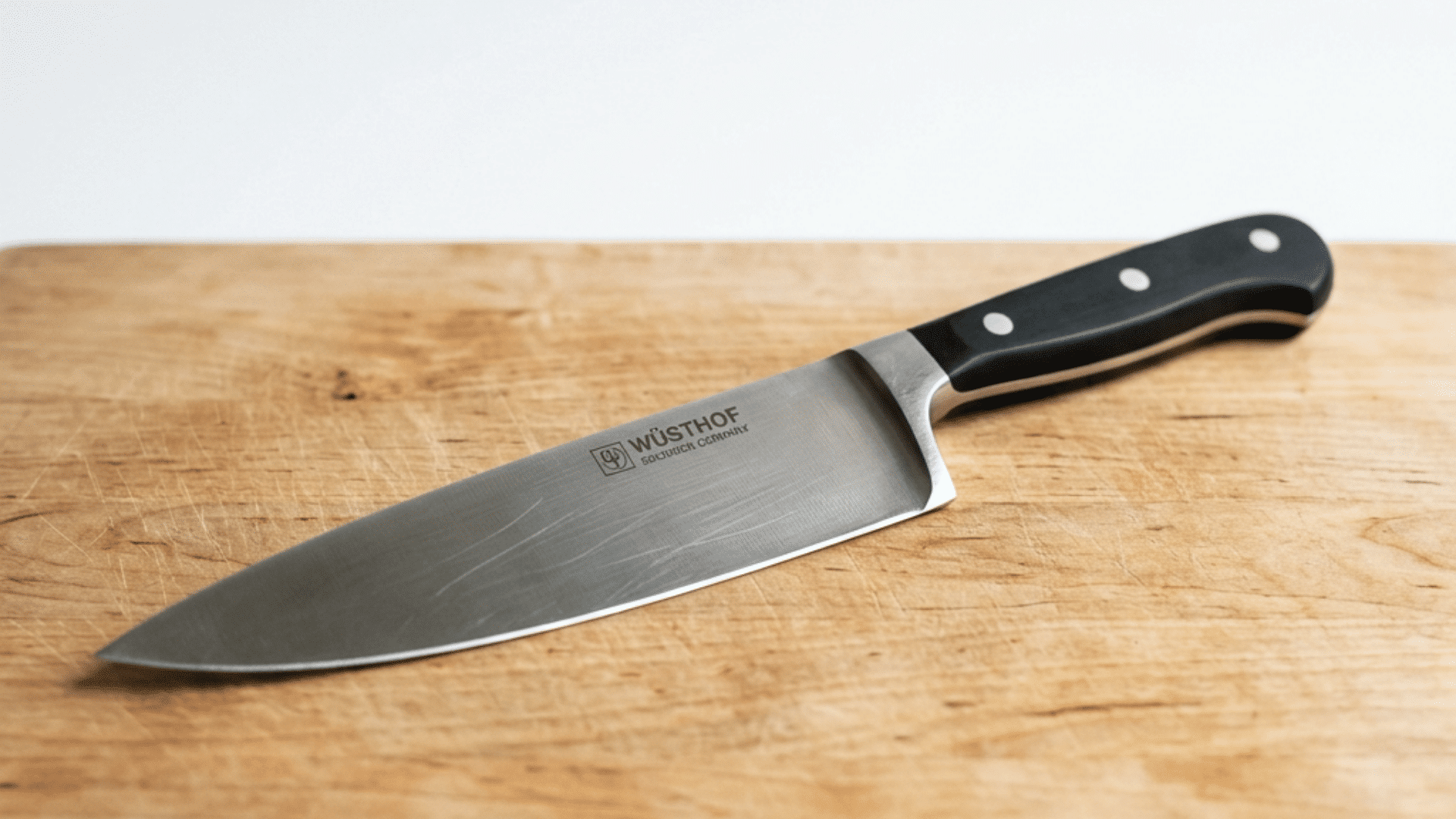
A chef’s knife is one of the most important minimalist kitchen essentials because it handles most cutting jobs. It can slice fruit, chop vegetables, cut herbs, trim meat, and prep simple meals without needing a full knife block.
A sharp, comfortable knife saves time and makes cooking feel less tiring. I saw the biggest change after switching from a dull knife to a good everyday knife.
One reliable chef’s knife is better than five weak knives that barely get used.
2. Cutting Boards
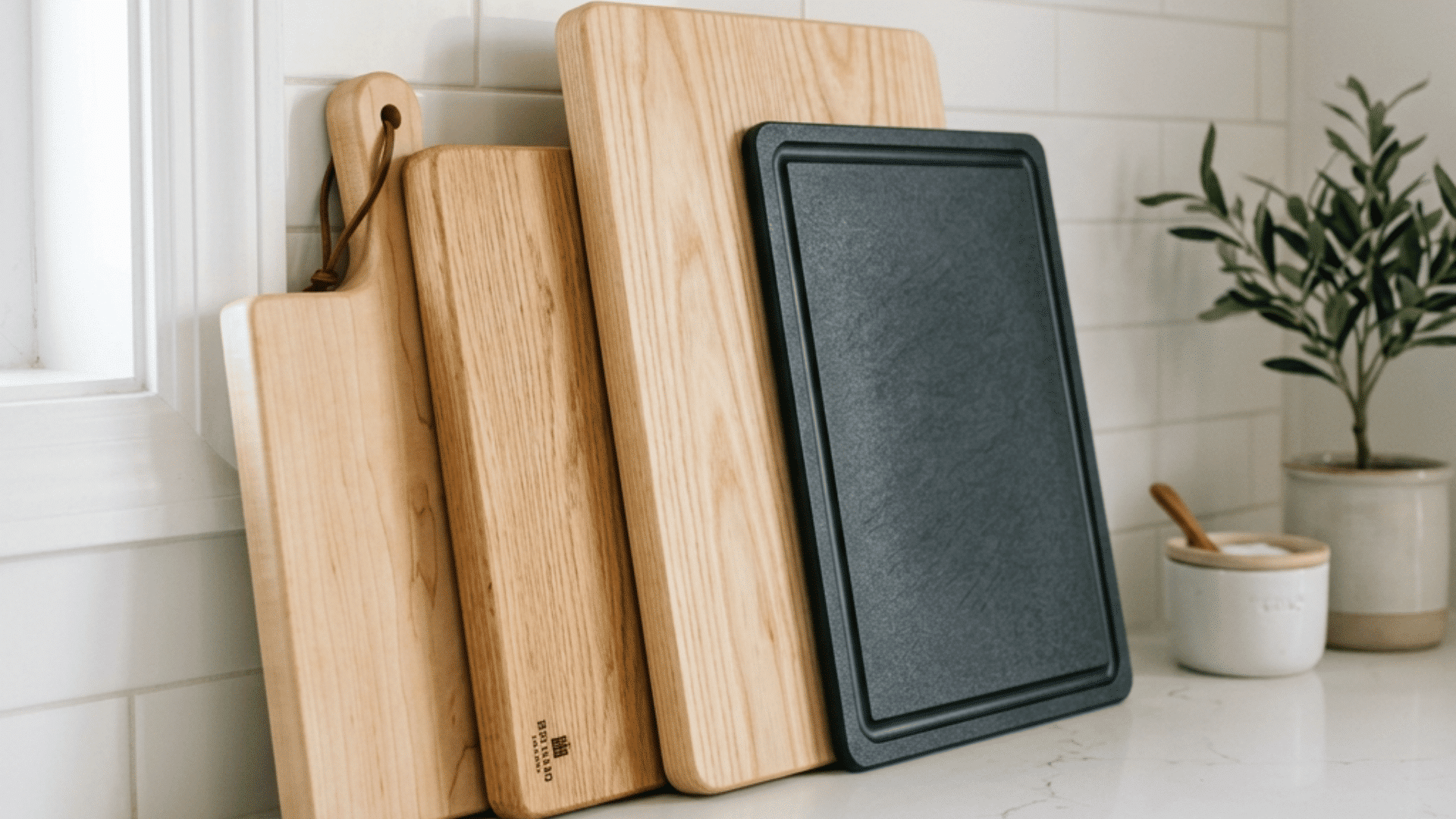
Cutting boards keep food prep clean, safe, and organized. Two or three boards are enough for most kitchens. One can be used for fruits and vegetables, another for meat or fish, and a smaller one for quick jobs like slicing bread or lemons.
Plastic boards are easy to wash, while wood or bamboo boards work well for dry prep. Different boards help reduce mess and food safety worries.
3. Pots And Pans
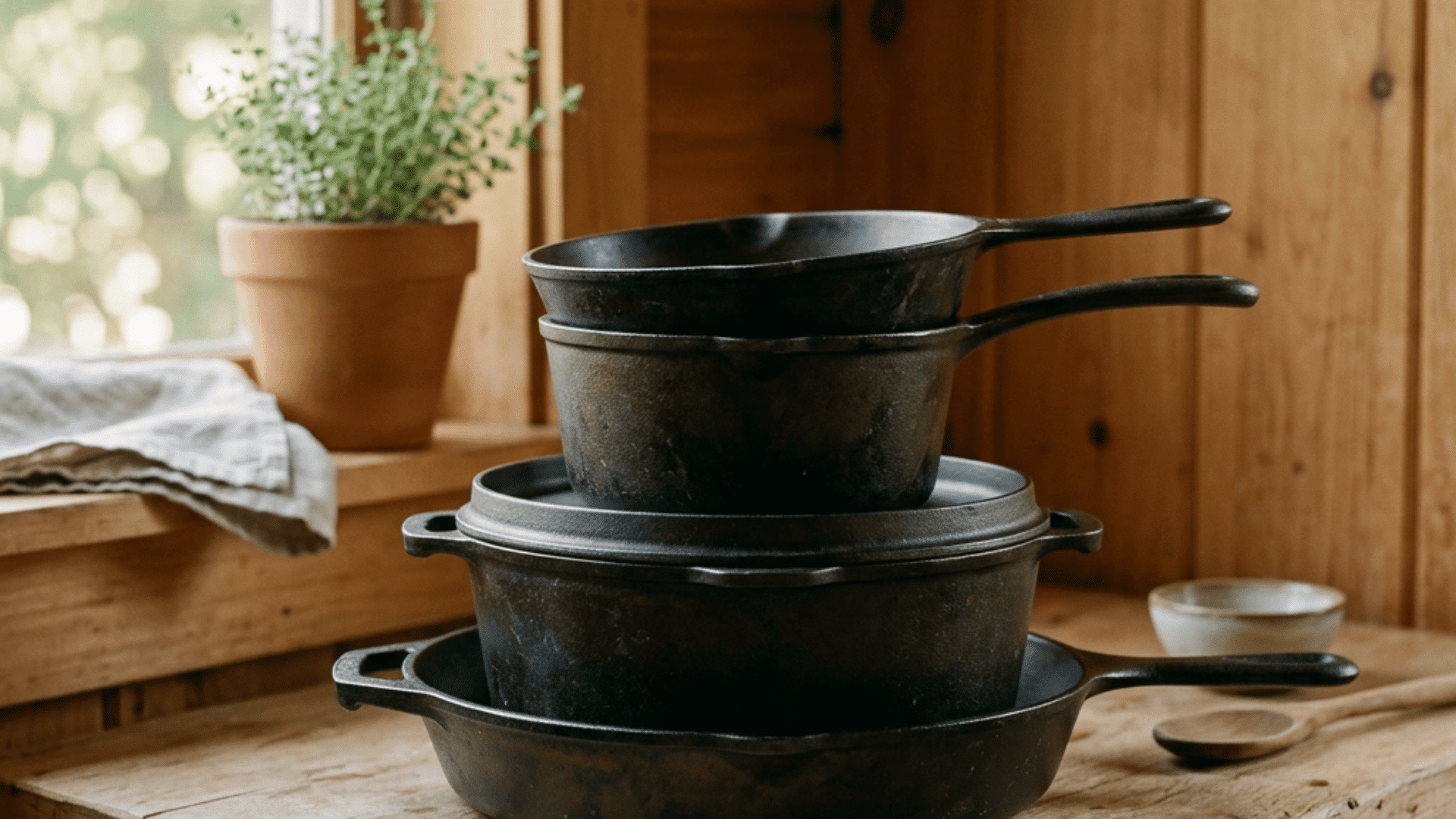
A small set of pots and pans can handle most daily meals. A medium pot works for oatmeal, rice, eggs, and sauces. A larger pot is ideal for pasta, soups, and stews.
One skillet is useful for eggs, tofu, fish, and quick dinners. A sauté pan can cover stir-fries and one-pan meals. This keeps the kitchen ready without filling every cabinet.
Quality cookware matters more than owning a large matching set. For a minimalist kitchen, fewer strong pieces usually work better.
4. Mixing Bowls
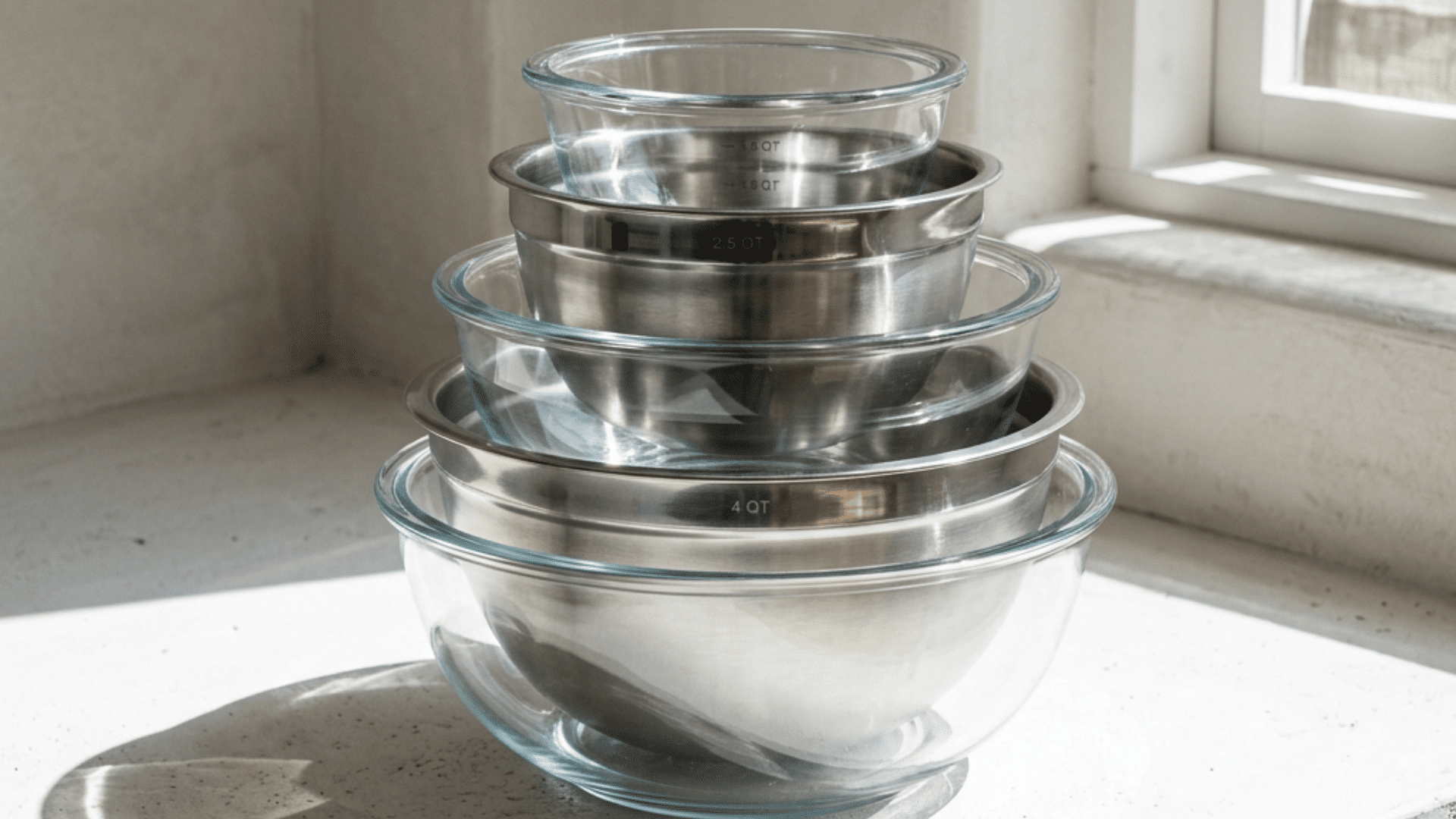
Mixing bowls are simple, but they do a lot. They help with salads, batters, marinades, washed produce, and meal prep. A nesting set saves space because the bowls stack inside each other.
Glass bowls feel sturdy, while stainless steel bowls are light and easy to move. They quickly became part of daily prep. Bowls of different sizes make cooking smoother without adding clutter.
5. Measuring Tools
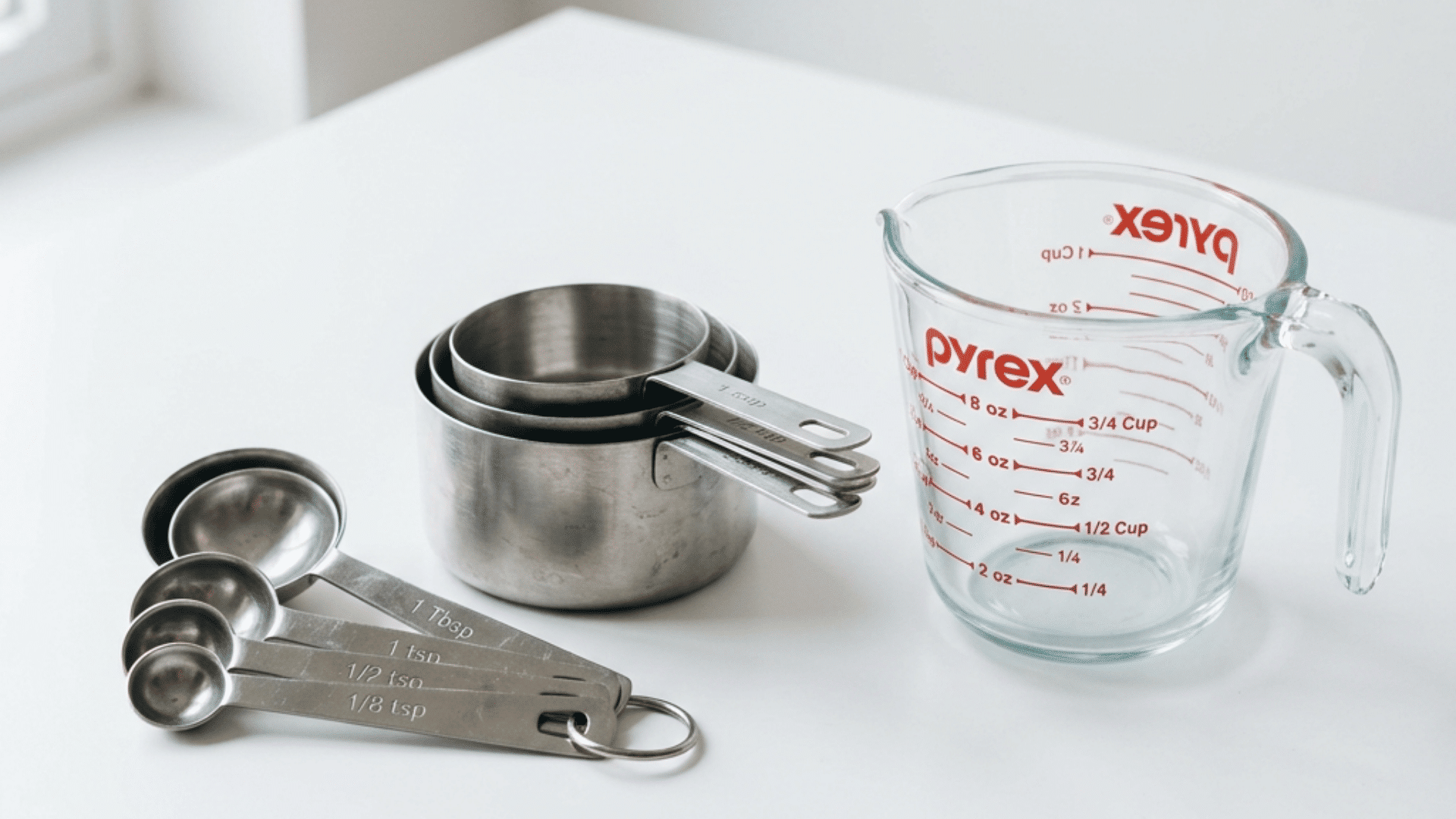
Measuring cups, measuring spoons, and a glass measuring cup make recipes easier to follow. They are useful for baking, grains, sauces, dressings, and liquids.
A glass measuring cup can also melt butter, warm broth, or mix small batches. These tools are small, affordable, and easy to store.
They also help beginners cook with more confidence by making the amounts clear. Accurate measuring can turn a confusing recipe into a simple step-by-step task.
6. Baking Sheet And Baking Dish
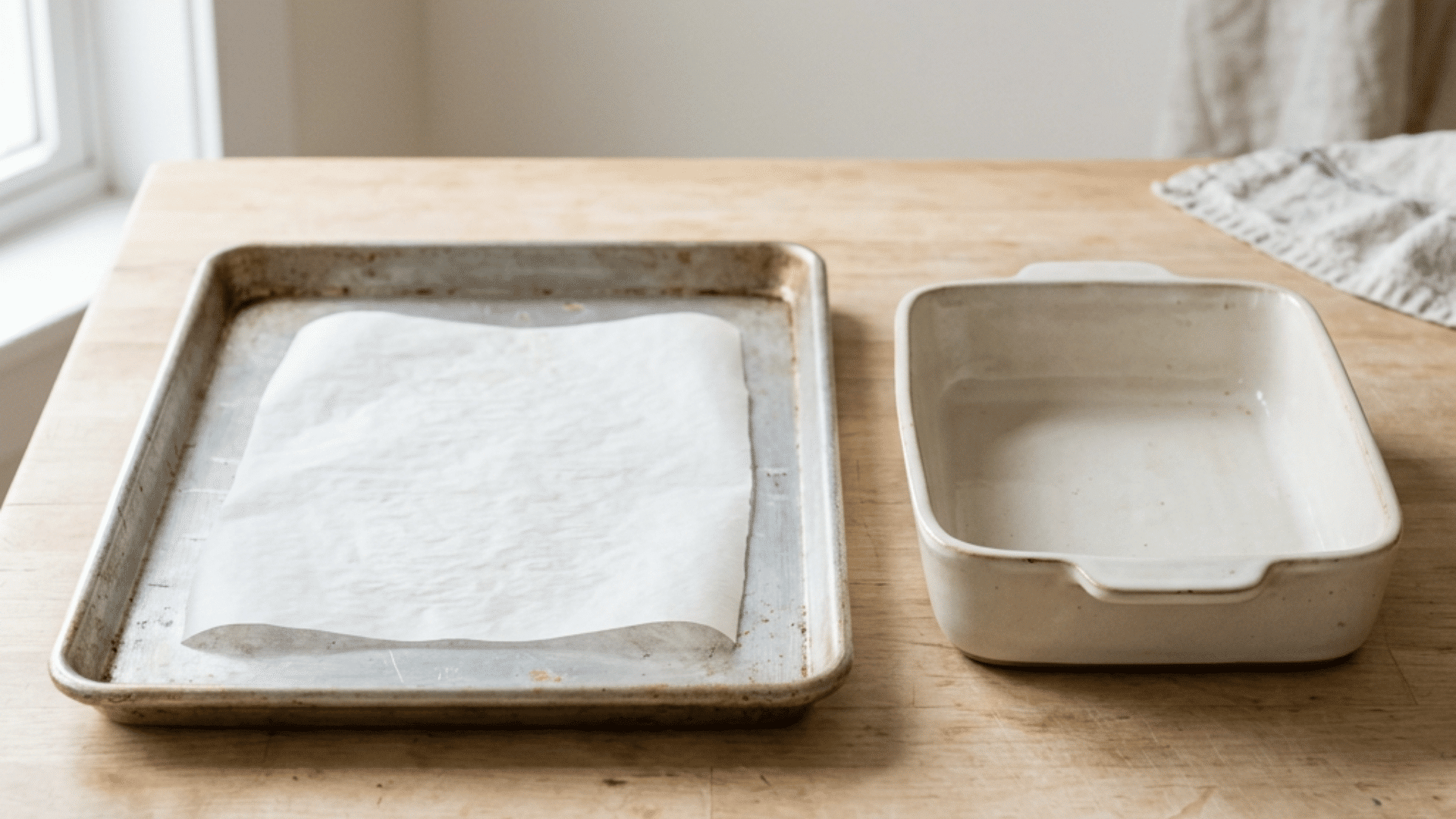
A baking sheet and a baking dish are useful even in a very simple kitchen. A baking sheet works for roasted vegetables, cookies, sheet pan dinners, frozen foods, and reheating leftovers.
A baking dish is better for casseroles, pasta bakes, brownies, and baked breakfasts. Together, they cover many oven meals without needing extra bakeware.
These two pieces make oven cooking easier while keeping the cabinet simple.
7. Basic Cooking Utensils
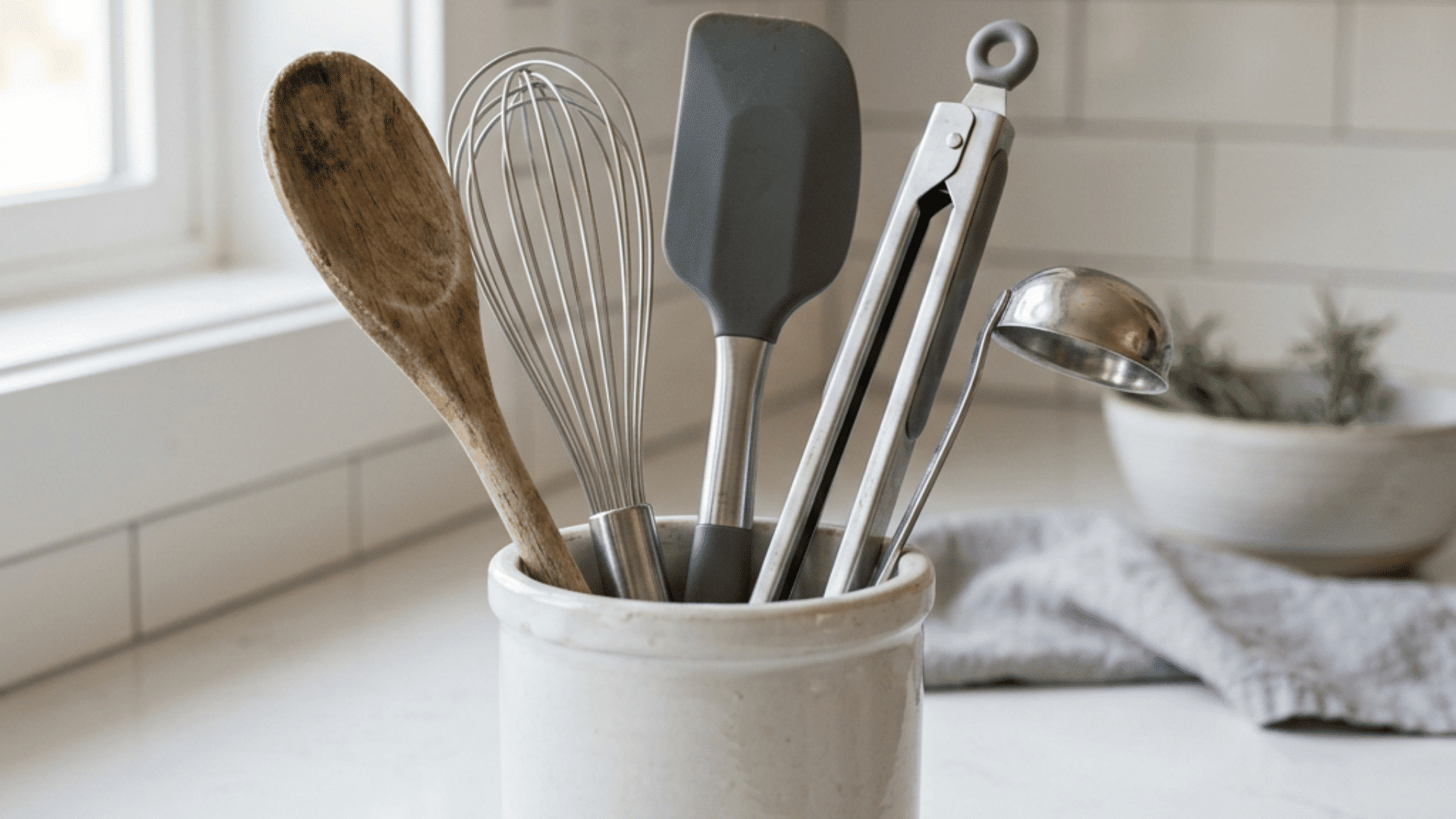
Basic cooking utensils should cover stirring, flipping, serving, whisking, and lifting food. A small set can include a spatula, wooden spoon, tongs, ladle, and whisk.
Silicone utensils are helpful with nonstick pans, while wooden spoons are sturdy for soups and sauces. A large utensil set often adds pieces that sit unused.
A few useful utensils near the stove can make cooking faster and cleaner. A crock or drawer organizer keeps them easy to grab.
8. Food Storage Containers
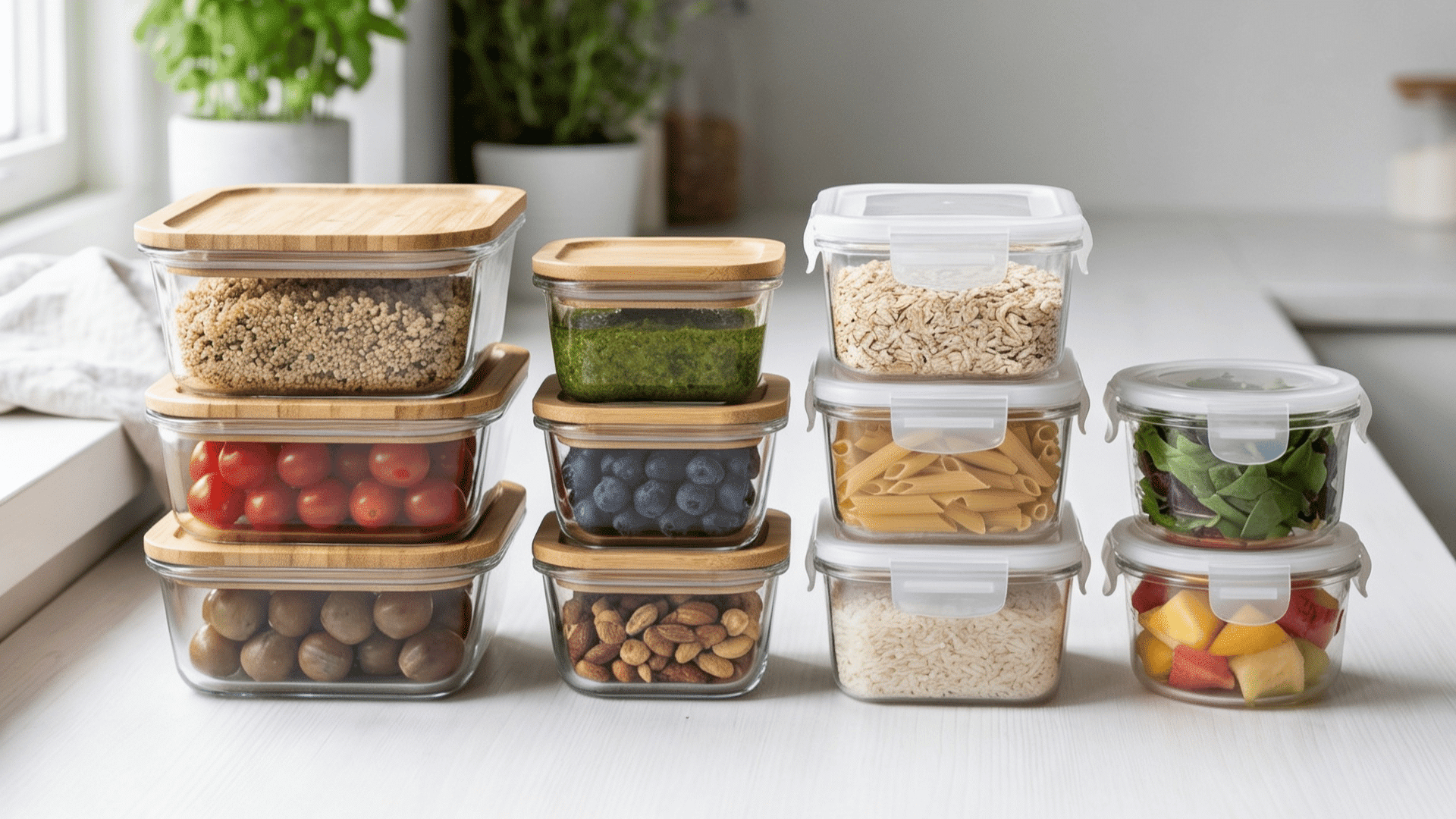
Food storage containers help with leftovers, lunches, chopped produce, and meal prep. Stackable containers save space and make the fridge easier to manage.
Glass containers are strong, easy to clean, and less likely to retain odors. Plastic containers are lighter and can work well for packed meals.
The best choice depends on daily habits and storage space. Good containers help reduce food waste by making cooked food and ingredients easier to see and use.
9. Vegetable Peeler
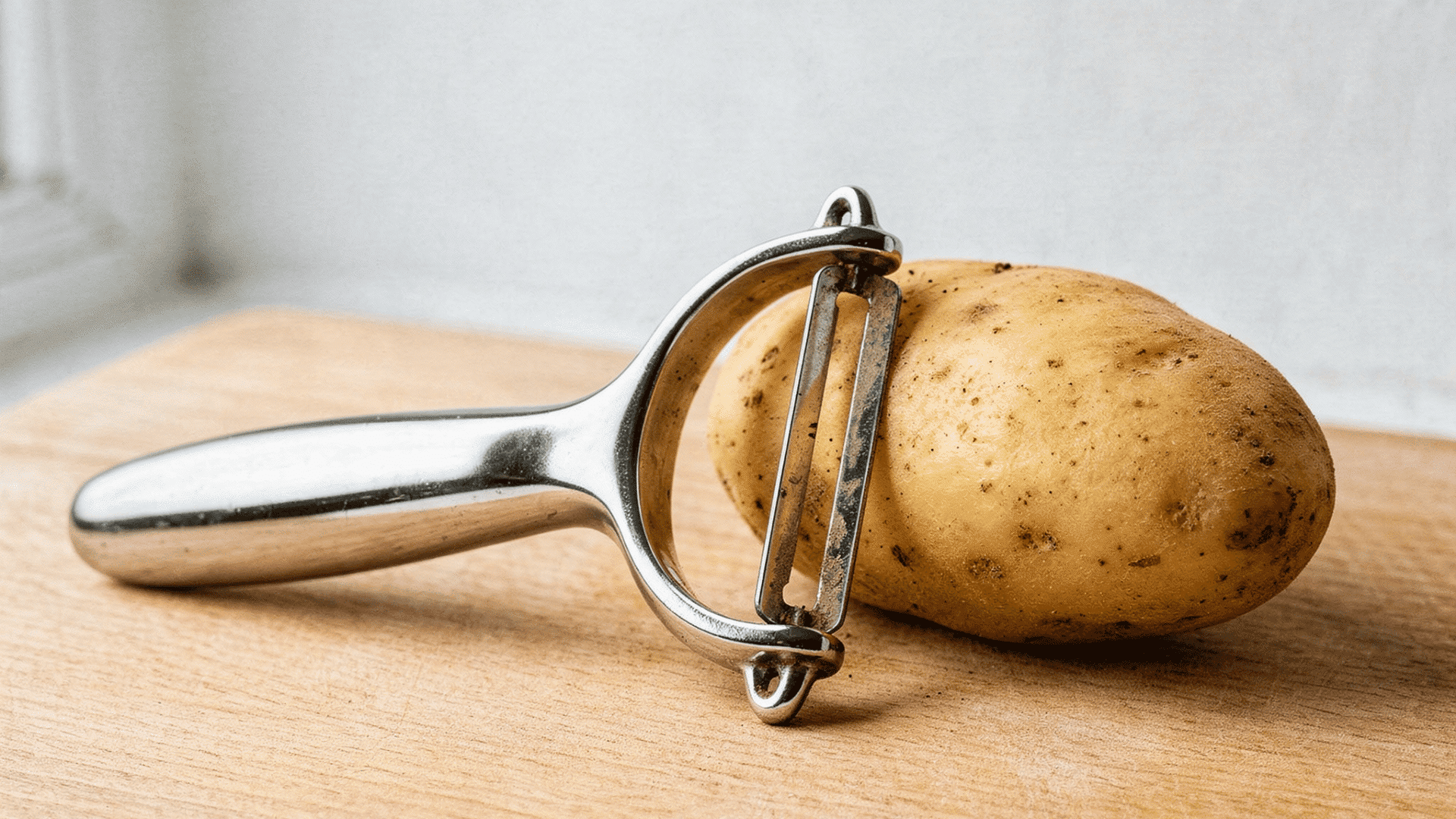
A vegetable peeler is a small tool that earns its spot in a simple kitchen. It peels potatoes, carrots, apples, cucumbers, and other produce faster than a knife. It also removes a thin layer, so less food gets wasted.
I did not use mine much at first, but now it helps with quick weekday prep. For minimalist kitchen essentials, choose one sturdy peeler that is comfortable to hold and easy to clean.
10. Kitchen Scissors
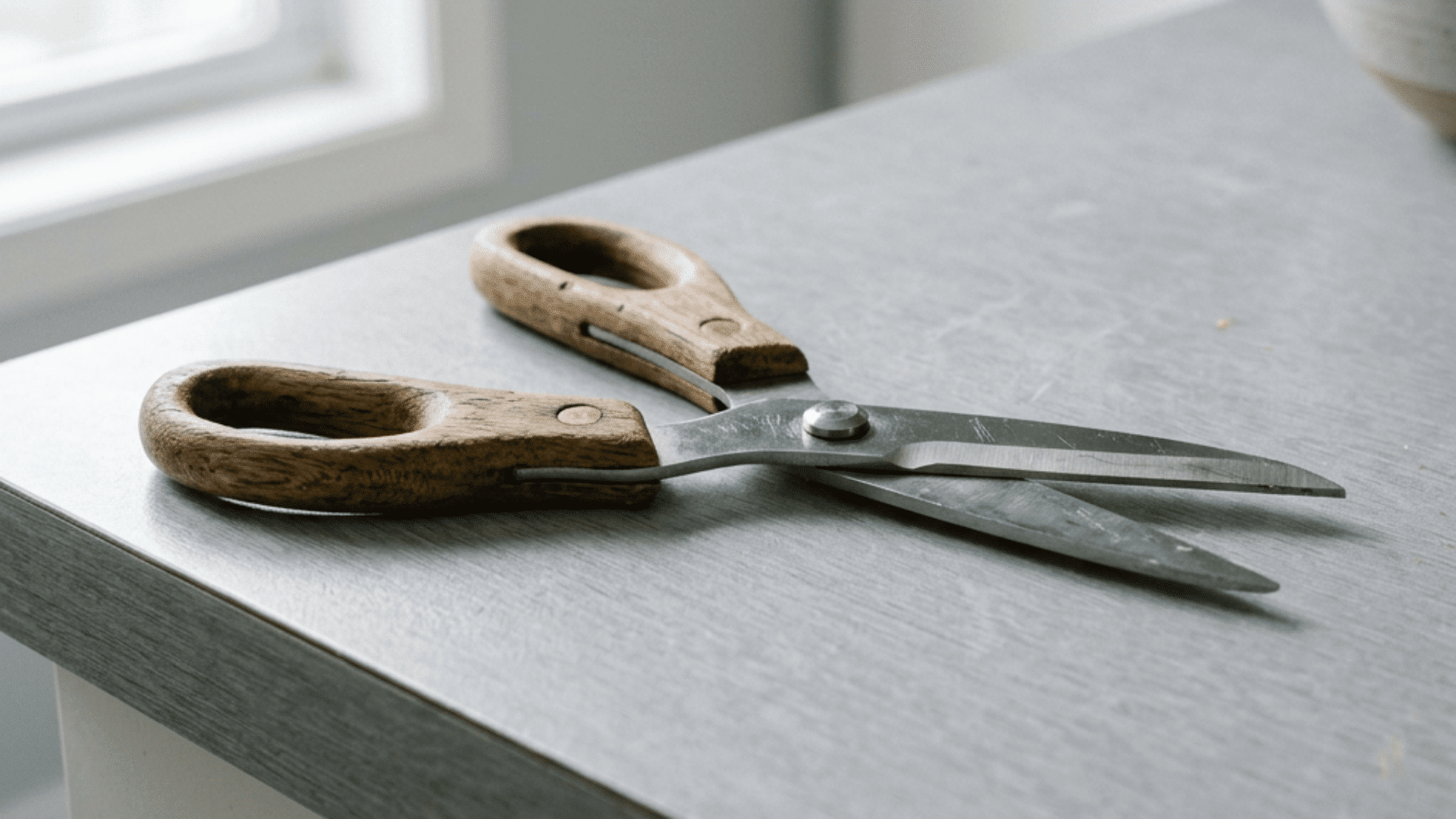
Kitchen scissors are useful for quick jobs that do not need a knife and a cutting board. They can open food packs, cut herbs, trim parchment paper, snip cooked meat, and divide pizza or flatbread.
Choose scissors that come apart for washing, especially when cutting food. One strong pair can replace several small cutting tools.
11. Oven Mitts
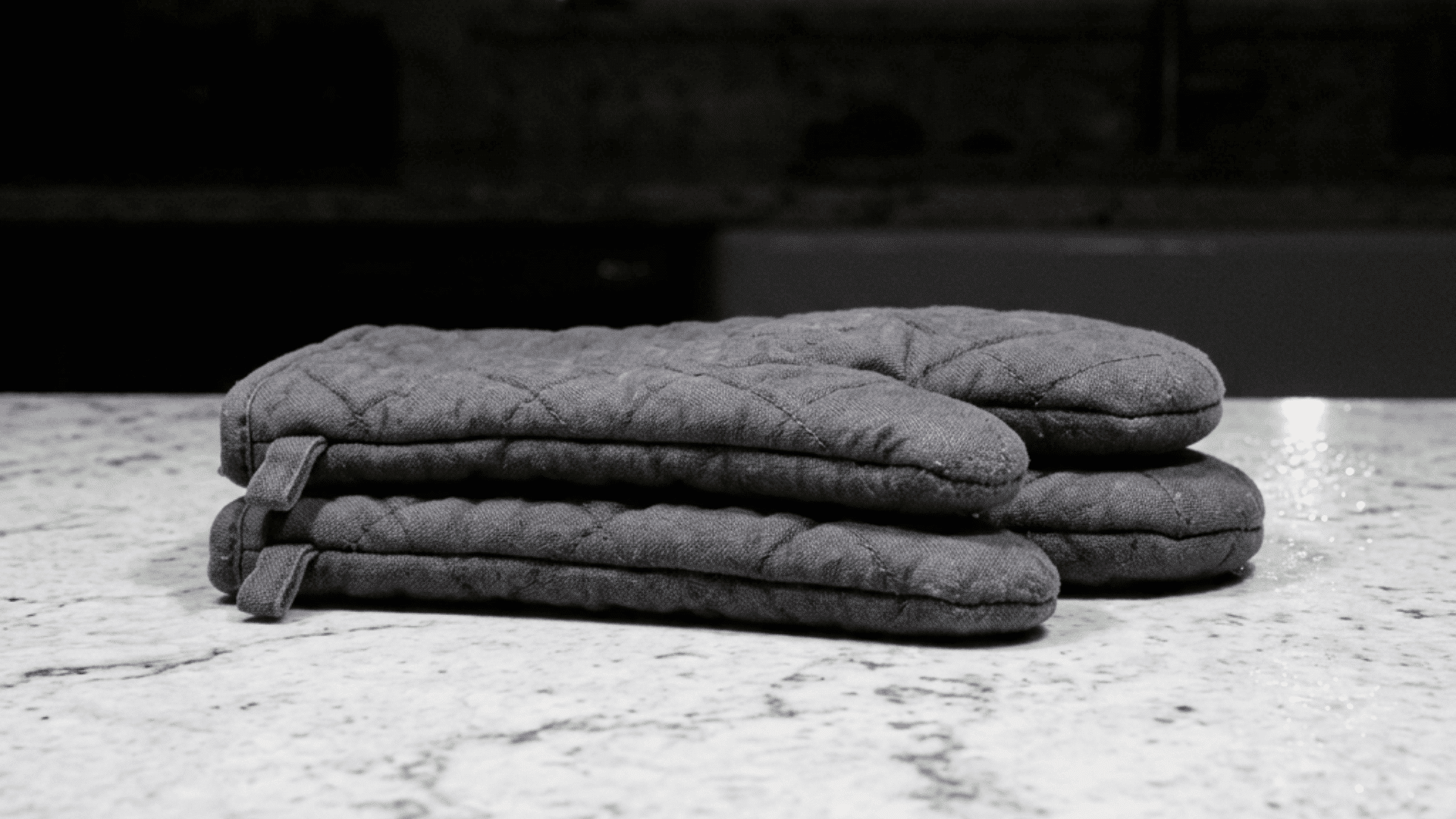
Oven mitts are basic but important for safe cooking. They protect hands when lifting baking sheets, hot pans, Dutch ovens, and casserole dishes.
Thin towels can slip, so proper mitts give better grip and coverage. I saw this matter most when pulling heavy dishes from the oven. A washable pair is best for daily use. Good oven mitts make baking and roasting safer without adding clutter.
12. Dish Towels
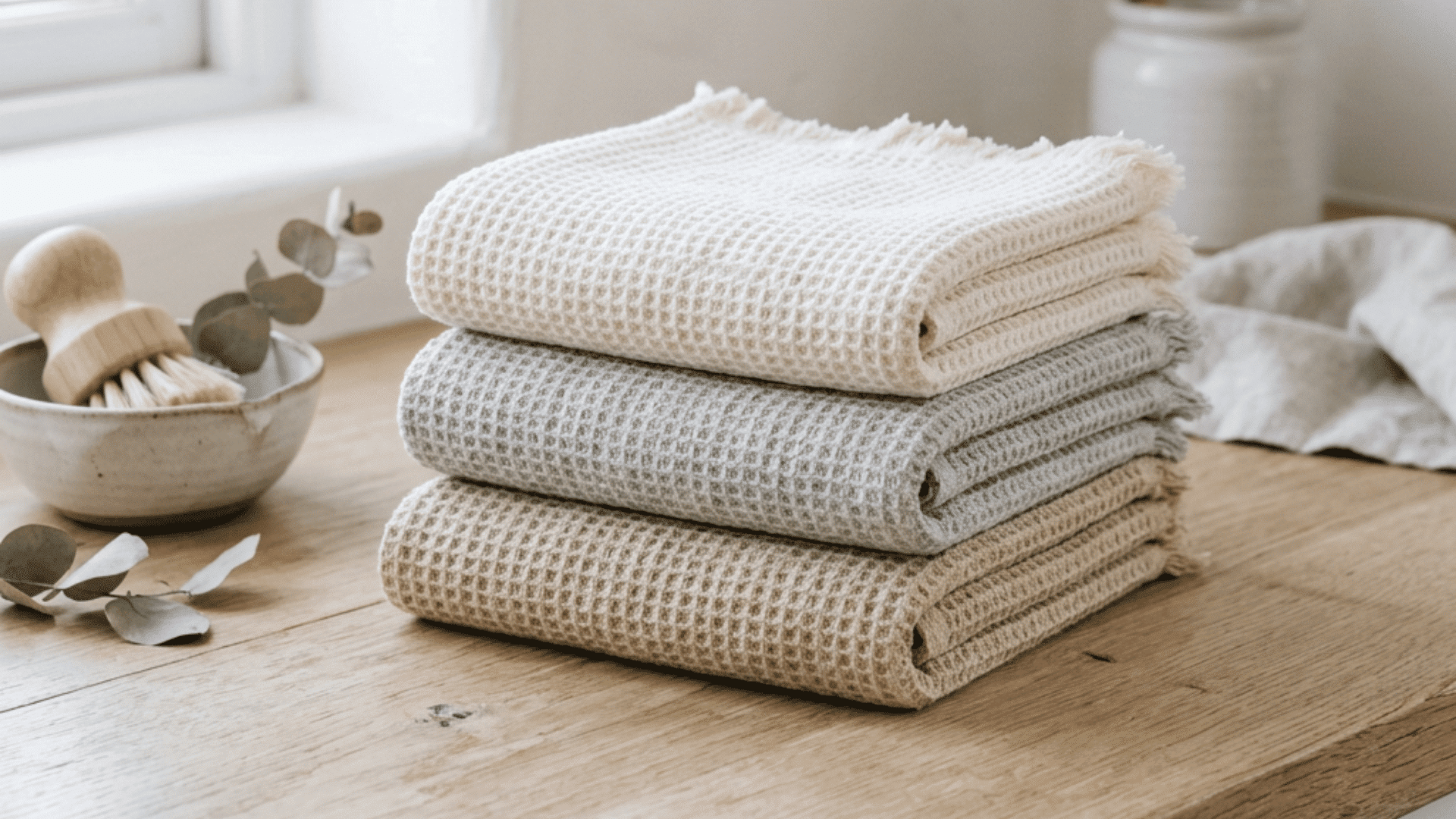
Dish towels help with small tasks all day. They dry hands, wipe counters, cover dough, hold warm dishes, and clean light spills.
A few cotton towels are enough for most homes, especially when they are easy to wash and reuse. They also reduce paper towel use. Keep them near the sink or stove for quick access. Simple dish towels support cooking, cleaning, and serving without taking up much space.
How to Choose the Right Minimalist Kitchen Tools
Choose tools that support real cooking habits, save space, and make daily tasks easier. The best items should feel useful often, not just look nice in a drawer.
- Daily Use: Pick tools that are used weekly, such as a chef’s knife, cutting board, pan, pot, and mixing bowl. These are true minimalist kitchen essentials because they support everyday meals.
- Multi-Use Value: Choose items that handle multiple tasks. A baking sheet can roast vegetables, bake cookies, and reheat food.
- Storage Fit: Select tools that stack, nest, or fit neatly in drawers. This matters most when applying to a minimalist small kitchen, where every drawer and shelf has to earn its space.
- Quality Where It Counts: Spend more on knives, pans, and food containers because they get used often.
- Real Need: Avoid buying tools for meals that are rarely made. A simple kitchen should match actual routines.
How to Declutter Before Building a Minimalist Kitchen
Use this table before buying new tools or organizing cabinets. It helps connect each kitchen area with the minimalist kitchen essentials that truly support daily cooking:
| Kitchen Area | What to Remove | What to Keep | Why It Helps |
| Knife Drawer | Dull knives, duplicate knives, broken handles | One sharp chef’s knife, a small paring knife, and a knife sharpener | Keeps food prep faster, safer, and easier |
| Utensil Drawer | Extra spatulas, unused gadgets, and melted tools | Spatula, wooden spoon, tongs, whisk, ladle | Covers stirring, flipping, serving, and mixing |
| Cookware Cabinet | Scratched pans, unused sets, and heavy items never used | One pot, one larger pot, one skillet, one sauté pan | Handles most simple meals without crowding storage |
| Baking Area | Extra pans, rusty sheets, odd bakeware | Baking sheet, baking dish, mixing bowls | Supports roasting, baking, and easy meal prep |
| Food Storage | Missing lids, stained containers, random pieces | Stackable containers with matching lids | Makes leftovers and meal prep easier to manage |
| Countertop | Rarely used appliances, extra decor, clutter trays | Daily-use items only, such as oil, salt, pepper, or a kettle | Keeps the workspace clear and ready for cooking |
Final Thoughts
A minimalist kitchen is not about getting rid of everything or following someone else’s perfect list. It is about keeping the tools that make cooking easier in your real life.
When the right items are easy to reach, meals feel less stressful, cleanup takes less time, and the kitchen feels more usable every day.
Start small. Clear one drawer, remove one unused gadget, or keep only the tools used most often for a week. That simple step can show what truly belongs in the kitchen and what is only taking up space.
The best minimalist kitchen essentials are the ones that support daily meals without adding clutter.
What tool could never leave your kitchen? Share your favorite essential or decluttering tip in the comments below.
Frequently Asked Questions
How Many Kitchen Tools Does a Minimalist Kitchen Need?
Most minimalist kitchens work well with 15 to 20 useful tools, depending on cooking habits, space, and household size.
Can a Minimalist Kitchen Work For a Family?
A minimalist kitchen can work for a family when its cookware, dishes, and storage containers align with daily meals and household needs.
Should Countertops Be Empty in a Minimalist Kitchen?
Countertops do not need to be empty, but they should hold only daily-use items like oil, salt, pepper, or a kettle.