Want to make your bedroom feel totally different without spending a fortune? One accent wall can do exactly that.
I’ve seen it happen on dozens of makeovers. One wall changes everything. It adds personality, depth, and that finished look that ties a whole room together.
In this guide, I’ll walk you through the best bedroom accent wall ideas for every style and budget. If you’re a renter who can’t paint, a first-timer with basic tools, or just looking for fresh inspiration, there’s something here for you.
We’ll cover painted walls, wallpaper, wood panels, textured finishes, and easy DIY techniques you can pull off over a weekend.
Let’s find the right look for your space.
Why Your Bedroom Needs an Accent Wall
An accent wall creates an instant focal point and anchors the entire room. Without it, the eye doesn’t know where to land, and the space feels flat. Add one strong wall, and the whole room gets structure.
I always tell people: if your bedroom feels unfinished and you can’t figure out why, it’s usually because there’s no focal point. One accent wall fixes that fast.
Beyond focal points, accent walls change how a space feels:
- Depth and dimension: A darker or textured wall visually recedes, making the room feel more layered and intentional.
- Mood: Color and texture are powerful mood drivers. A deep forest green feels calm. A terracotta limewash feels warm and organic. A bold geometric pattern feels playful.
- Personality: An accent wall is the one place in a room where you can be bold without committing the entire space.
Now that you know why it works, here are the most effective bedroom accent wall ideas to try, from the simplest to the most involved.
Bedroom Accent Wall Ideas
Color, texture, and fabrics are some popular ways to change how a bedroom feels, and the accent wall is where that decision carries the most weight. Get it right, and the whole room clicks into place. Get it wrong, and no amount of furniture or decor will fix it.
There are a handful of directions that work consistently well in bedrooms, and once you understand why each one works, picking yours gets a lot easier.
1. Deep, Moody Tones for a Grounded Feel
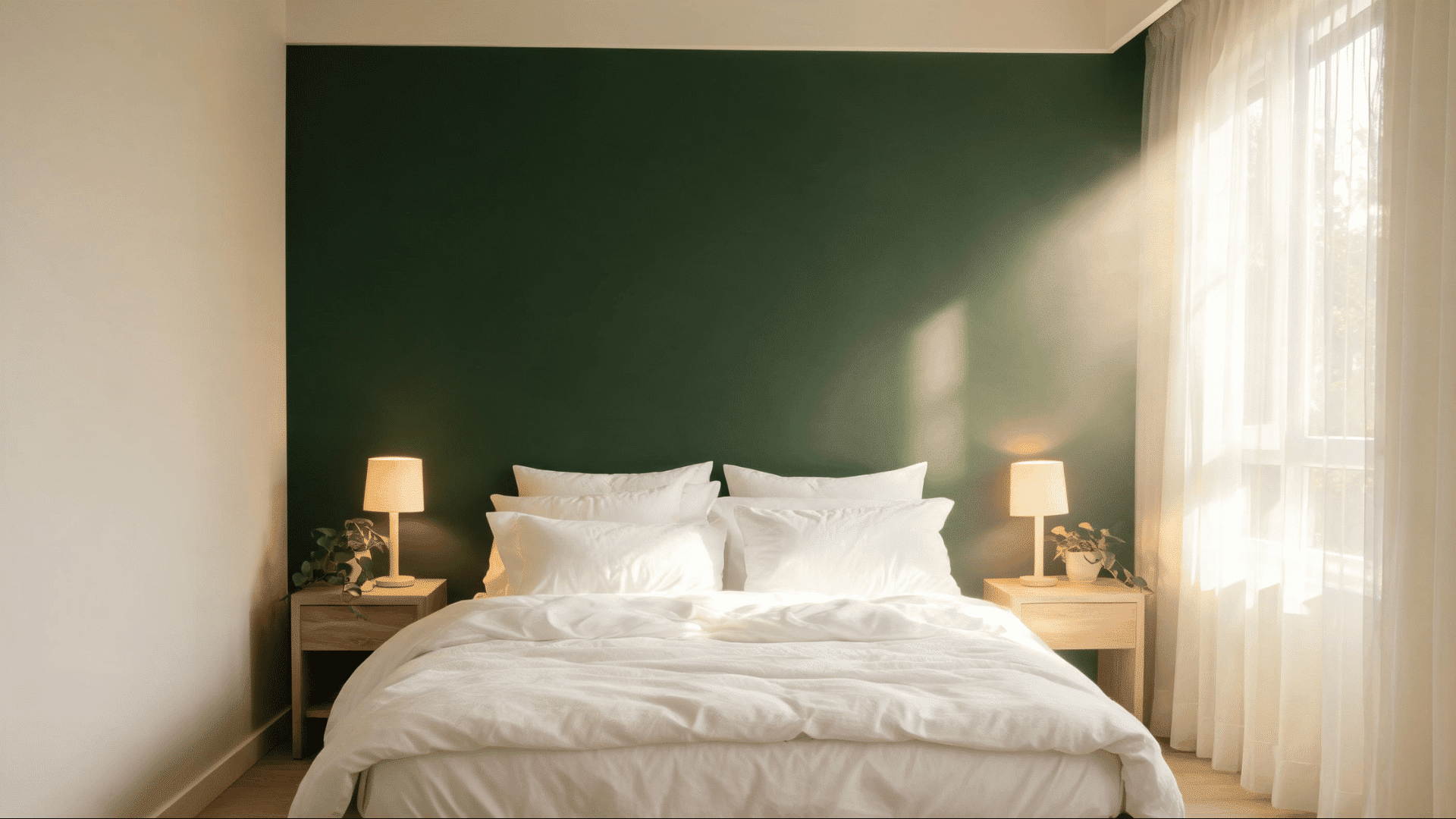
Colors like forest green, navy, charcoal, and deep plum add weight to the room in the best possible way. They make the space feel intentional and enveloping rather than empty or unfinished.
These work especially well behind the bed, where you want the wall to feel like a solid backdrop worth settling into.
They’re also more forgiving than people expect. A deep charcoal accent wall paired with white or linen bedding doesn’t feel dark or heavy. It feels anchored.
2. Warm Earthy Tones for Calm and Comfort
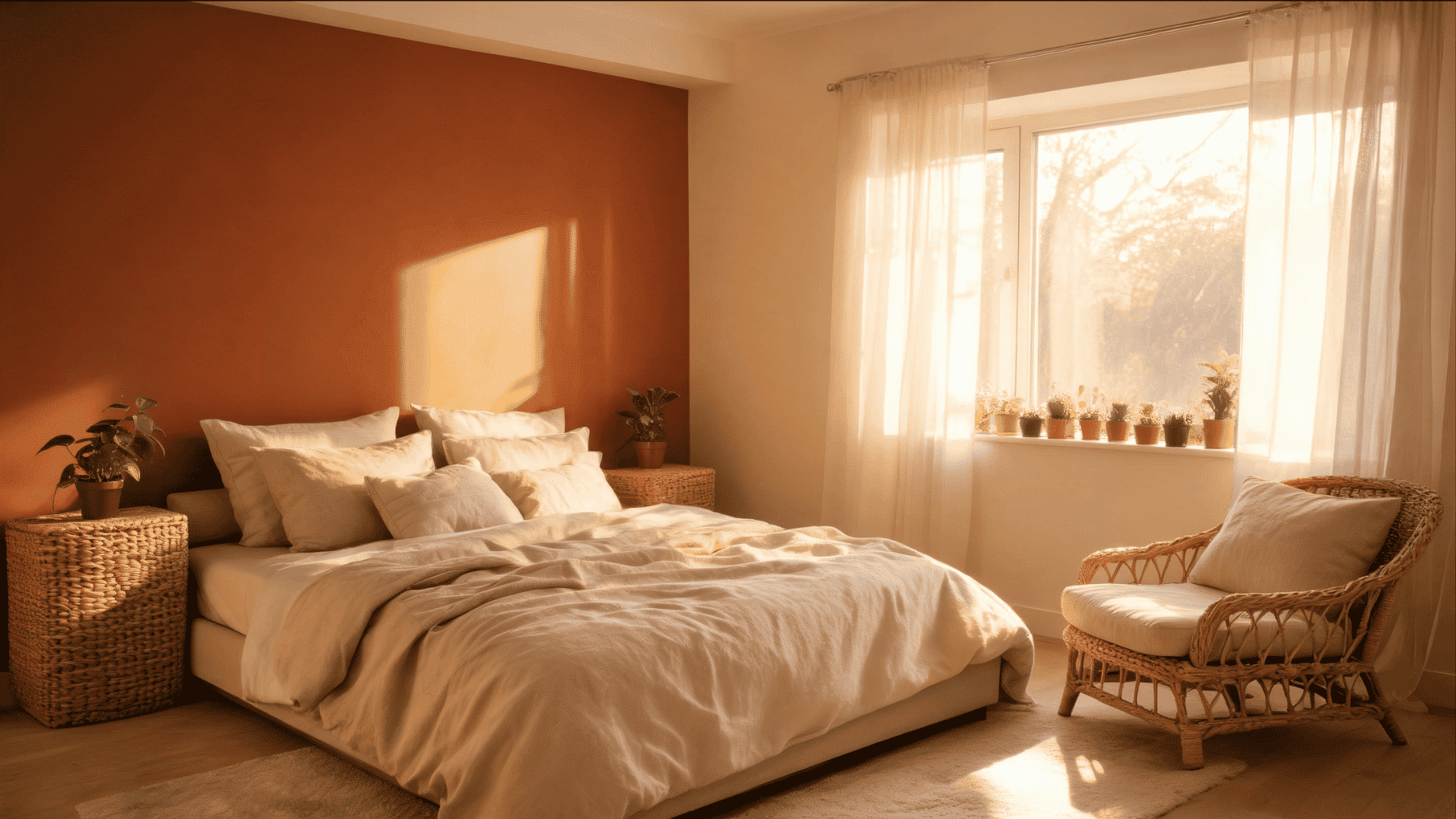
Terracotta, warm clay, dusty rose, and ochre bring warmth without the visual intensity of a bright color, and they work with almost every wood tone and neutral you’re likely to already have in the room.
These are particularly good choices if your bedroom gets warm afternoon light. The wall deepens in a way that feels rich rather than harsh.
3. Soft Neutrals with Depth
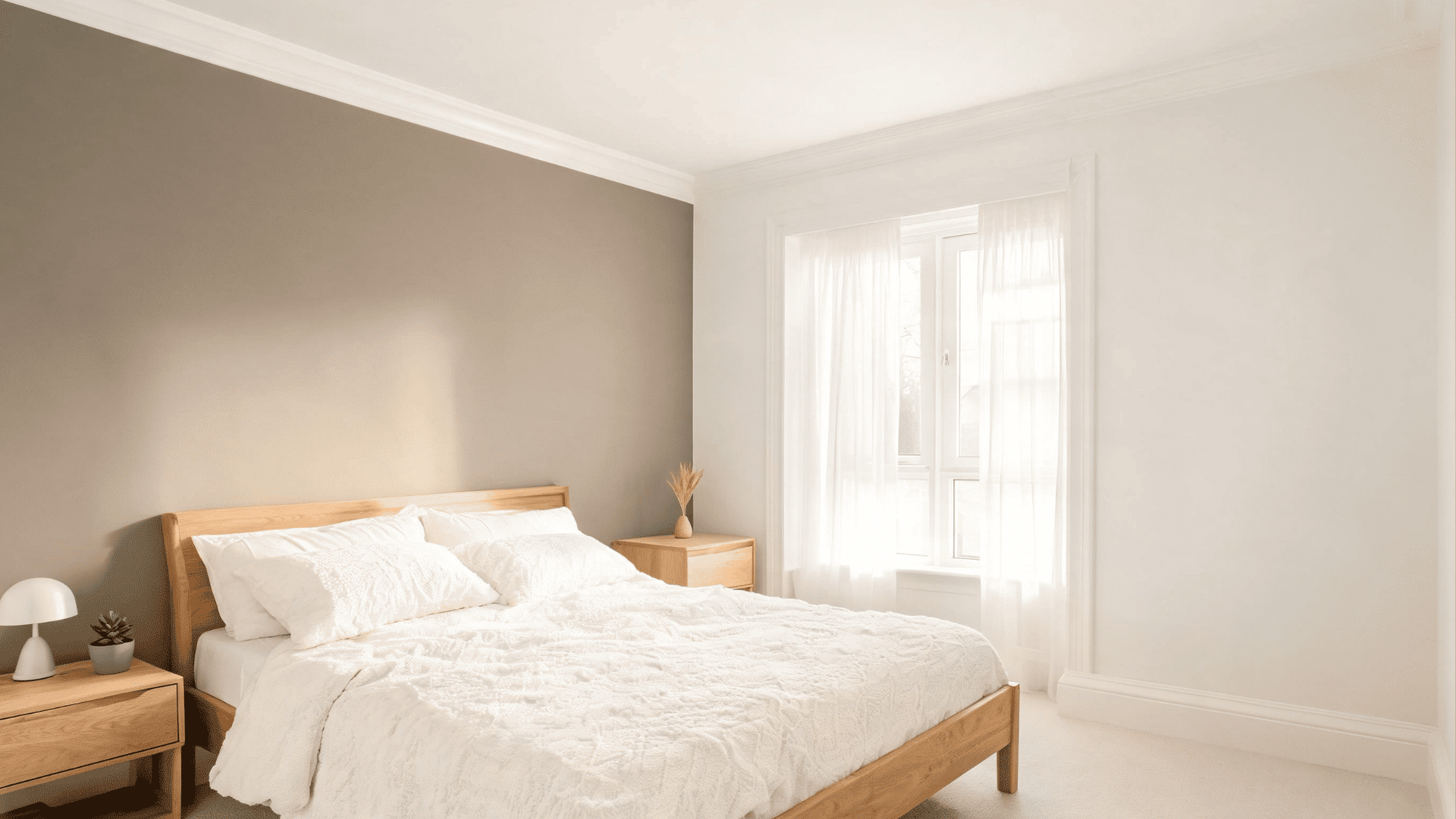
Not every accent wall needs to be bold. Warm greige, soft taupe, and creamy off-whites with a slight undertone can read as an accent wall when the rest of the room is a cooler white. The contrast is subtle, but the effect is there.
This works best in smaller bedrooms where a strong color would feel like it’s closing in. The wall still has presence, just quieter.
4. Cool Tones for a Fresh, Airy Feel
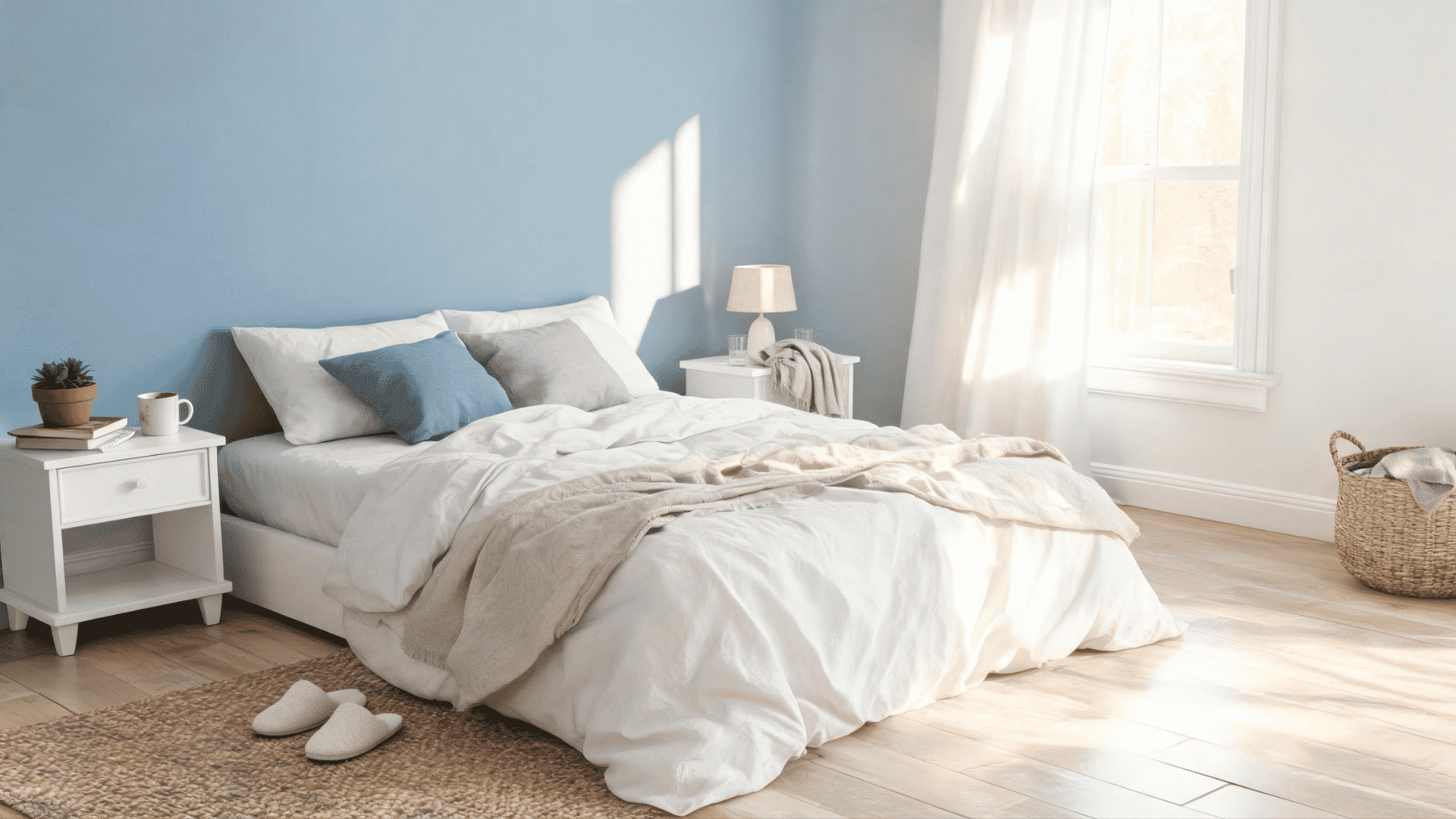
Dusty blue, soft sage, and muted lavender are consistently popular in bedrooms because they read as calm without feeling cold. They pair naturally with white trim, light wood, and linen textures, which makes them easy to work with.
If your bedroom gets morning light, a cool-toned accent wall will catch that light, making the whole room feel fresh and easy to wake up in.
Tip: Always test your paint color in a large swatch, at least 12×12 inches, on the actual wall before committing. Paint looks completely different under artificial light at night versus natural daylight.
5. Wallpaper Accent Walls
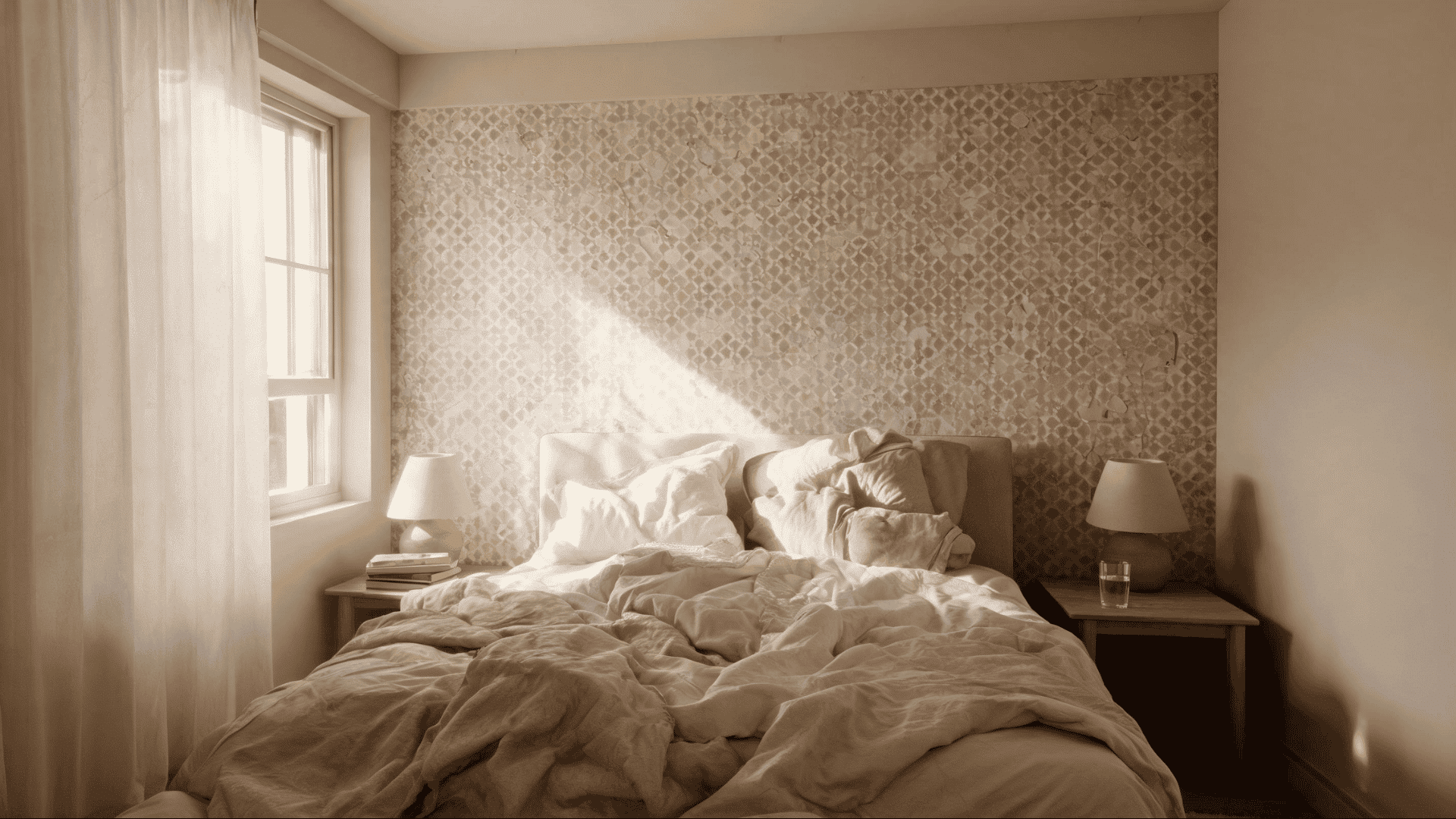
Wallpaper has had a full comeback. Not the fussy, permanent kind from decades past, but modern versions that are bold, practical, and surprisingly easy to work with.
Today’s wallpaper options range from high-end traditional paste styles to peel-and-stick sheets you can hang and remove without any tools.
For a bedroom accent wall, wallpaper can do what paint can’t: add pattern, depth, and visual weight all at once.
- Peel-and-stick wallpaper: Modern peel-and-stick wallpaper looks identical to traditional wallpaper, removes cleanly without damaging walls, and comes in thousands of patterns. The installation process is covered in detail in the DIY section below.
- Full wall vs. half-wall application. You don’t have to paper the entire wall. A half-wall application with wallpaper on the lower half and paint above, separated by a thin strip of molding, can be just as impactful and uses less material.
Tip: When applying peel-and-stick wallpaper, work with a friend if you can. One person holds the panel straight while the other smooths it down. Solo application on a full wall usually leads to crooked strips and air bubbles that are hard to fix once the panel is stuck.
6. Wood Accent Walls
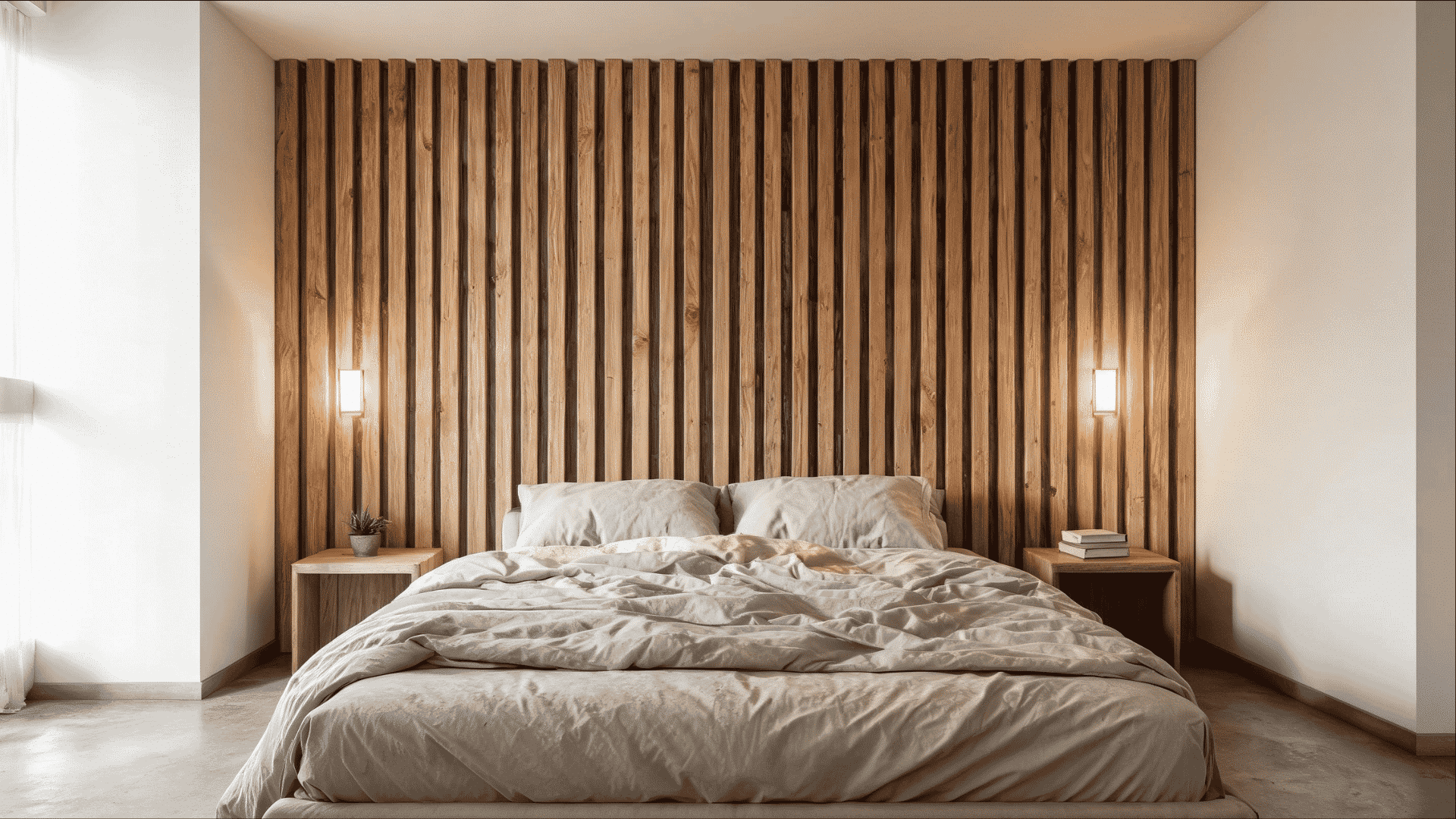
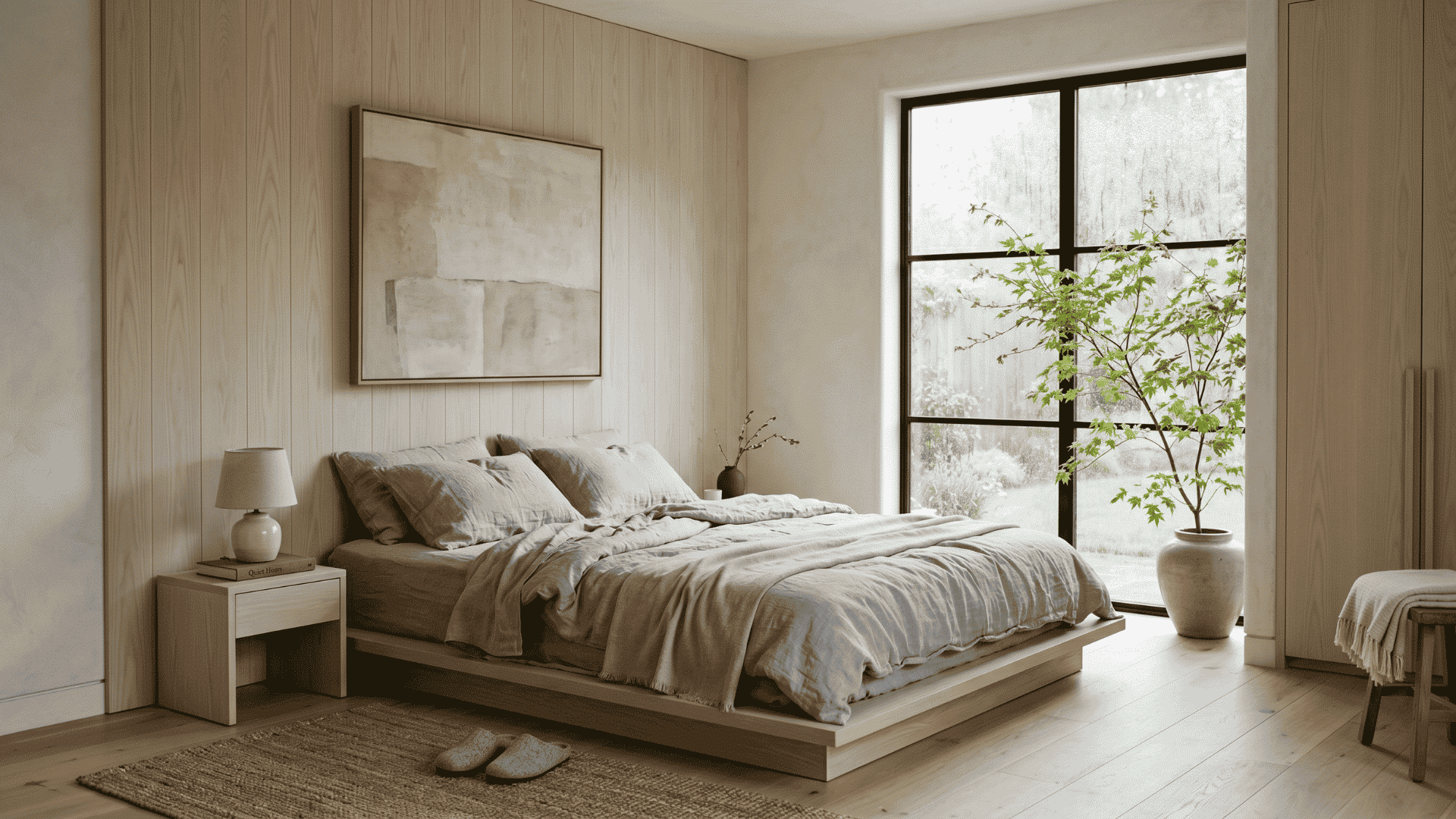
Wood brings warmth and texture that painted walls simply can’t match. And contrary to what many people assume, wood accent walls work across a wide range of styles, not just rustic or farmhouse rooms.
I’ve installed slatted wood walls in clean, modern bedrooms and reclaimed wood panels in eclectic spaces, and both felt completely at home. The material is flexible. It’s the installation style that sets the tone.
- Vertical slats for a modern minimal look: Thin vertical wood slats, often called a slatted panel wall, are hugely popular in contemporary bedrooms right now. The clean lines feel structured and refined.
- Painted wood panels for contrast: Plain plywood or MDF panels don’t have to look cheap. Cut into consistent strips, installed vertically or in a grid, and painted a bold color, they become a clean statement wall.
Tip: For slatted walls, I always recommend spacing your slats between 1.5 and 2.5 inches apart. Too close and it reads as solid paneling. Too far apart and you lose the effect. That middle range gives you the shadow lines that make the wall look like it cost a lot more than it did.
7. Textured Walls: Plaster, Limewash, and More
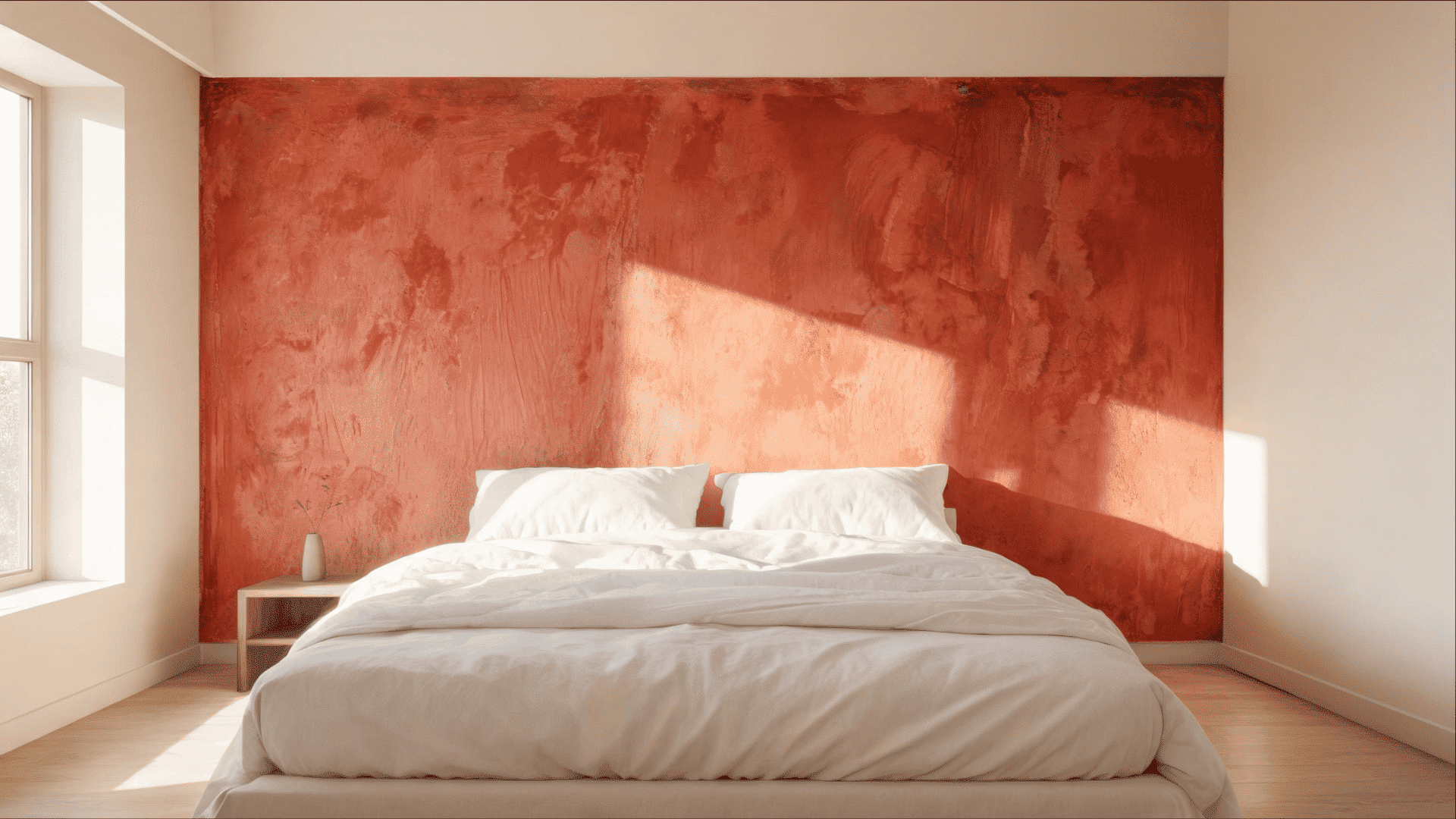
If you want depth and visual interest without pattern or color contrast, texture is the right answer. Textured accent walls feel handcrafted and personal, and they’re particularly well-suited to bedrooms aiming for a calm, artisanal look.
Unlike wallpaper or wood, a textured wall doesn’t rely on a strong pattern to make an impression. It works through light and shadow, changing appearance throughout the day as the light in the room shifts.
- Soft texture finishes for depth: Venetian plaster and smooth, troweled finishes reflect light in ways flat paint never can, creating a subtle shimmer that shifts throughout the day.
- Limewash for an organic feel: Limewash paint applied with broad, overlapping strokes creates a mottled, aged effect that looks genuinely old-world. It’s breathable, eco-friendly, and one of the most popular finishes in bedroom design right now.
- Imperfection as a design feature: What makes textured walls special is the irregularity. Variations in tone, visible brush or trowel marks, and layered depth. These aren’t flaws to minimize but the reason why the wall looks interesting.
Tip: For your first limewash attempt, practice the overlapping stroke technique on a piece of drywall or plywood scrap before touching the actual wall. The pattern takes about 10 minutes to get comfortable with, and that practice run will save you a lot of backtracking on the real surface.
8. Fabric or Upholstered Accent Walls
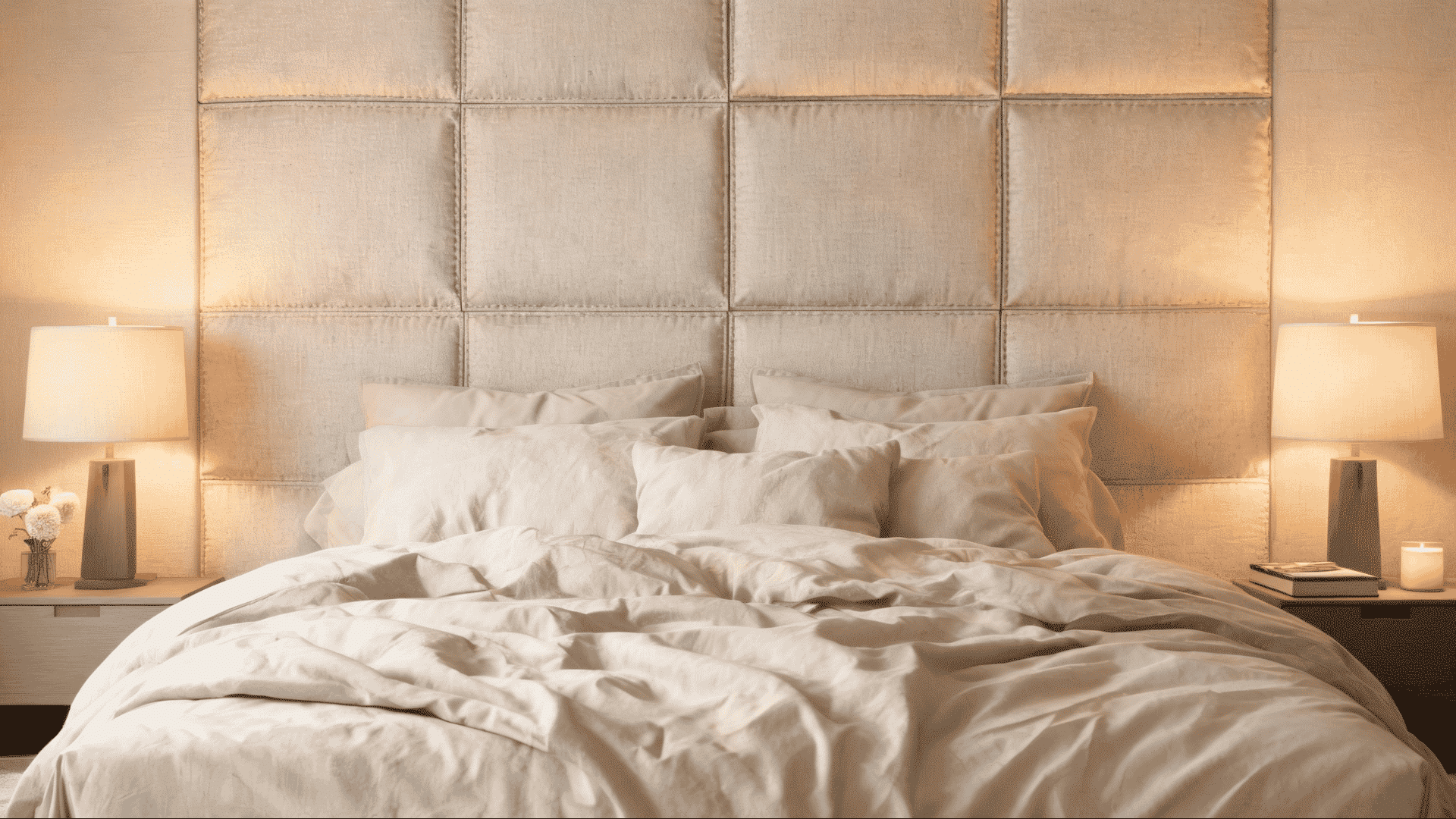
Upholstered and fabric walls bring something that the others don’t: softness. In a bedroom, a room designed for rest, that matters more than most people realize.
Fabric absorbs sound, adds visual warmth, and creates a sense of comfort that hard surfaces simply can’t match.
A fully upholstered accent wall in velvet, boucle, or linen takes that further still. The investment in materials is higher than that for paint or wallpaper, but the result falls into a different category entirely.
- Padded headboard wall extensions: Start with a traditional upholstered headboard, then extend the fabric or padded panels up the wall behind it and out to the sides.
It works especially well in bedrooms with high ceilings where the headboard alone looks too small for the wall space. - Fabric panels for texture and sound absorption: Large fabric panels stretched over frames and hung like artwork add warmth and color while also dampening sound.
They work particularly well in bedrooms with hard floors or lots of glass and other reflective surfaces, where echo and noise are issues.
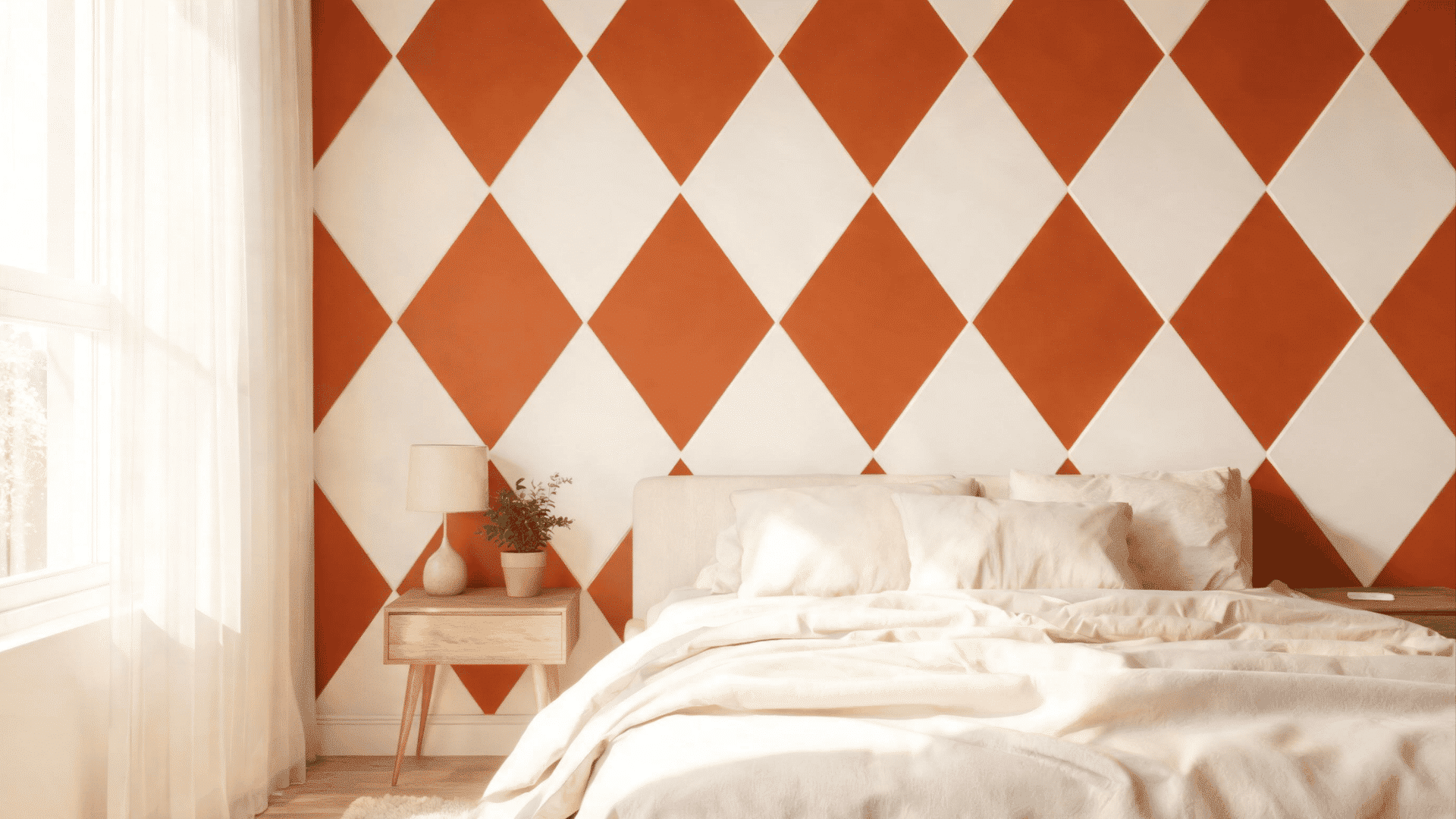
9. Tape Geometric Patterns
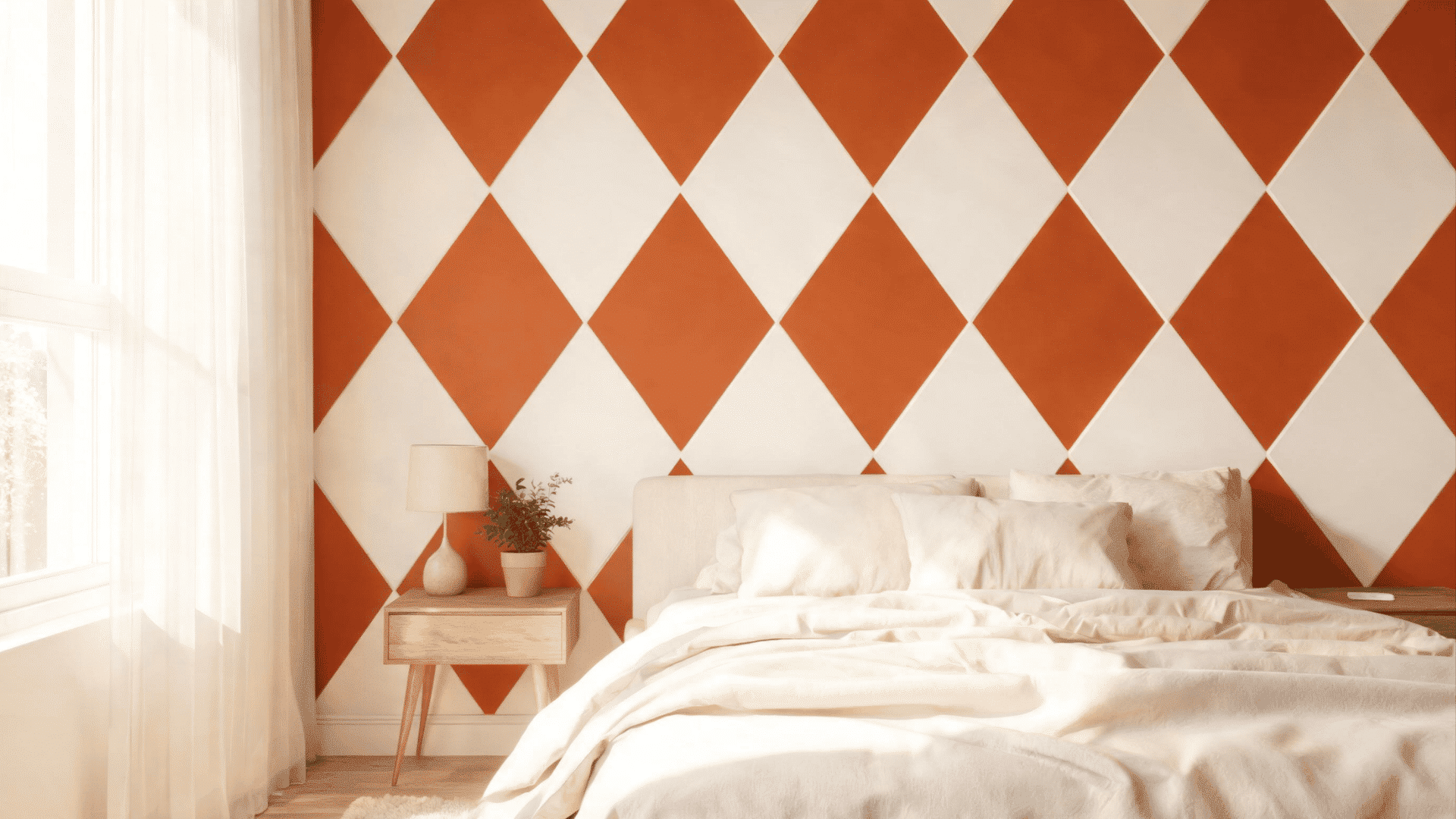
Use painter’s tape to mask off triangles, chevrons, diamonds, or abstract shapes on your accent wall. Paint over the tape, let it dry completely, then peel slowly at a 45-degree angle.
The key is pressing every tape edge firmly with a putty knife or credit card before you paint to prevent bleeding under the edge. Rush that step, and the lines won’t be sharp.
10. Ombre Wall Effects
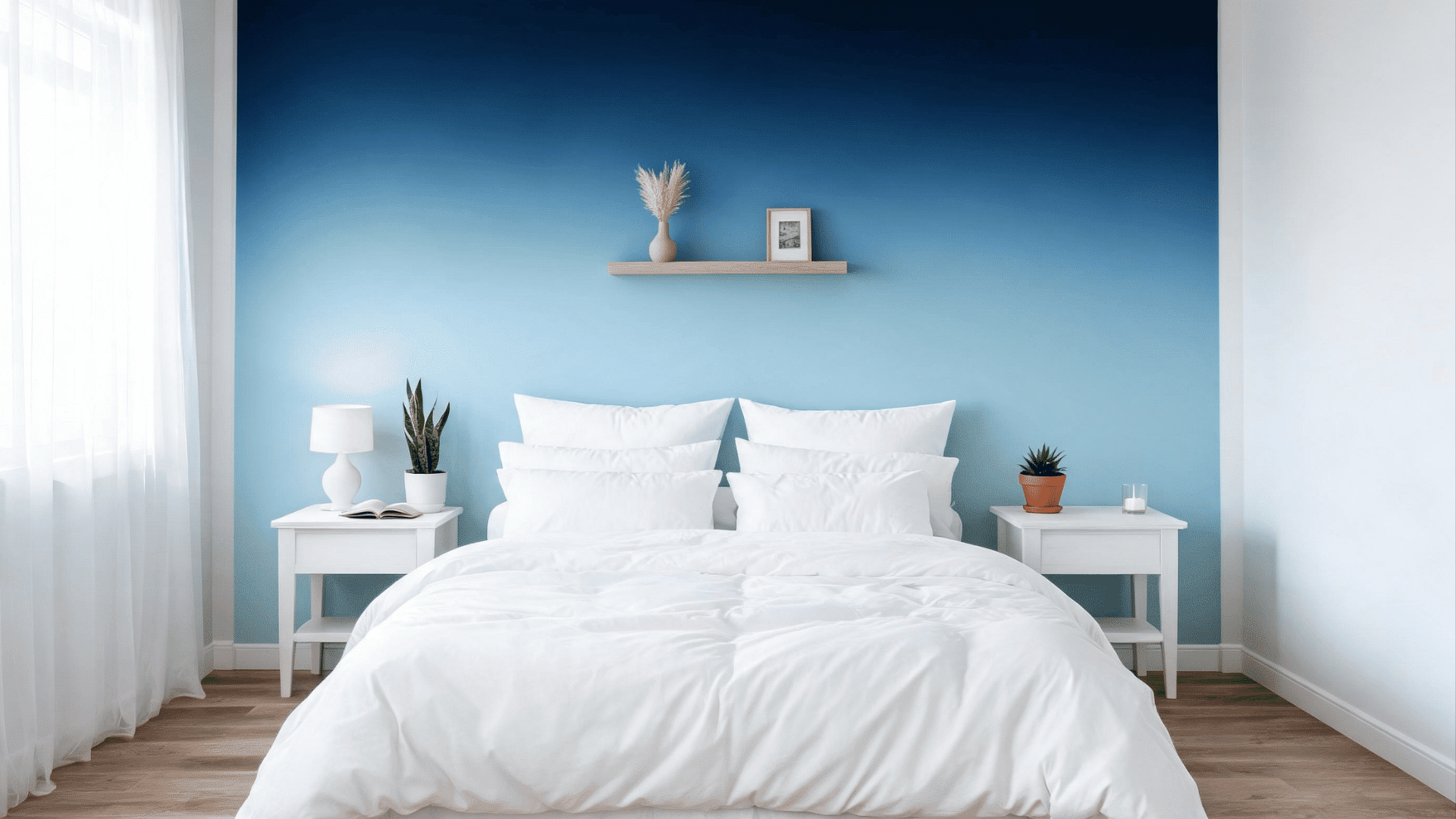
Blend two related paint colors from top to bottom using a dry roller brush while both colors are still wet on the wall. The transition should be gradual, not a hard line.
This technique works best with colors that sit close on the spectrum, like deep blue into medium blue, or pale peach into terracotta. The closer the colors, the easier it is to blend cleanly.
11. Half-Painted Wall Styling
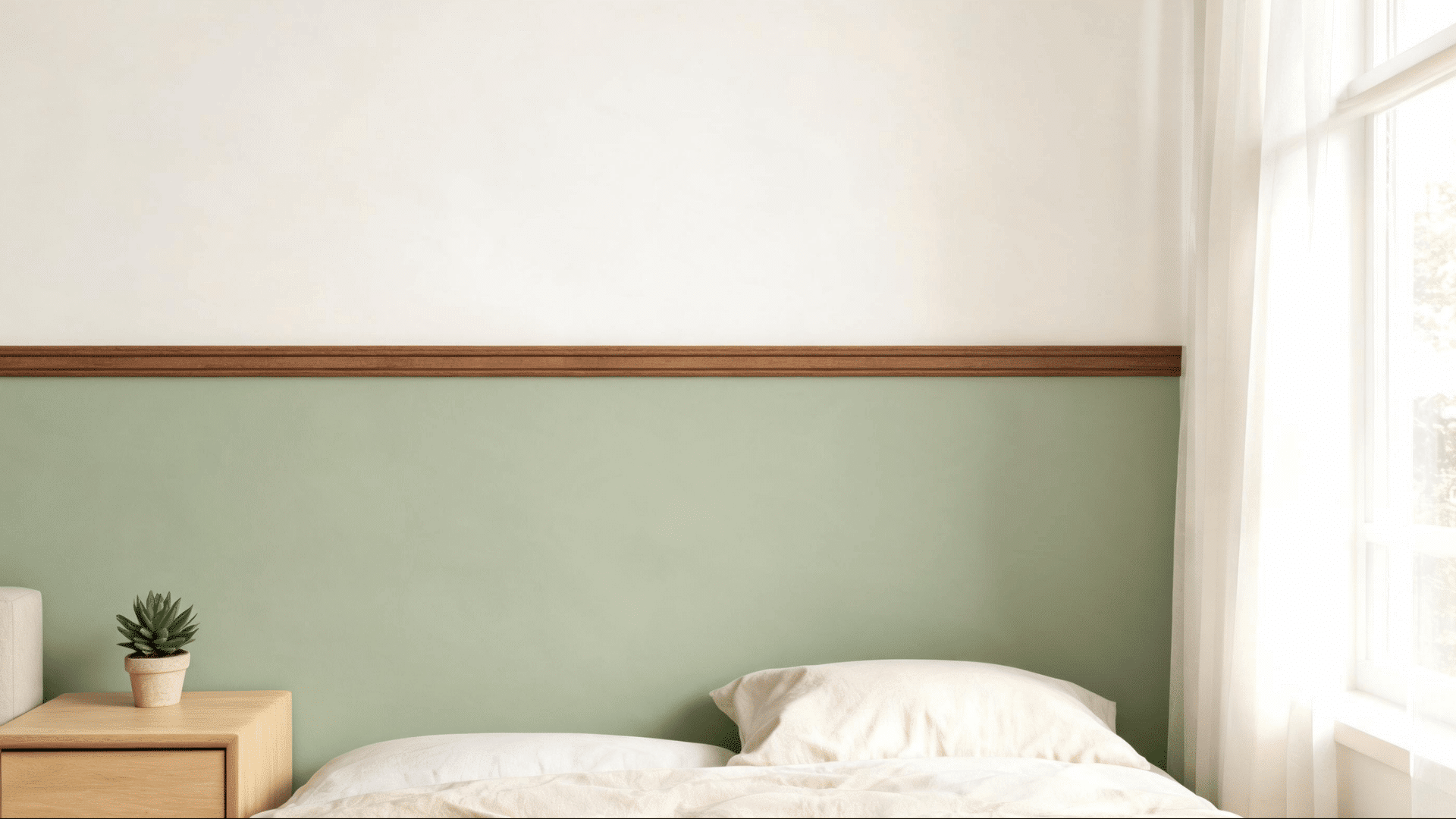
Painting just the bottom half or two-thirds of a wall is one of the easiest techniques on this list and one of the most popular right now. Use a level to mark a clean horizontal line, tape it off, and paint below it.
Add a thin strip of contrasting molding along the tape line for a more finished look. It takes a few hours, and the result always impresses.
Tip: For geometric tape work, use Frog Tape instead of standard painter’s tape. It has a moisture-activated edge seal that nearly eliminates bleed lines. It costs a bit more than regular tape but the cleaner lines are worth every cent, especially on detailed patterns.
12. Removable Wall Decals
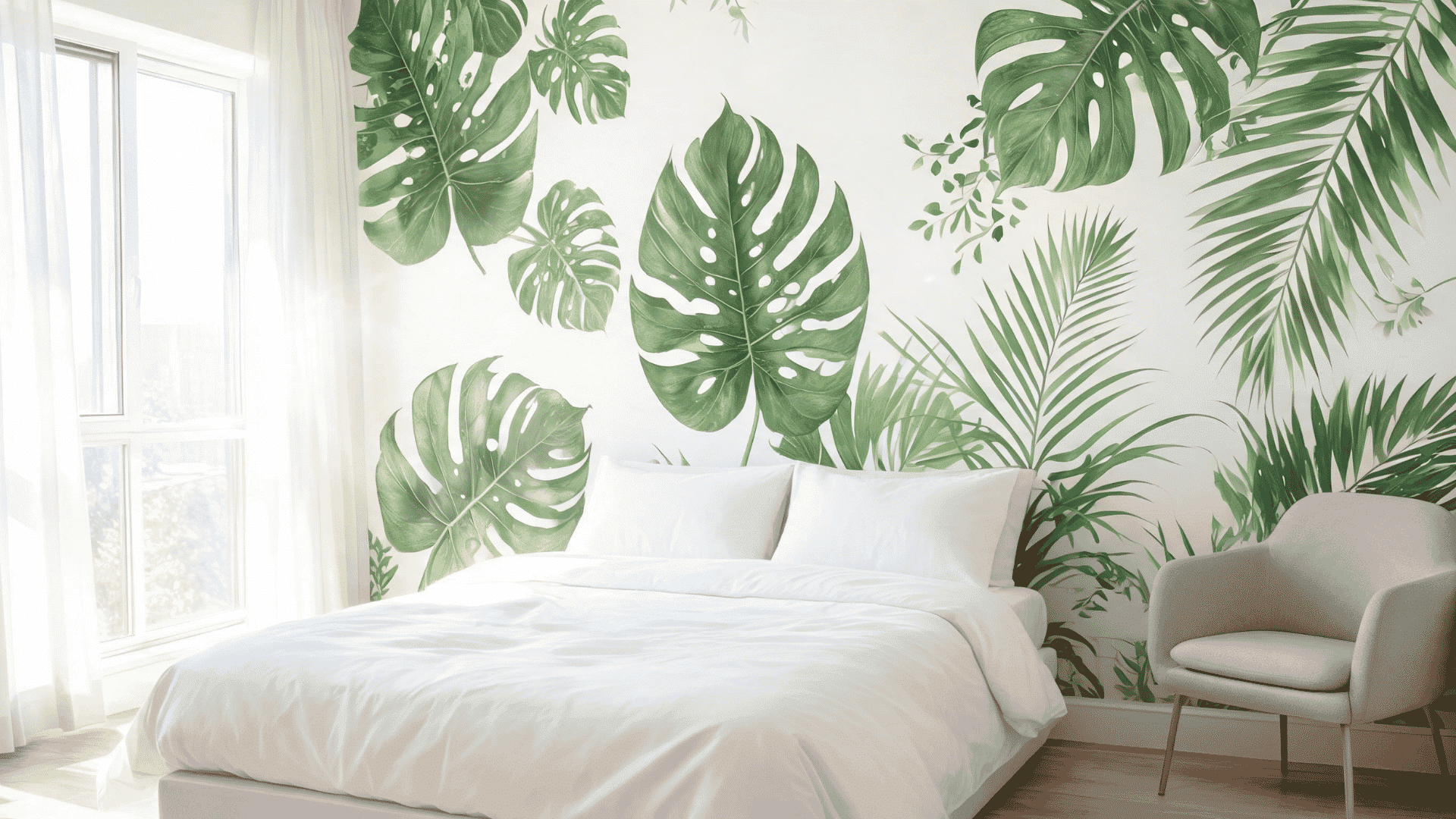
Large-format decals with geometric patterns, botanical prints, or abstract shapes apply cleanly and come off without residue.
They work best on smooth, flat walls. If you plan to reuse them, store them flat on their backing sheet rather than rolling them up, which can cause the edges to curl and lose adhesion.
They’re available in a wide range of sizes and styles, making it easy to create a focal point without committing to paint or wallpaper.
Larger decals placed behind the bed can mimic the look of a custom accent wall, while smaller designs can be arranged into a pattern that suits the room. Since installation requires very few tools, this is one of the quickest ways to refresh a bedroom over a weekend.
13. Command-Strip Panel Styling
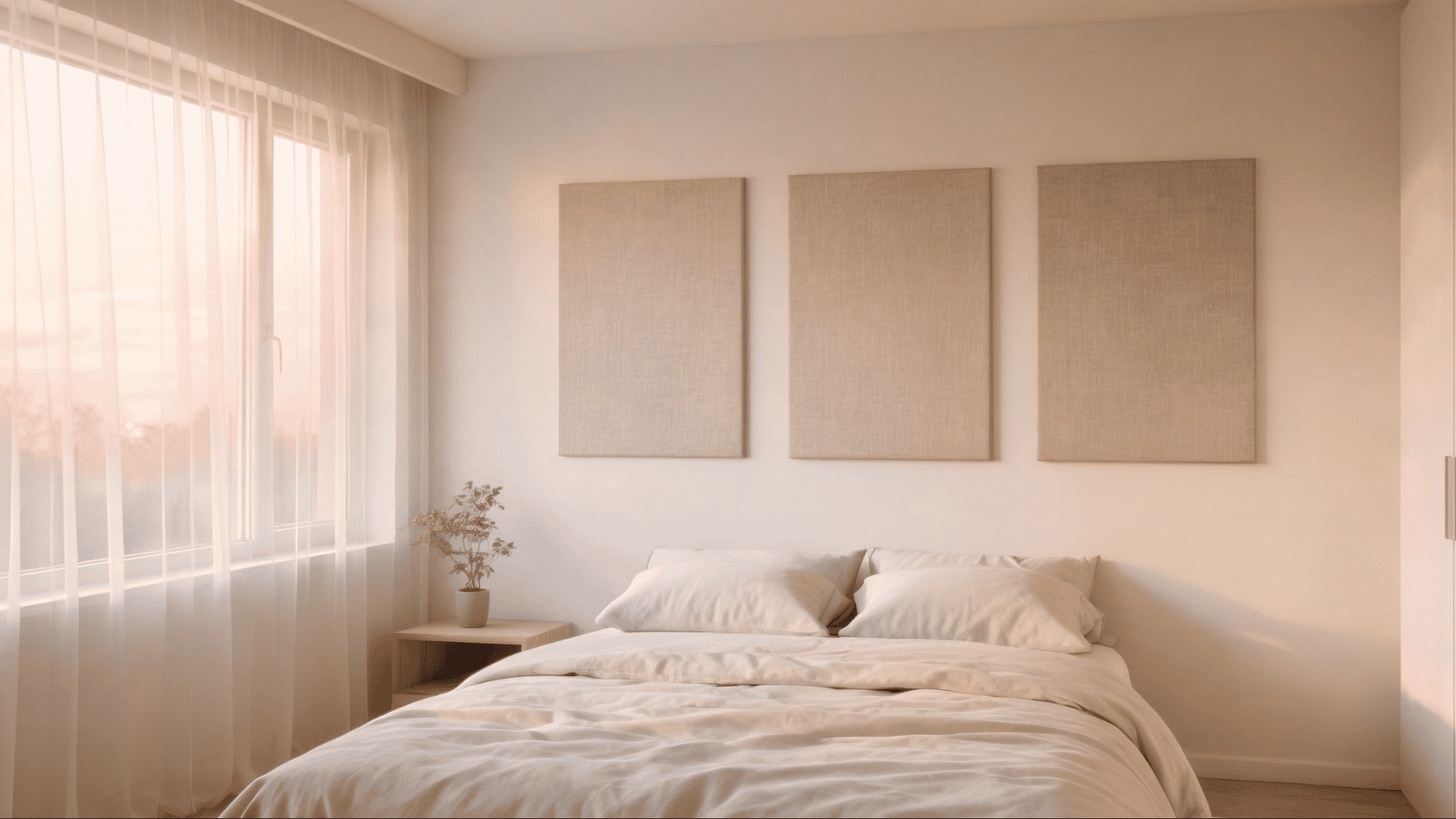
Lightweight wood panels, fabric-covered frames, and decorative tile-style panels can all be mounted securely with heavy-duty Command strips. Always check the weight limit printed on the packaging before choosing your strip size.
Apply strips to both the wall and the back of the panel for the best hold, and press each strip firmly for at least 30 seconds before hanging.
14. Fabric Hanging Setups
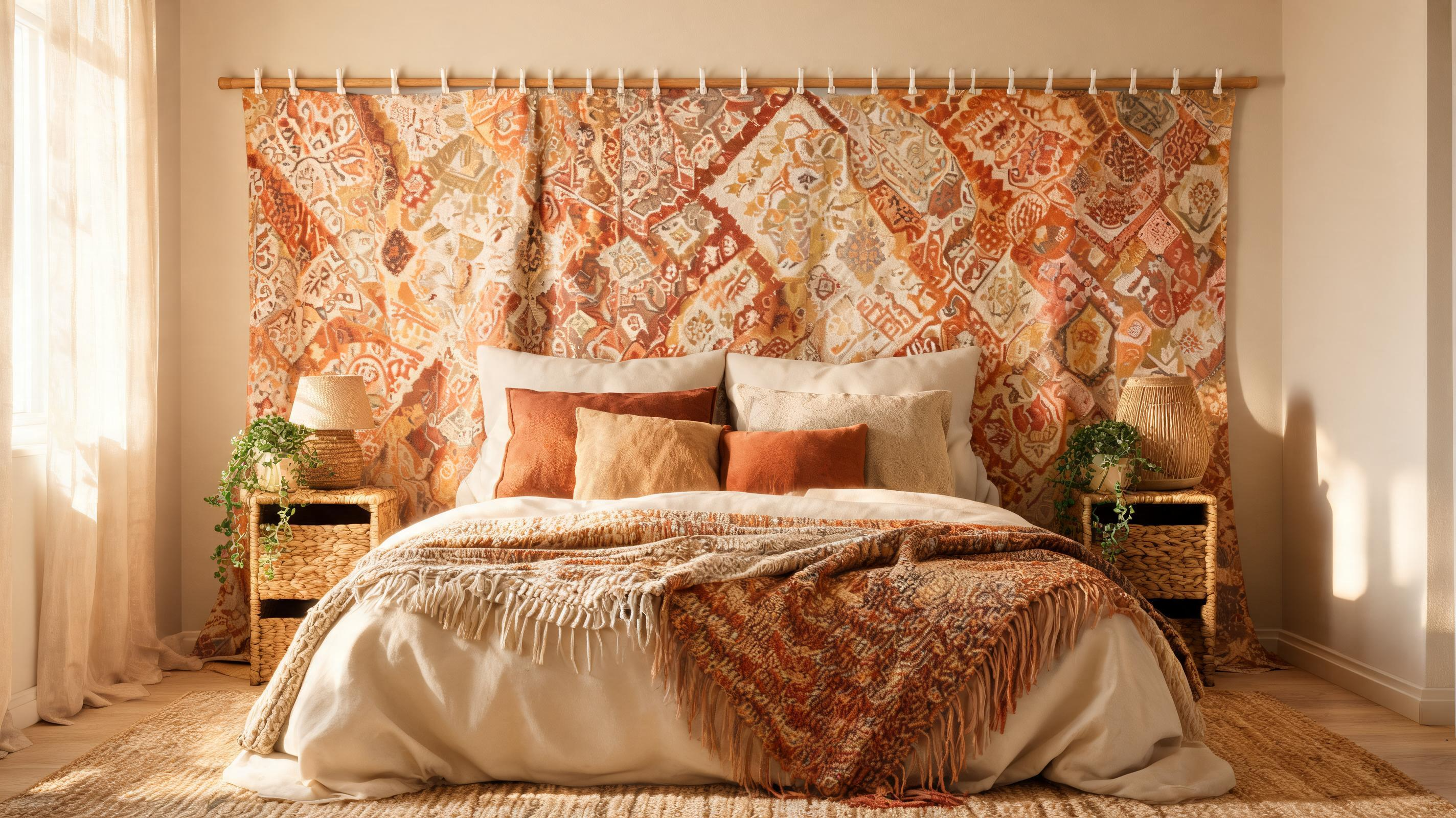
A large piece of fabric hung from a wooden dowel rod using removable hooks can cover an entire wall and make a strong impression. Choose a fabric with enough color, pattern, or texture to carry the room visually.
This approach costs very little, installs in under an hour, and can be removed in minutes when you move out.
Tip: Before mounting anything with Command strips, clean the wall surface with rubbing alcohol and let it dry for at least 15 minutes. This removes invisible residue that weakens adhesion over time. I’ve had fabric panels hold solidly for over a year in rental spaces using this one prep step.
15. Navy Blue Statement Wall
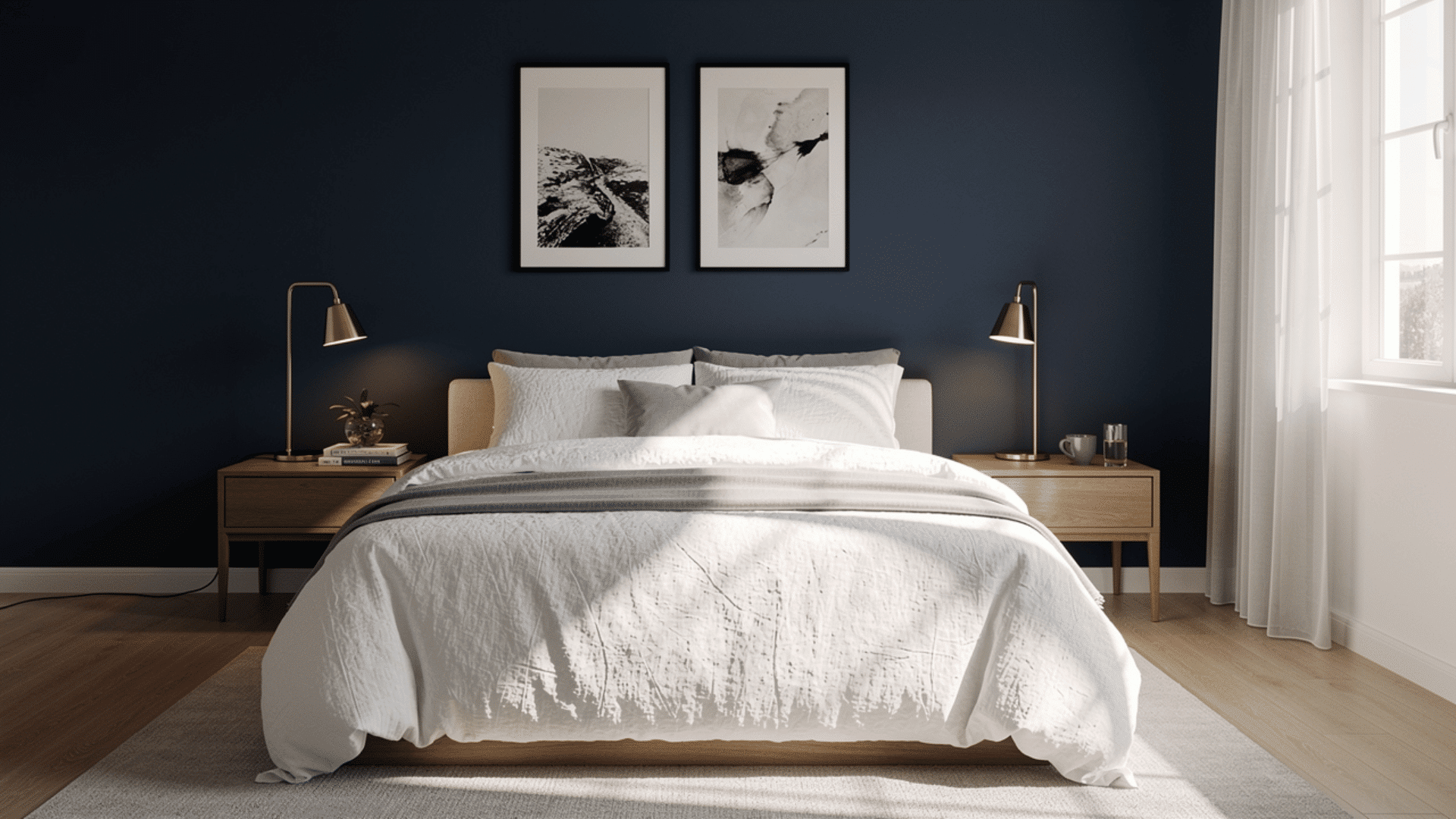
Navy blue is a dependable choice when you want a darker accent wall without going all the way to black. I often recommend it because it works with a wide range of decorating styles, from modern spaces to more traditional bedrooms.
Navy creates contrast against white bedding and lighter furniture while still feeling calm enough for a sleeping space. It also pairs well with natural wood finishes, brass accents, and soft gray tones.
During the day, the color feels crisp and clean. In the evening, it creates a comfortable backdrop that makes the room feel more grounded.
16. Warm Terracotta Accent Wall
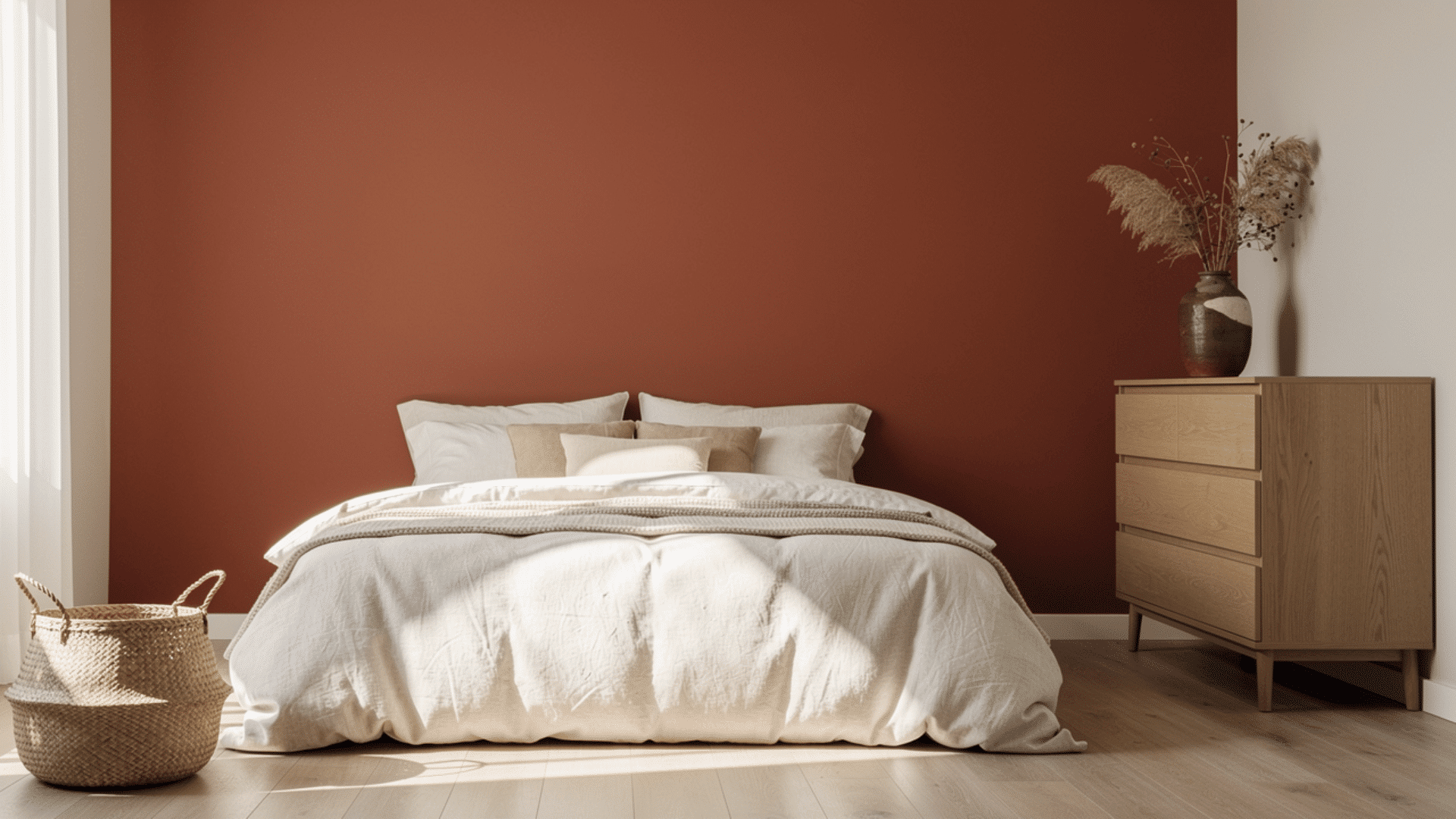
Terracotta is one of those colors that instantly adds warmth and personality to a bedroom. I like using it in spaces that feel plain or lack visual interest because it introduces color without becoming too bright.
It works particularly well with cream bedding, wood furniture, woven baskets, and natural textiles. The earthy undertones help create a welcoming environment that feels comfortable throughout the year.
In rooms with plenty of natural sunlight, terracotta can look especially rich as the light changes during the day, adding subtle variation and depth to the wall.
17. Venetian Plaster Accent Wall
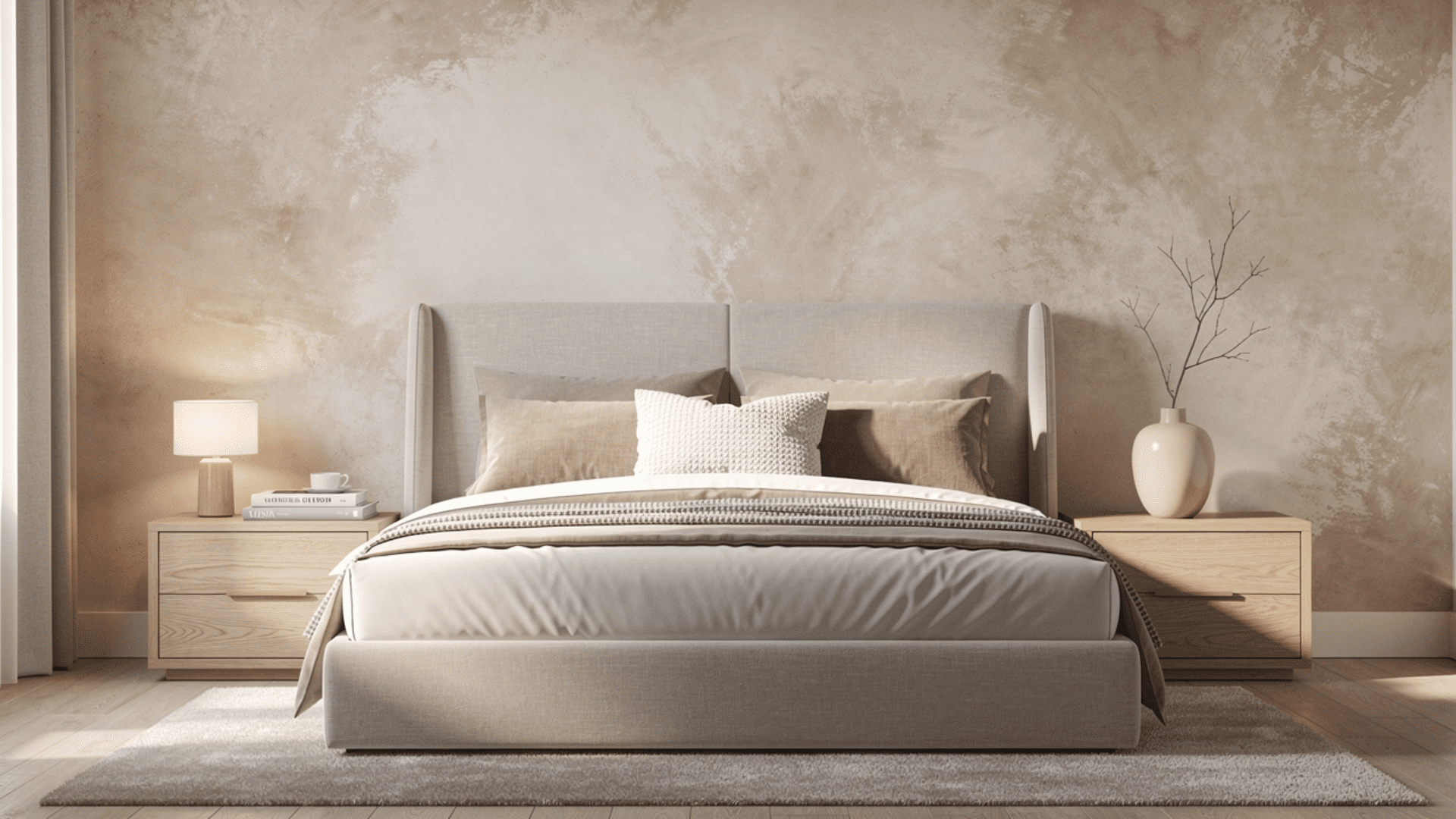
Venetian plaster creates a smooth yet textured surface that reflects light in unique ways. Unlike standard paint, the finish contains subtle variations that add depth and movement across the wall.
I’ve used Venetian plaster in bedrooms where a plain painted wall felt too simple, but patterned wallpaper felt unnecessary. Behind the bed, it becomes a focal point without overwhelming the room.
The finish works particularly well with neutral color palettes and simple furnishings, allowing the texture itself to become the main feature.
18. Charcoal Gray Accent Wall
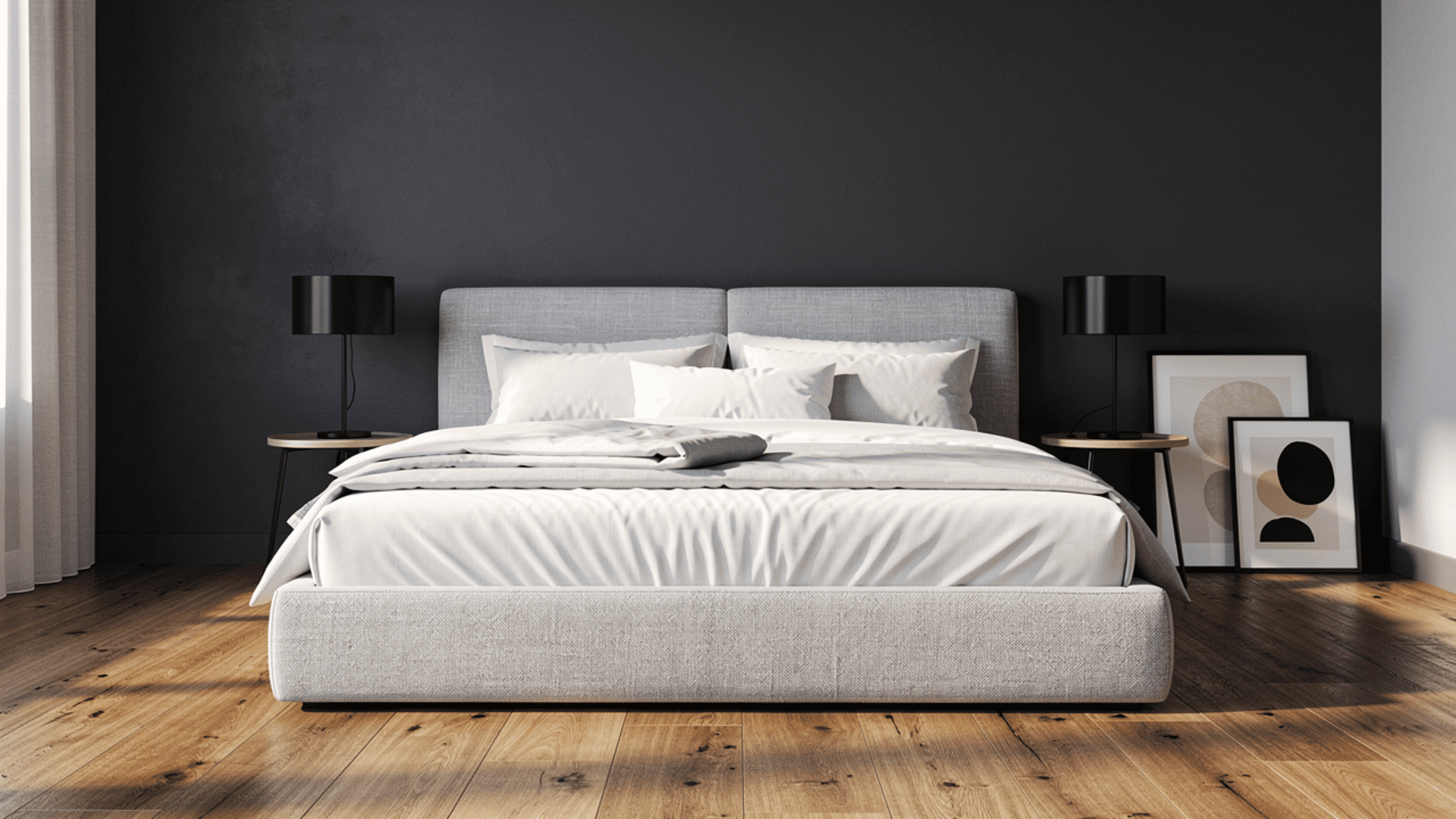
Charcoal gray offers the depth of a dark accent wall while remaining flexible enough to work with nearly any color scheme.
The darker shade helps define the sleeping area and creates contrast against lighter furnishings. Charcoal also works well with black metal accents, wood furniture, and white bedding.
Because it relies on depth rather than bright color, it feels polished without demanding constant attention from the rest of the room.
I often suggest it for homeowners who prefer neutral palettes but still want a noticeable focal point behind the bed.
19. Botanical Wallpaper Accent Wall
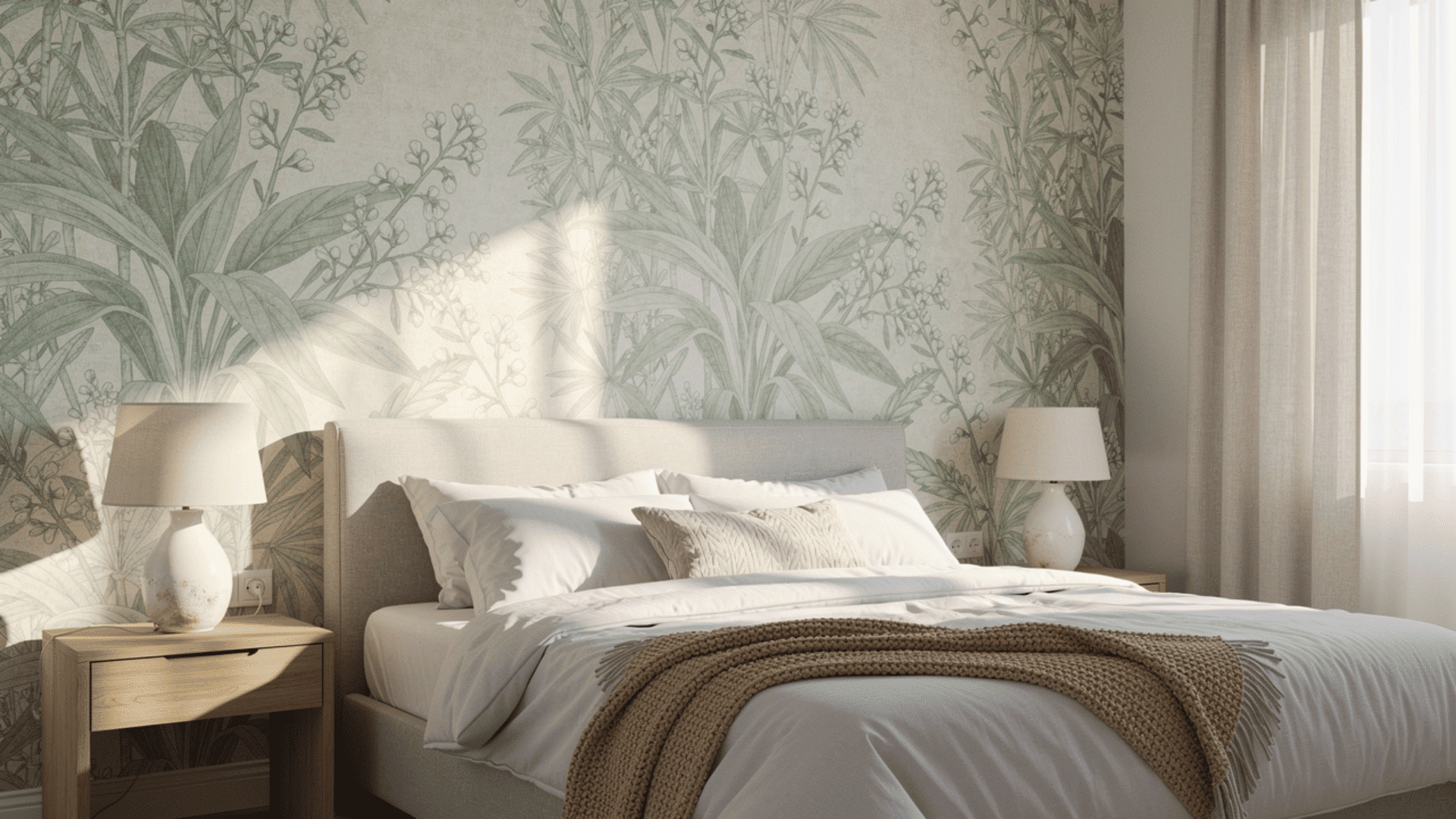
Botanical wallpaper is a simple way to introduce pattern and visual interest into a bedroom. Designs featuring leaves, branches, flowers, or tropical plants can add character without making the space feel cluttered.
This style pairs particularly well with wood furniture, natural fabrics, and neutral color palettes. By keeping the surrounding decor relatively simple, the wallpaper can become the feature that gives the room its personality and sense of style.
20. Textured Grasscloth Wallpaper Wall
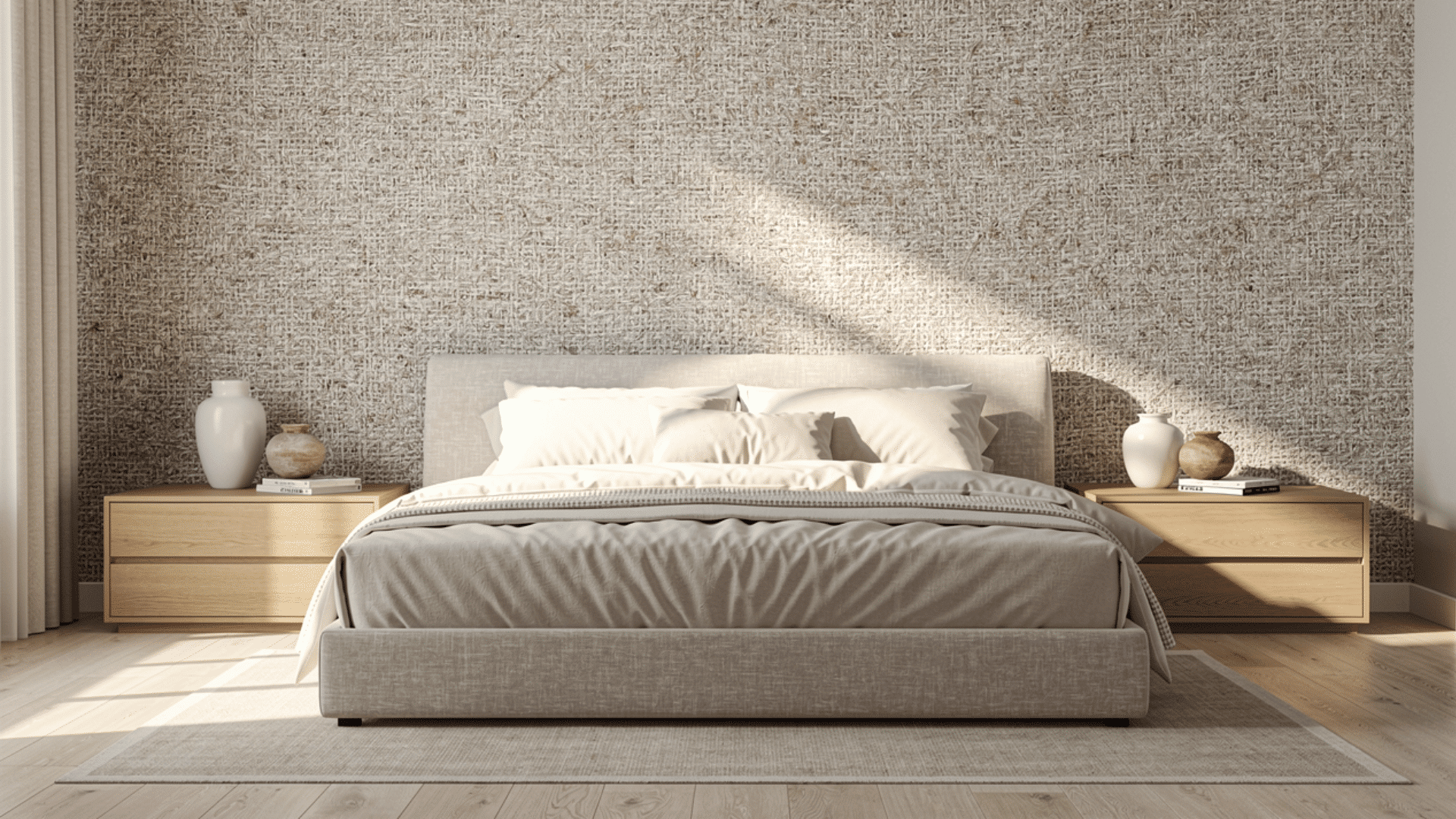
Grasscloth wallpaper creates depth through texture rather than color or bold patterns. The woven fibers catch light differently throughout the day, producing subtle variation across the wall surface.
It pairs especially well with linen bedding, natural wood furniture, and simple decorative accessories. The result is a layered look that feels thoughtful and inviting while remaining understated enough for a relaxing bedroom environment.
21. Chevron Wood Accent Wall
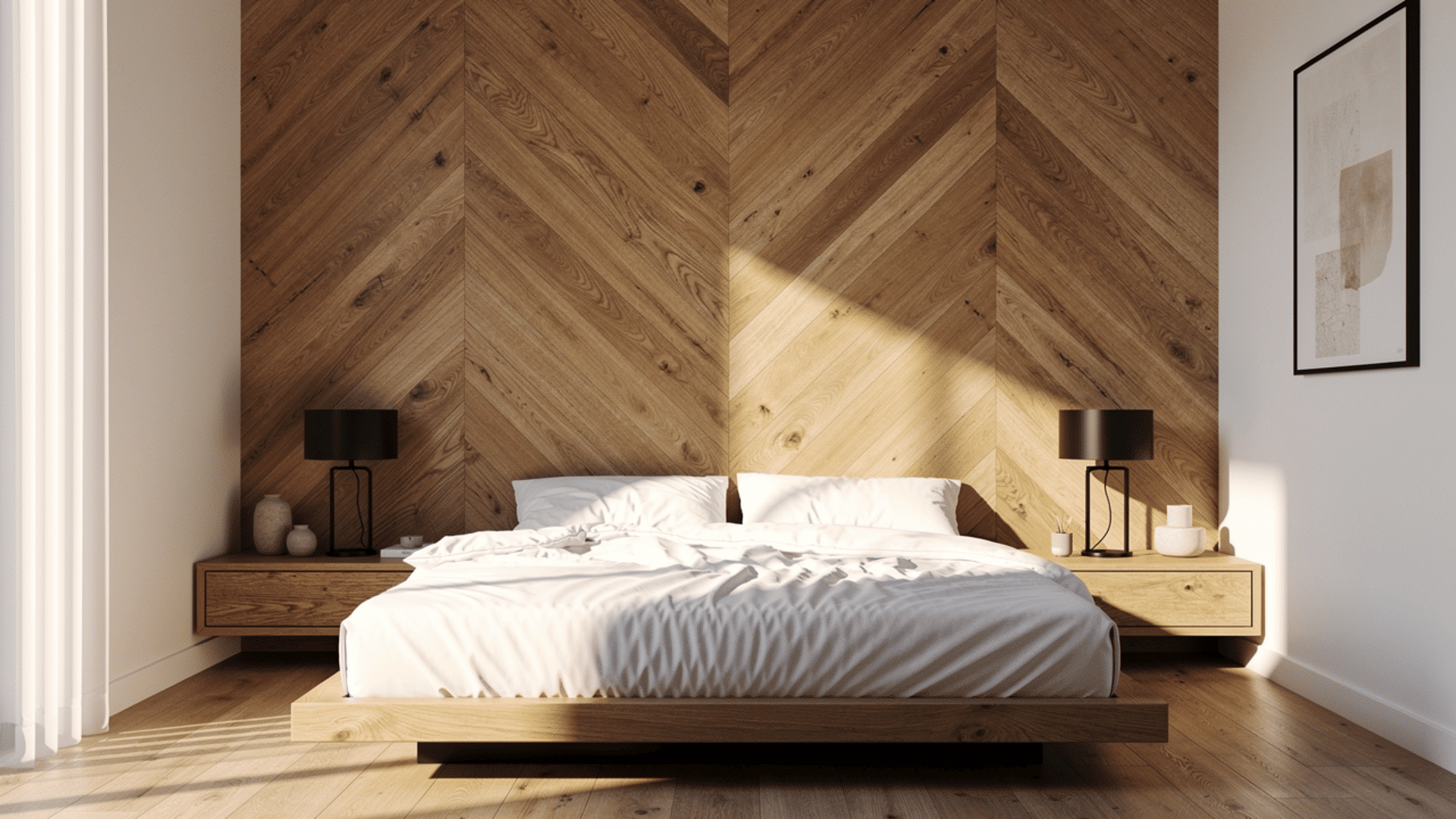
A chevron wood wall uses angled boards arranged in a repeating pattern to create movement and visual interest. This design immediately catches attention, which is why I typically recommend it for the wall behind the bed.
The pattern introduces detail without requiring additional artwork or decorative features. Natural wood finishes tend to work best because they allow the texture and craftsmanship to stand out.
If you’re looking for an accent wall that feels custom and distinctive, a chevron design can make a strong statement.
Choosing the Right Accent Wall for Your Bedroom
Not every wall in a bedroom deserves the spotlight. In most bedrooms, the right choice is almost always the wall directly behind the bed. It’s the first thing you see when you walk in, and it’s where the eye naturally lands.
That’s your accent wall.
If your room has an unusual layout or a large window on that wall, a side wall can work, but treat that as the exception rather than the rule.
Beyond position, match your chosen style to the room size. Busy patterns and bold contrasts work well in larger rooms. In smaller spaces, solid colors and soft textures do the job without closing the room in.
Final Thoughts
An accent wall doesn’t have to be complicated or expensive. Paint a bold color, hang some peel-and-stick wallpaper, nail up a few wood strips, or tape a geometric pattern.
Any one of these can completely change how your bedroom looks and feels.
You don’t have to do everything at once. Pick one idea that fits your budget and your skill level right now. Start small if you need to. Even a half-painted wall or a single fabric panel makes a real difference.
Your bedroom should feel like a place you actually want to be in. One wall is all it takes.
Now it’s your turn. Which idea are you trying first? Drop it in the comments below. I’d love to see what you come up with.
Frequently Asked Questions
Which Accent Wall Color Works Best for a Small Bedroom?
Stick to soft, solid colors like warm greige, dusty blue, or sage green. These add visual interest without making the room feel smaller.
Can I do an Accent Wall in a Rental Without Damaging the Wall?
Yes. Peel-and-stick wallpaper, removable wall decals, fabric hung from a dowel rod, and command-strip panels all work well in rentals.
Which Wall in a Bedroom Should be the Accent Wall?
The wall behind the bed is almost always the right choice. It’s the first thing you see when you walk into the room, and it naturally draws the eye.
Do I Need Any Special Skills or Tools to do this Myself?
Not for most of these projects. Paint techniques, peel-and-stick wallpaper, and temporary renter options need nothing more than basic supplies from a hardware store.