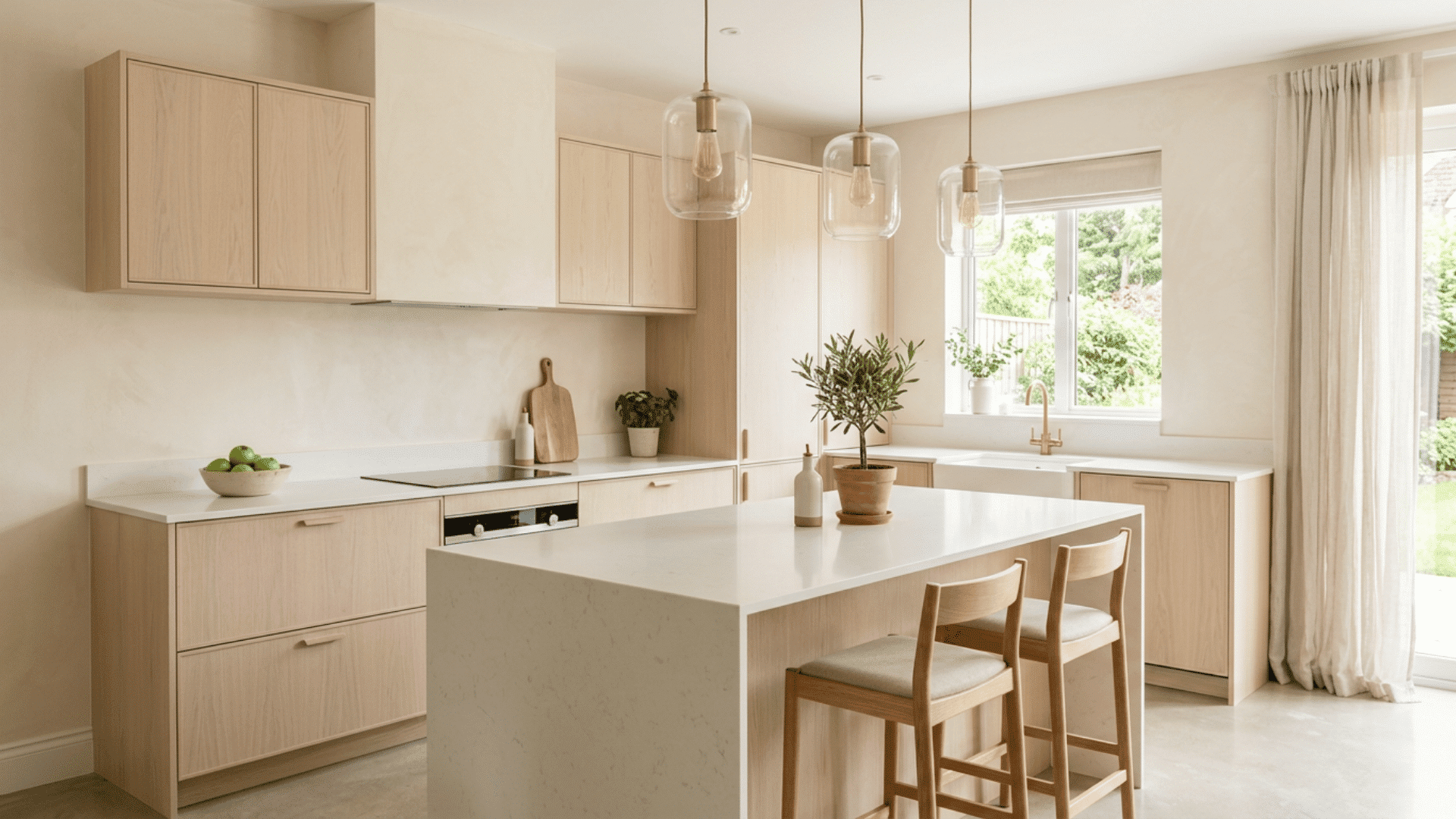
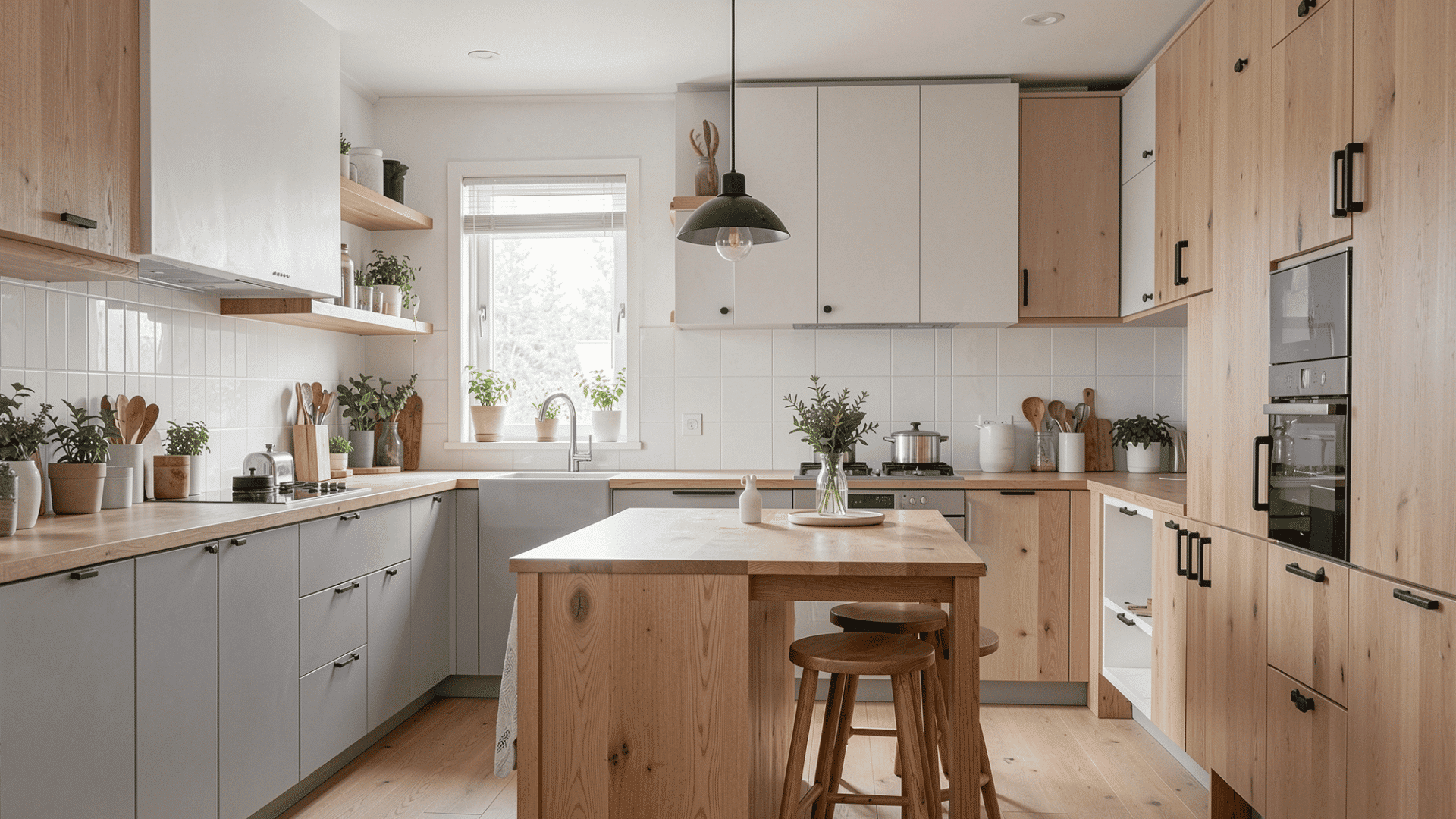
Have you ever walked into a kitchen and thought it just felt right? Clean, calm, bright, and easy to be in.
That is exactly what a Scandinavian kitchen feels like. This style comes from the Nordic countries and has become one of the most popular kitchen looks in the world.
I’ll walk you through the best ideas you can use right now and help you choose the right colors, materials, and layouts for your space.
You will also get costs, tips, and simple steps for each idea. If you are starting from scratch or just refreshing what you have, this guide has everything you need.
What Is a Scandinavian Kitchen?
Scandinavian Style is built around three simple ideas. Everything should look good, work well, and feel comfortable.
That is it. No extra clutter. No fancy decoration. Just clean, functional, beautiful spaces that make cooking and gathering feel easy.
The style comes from Sweden, Norway, Denmark, Finland, and Iceland. These countries have long, dark winters.
So their kitchens are designed to feel bright and warm even when the sun is not out.
Here are the key features of a Nordic kitchen style:
- White or light gray cabinets
- Natural wood surfaces and open shelves
- Lots of natural light
- Neutral colors with subtle accents
- Functional storage that hides clutter
- Cozy textiles and plants that bring life to the space
The result is a kitchen that feels calm, practical, and genuinely nice to spend time in every day.
Scandinavian Kitchen Ideas You Can Start Using Today
Here are scandi kitchen ideas that cover everything from cabinets and countertops to lighting, storage, and accessories.
1. Start with White or Light Gray Cabinets
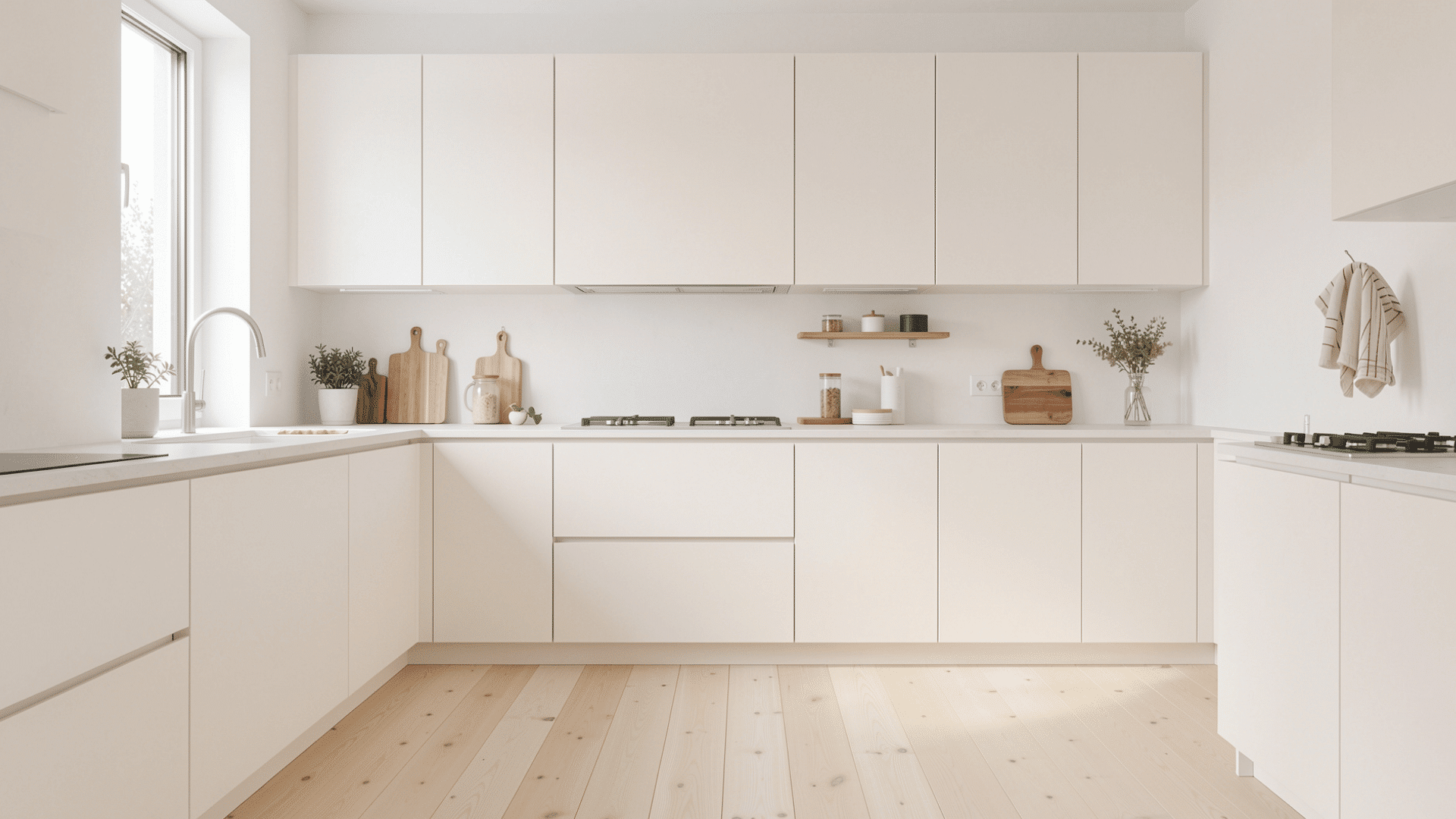
White or light gray cabinets are the foundation of every Scandinavian kitchen design.
These colors make the space feel bright, open, and clean without feeling cold.
How to do it: Paint cabinets in warm white or soft gray. Choose a matte finish instead of a glossy one. Keep doors flat and handleless for a sleek, modern look.
Avoid if: You prefer dark or bold cabinet colors or want ornate raised-panel doors.
Cost: $500–$3,000 for painting or replacing cabinet doors. Professional painting adds $800–$2,000.
Tip: Paint all cabinets the same warm white color. Flat, handleless doors look more modern and more Scandi than traditional raised panels
2. Use Light Wood for Open Shelving
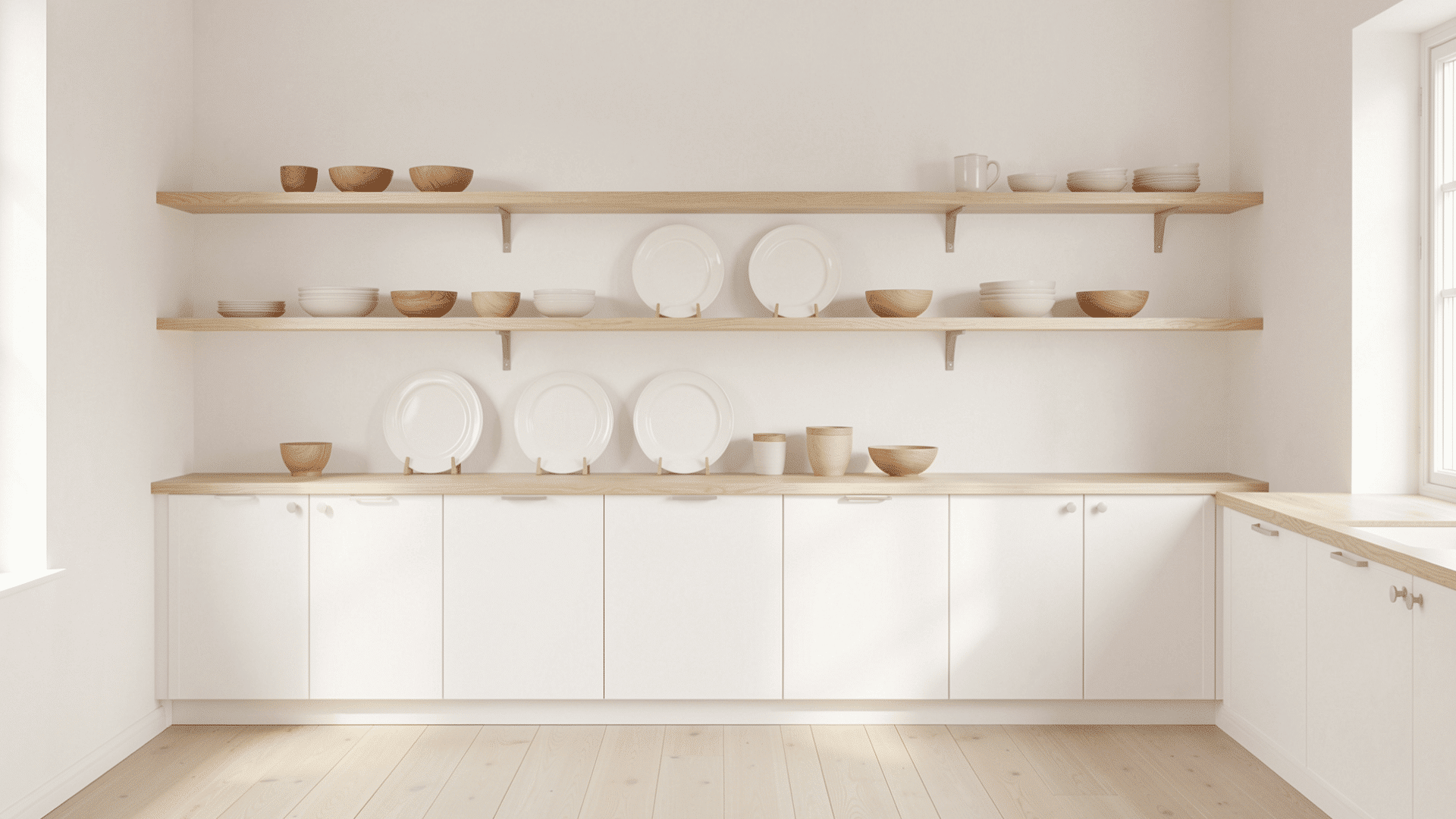
Open shelves in light wood like birch or oak add warmth and make the kitchen feel airy.
They show off your nicest dishes and accessories without closing off the space.
How to do it: Install floating shelves in light oak or birch. Keep shelves thirty to thirty-six inches apart. Display only attractive items like white plates or wooden bowls.
Avoid if: You have too many dishes or prefer closed storage to hide clutter.
Cost: $150–$600 for three to four shelves. Custom wood shelves cost more.
Tip: Place only five to seven items per shelf. Too many items look messy and ruin the minimal Scandi look.
3. Choose Wooden Worktops for Warmth
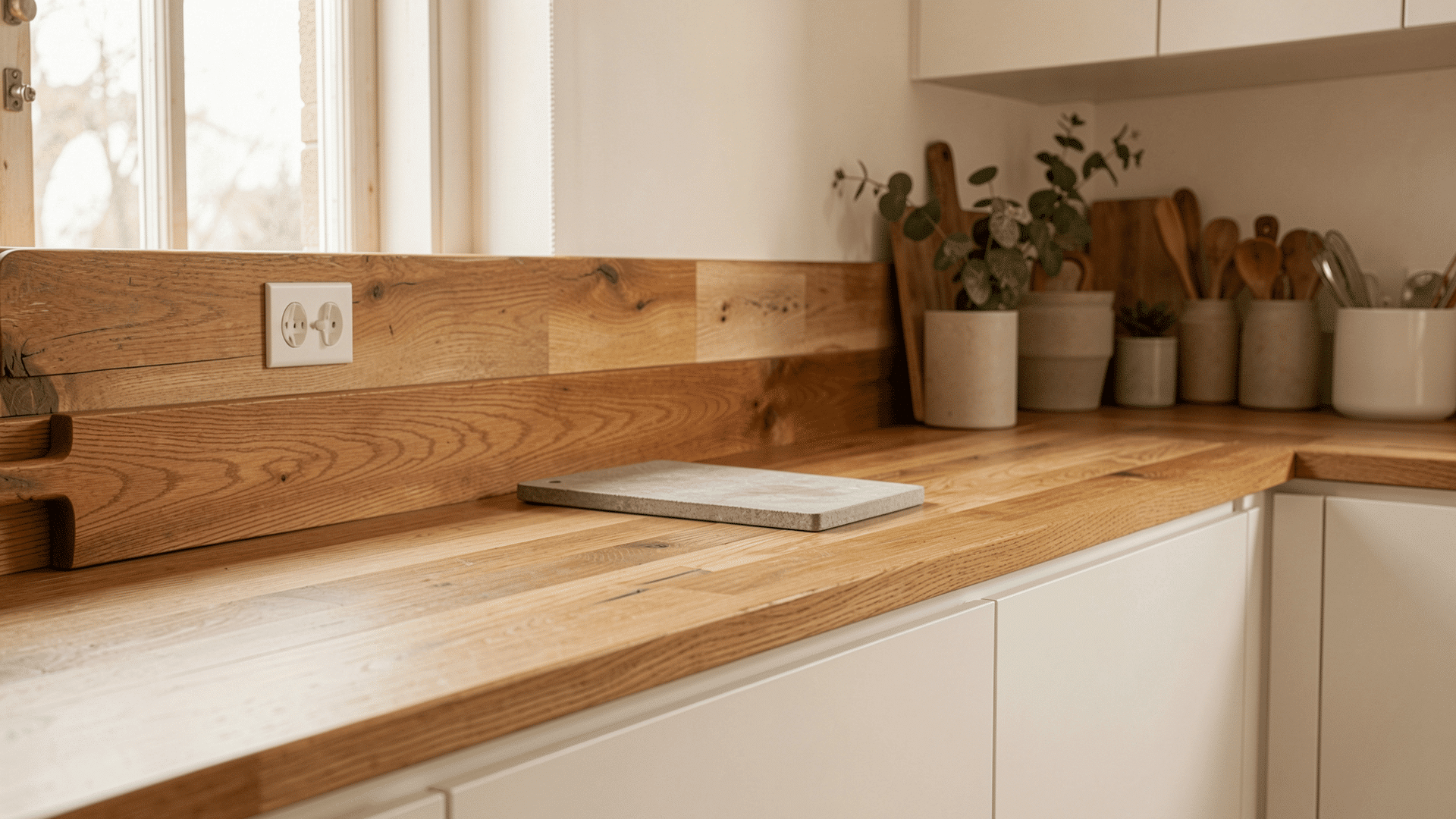
Wooden countertops add natural warmth and texture to a Scandinavian kitchen.
They feel cozy and work beautifully with white cabinets and open shelving.
How to do it: Select solid wood or high-quality laminate that looks like wood. Oak or beech works best. Seal wood yearly to protect from water damage.
Avoid if: You cook heavily with hot pans or want zero-maintenance surfaces.
Cost: $800–$2,500 for wood countertops. Butcher block is cheaper at $400–$1,200.
One tip: Use wood for the main counter but keep a stone cutting board separate to protect the surface from knife marks.
4. Install Built-In Appliances
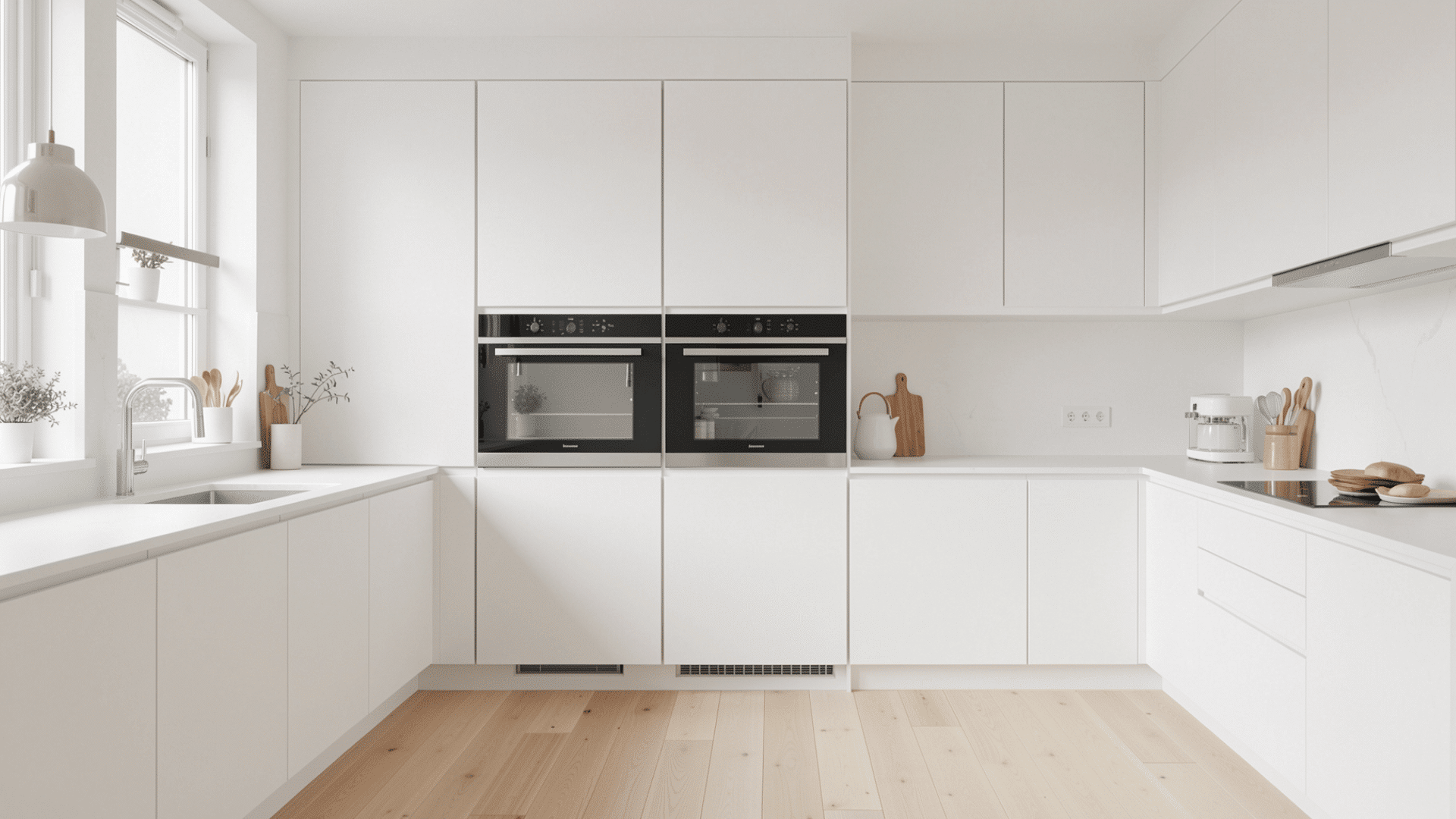
My friend has this in his house, and when I saw it, I was amazed. It looked so beautiful. Built-in appliances hide behind cabinet doors and keep countertops clean and uncluttered.
This creates the sleek, minimal look that defines minimalist kitchen design.
How to do it: Choose appliances that fit behind cabinet panels. Install oven, dishwasher, and fridge under counters or hide them behind matching cabinet doors.
Avoid if: You have a small budget or rent your space. Built-in appliances cost more and require professional installation.
Cost: $2,000–$8,000 for built-in appliances. Custom panels add $500–$1,500.
Tip: Start with hiding the dishwasher first. It is the most visible appliance and makes the biggest visual difference right away.
5. Add Contrast with Dark Flooring
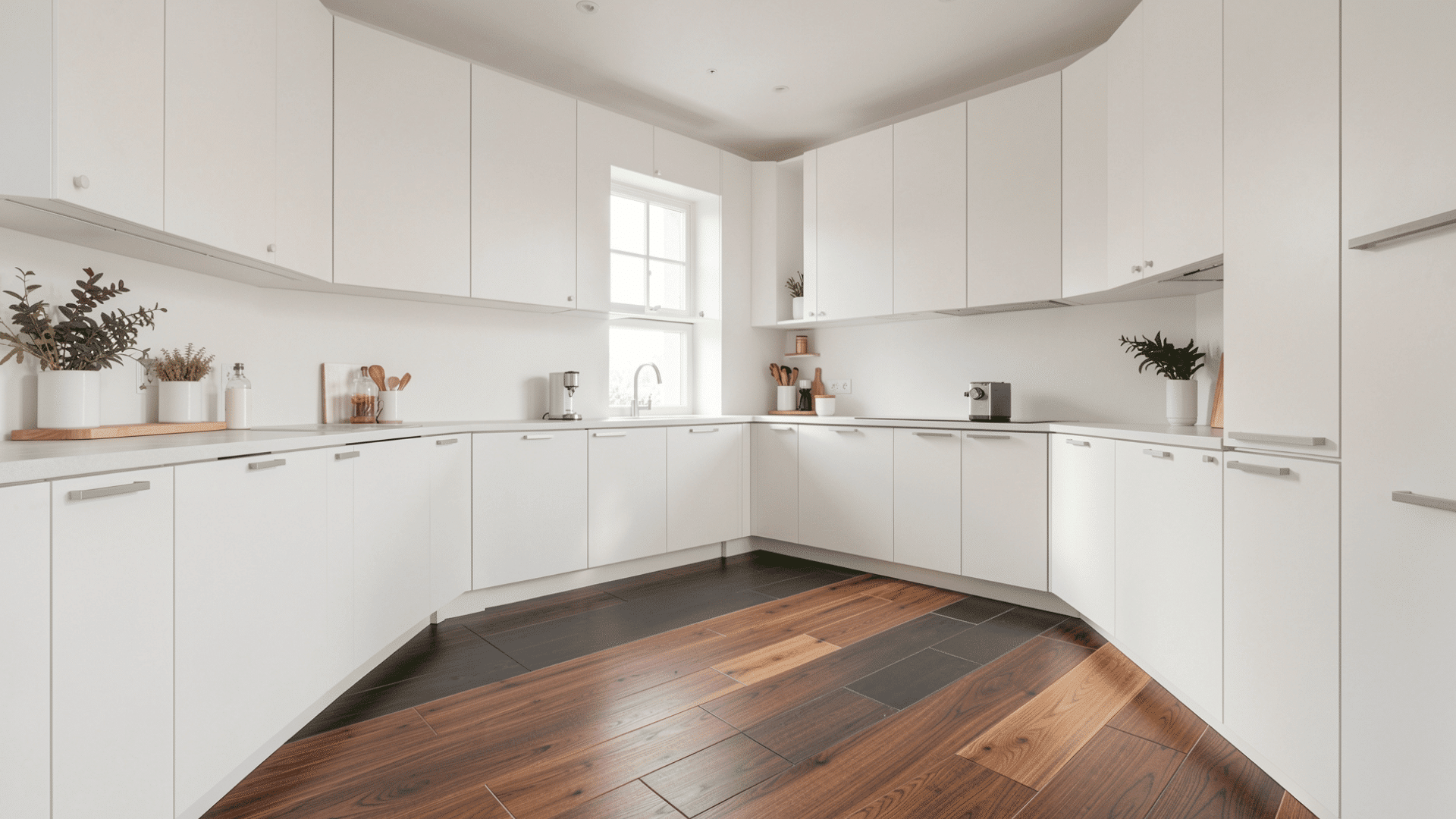
Light kitchens need dark flooring for contrast. Without it, the space can feel washed out and flat. Dark floors add depth and ground the whole room.
How to do it: Choose light oak wood floors or monochrome tiles. Dark gray or black tiles work well. Make sure floors are matte, not glossy.
Avoid if: You have a very small kitchen. Dark floors can make tiny spaces feel even smaller.
Cost: $1,500–$6,000 for flooring. Vinyl planks are cheaper at $800–$2,000.
Tip: Warm-toned wood floors like honey oak work better than cool-toned dark wood for Scandinavian style.
6. Use Geometric Patterns on Splashbacks
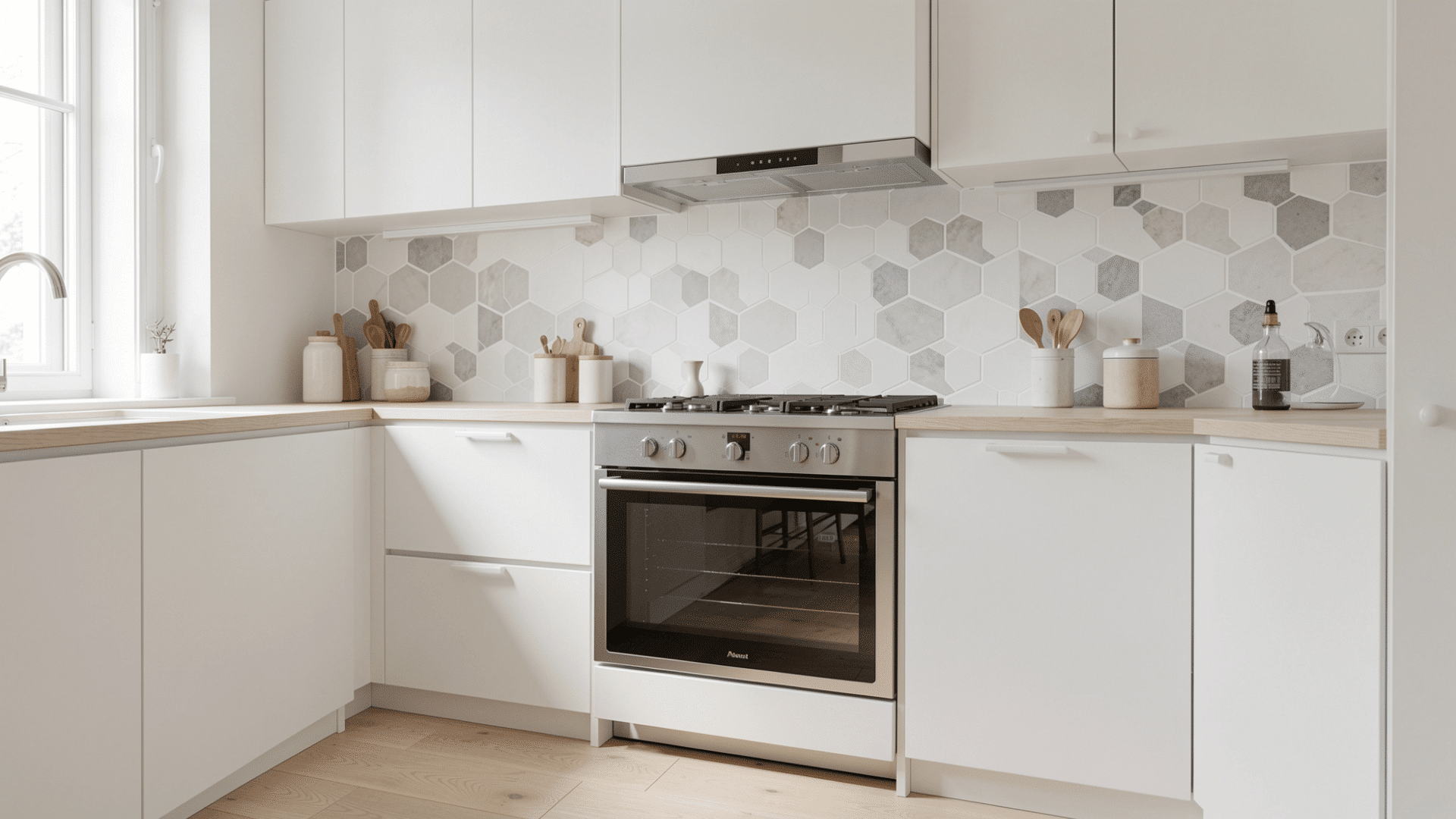
A bold geometric splashback adds modern interest without overwhelming the space. Think hexagonal tiles or simple repeating patterns in neutral tones.
How to do it: Install a tile splashback in a geometric pattern behind the stove. Use white grout with gray tiles or the other way around. Keep the pattern simple, not busy.
Avoid if: You want everywhere to be solid color or dislike all patterns.
Cost: $400–$1,500 for tile splashback. DIY installation is cheaper.
Tip: Use geometric tiles only behind the stove. Extending them across the whole kitchen can feel too busy and cluttered.
7. Hang Large Pendant Lights Over the Island
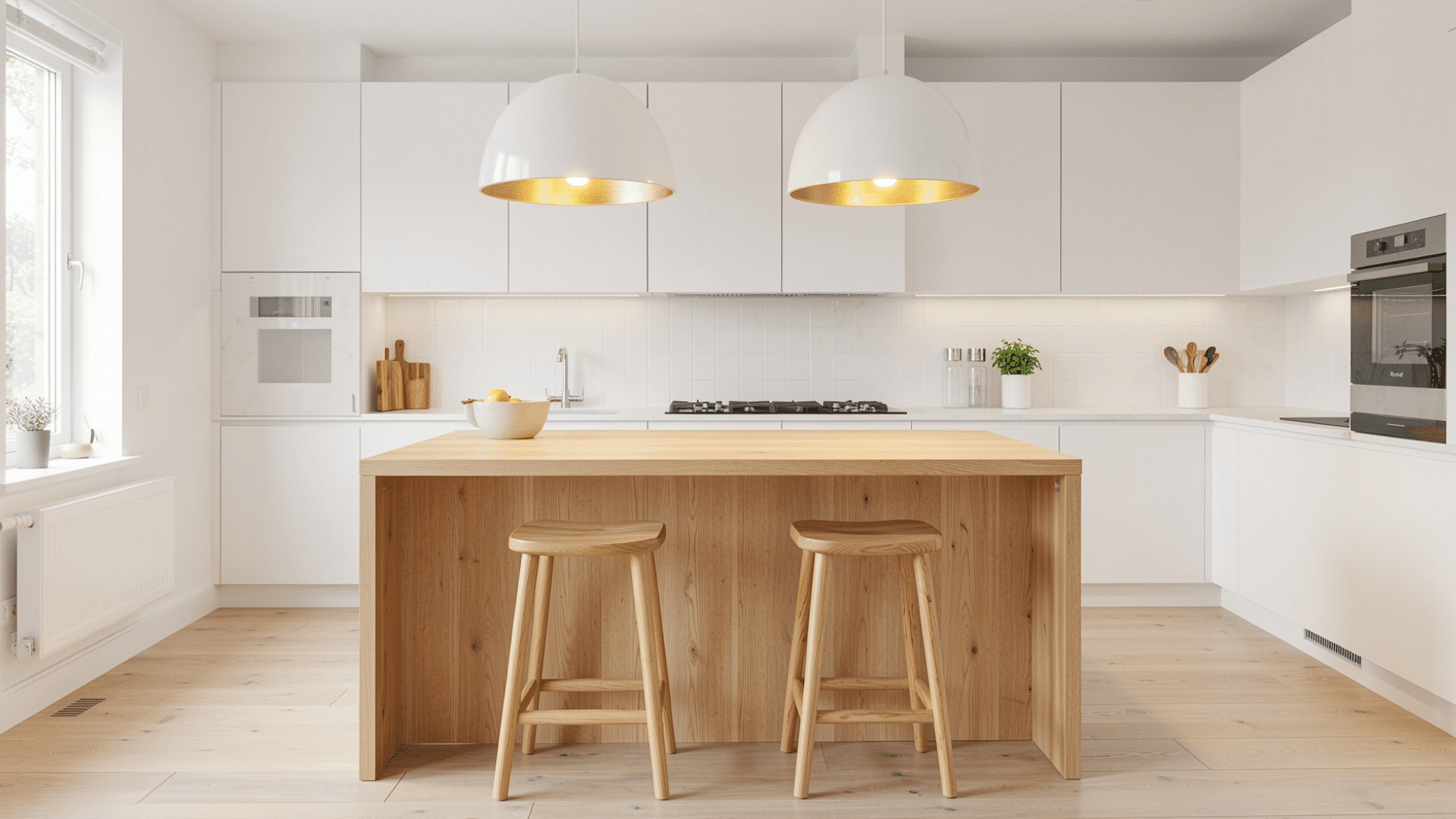
Statement pendant lights create a focal point and add warmth to any scandi kitchen ideas layout.
Large domed pendants in white or brass work best over an island or dining table.
How to do it: Hang one large pendant or two smaller ones over the island. Position lights thirty to thirty-six inches above the counter. Choose white, brass, or matte black finishes.
Avoid if: You have low ceilings. Large pendants need height to work well.
Cost: $150–$600 per pendant light. Electrical work adds $200–$500.
Tip: Pendants should be one-third the width of your island for proper proportion. Measure before you buy.
8. Add Monochrome Accents with Black Fixtures
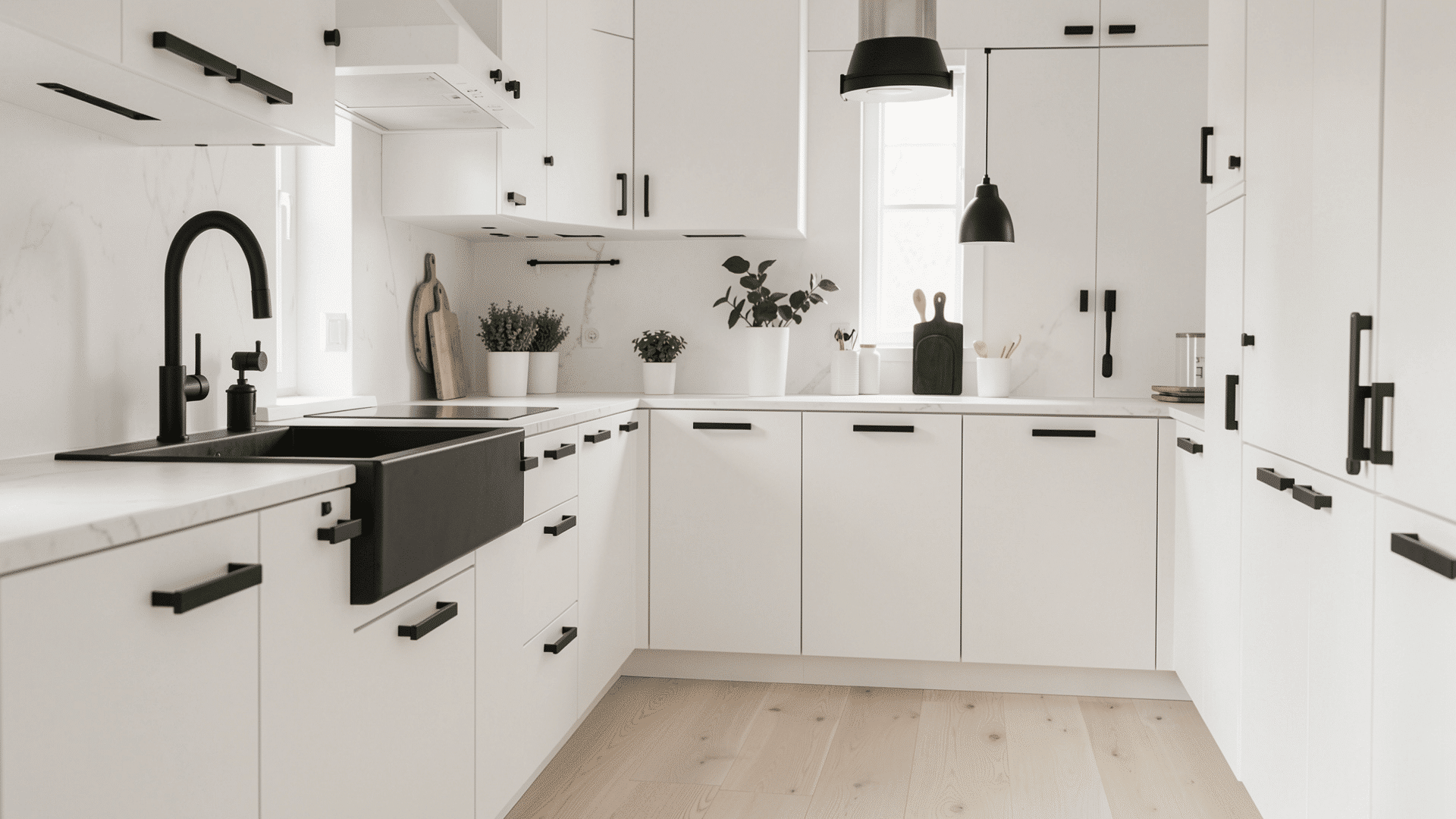
Black sinks, taps, and fixtures create a sharp contrast against white cabinets. This modern touch is very much part of the Nordic kitchen style and looks great in 2026.
How to do it: Replace chrome fixtures with matte black ones. Choose a black faucet, sink, and cabinet handles. Keep all metal finishes the same color throughout.
Avoid if: You prefer all-light or warm-toned fixtures throughout your space.
Cost: $200–$800 for black fixtures. A faucet alone runs $100–$400.
Tip: Match all metal finishes. Do not mix black, brass, and chrome. Pick one finish and stick with it everywhere.
9. Install Smart Storage Organizers
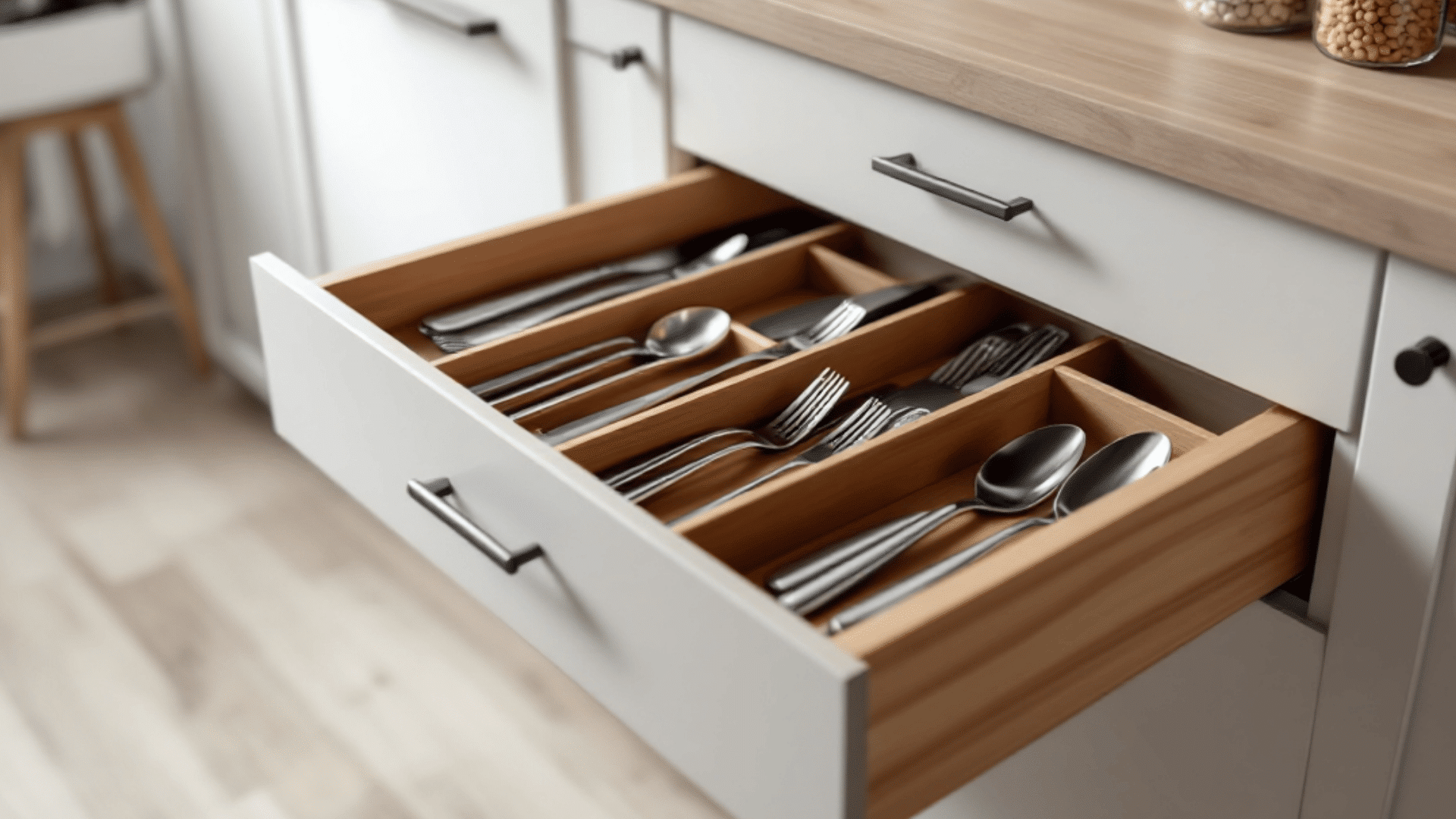
Scandinavian kitchens value function just as much as looks. Drawer organizers, cutlery trays, and pull-out shelves keep everything tidy and easy to reach.
How to do it: Add drawer dividers for utensils. Install pull-out shelves in deep cabinets. Use clear containers for dry goods and keep everything labeled.
Avoid if: You rarely cook or do not mind a little clutter in your space.
Cost: $100–$500 for organizers. Custom pull-outs cost $500–$1,500.
Tip: Start with one drawer. Organize your utensil drawer first, then add organizers to other drawers slowly over time.
10. Add Soft Textiles for a Hygge Kitchen Feel
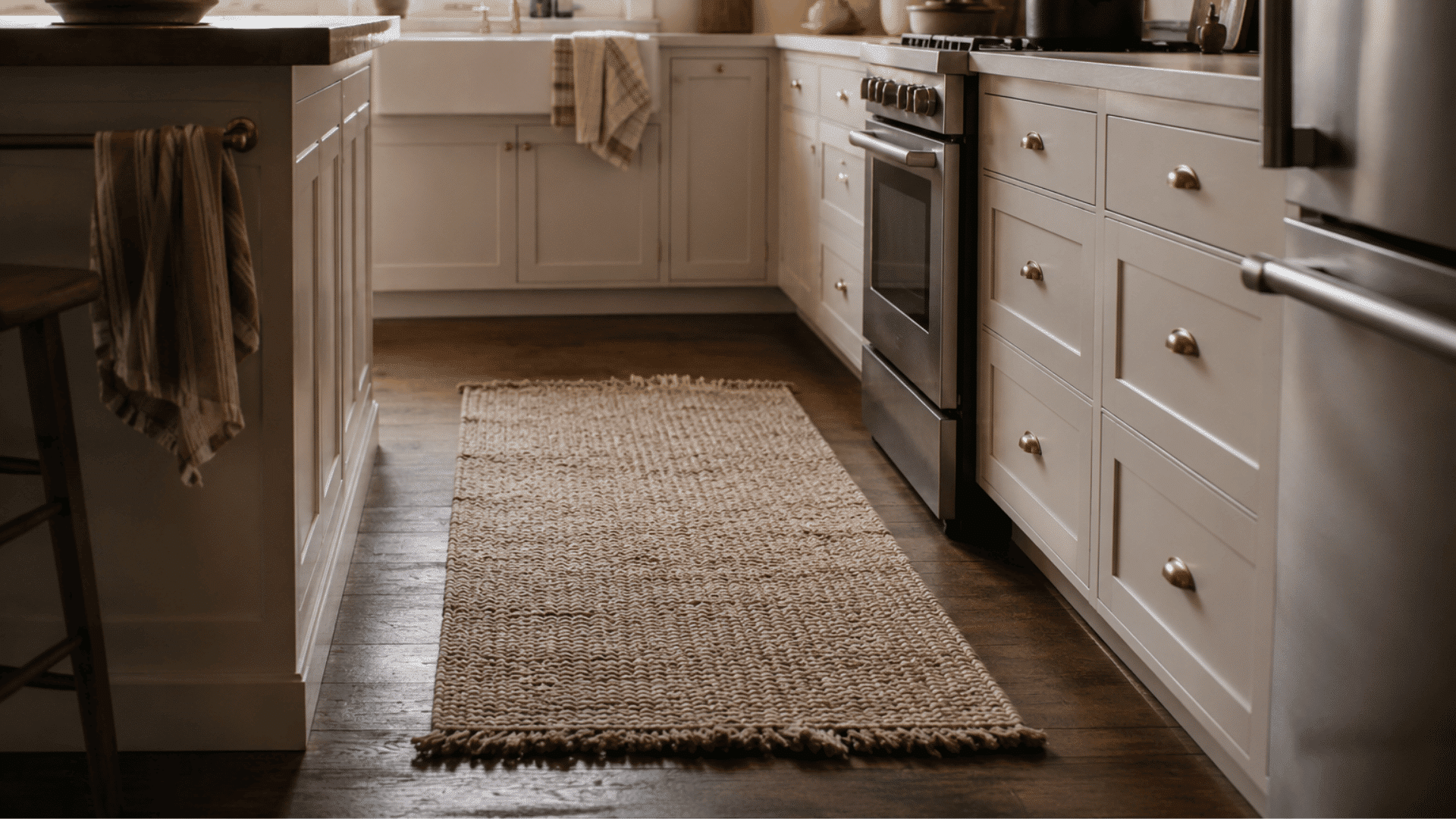
Rugs and cushions add softness and warmth to any kitchen. A rug under the dining table or cushions on chairs can turn a cold space into a hygge kitchen that feels genuinely inviting.
How to do it: Place a flatweave rug under the dining table. Add linen or wool cushions to chairs. Choose neutral colors like beige, gray, or white.
Avoid if: You have a very small kitchen. Rugs can make tight spaces feel crowded.
Cost: $100–$400 for a rug. Cushions are $20–$60 each.
Tip: Choose a rug that is easy to vacuum. Flatweave or low-pile rugs work better than thick shag rugs in a kitchen.
11. Bring in Greenery with Potted Herbs
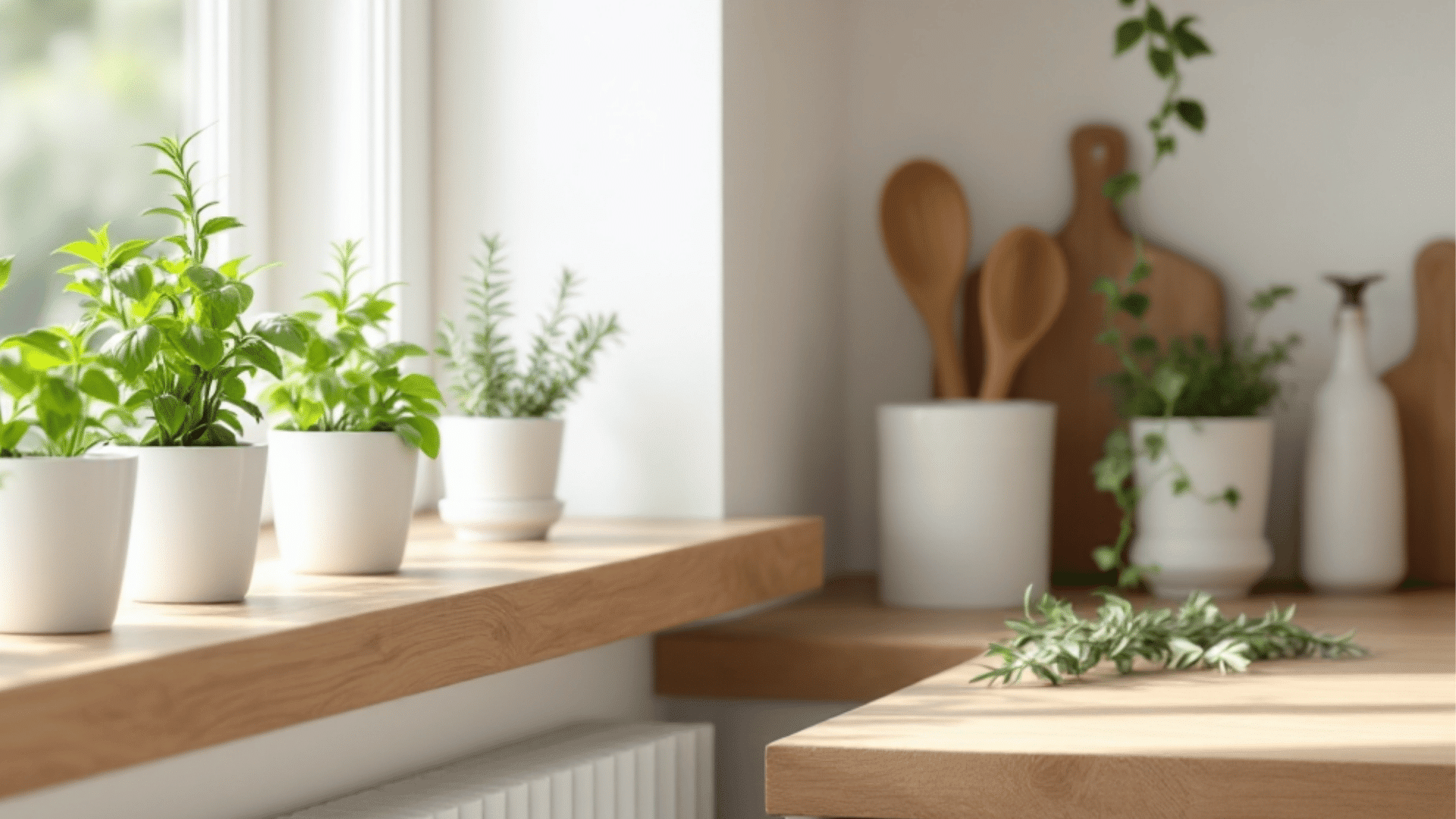
Plants add life and freshness to any Scandinavian kitchen. Potted herbs on the windowsill or trailing ivy on shelves bring nature inside and complement the whole natural theme.
How to do it: Place small herb pots on the windowsill. Try basil, mint, or rosemary. Add trailing ivy or a fiddle-leaf fig in the corner. Use simple white or terracotta pots.
Avoid if: You have no time to water plants or get very little sunlight in your kitchen.
Cost: $30–$150 for plants and pots. Herbs are $5–$10 each.
Tip: Start with succulents or snake plants. They need very little water and look great in simple white pots on any shelf.
12. Use Metallic Finishes Sparingly
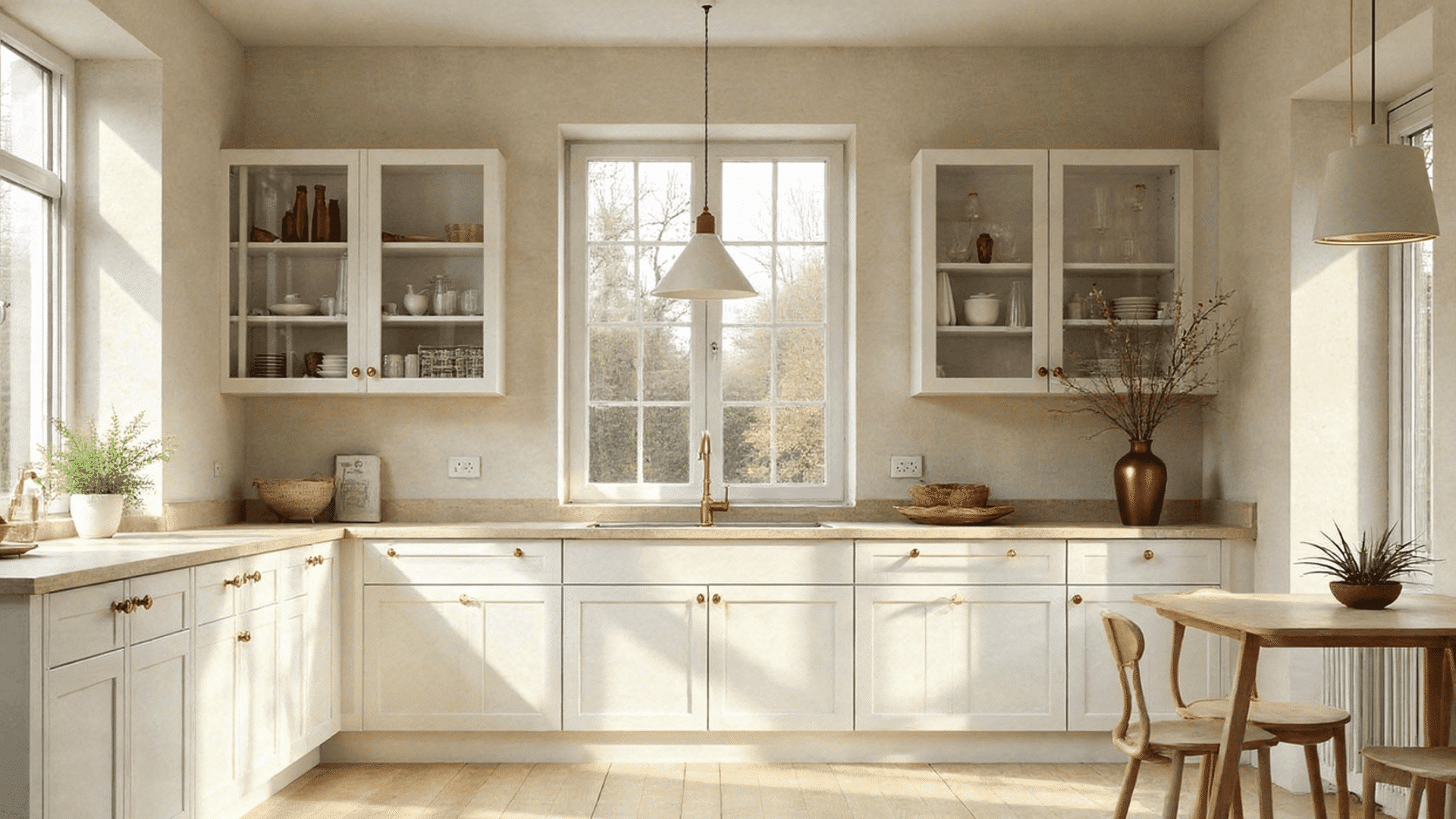
Brass, copper, or bronze accents add subtle warmth and character. The key is to use them in small doses on fixtures, hardware, or accessories rather than everywhere at once.
How to do it: Choose one metal finish like brushed brass. Use it on your faucet, cabinet handles, or pendant light. Keep all other metals the same color.
Avoid if: You prefer all-matte or all-black finishes throughout your kitchen.
Cost: $100–$600 for metallic fixtures. Cabinet handles are $5–$20 each.
Tip: Brushed brass is warmer than polished gold. It fits Scandinavian style better and shows far fewer fingerprints.
13. Choose Neutral Accessories
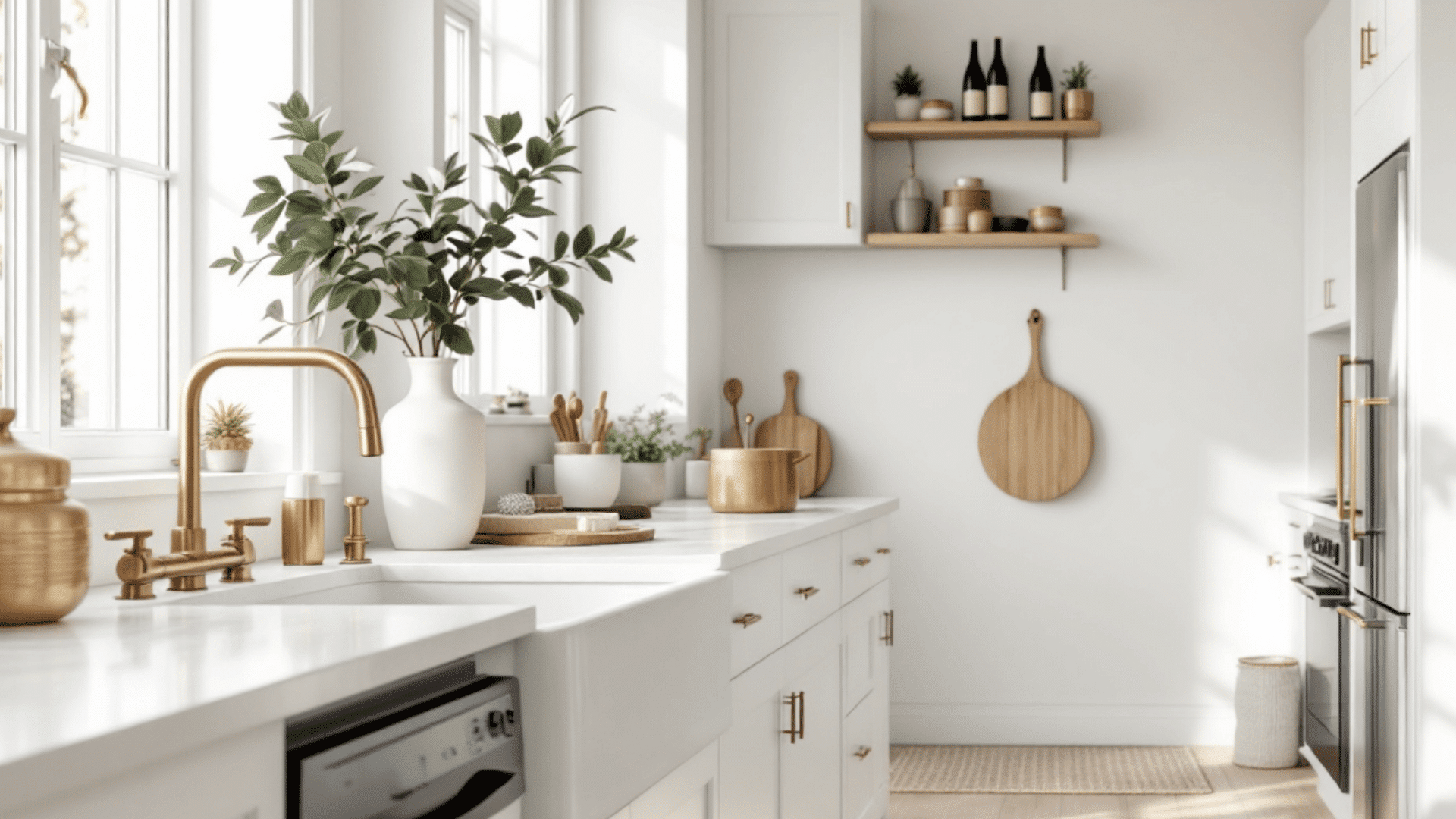
Ceramic bowls, wooden utensils, and handmade pieces add character without creating clutter. Sticking to neutral colors like white, beige, or gray keeps the space calm and collected.
How to do it: Display a few ceramic bowls on open shelves. Use wooden spoons and cutting boards. Keep accessories minimal and make sure every piece is functional.
Avoid if: You love colorful patterns or collect many kitchen items and want to display them all.
Cost: $50–$300 for accessories. Wooden utensils are $10–$30 each.
Tip: Buy handmade pieces from local artisans. They add far more character than mass-produced items from big box stores.
14. Maximize Natural Light
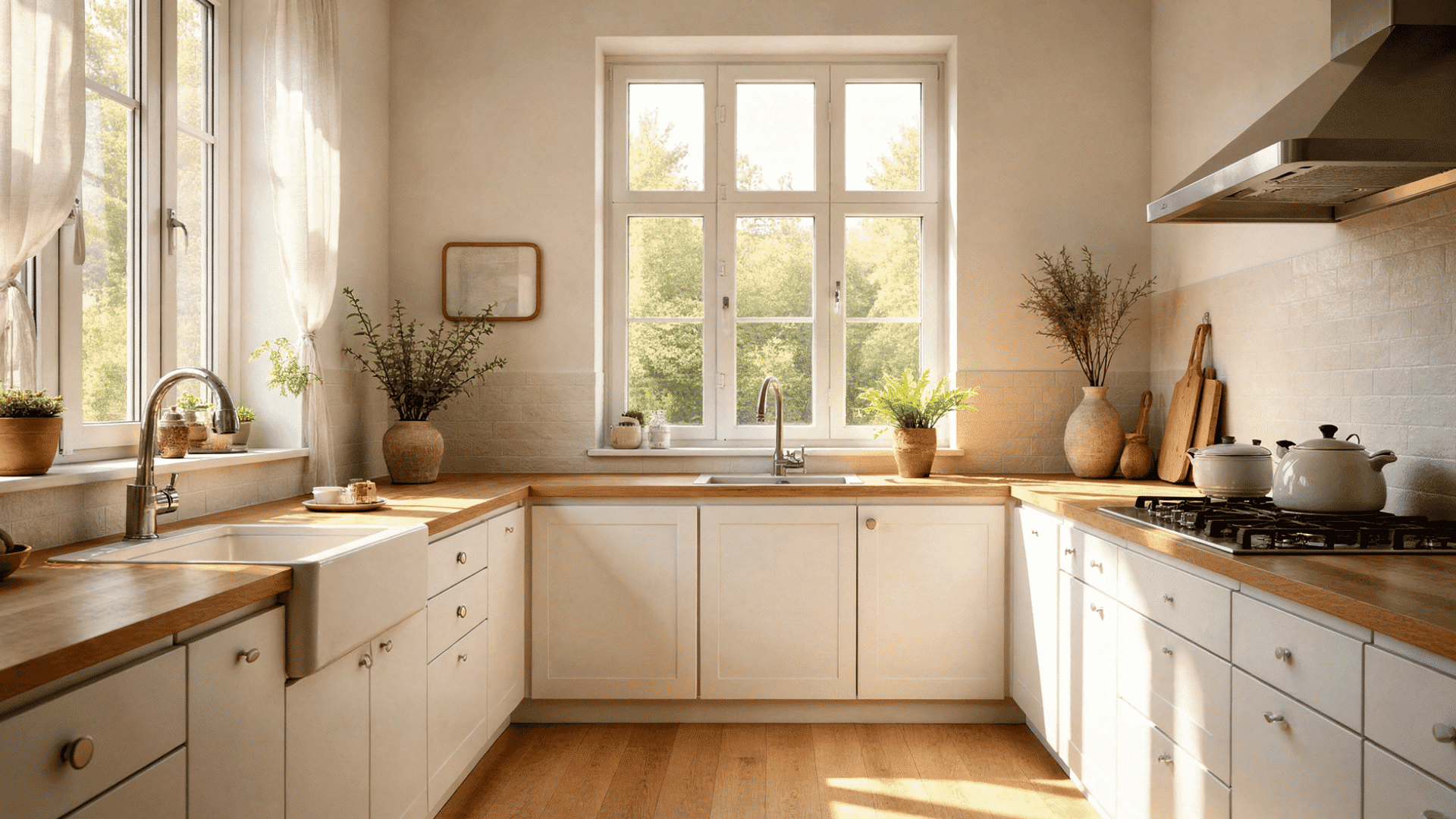
A Scandinavian kitchen design needs lots of daylight to feel right. Sheer curtains, clean windows, and mirrors all help bounce light around the room and keep the space bright.
How to do it: Replace heavy drapes with sheer white curtains. Keep windows unobstructed at all times. Add a mirror on a wall opposite the window to reflect light back into the room.
Avoid if: You need total privacy or live in a very hot climate where blocking sunlight is necessary.
Cost: $100–$400 for curtains. Mirrors are $50–$200.
Tip: White sheer curtains work best. They soften daylight without blocking it and make the whole room glow in the morning.
15. Create a Clean Countertop Policy
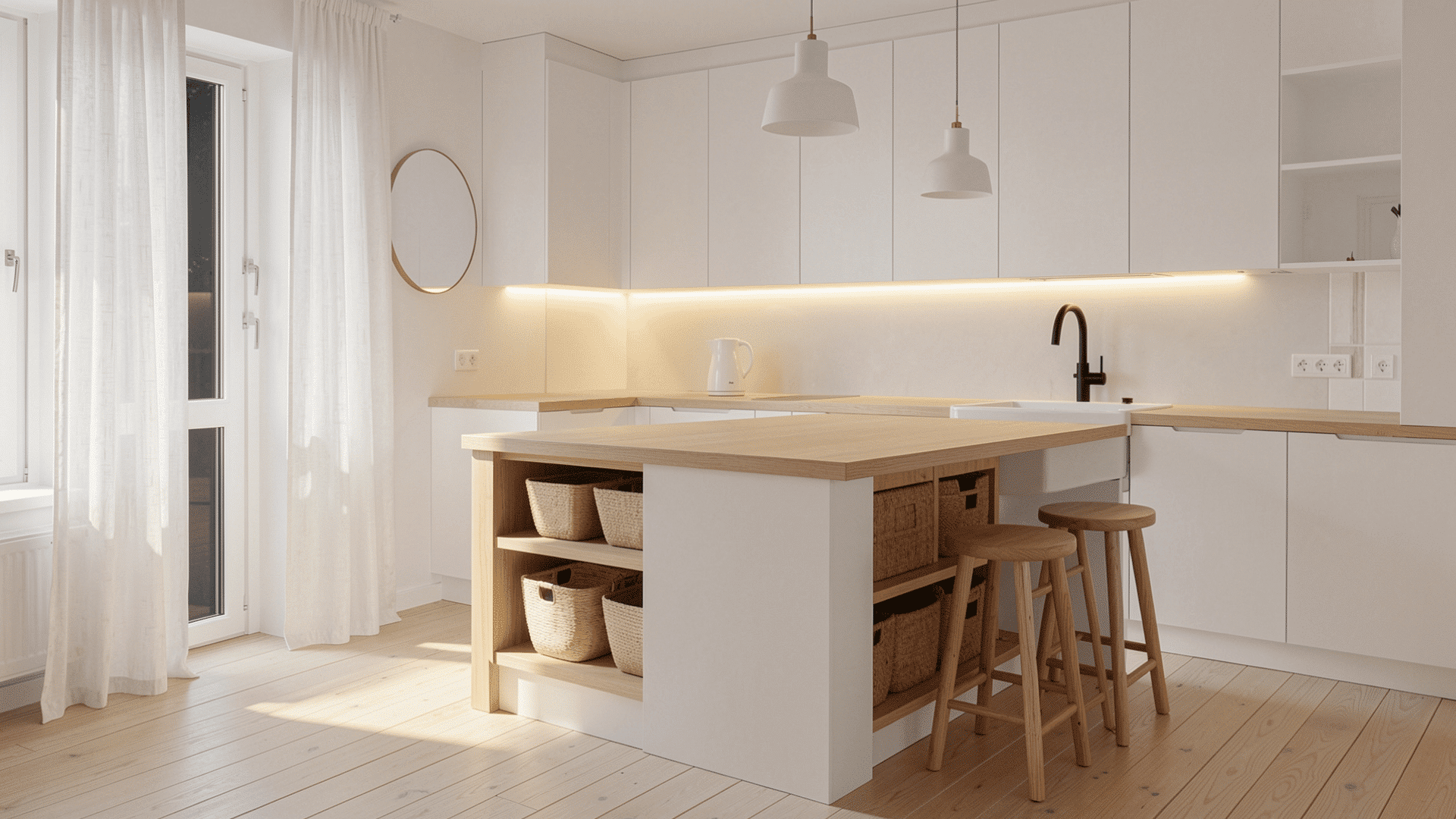
Keeping countertops clear of clutter is one of the most important habits in any Scandi kitchen. Only display items you use every single day, and store everything else inside cabinets.
How to do it: Clear countertops every night before bed. Keep only a coffee maker or kettle out. Put away bread boxes, fruit bowls, and extra appliances.
Avoid if: You cook with many tools out at once or find it hard to put things away after use.
Cost: $0 for the habit change. Storage bins are $50–$150.
Tip: Put away one item you think you need on the counter. If you do not miss it after a week, donate it or store it away for good.
16. Use Handleless Cabinet Doors
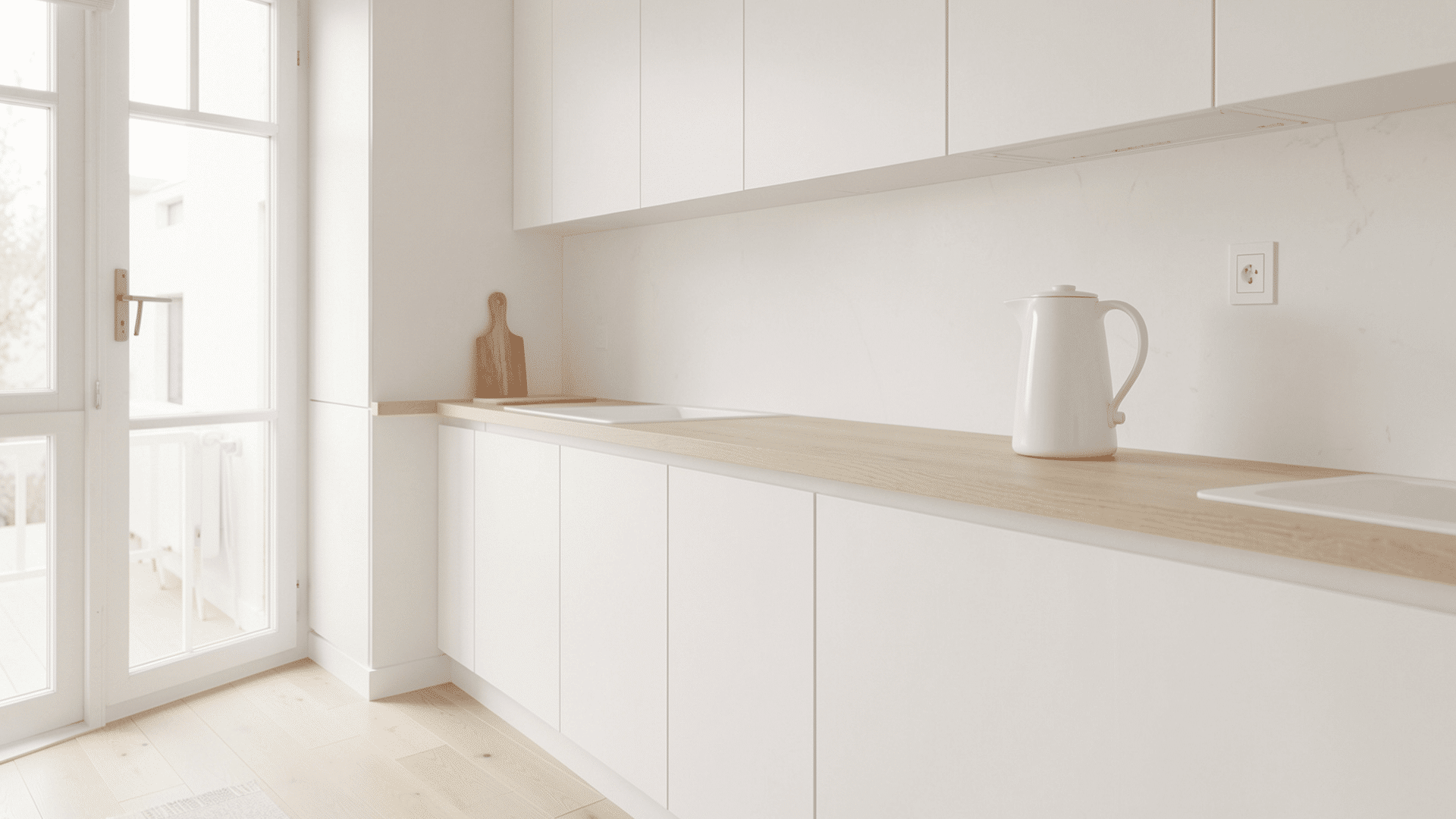
Handleless cabinets create clean, uninterrupted lines across your kitchen. Push-to-open mechanisms or integrated finger pulls keep surfaces smooth and very Scandi.
How to do it: Replace cabinet doors with push-to-open style. Install integrated finger pulls along the bottom edge. Or use magnetic catches for a fully hidden opening system.
Avoid if: You have young children who might accidentally open cabinets throughout the day.
Cost: $300–$1,500 for push-to-open hardware. New doors run $500–$2,000.
Tip: Push-to-open works best with soft-close hinges. Without soft-close, doors slam and feel cheap and low quality.
17. Choose Matte Over Glossy Finishes
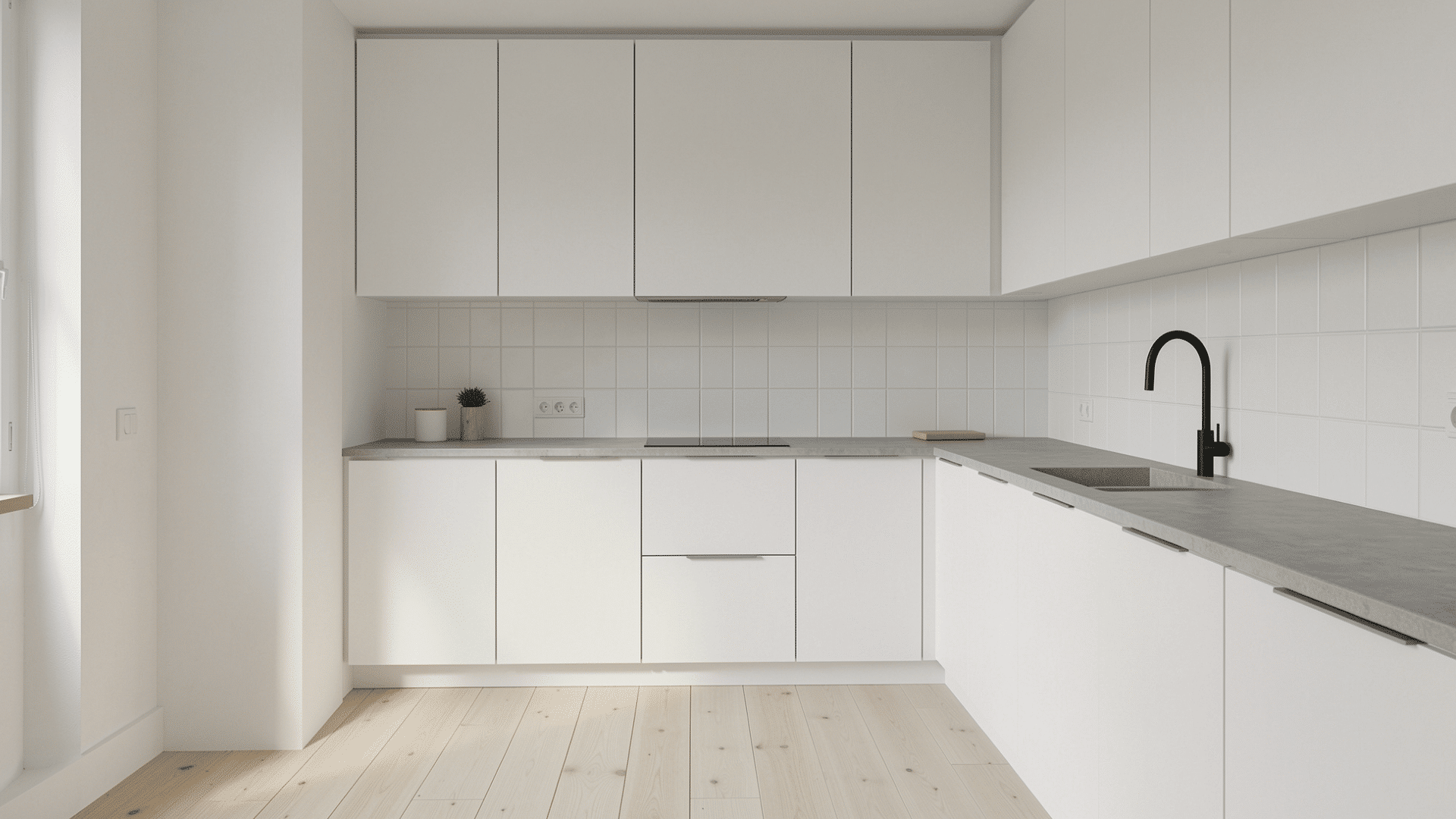
Matte finishes look more modern and hide fingerprints far better than glossy ones. Glossy surfaces show every smudge and feel less true to the Scandinavian spirit.
How to do it: Paint cabinets in a matte or satin finish. Choose matte countertops and backsplash tiles. Avoid shiny chrome fixtures throughout the space.
Avoid if: You prefer super-shiny, high-gloss surfaces and do not mind regular cleaning.
Cost: Same price as glossy paint. Matte paint runs $30–$60 per gallon.
Tip: Semi-matte is the sweet spot. It has a slight sheen but does not show fingerprints the way high gloss does.
18. Add a Farmhouse Sink in White or Black
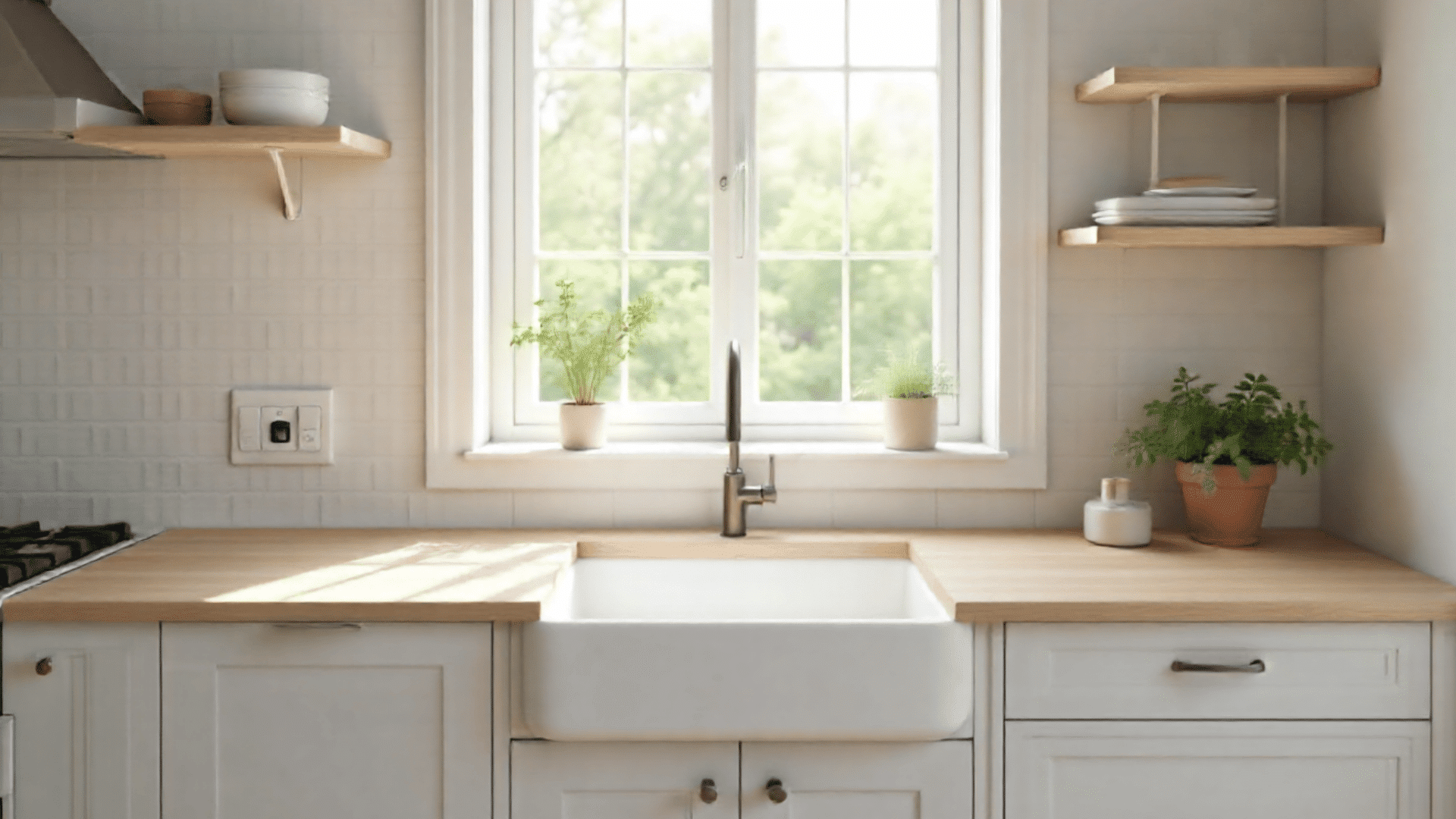
A farmhouse sink adds character while staying highly functional. White fireclay or matte black works best and fits perfectly into any Nordic kitchen style setup.
How to do it: Install an apron-front sink in white fireclay or matte black stainless steel. Choose a size thirty to thirty-three inches wide. Make sure your cabinet base fits the sink dimensions before ordering.
Avoid if: You have very small base cabinets. Farmhouse sinks need deeper cabinet bases to fit properly.
Cost: $400–$1,200 for the sink. Installation adds $300–$600.
Tip: White fireclay is classic Scandi. A black farmhouse sink is more modern. Both work well depending on your overall color scheme.
19. Install Under-Cabinet Lighting
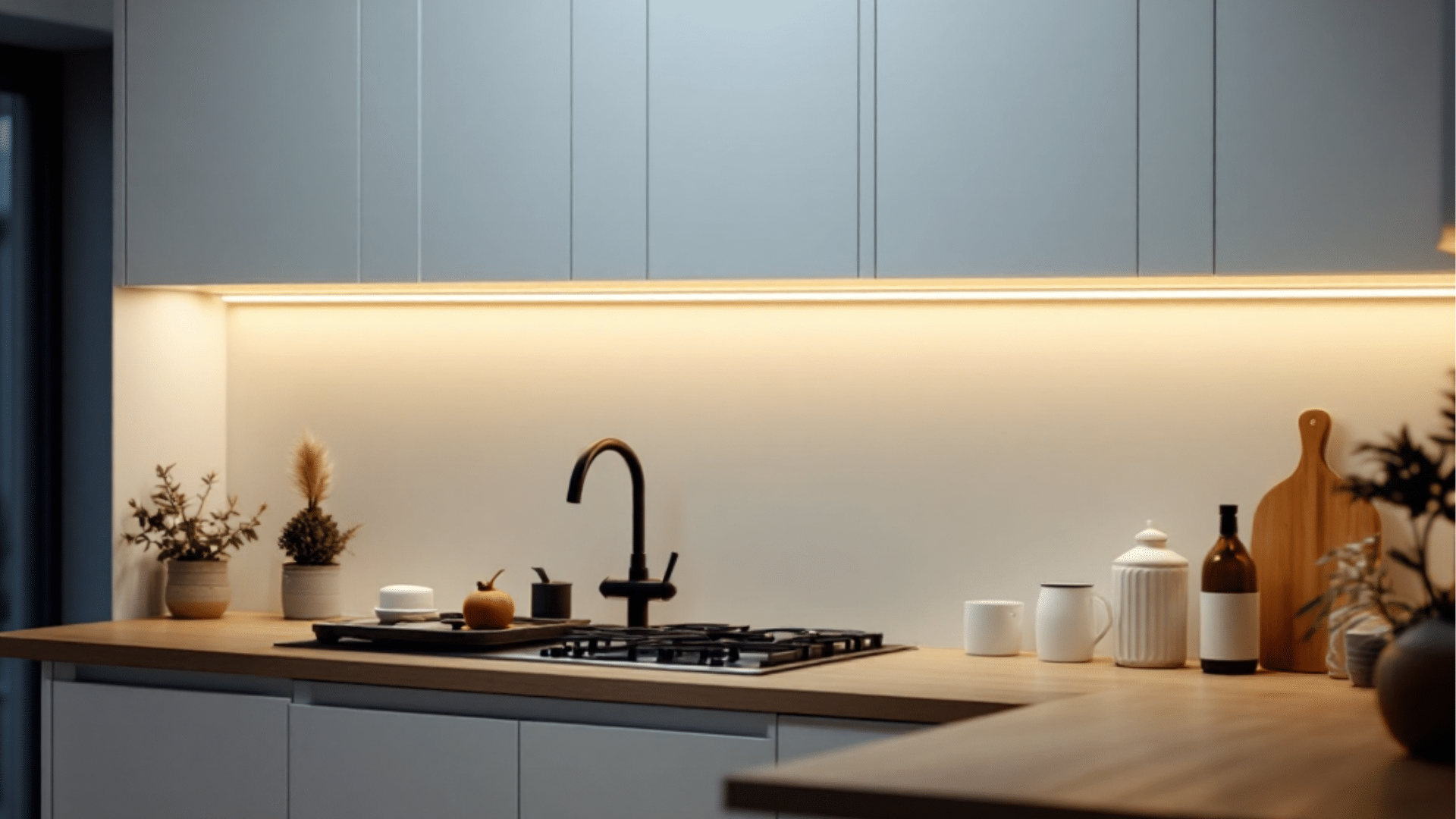
LED strip lights under cabinets brighten work areas and add a warm glow in the evening. They make the kitchen feel cozy and well-lit without harsh overhead lighting.
How to do it: Install LED strip lights under upper cabinets. Choose warm white at 2,700 to 3,000 kelvin. Use a plug-in or hardwired system and add a dimmer switch for control.
Avoid if: You have very low ceilings where extra light strips feel too busy or overwhelming.
Cost: $100–$400 for LED strips. An electrician adds $200–$500 for hardwired installation.
Tip: Warm white light is always best. Cool white light at five thousand kelvin feels sterile and hospital-like in a kitchen.
20. Use a Large Kitchen Island for Function
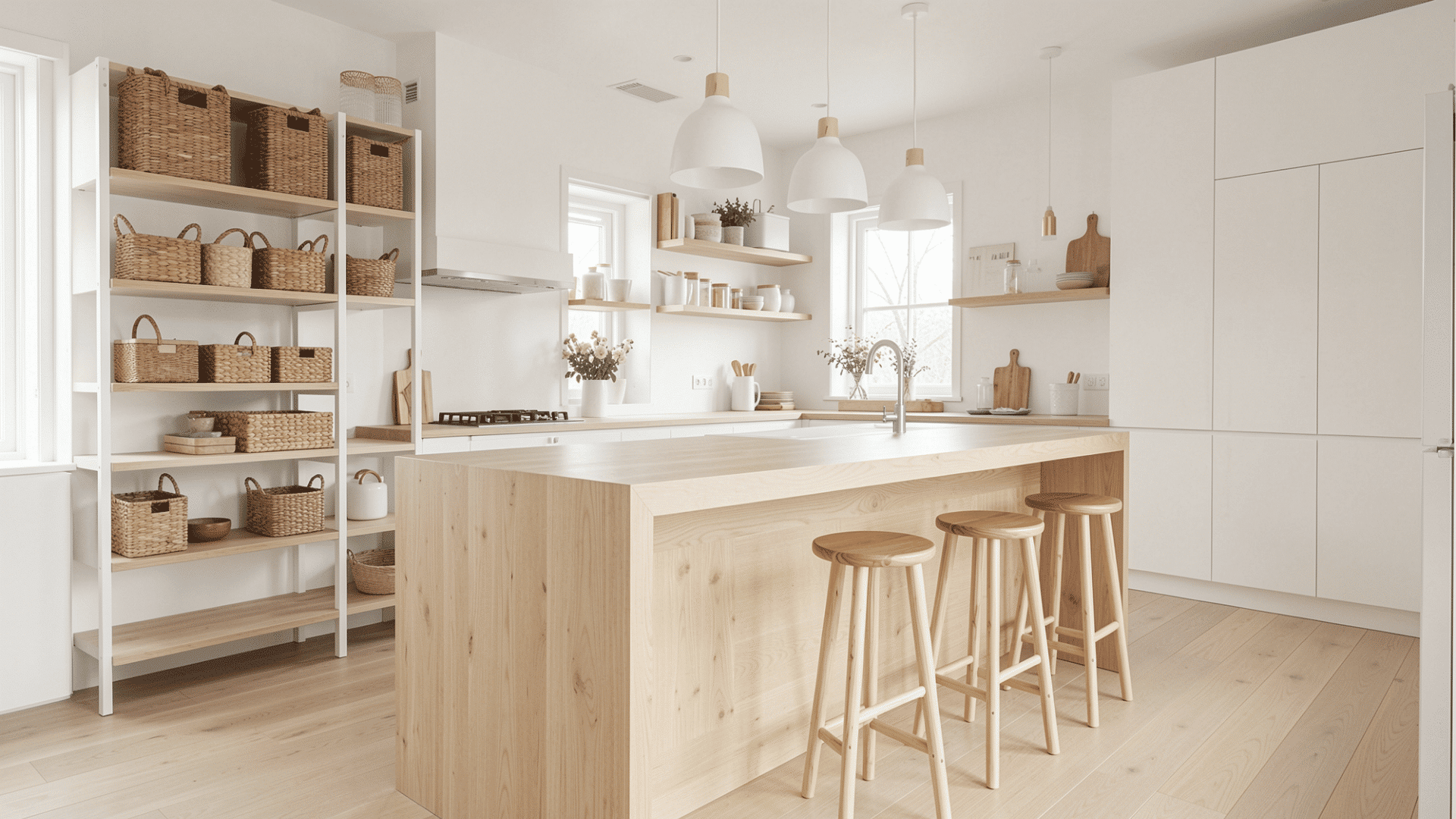
This is my personal favorite, and I actually have this design in my own kitchen. A kitchen island adds prep space, storage, and casual seating all in one place.
Scandi islands are simple, built in light wood, and always highly functional rather than decorative.
How to do it: Build an island in light oak or white with a wood top. Add open shelving on one side. Include two barstools for seating. Keep the legs slim and the lines simple.
Avoid if: Your kitchen is under ten feet wide. Islands need space around them to work well.
Cost: $1,500–$6,000 for an island. Custom builds cost $4,000–$10,000.
Tip: Leave thirty-six to forty-two inches around the island for walking room. Too tight and the whole kitchen feels cramped and hard to move through.
21. Choose Simple Bar Stools with Wood Legs
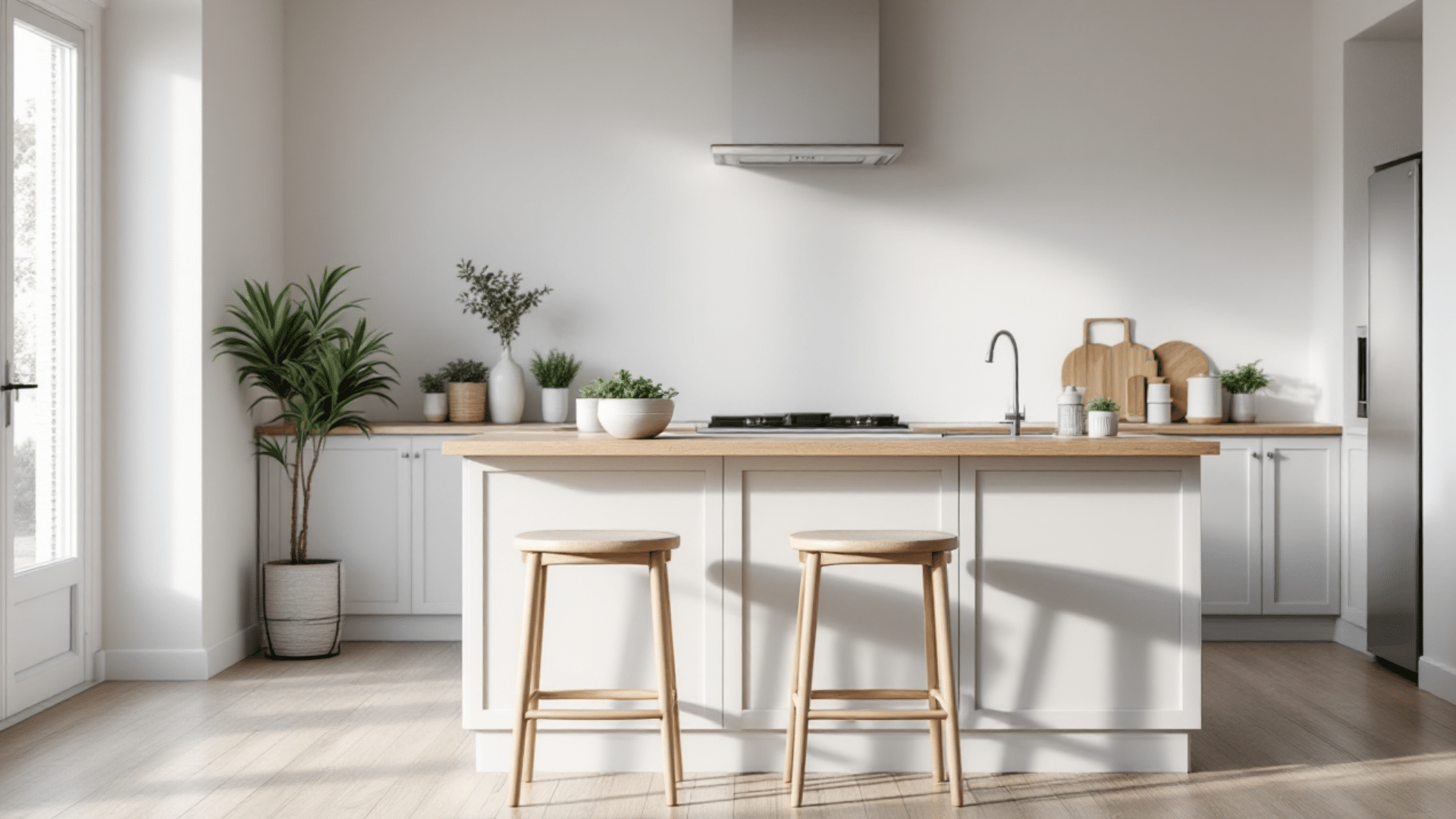
Bar stools with clean lines and wood legs fit perfectly into Scandi kitchen ideas. Avoid ornate metal or plastic stools that clash with the natural, minimal feel of the space.
How to do it: Select light wood or white stools with simple shapes. Add a cushion in neutral fabric. Keep backs low or go backless for a more open, airy feel.
Avoid if: You need high-back support or have elderly guests who need more structured seating.
Cost: $150–$500 per stool. Two stools run $300–$1,000.
Tip: Light wood stools in birch or oak match open shelves perfectly. They create visual continuity throughout the whole kitchen.
22. Add Texture with Woven Baskets
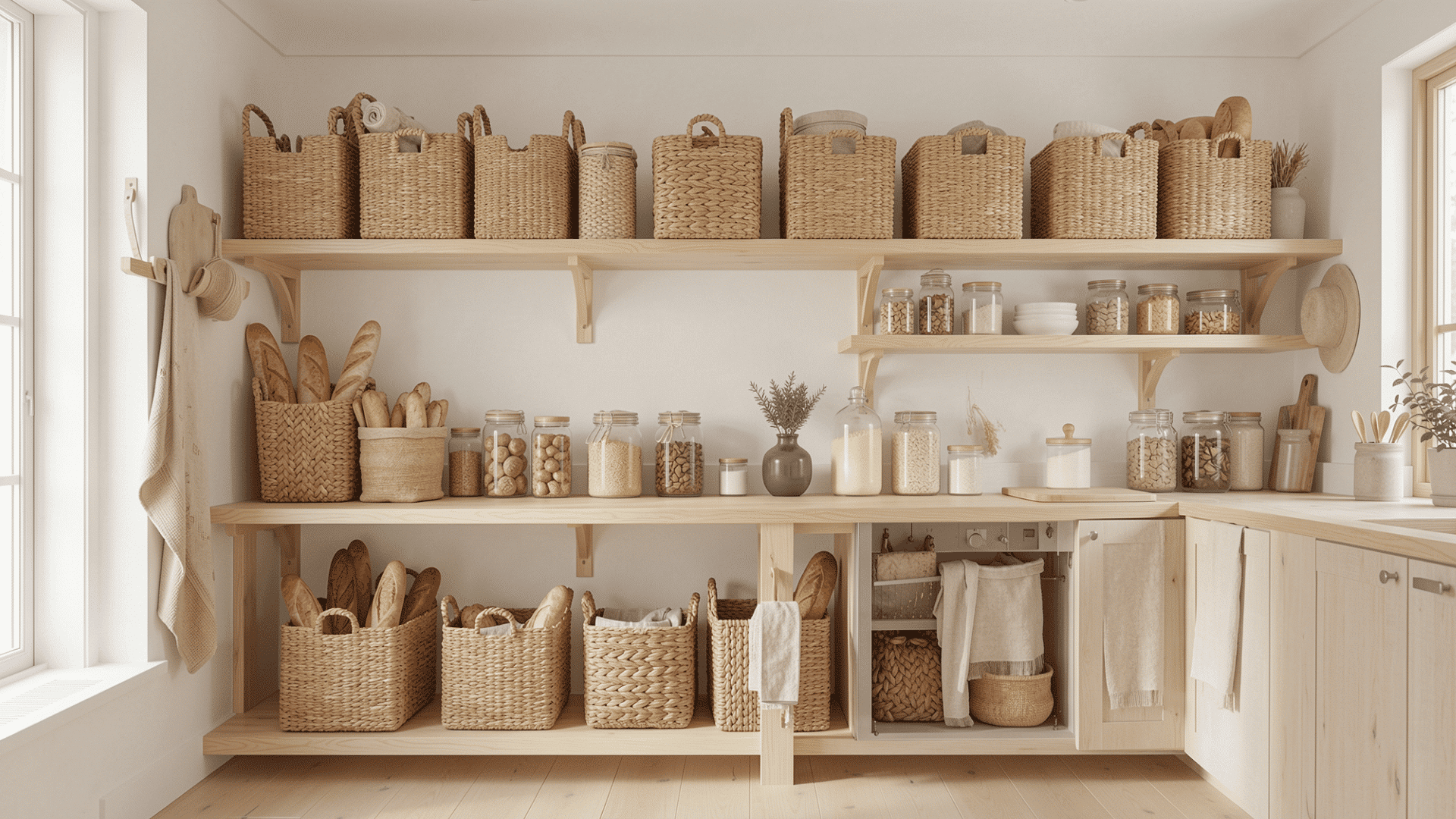
Woven baskets store everyday items while adding natural texture to the space. They work brilliantly in a hygge kitchen because they are both useful and visually warm.
How to do it: Place woven baskets on open shelves or under counters. Use them for bread, potatoes, or dry pantry goods. Choose natural seagrass or rattan in neutral tones.
Avoid if: You prefer hidden storage and do not want visible items on shelves or counters.
Cost: $30–$150 per basket. A set of three runs $80–$300.
Tip: Use baskets in pairs or groups of three. A single basket looks odd and out of place on an open shelf.
23. Keep Walls Bare or Add One Piece of Art
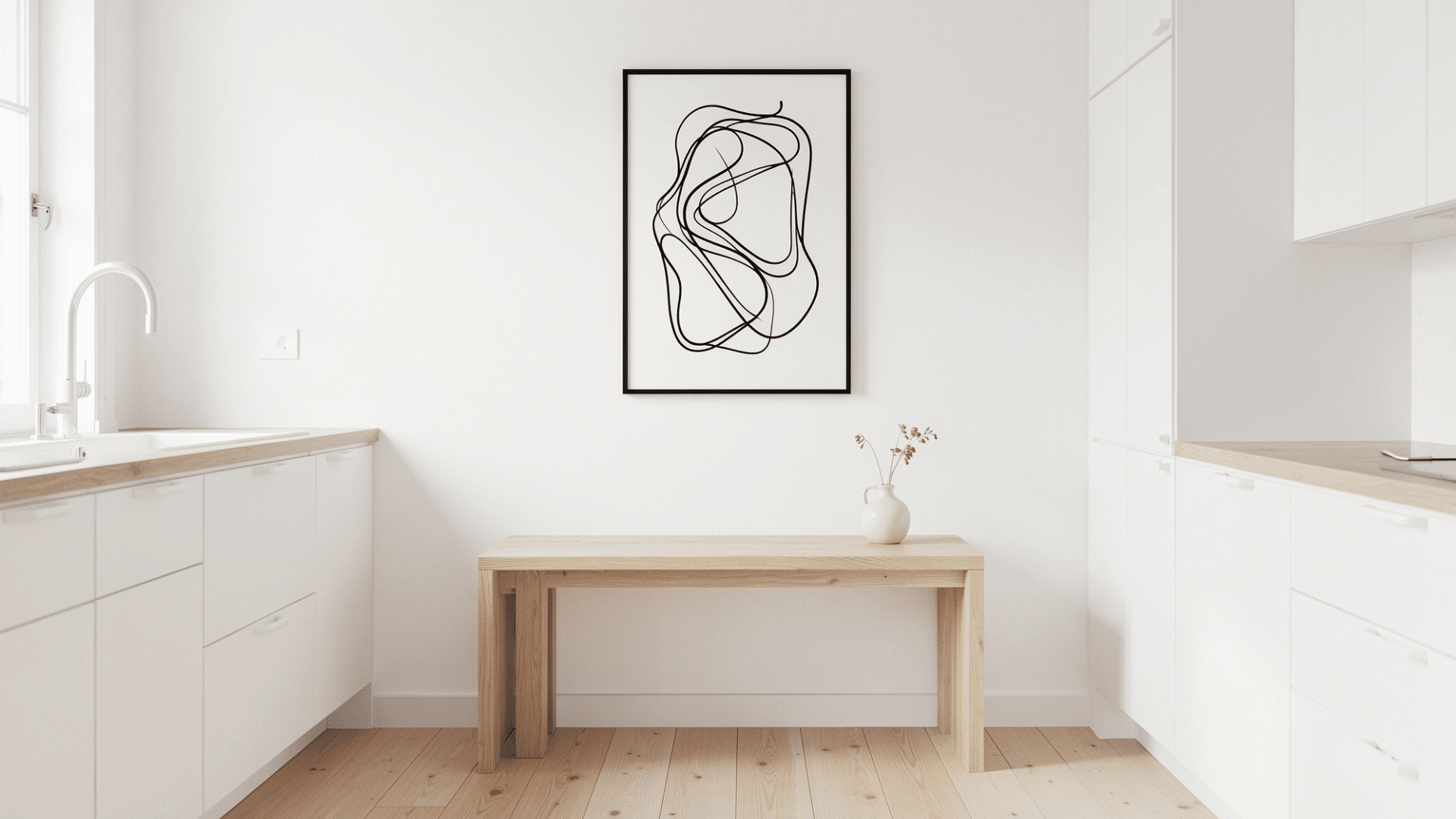
Scandinavian kitchens do not need wall art to look finished. If you want something on the wall, choose one simple black-and-white print or a clean abstract line drawing in a thin frame.
How to do it: Hang one small print in a simple frame. Choose a black-and-white photo or a line drawing. Keep the frame thin and black or in natural wood to match the rest of the room.
Avoid if: You love colorful art or want a full gallery wall with many different pieces.
Cost: $50–$300 for art and frame. Prints alone are $20–$100.
Tip: One medium-sized piece works far better than many small ones. It creates a clear focal point without adding visual clutter to the space.
24. Use a Japandi Twist for More Warmth
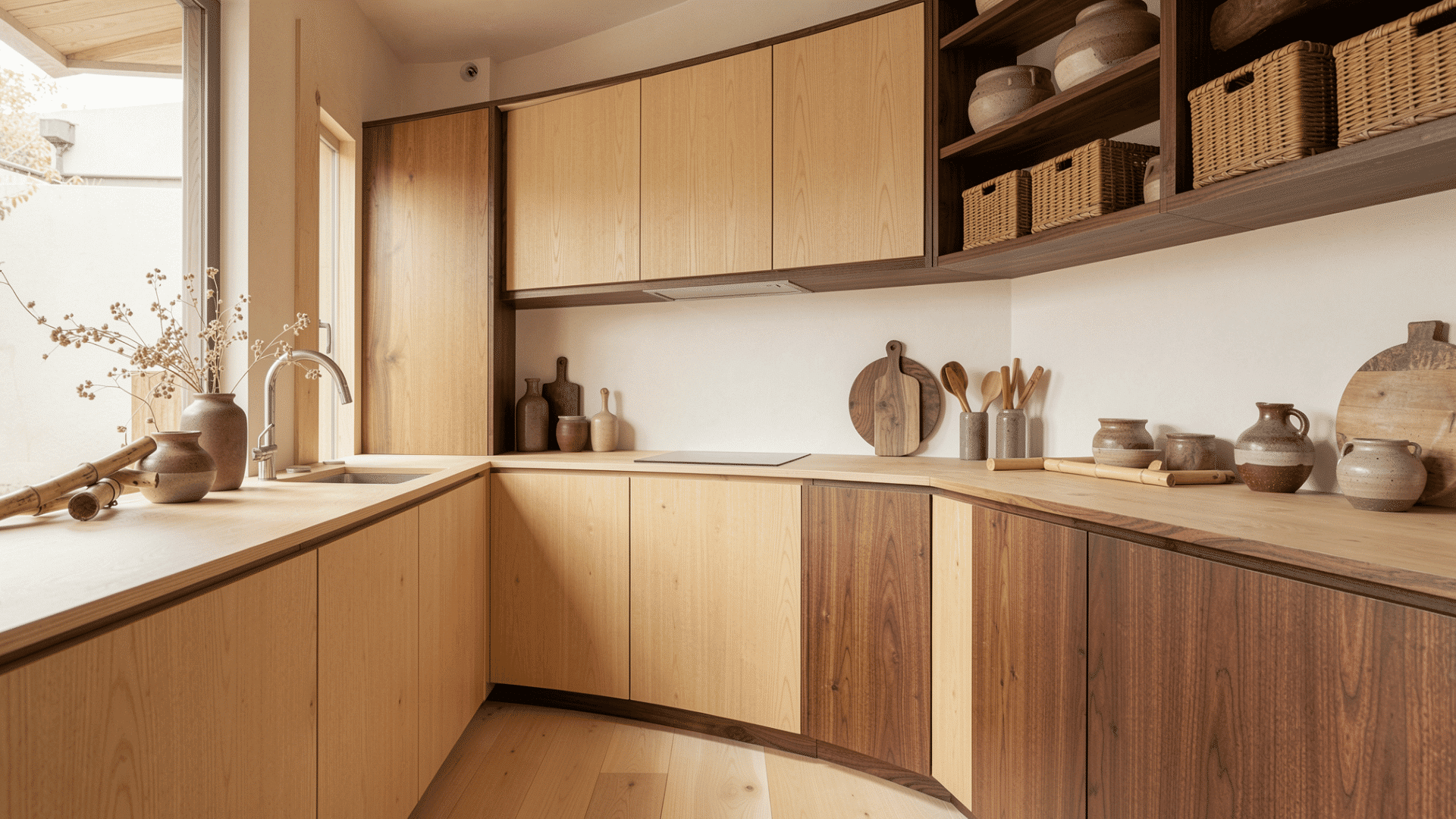
Japandi blends Japanese and Scandinavian design into one calm, layered look. It adds darker wood tones, more texture, and a deeper sense of warmth to any minimalist kitchen design.
How to do it: Mix light oak with walnut accents. Add woven baskets and ceramic vases. Use bamboo or rattan accessories throughout. Keep the base light and add darker touches slowly through accessories.
Avoid if: You prefer pure Scandinavian style or find darker wood tones too moody for your taste.
Cost: $200–$1,000 for Japandi accessories. Furniture additions cost more.
Tip: Start with one walnut piece like a cutting board or bowl. Add darker wood slowly rather than changing everything at once.
25. Paint Walls in Soft Nature Colors
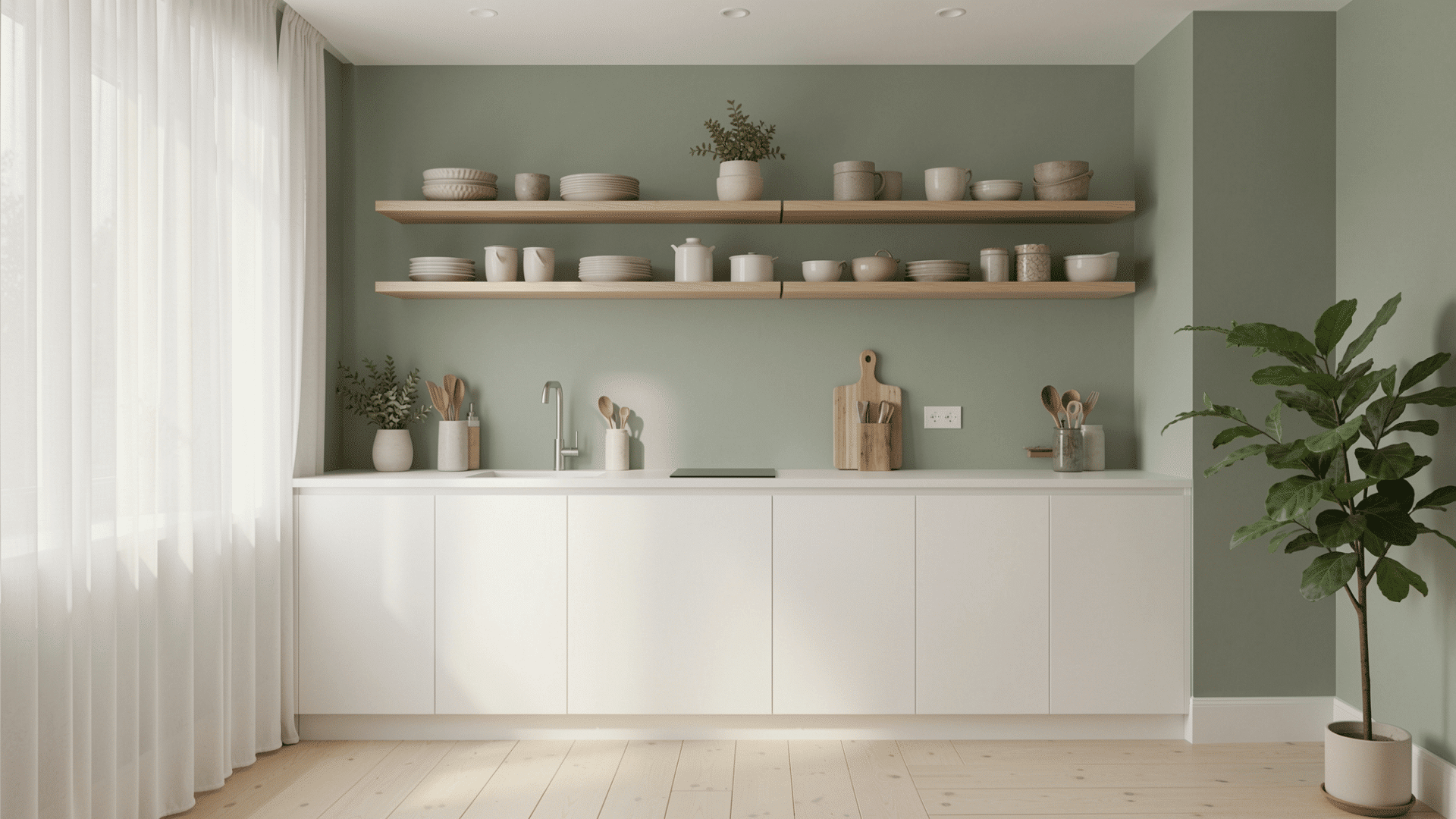
You do not have to use white walls in a Scandinavian kitchen. Soft sage green, dusty blue, or warm beige create a calm, nature-inspired feel while staying true to the Scandi spirit.
How to do it: Paint walls in soft sage green or dusty blue. Pair with white cabinets and light wood throughout. Use a matte finish for a soft, non-reflective look.
Avoid if: You prefer traditional white walls or want bold, saturated colors that make a strong statement.
Cost: $200–$600 for paint and supplies. Professional painting adds $500–$1,500.
Tip: Test the paint color first on two different walls. Soft sage looks completely different in morning light versus evening light, so always check both.
Wrapping Up
A Scandinavian kitchen is one of the most practical and beautiful kitchen styles you can create in your home today.
It combines clean white cabinets, natural wood surfaces, smart storage, and cozy touches to create a space that feels bright, calm, and easy to use every single day.
The style works in small apartments just as well as large family homes because the principles are simple and adaptable.
The look has grown warmer with richer wood tones, soft natural colors, and more personal touches that make the space feel lived-in and real.
Pick one idea from this guide and put it into action this week. Your kitchen will start to shift faster than you think.
Frequently Asked Questions
How Do I Start a Scandi Kitchen on a Budget?
Paint cabinets warm white, add open wood shelves, swap heavy curtains for sheer ones, and add a few plants. Total cost can start around $1,000
What is the Best Lighting for a Nordic Kitchen Style?
Large white or brass pendant lights over the island, plus warm LED strips under cabinets, create the best lighting.
Do Scandinavian Kitchens Have to Be All White?
No, you can use soft sage green, dusty blue, or warm beige on walls. Pair nature-inspired colors with white cabinets and light wood for a calm Scandi feel
What is the Difference Between Japandi and Scandinavian Kitchen Style?
Scandinavian kitchens are brighter and cozier, while Japandi adds darker wood tones and more earthy texture.