I’ll be honest, I didn’t think a wall could change a room that much. Then I put up a wood accent wall, and suddenly my living room looked like it had a whole personality. Turns out, wood has that effect on people.
It adds warmth and texture, making plain walls look like they actually have something to say. And no, you don’t need a big budget or a full renovation to get there. A few planks, some paint, and a free weekend can go a long way.
In this blog, I’m covering everything from rustic shiplap to sleek slat walls, which rooms are the best fit, how much you might spend, and how to do it yourself without losing your mind.
So if your walls have been looking a little too plain for a little too long, you’re in the right place. Let’s fix that.
Best Wood Accent Wall Ideas for Every Home Style
When it comes to wood accent walls, the style you pick changes everything. A vertical slat wall feels completely different from a rustic reclaimed wood wall, even if both use the same material.
So before you start planning, it helps to know what’s out there. Here are ten of my favorite wood accent wall ideas that work across all kinds of homes, budgets, and personal styles.
1. Modern Vertical Slat Wood Wall
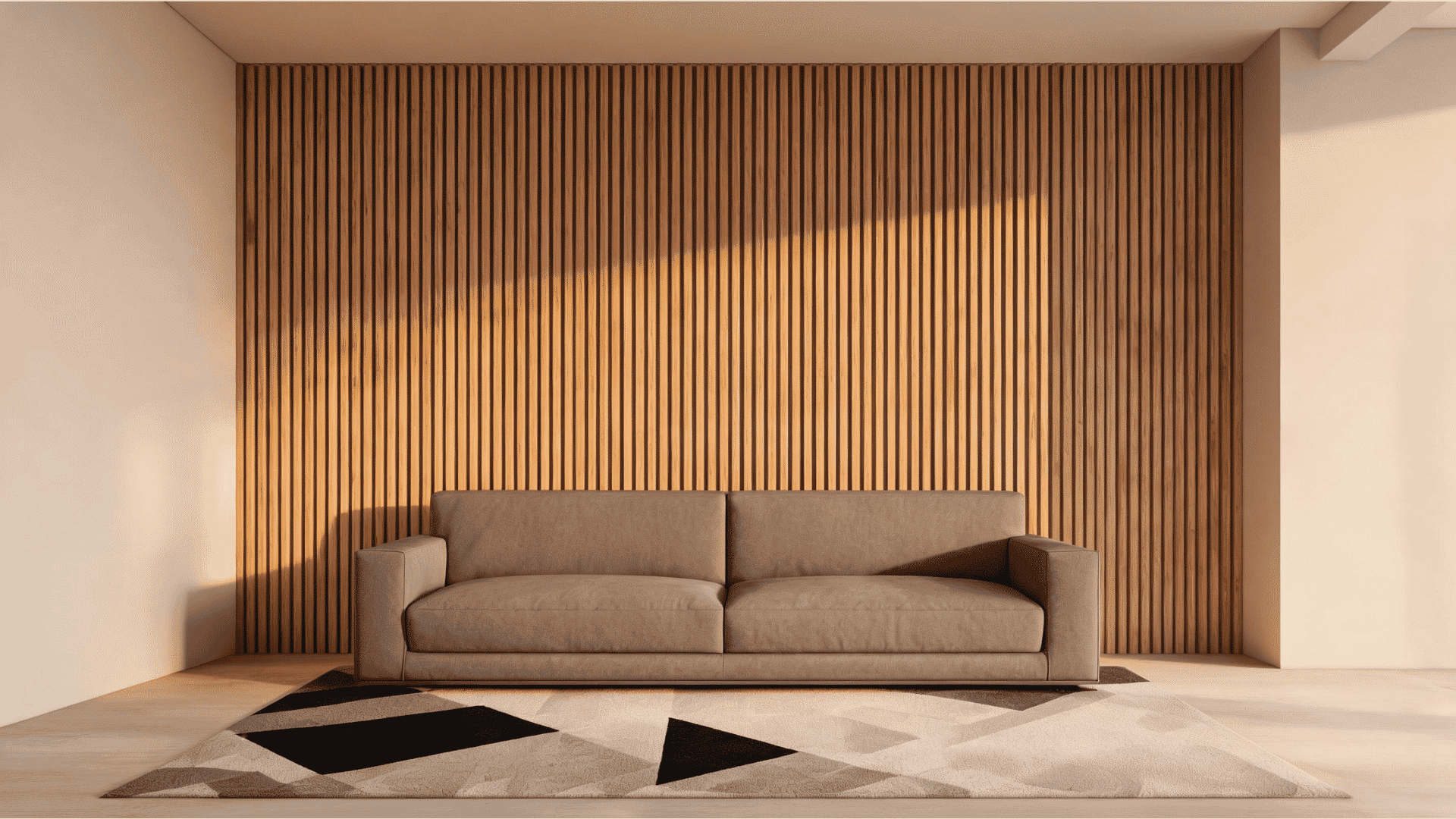
Vertical slat walls are one of the cleanest, most modern looks you can get with wood. Thin strips of wood run floor to ceiling, creating a sleek, linear pattern that makes any room feel taller and more open.
I love this style for living rooms and home offices because it looks sharp without being too loud. You can keep the wood natural or paint it any color to match your space.
Keep the slat spacing consistent. Even a small variation can throw off the whole look. I’d suggest cutting all your pieces at once before you start installing.
2. Rustic Reclaimed Wood Accent Wall
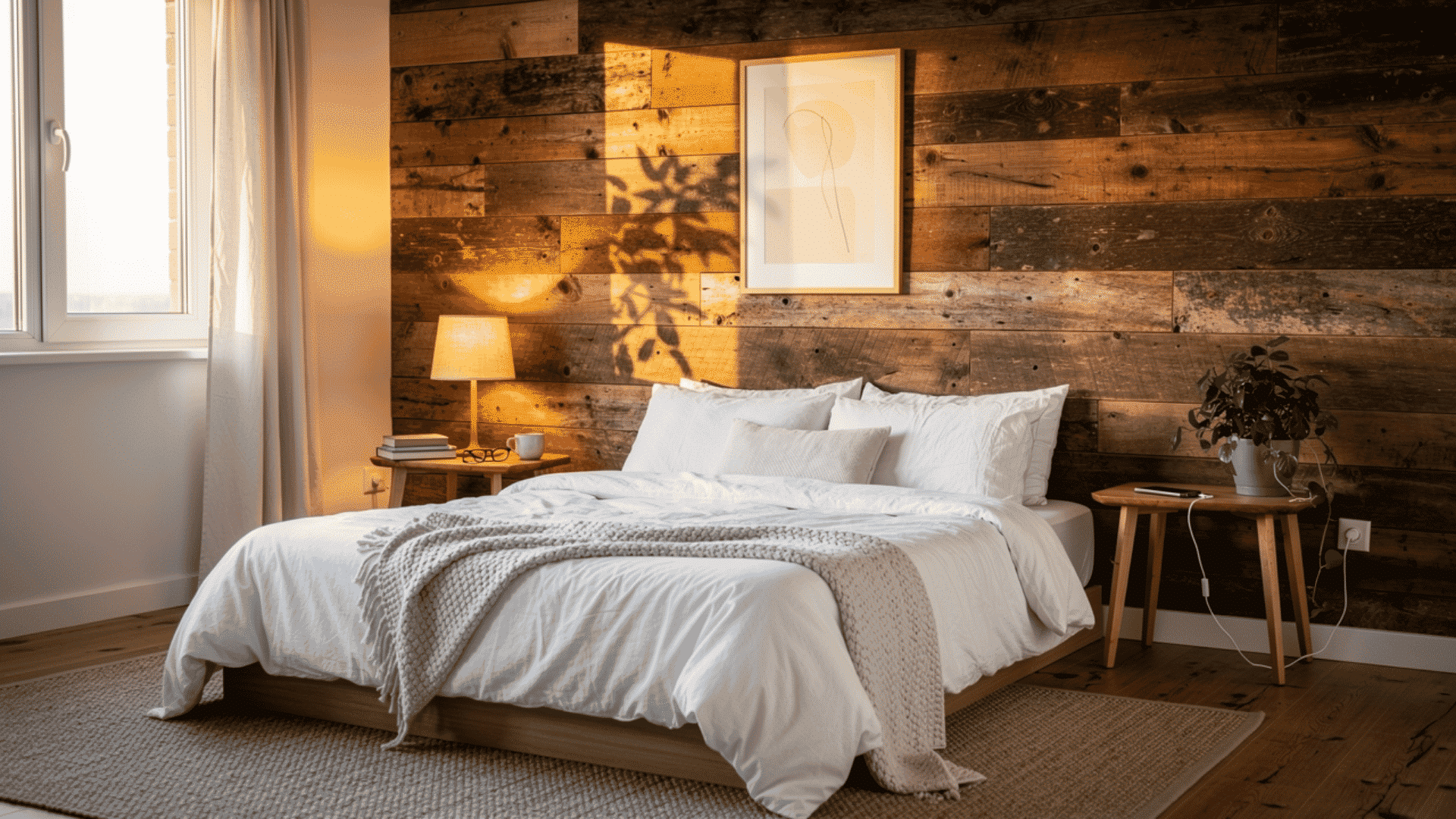
Reclaimed wood walls are full of personality. Every plank has its own knots, grain, and color variations, so no two walls ever look the same.
This style works beautifully in bedrooms, dining rooms, and even bathrooms where you want something that feels lived-in and warm.
I always recommend reclaimed wood to people who want their wall to feel like it has a story. You can source reclaimed planks from salvage yards, old barns, or specialty lumber stores, often at a lower cost than new wood.
Let reclaimed wood sit indoors for a few days before installing. It needs time to adjust to the humidity in your home, otherwise the planks can warp or gap after they go up.
3. Floor-to-Ceiling Wood Panel Wall
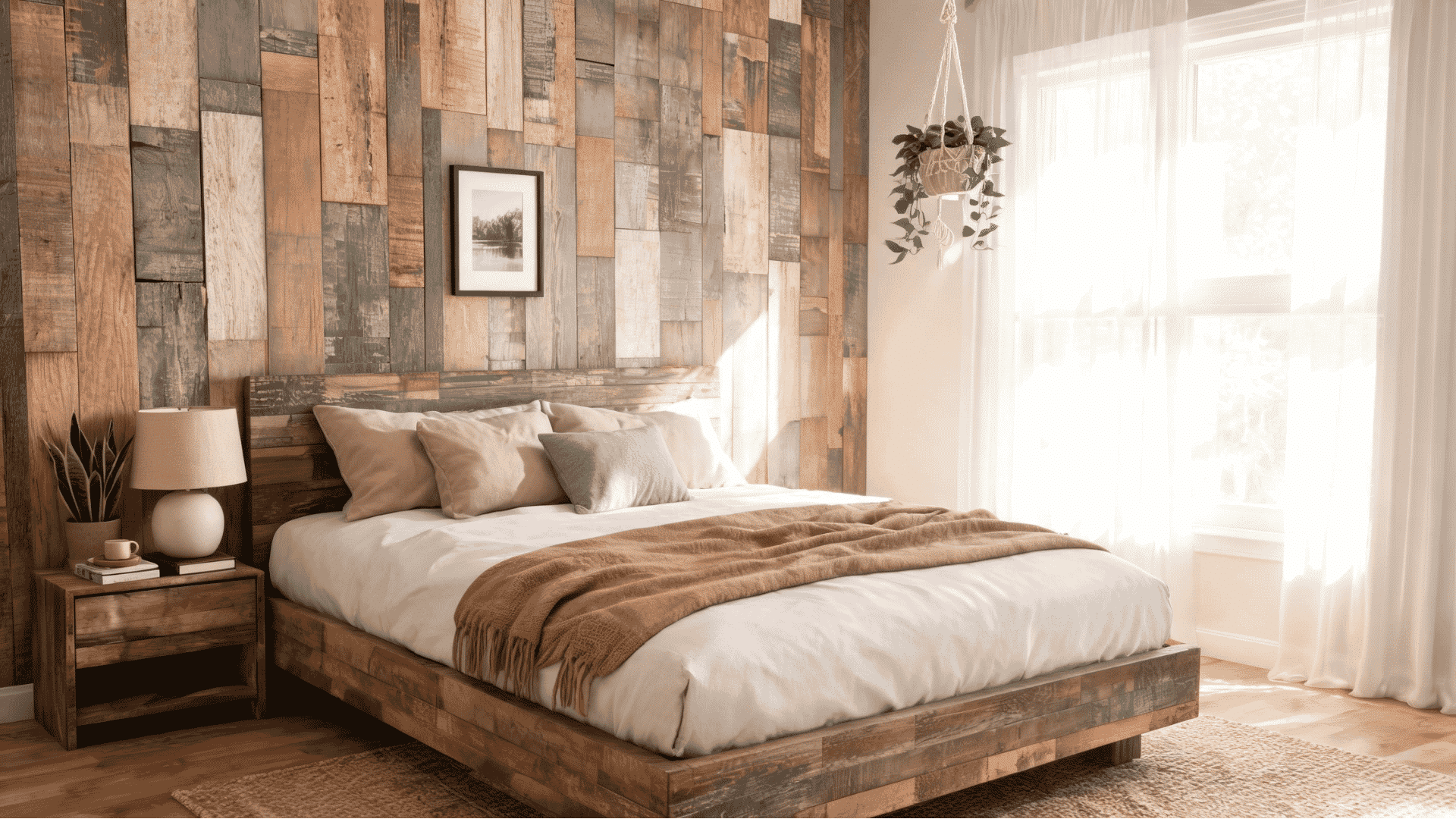
Nothing makes a statement quite like a full, floor-to-ceiling wood-panel wall. It fills the entire wall from bottom to top, which instantly makes the room feel more intentional and well-designed.
This style works in living rooms, entryways, and primary bedrooms where you want one wall to do all the talking.
Wide panels give a clean, modern feel while narrow ones add more texture and detail. Pair it with simple furniture and neutral tones so the wall stays the star of the room.
4. Dark-Stained Wood Statement Wall
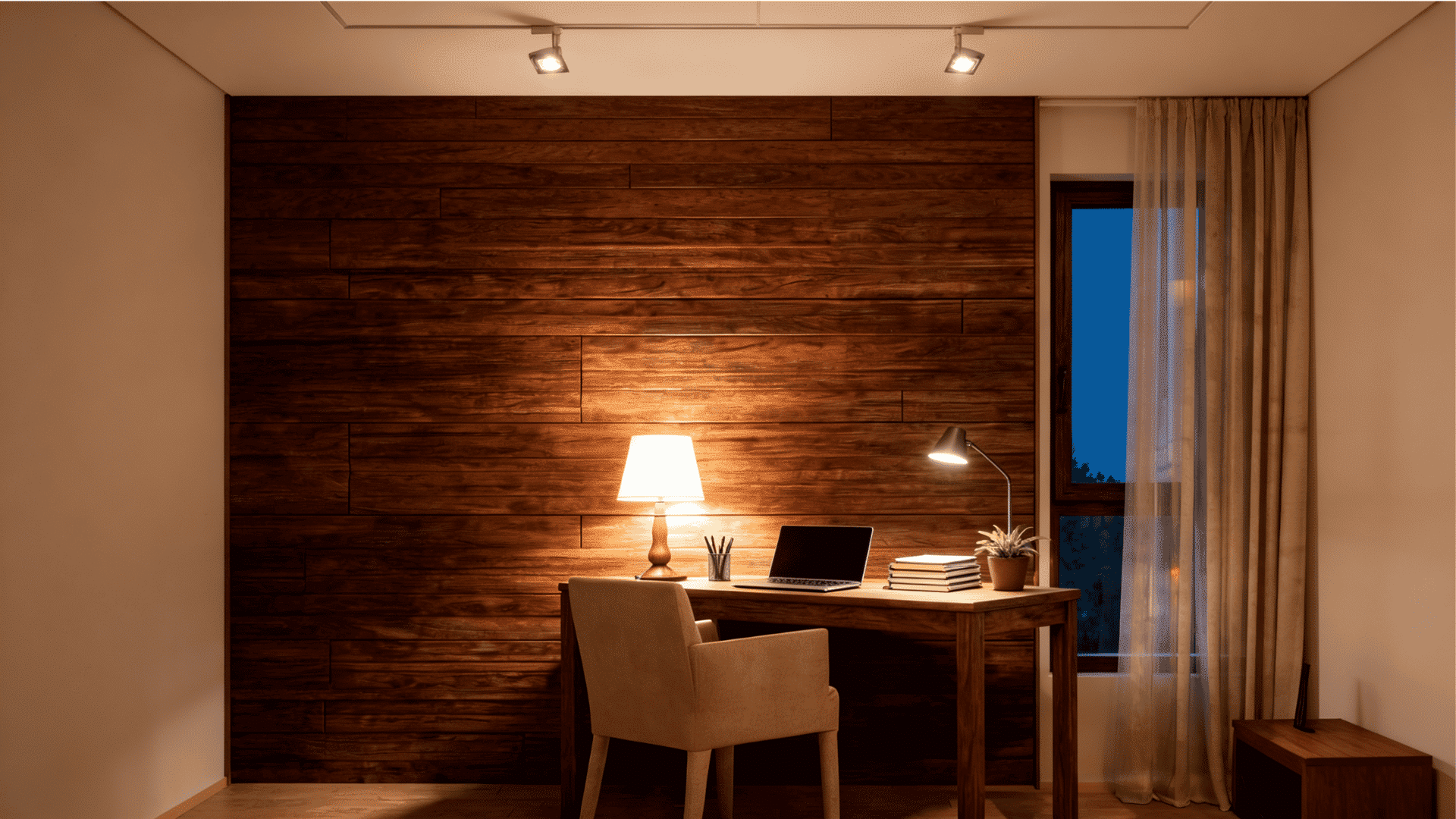
Dark-stained wood walls bring a richness to a room that lighter finishes simply can’t match. Deep walnut, espresso, or ebony stains add depth and make a space feel cozy, serious, and a little high-end all at once.
This works especially well in home offices, libraries, and dining rooms where you want a stronger, more grounded feel. The key is balancing it with lighter furniture and good lighting so the room doesn’t feel too heavy.
Before committing to a dark stain on the whole wall, test it on a spare plank first. I’ve seen people go full espresso and love it, and others wish they’d gone one shade lighter. Always test before you commit.
5. Light Oak Scandinavian Accent Wall
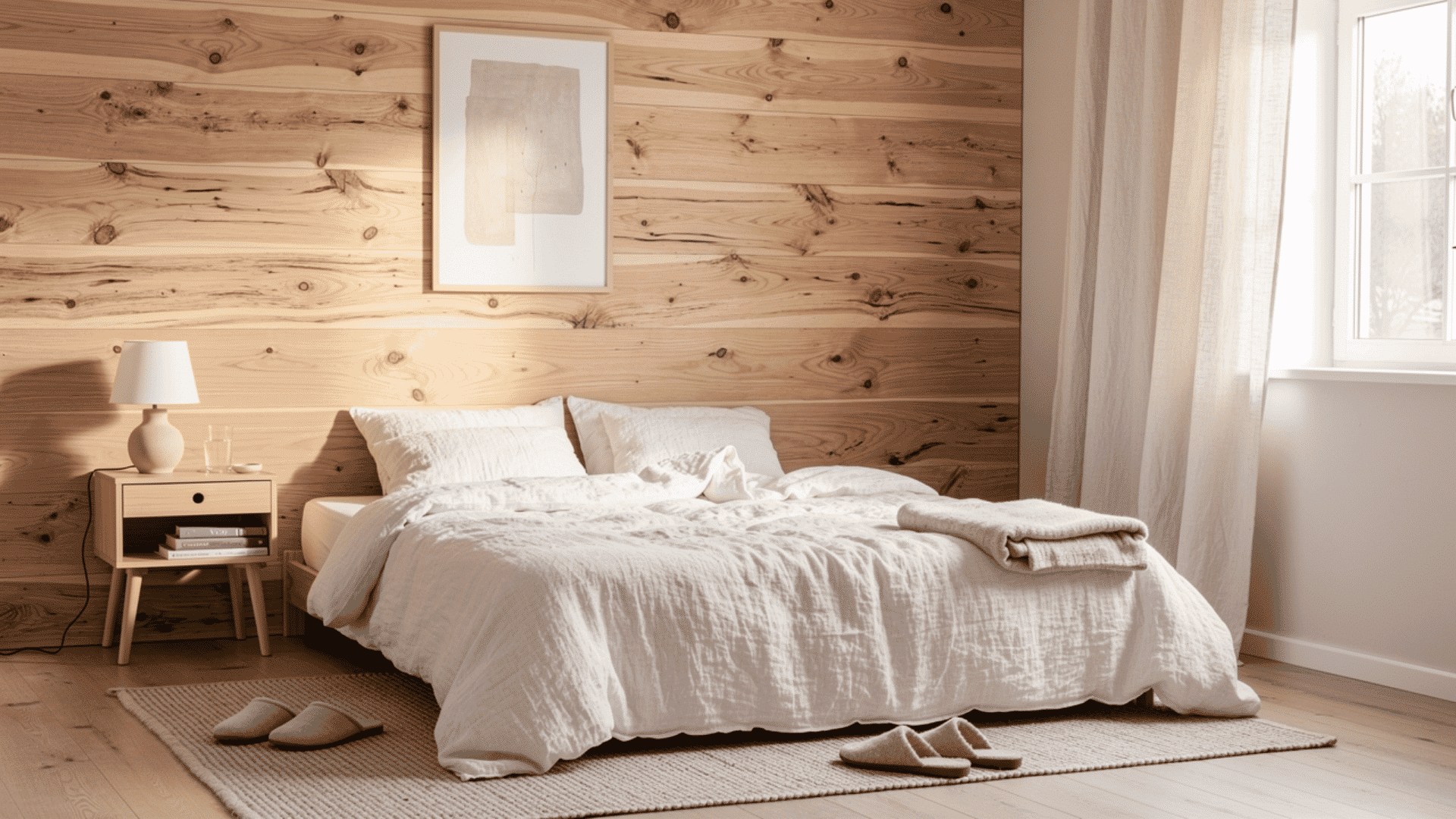
Light oak wood walls have a clean, fresh quality that makes rooms feel bigger and more breathable. This style draws heavily on Scandinavian design, where simplicity and natural materials are at the core.
It pairs perfectly with white walls, linen textiles, and minimal furniture for that calm, uncluttered look. I particularly love this in bedrooms and small living spaces where you want warmth without making the room feel closed in.
Light oak is also one of the easiest finishes to maintain over time, which is always a bonus.
6. Chevron Wood Accent Wall
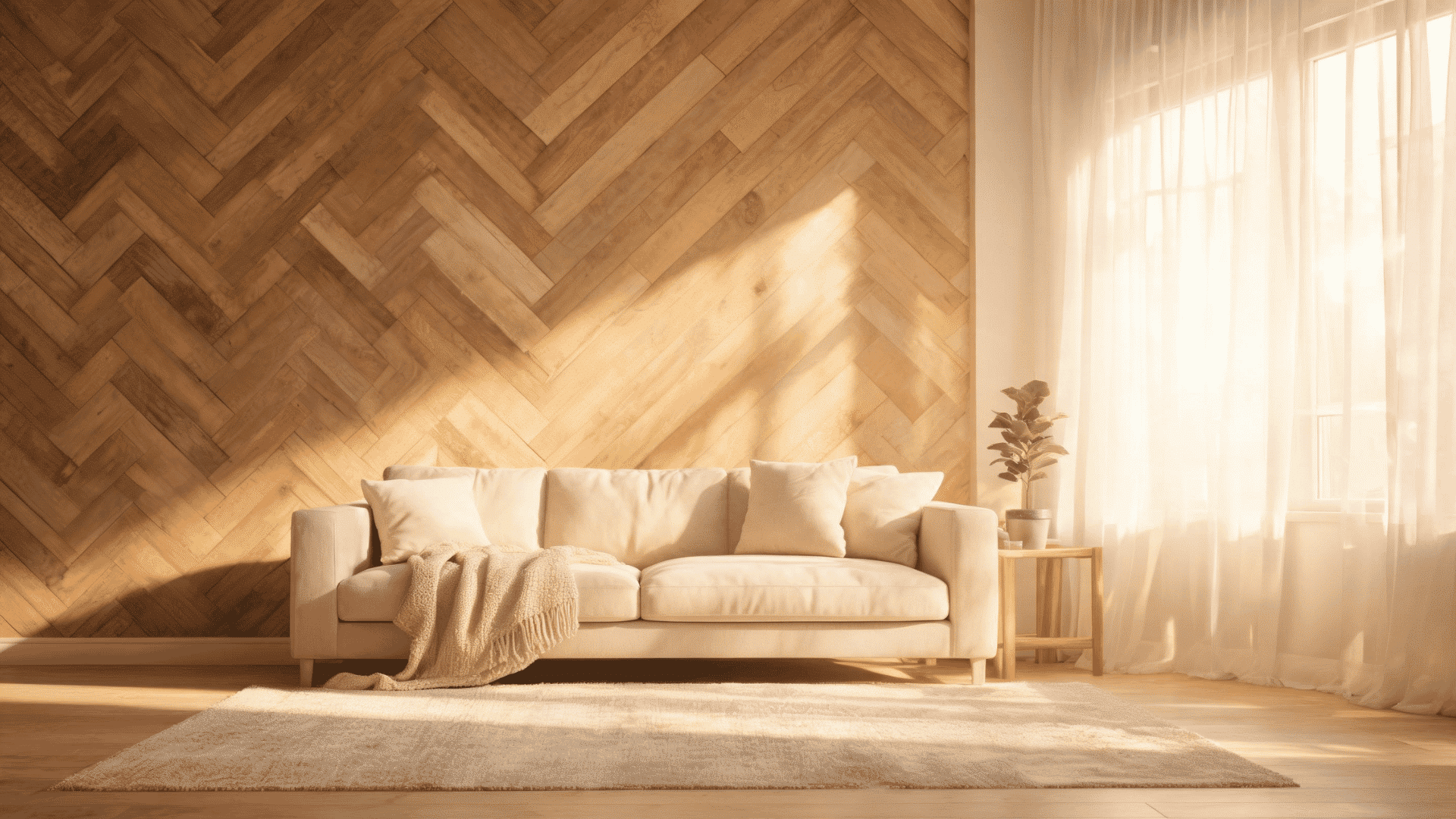
Chevron patterns take a regular wood wall and turn it into something that genuinely stops people in their tracks.
The V-shaped arrangement of planks creates a strong sense of direction and movement across the wall, making it feel more like art than just a surface.
It works well as a bedroom headboard wall or a focal point in a living room. Chevron does require more careful planning and cutting than straight layouts, so if you’re going the DIY route, take your time with the angles.
Draw the chevron pattern on paper before touching any wood. I cannot stress this enough. Getting the angles wrong on the wall is a much bigger problem than getting them wrong on a sketch.
7. Herringbone Wood Feature Wall
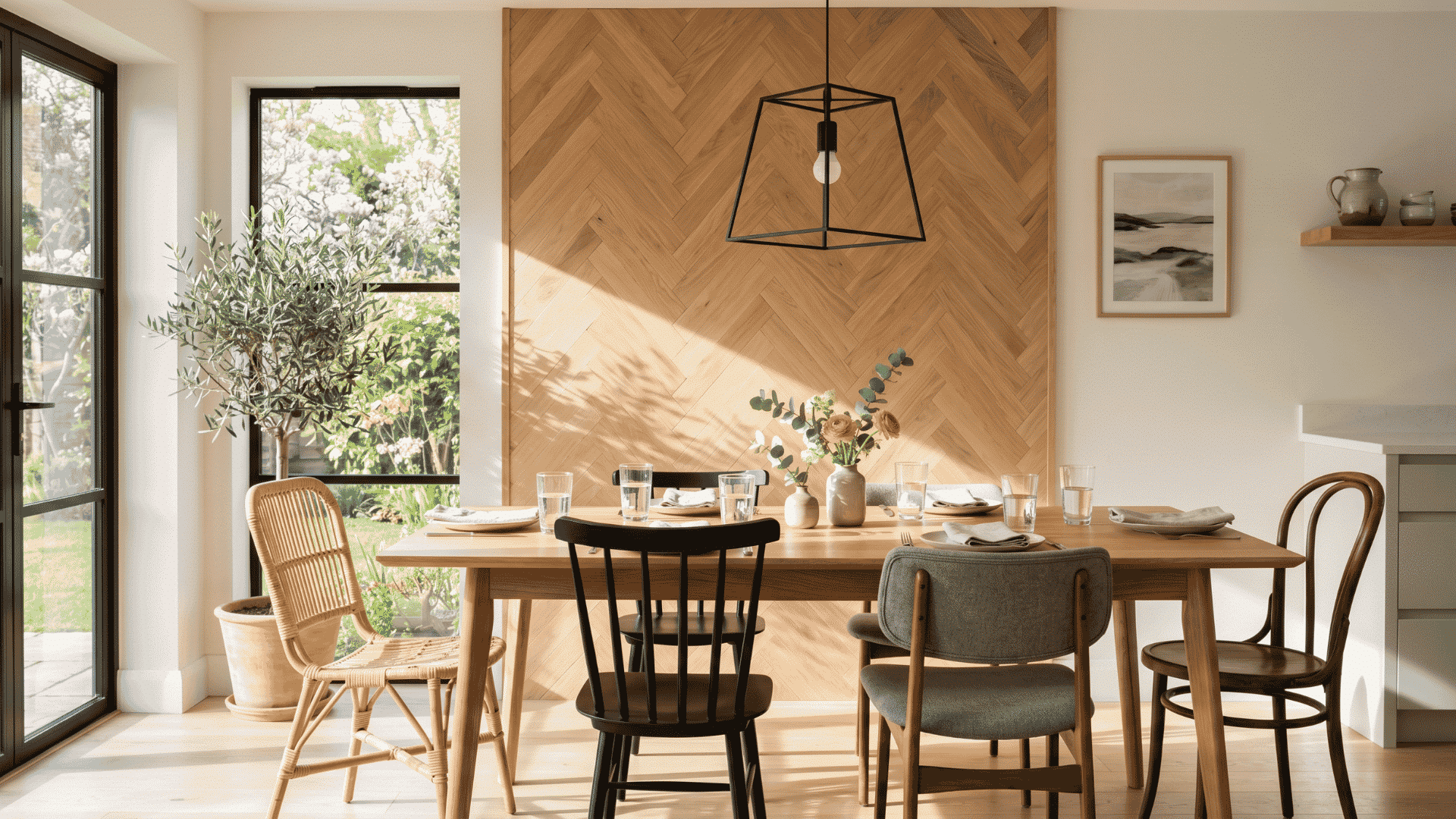
Herringbone is chevron’s more detailed cousin, with a classic quality that works in both traditional and modern spaces.
Instead of continuous V-shapes, herringbone staggers the planks in a zigzag, brick-like layout that adds visual complexity without feeling chaotic.
It’s a popular choice for dining rooms, entryways, and accent walls behind fireplaces.
Because the cuts are more precise, herringbone is best suited for people who are comfortable with woodworking or are willing to hire a professional.
When it’s done well, it looks genuinely impressive.
8 Geometric Wood Wall Design
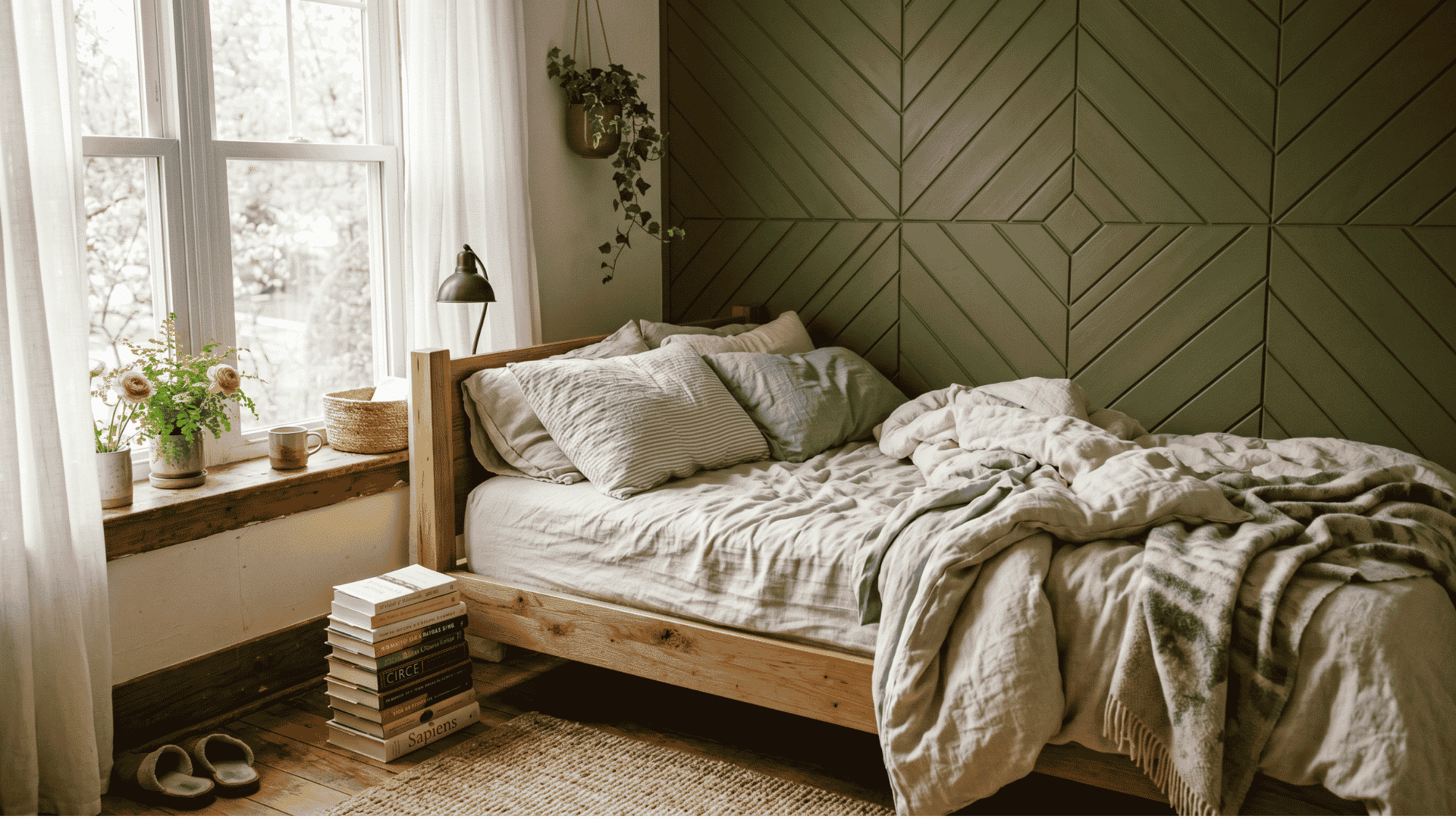
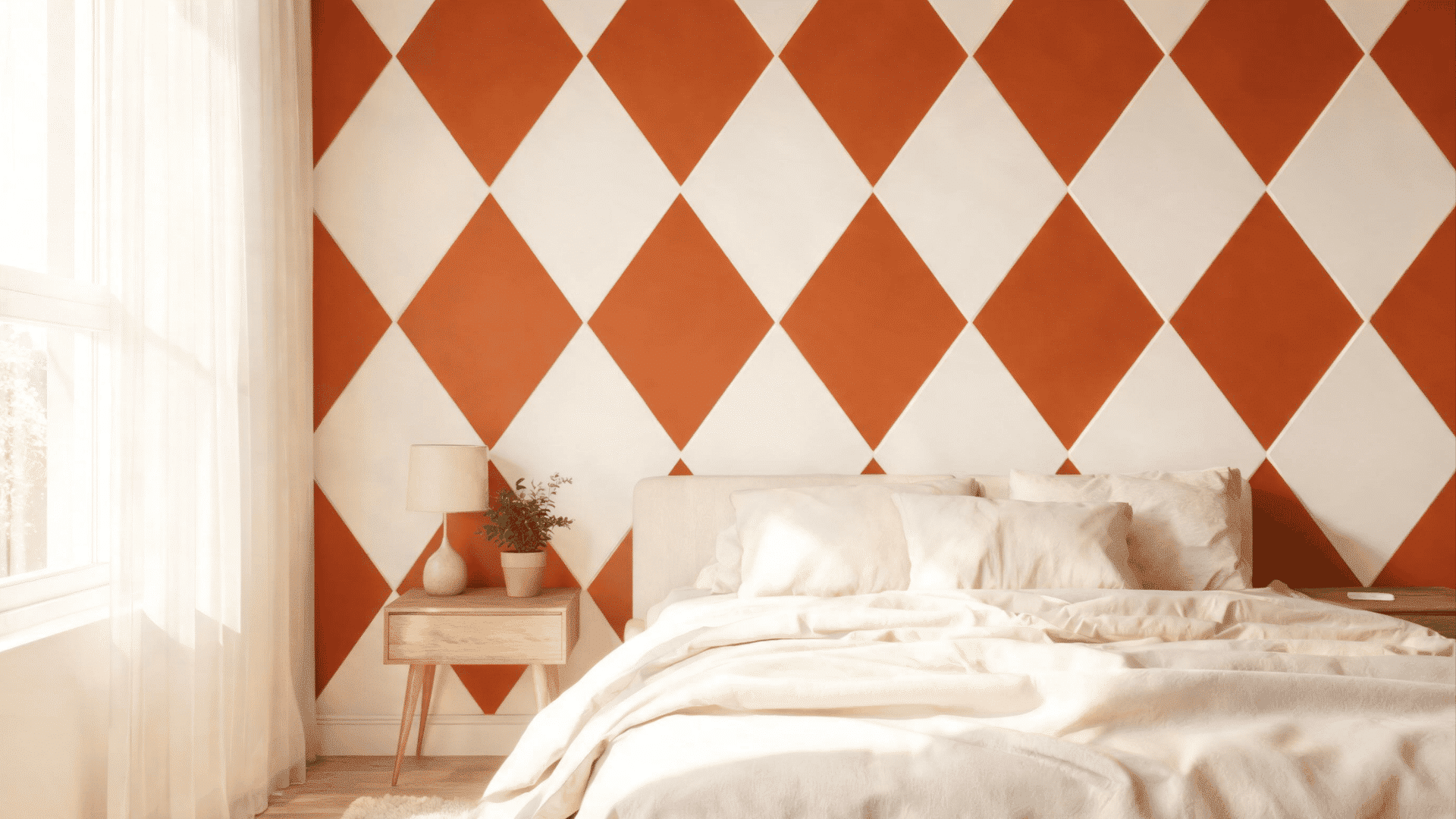
Geometric wood walls are where creativity really runs wild. Instead of standard horizontal or vertical layouts, geometric designs use shapes such as triangles, hexagons, and diamonds, along with custom angular patterns, to create a wall that feels unlike anything else.
This style works especially well in modern and eclectic interiors where bold design choices are expected. You can go as simple or as complex as you like, from a single large triangle to a full repeating pattern across the wall.
Painted geometric wood walls are also a great way to add color and pattern at the same time.
Start with a single geometric shape repeated across the wall rather than mixing multiple shapes at once. It’s easier to execute and usually looks cleaner in a real room than it does on a mood board.
9. Mixed-Tone Wood Pattern Wall
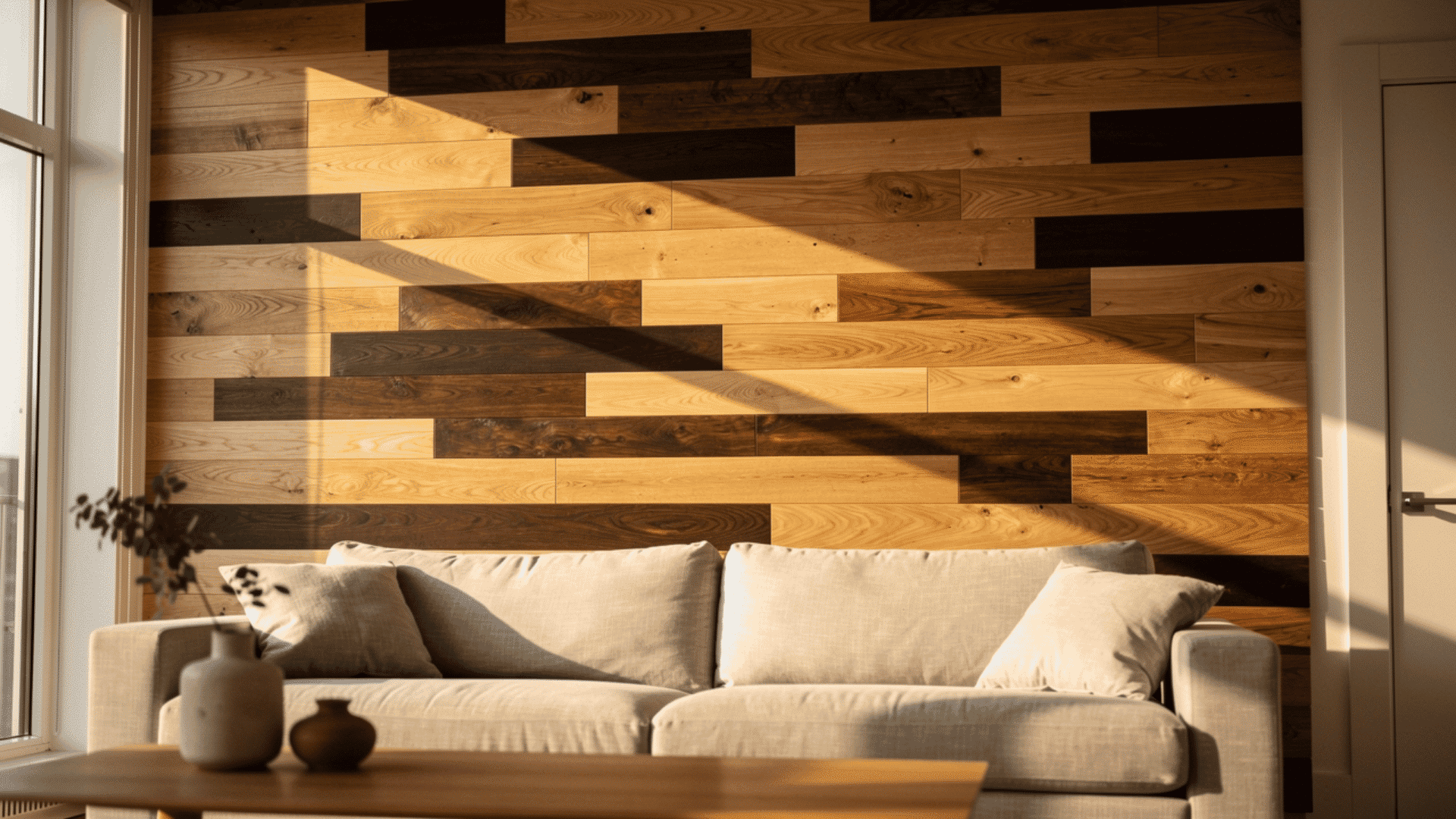
A mixed-tone wood wall uses planks of different stains, colors, or natural wood varieties side by side to create a layered, textured look. It’s one of the most creative approaches on this list because no two walls look alike.
You can go subtle with two similar shades or bold with high-contrast tones for a more graphic effect. This style works well in living rooms and creative spaces where you want the wall to feel personal and a little unexpected.
Using leftover or mismatched wood pieces also makes it a budget-friendly option worth considering.
10. Minimalist Wood Accent Wall
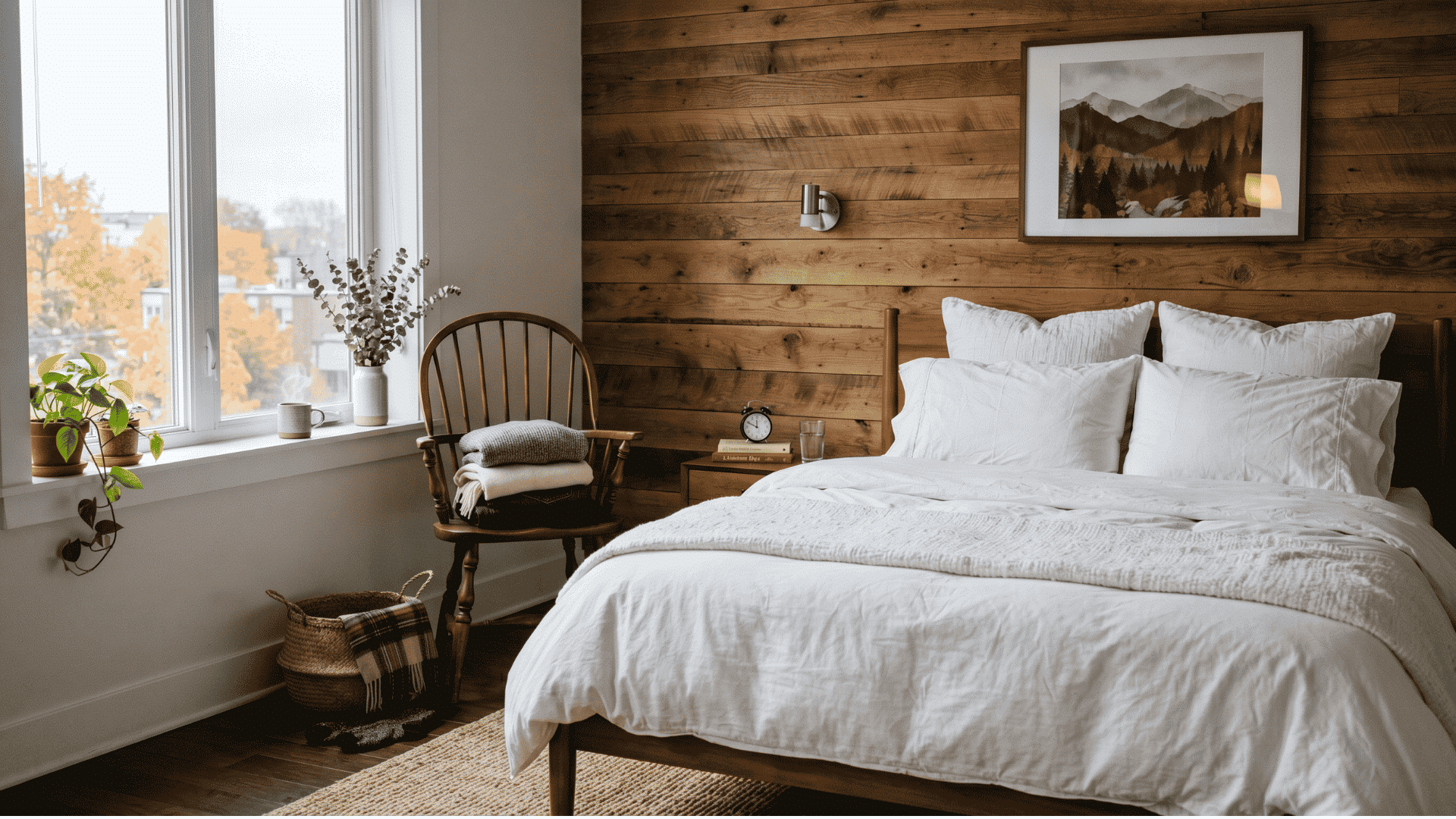
Not every wood wall needs to be loud. A minimalist wood accent wall uses clean lines, consistent tones, and simple layouts to add warmth without any visual clutter.
Think evenly spaced horizontal planks in a single natural finish, nothing fussy, nothing overdone. This style fits perfectly in modern apartments, small bedrooms, and Scandinavian-inspired spaces where the goal is calm over complexity.
It’s also one of the easiest styles to pull off yourself because there’s less room for error when the design is straightforward.
Wood Accent Wall Ideas by Room
A wood accent wall doesn’t work the same way in every room. The style, finish, and placement that looks great in a bedroom might feel completely off in a bathroom or hallway. That’s why I always say, pick the room first, then pick the style.
Here’s a room-by-room breakdown of what works, what doesn’t, and what I’d personally recommend for each space.
11. Bedroom Wood Accent Wall Behind the Bed
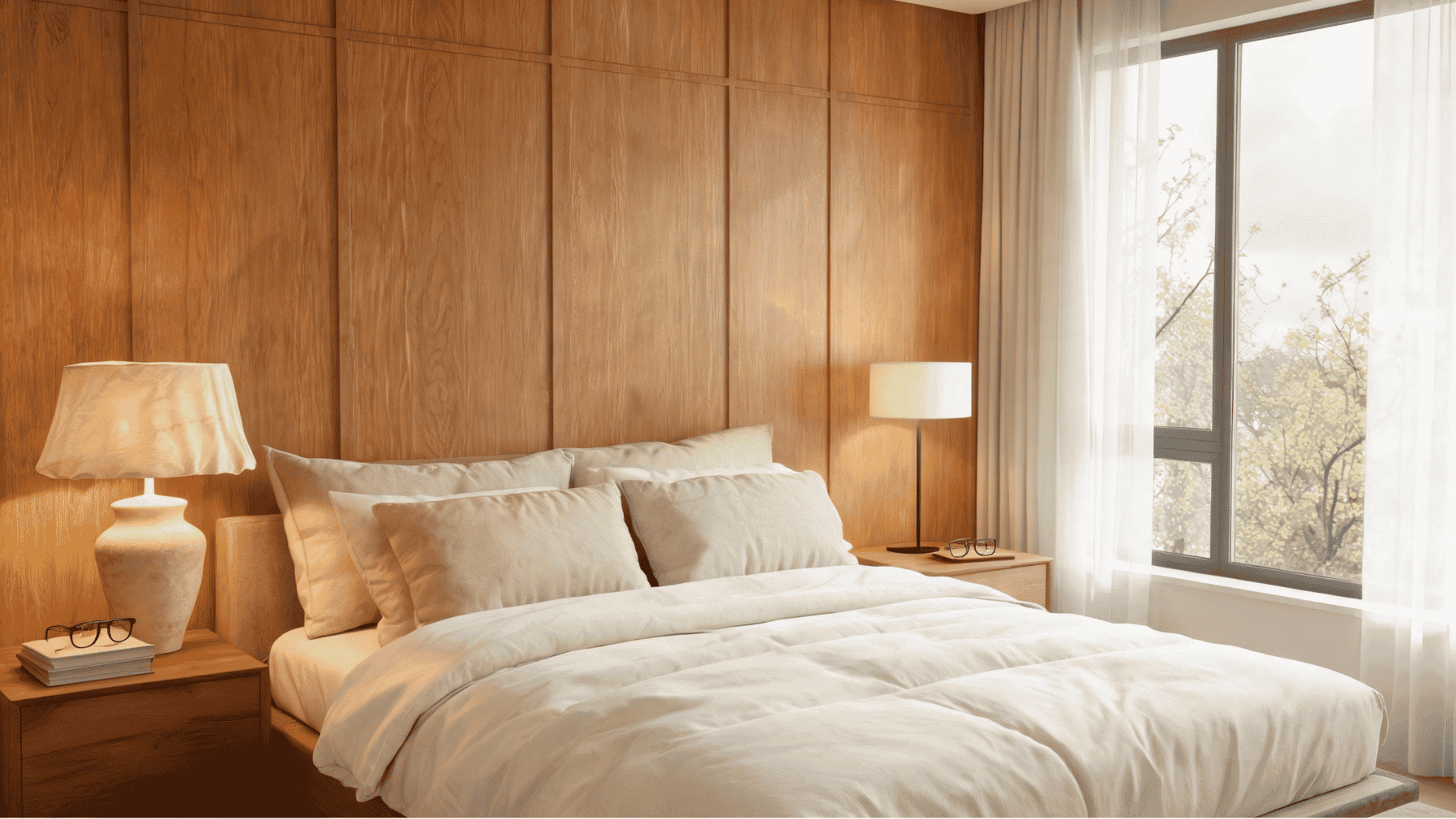
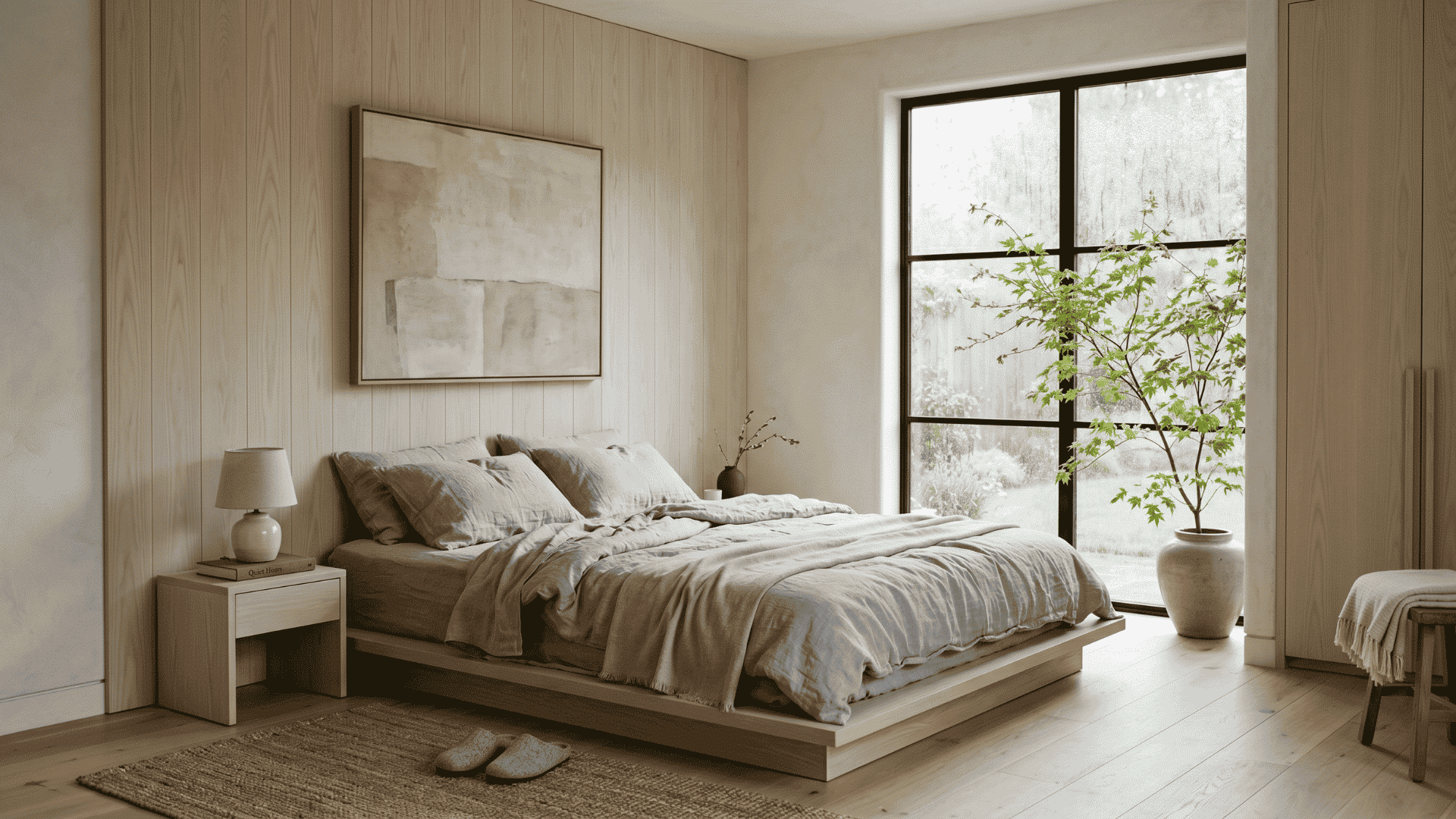
The wall behind your bed is one of the best places in the entire home for a wood accent wall. It acts as a natural headboard, frames the bed beautifully, and instantly makes the room feel more pulled together.
Horizontal shiplap, vertical slats, and reclaimed wood all work really well here. Warm tones like honey oak or walnut make the bedroom feel cozy and restful, which is exactly what you want in a space meant for sleep.
You don’t need to cover the whole wall either. Even a partial wood panel behind the bed makes a big difference.
Keep the wood finish matte rather than glossy in the bedroom. Glossy finishes reflect light and can actually make it harder to wind down at night. Matte or satin gives you warmth without the shine.
12. Living Room TV Feature Wall
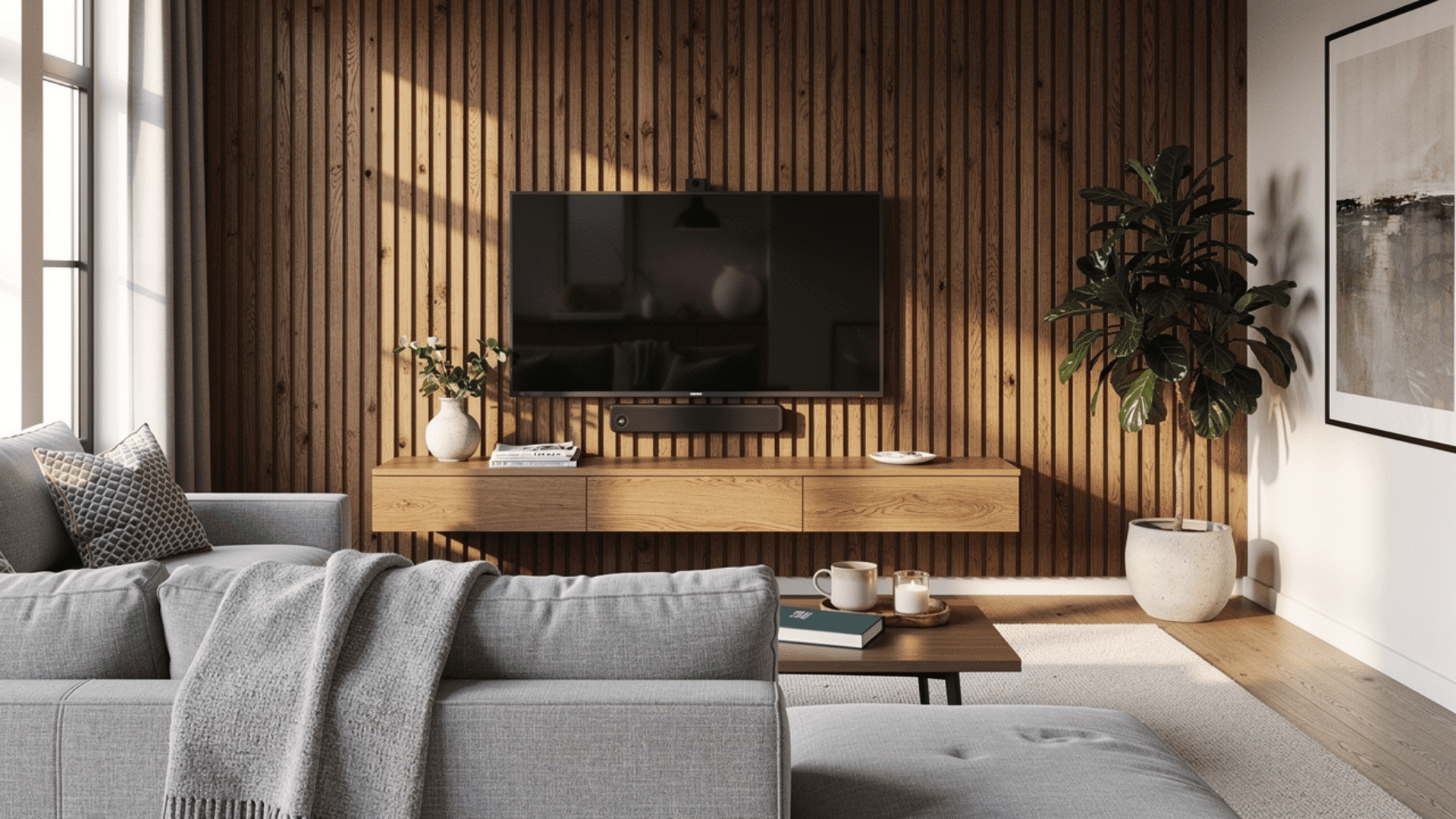
The wall behind your TV is already a natural focal point, so it makes complete sense to give it some personality. A wood accent wall here does double duty.
It makes the TV look more intentional and less like a black rectangle just hanging on a wall. Vertical slat walls and full panel walls work especially well in living rooms because they add structure without competing with the furniture.
Dark stains can make the TV blend in more, while lighter finishes brighten the whole space. Either way, this addition changes how the entire room feels.
13. Dining Room Wood Statement Wall
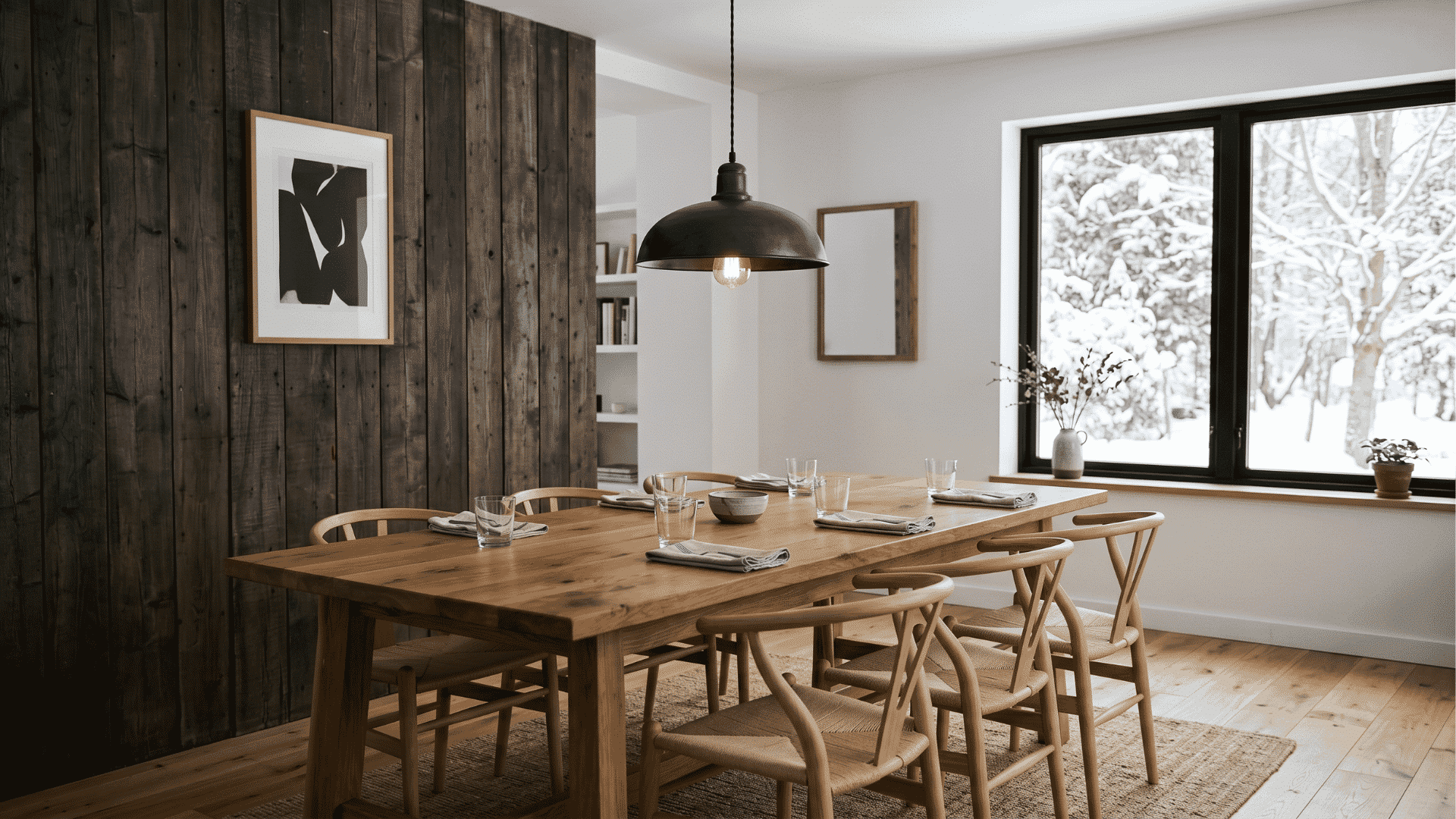
Dining rooms are a great spot for a wood accent wall because people actually sit and look at the walls while they eat.
A well-done wood wall in a dining room becomes the kind of thing guests notice and comment on without being able to explain why the room feels so good.
Reclaimed wood, dark-stained panels, and herringbone patterns all work beautifully here.
The key is to pick a wall that sits directly in your line of sight when seated at the table, usually the wall at the head of the room or directly across from where most people sit.
14. Entryway Wood Accent Wall
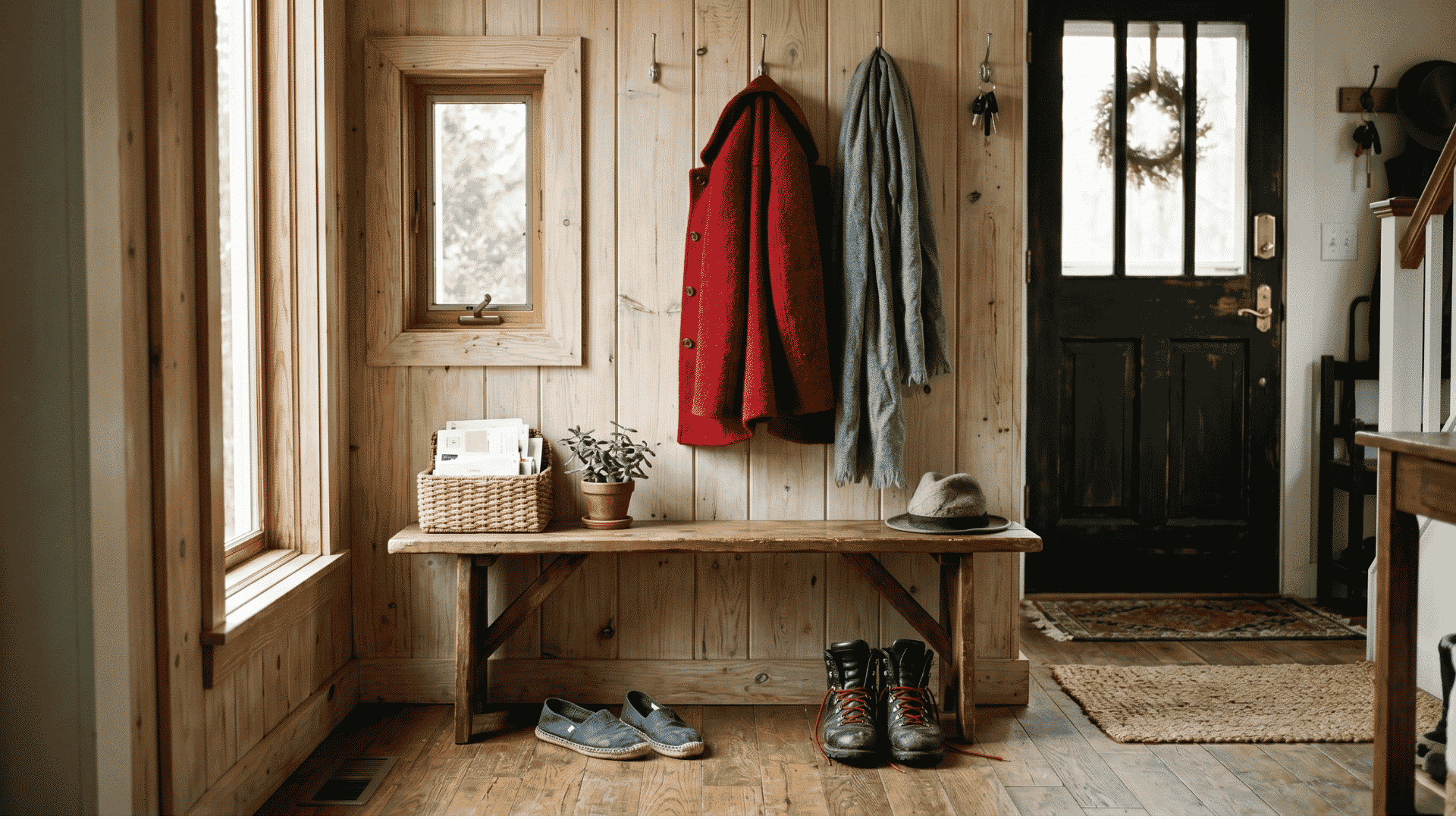
Your entryway sets the tone for everything else in the home. A wood accent wall here makes it clear that your space has personality and intention. Because entryways are usually smaller, you don’t need much wood to make an impact.
Even a single accent wall with clean vertical planks or a geometric pattern can completely change how the space feels. Lighter wood tones work well in narrow entryways because they keep things from feeling cramped.
Darker tones work great in larger foyers where you want something bold and welcoming right from the start.
15. Home Office Wood Backdrop
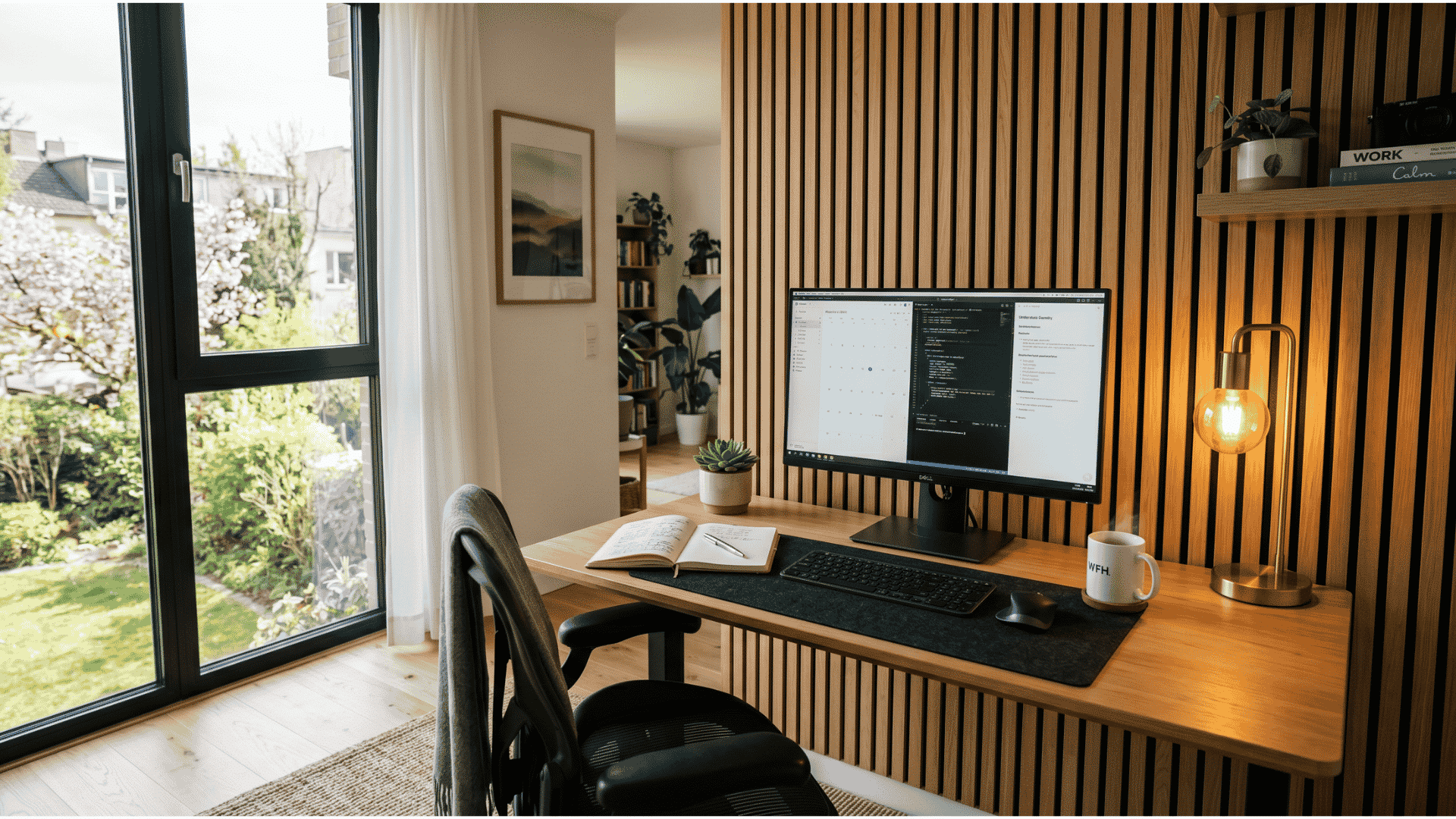
A wood accent wall in a home office serves a practical purpose that most people don’t think about right away. It makes your video call background look really, really good.
Beyond that, wood brings a calm, focused energy to a workspace that plain painted walls just don’t deliver.
Vertical slat walls and simple horizontal plank layouts are my top picks for home offices because they look professional without being distracting.
If you want to add some depth, a dark walnut or charcoal-stained wall behind your desk creates a serious, intentional workspace that’s hard not to feel productive in.
I’ve found that a wooden wall behind the desk also reduces echo during calls. It’s not a dramatic difference, but if you’re on video calls a lot, the added texture absorbs just enough sound to make your audio noticeably cleaner.
16. Bathroom Wood Accent Wall
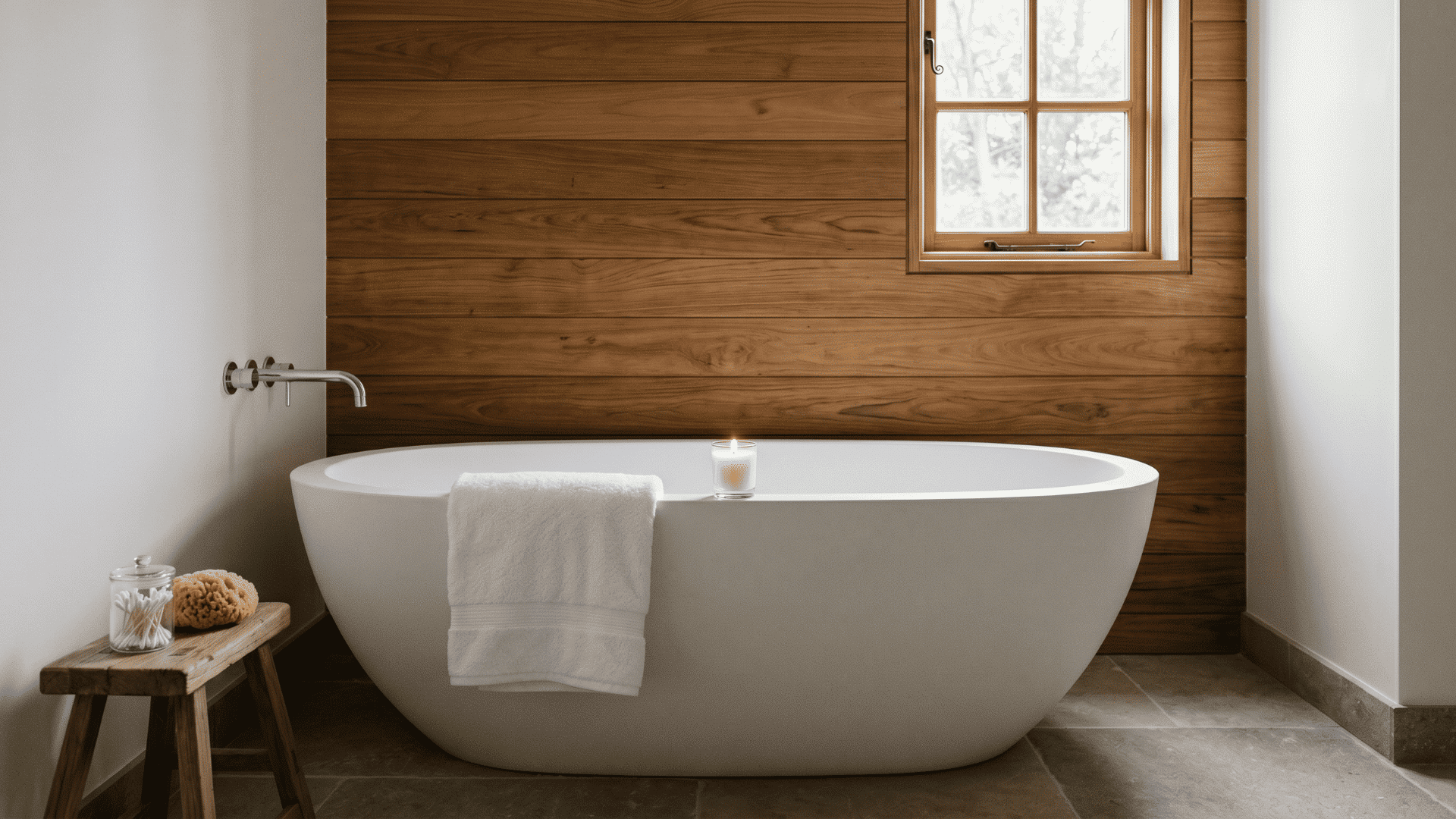
Yes, you can absolutely put a wood accent wall in a bathroom, but you do need to be smart about it. The key is choosing the right materials and sealing them properly so moisture doesn’t cause warping or damage over time.
Teak, cedar, and engineered wood are all solid choices for bathrooms because they handle humidity better than most other wood types.
A wood accent wall works best on the wall opposite the shower or behind a freestanding tub, somewhere it won’t get directly hit by water.
Done right, a wood wall in a bathroom feels quiet, polished, and really unexpected in the best way.
Always apply at least two coats of a water-resistant sealant before installing wood in a bathroom, and reapply every couple of years. Skipping this step is the number one reason bathroom wood walls fail.
17. Hallway and Staircase Feature Wall
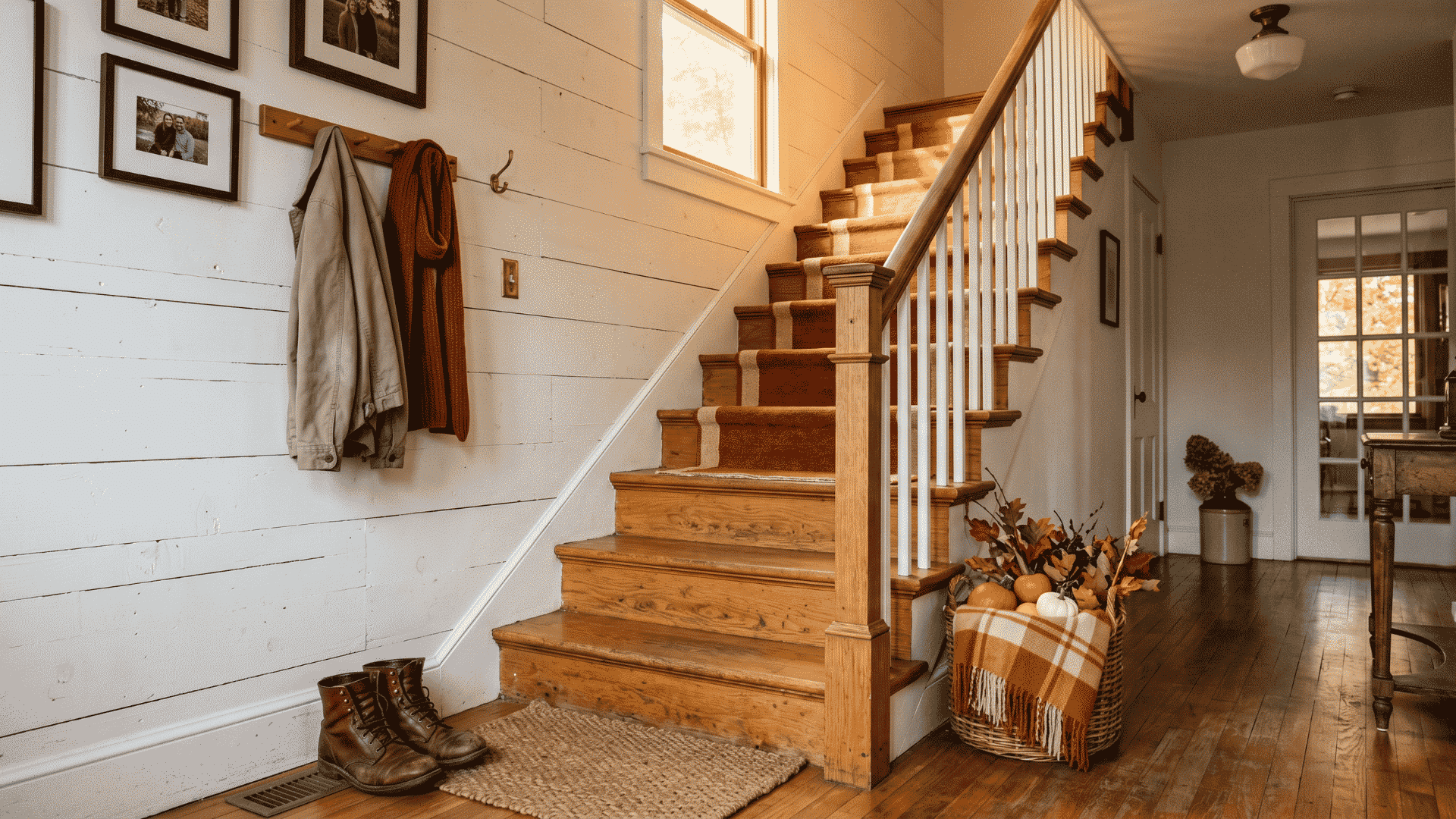
Hallways and staircases are usually the last places people think of for accent walls, which is exactly why they’re such a great opportunity.
A wood wall running along a staircase or down a long hallway creates a strong visual line that guides people through the home and makes the space feel intentional rather than just functional.
Shiplap and vertical plank layouts work really well here because they follow the natural lines of the architecture.
For staircases, an angled wood installation that follows the pitch of the stairs is one of those details that looks like it took a lot of thought, even when it didn’t.
Trending Wood Accent Wall Designs
Wood accent walls have come a long way from basic shiplap. Right now, there are some genuinely exciting design directions happening that mix materials, finishes, and lighting in ways that feel fresh and current.
If you want your wall to feel like it belongs today, these are the trends worth paying attention to. Here’s what’s getting a lot of attention right now and why each one works so well.
18. Fluted and Ribbed Wood Panels
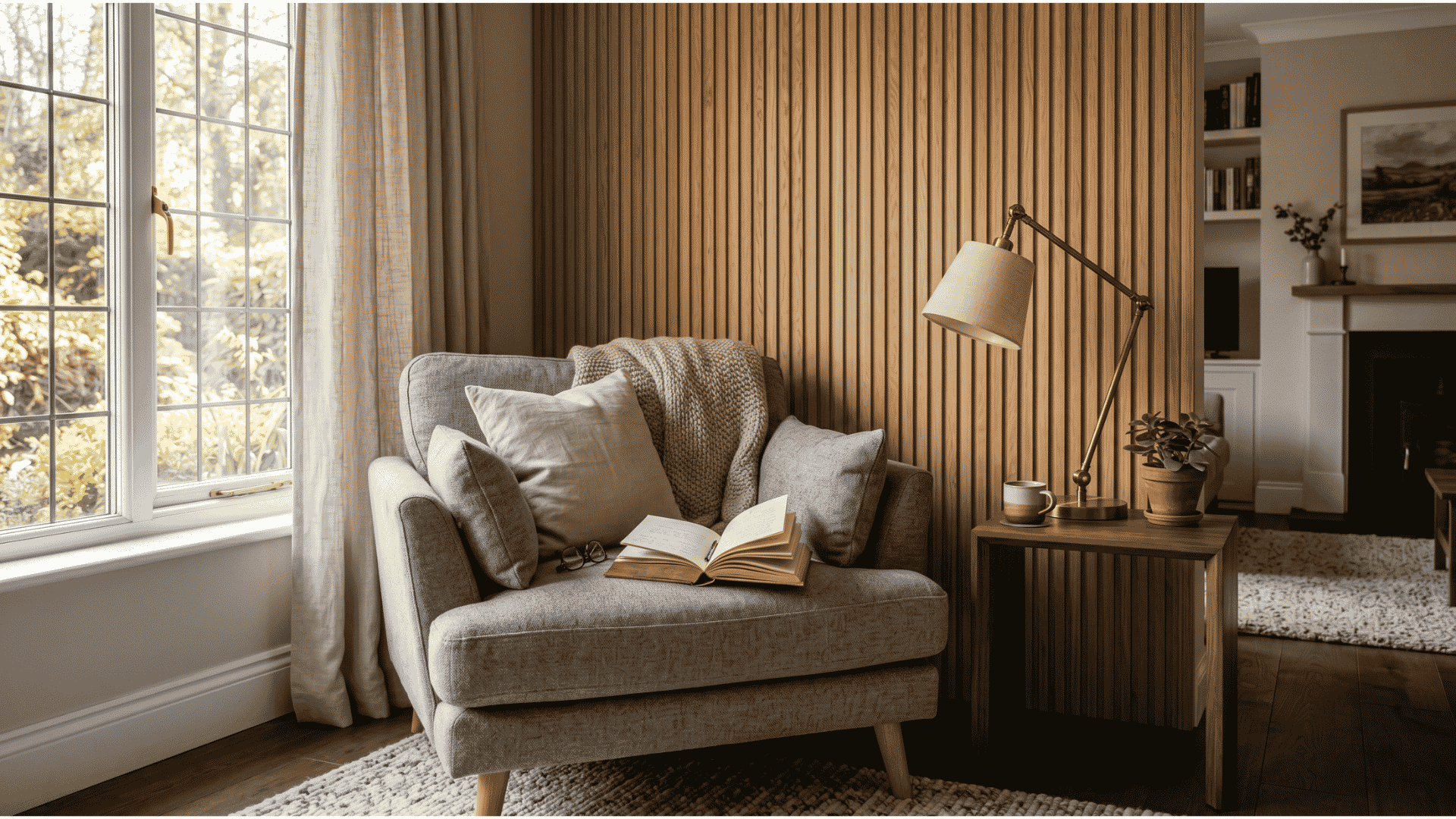
Fluted and ribbed wood panels are everywhere right now, and honestly, it’s easy to see why.
The raised, rounded grooves running vertically across the wall create a texture that catches light beautifully and adds serious depth to any flat surface.
It looks polished without trying too hard, which is a combination that’s hard to pull off. This style works especially well in living rooms, bedrooms, and entryways where you want something that feels fresh and well-thought-out.
You can buy pre-made fluted panels or create the look yourself by attaching round dowels to a flat backing board.
Fluted panels collect dust in the grooves more than flat walls do. A quick run with a soft brush attachment on your vacuum every few weeks keeps them looking sharp without any real effort.
19. Japandi-Inspired Wood Walls
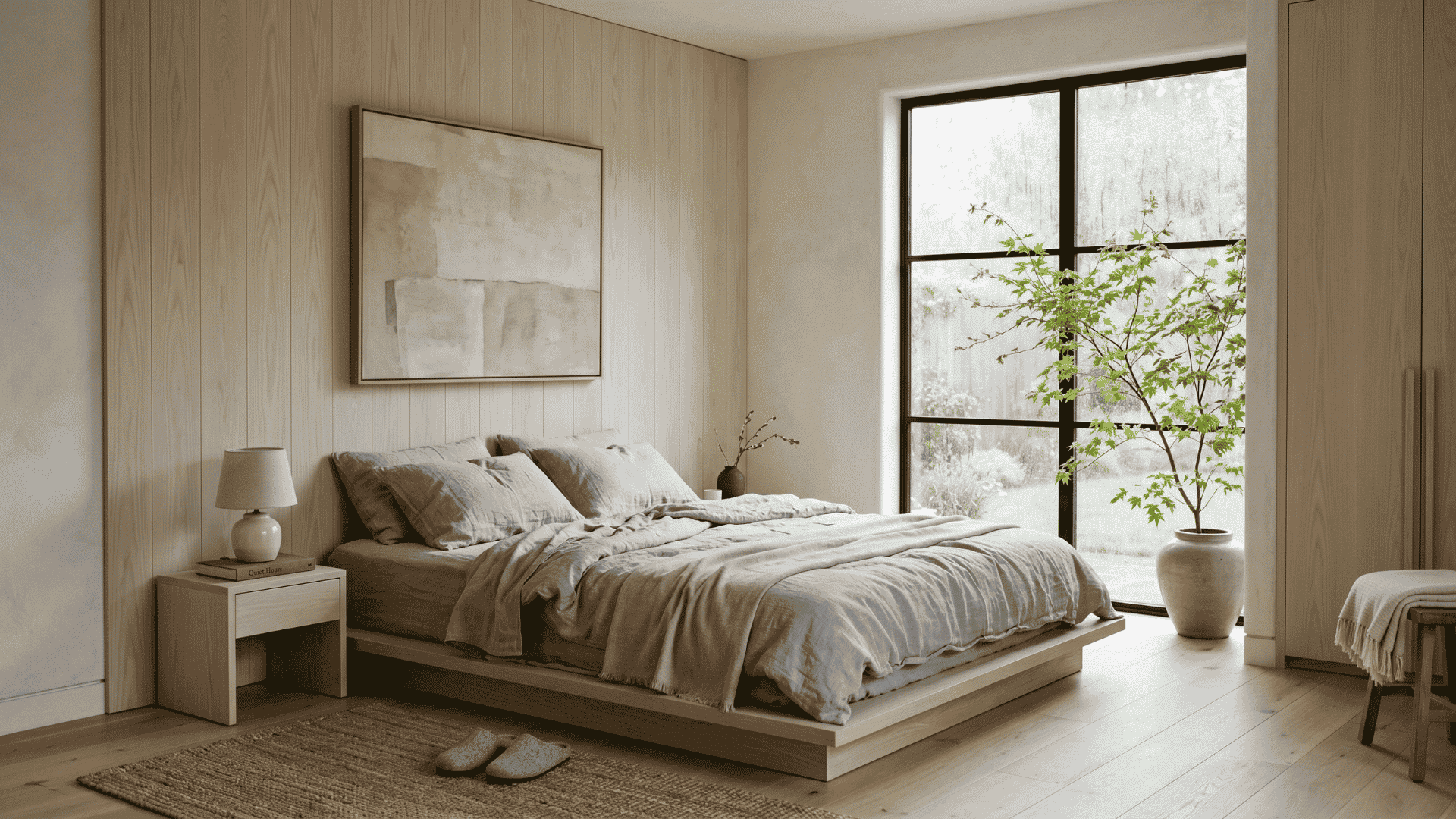
Japandi is the design child of Japanese minimalism and Scandinavian simplicity, and it has taken the interior world by storm over the last couple of years.
A Japandi-inspired wood wall leans into natural grain, muted tones, and clean, uncluttered lines.
Think light ash, pale oak, or natural cedar with very little finishing so the wood looks and feels as close to its natural state as possible. There are no bold patterns or high-contrast stains here. The whole point is quiet, intentional beauty.
This style works best in bedrooms, meditation spaces, and living rooms where the goal is calm over everything else.
20. Black Wood Accent Walls
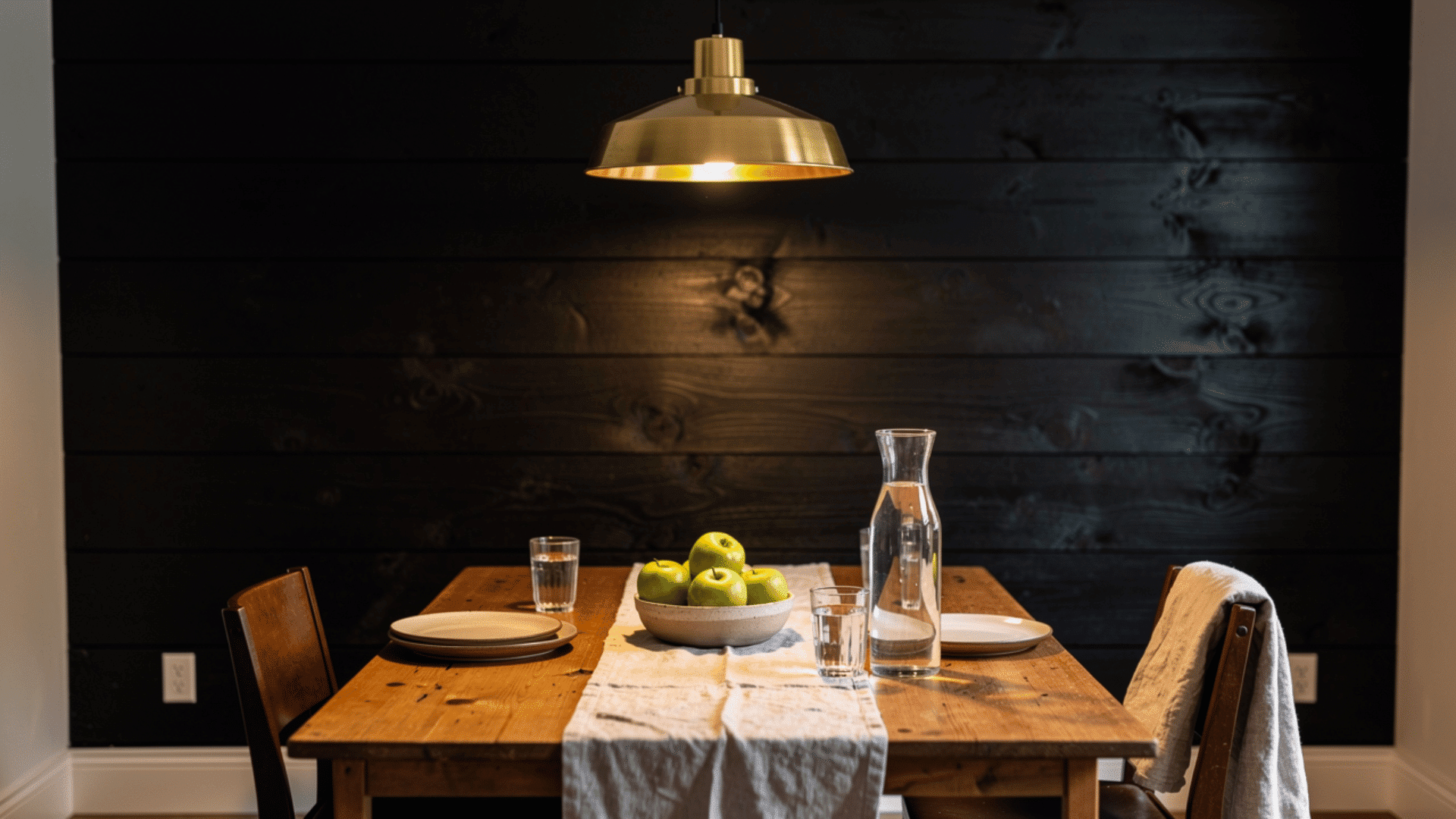
Black wood accent walls are bold, dramatic, and surprisingly versatile. Whether it’s a deep ebony stain, a charcoal finish, or actual black paint over wood planks, this look commands attention in a way that few other wall treatments can.
It works best in rooms with good natural light or strong artificial lighting because, without it, a black wall can make a space feel smaller than it actually is.
Done well, a black wood wall in a dining room or home office feels sophisticated and intentional. It also pairs incredibly well with brass hardware, warm lighting, and natural textures like linen and rattan.
21. Whitewashed Wood Panels
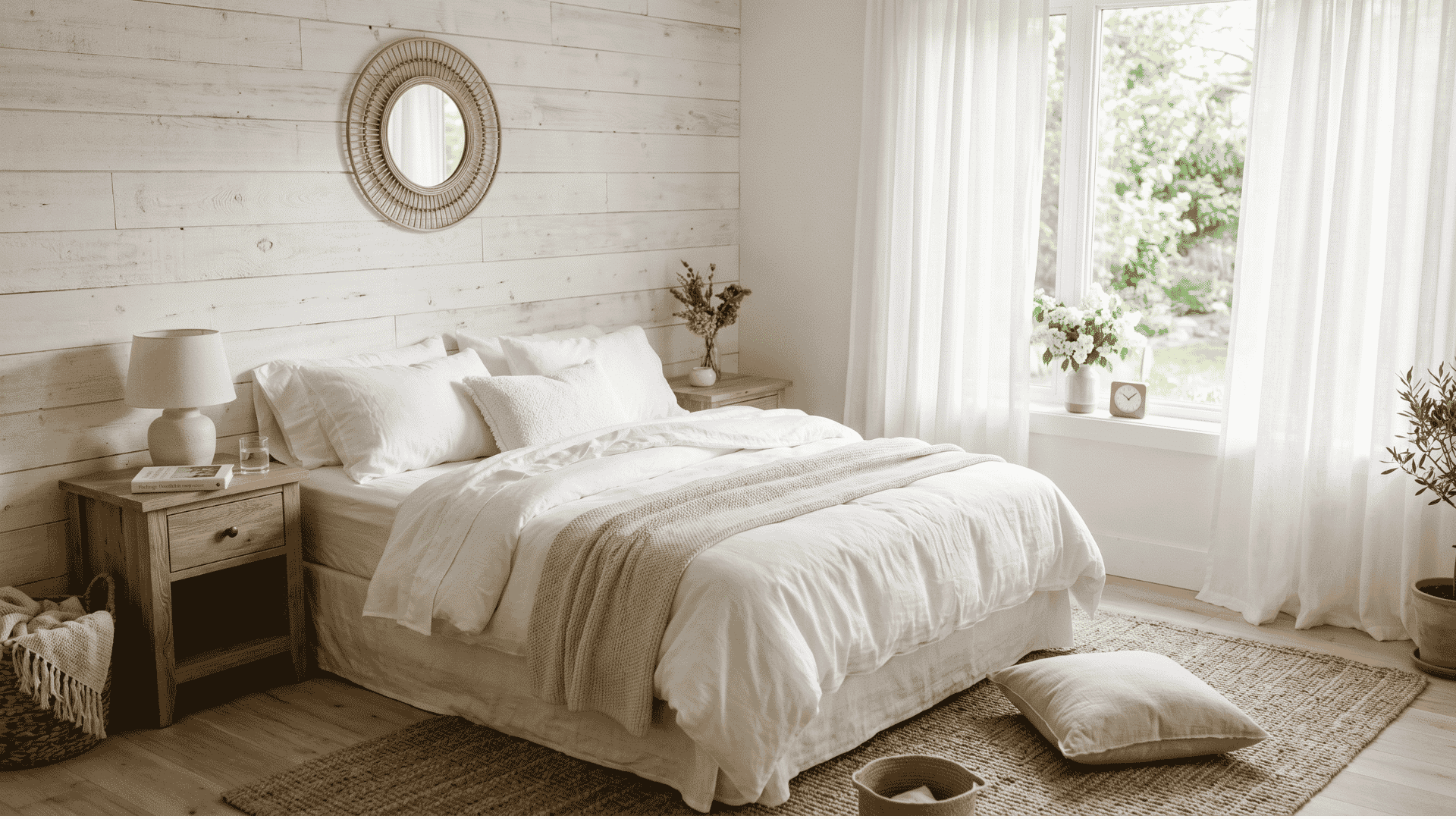
Whitewashed wood has a relaxed, coastal quality that makes rooms feel casual and bright without losing the warmth that wood naturally brings.
The whitewashing technique involves applying a diluted white paint or lime wash over raw wood and then wiping it back so the grain still shows through.
The result is something that feels softer than natural wood but more interesting than a plain white wall.
It works beautifully in bedrooms, living rooms, and bathrooms, and pairs well with neutral tones, woven textures, and simple greenery.
It’s also one of the more forgiving DIY finishes because slight imperfections actually add to the overall look.
Use a lint-free rag rather than a brush to apply and wipe back the whitewash. A brush can leave streaks that look uneven once the paint dries, but a rag gives you much more control over how much white stays on the surface.
Final Thoughts
A wood accent wall is one of those changes that sounds simple but completely shifts how a room feels. We covered a lot of ground here, from vertical slats and reclaimed wood to trending styles like fluted panels and Japandi-inspired walls.
We looked at which rooms work best, what materials to consider, and how different layouts change the mood of a space.
The best part is that there’s genuinely something here for every home, every style, and every budget. You don’t need to do it all at once, either. Pick one room, pick one style, and start there.
If this gave you some ideas for your own space, I’d love to hear about it. Drop a comment below and tell me which wood accent wall style is your favorite. And if you found this helpful, share it with someone who’s been staring at a boring wall for too long.
Frequently Asked Questions
What is the Cheapest Way to Make a Wood Accent Wall?
Plywood cut into strips is the most budget-friendly option. Peel-and-stick wood panels are another affordable choice, especially for renters or smaller walls.
Which Wall in a Room Should be the Wood Accent Wall?
Pick the wall your eyes go to first when entering the room. In bedrooms, that’s behind the bed; in living rooms, it’s behind the TV.
Can You Put a Wood Accent Wall in a Bathroom?
Yes. Use moisture-resistant woods like teak or cedar, seal them properly, and avoid placing the wall anywhere it gets directly hit by water.
Do Wood Accent Walls Make a Room Look Smaller?
Not if done right. Light wood tones and vertical layouts actually make rooms feel more open and taller than they really are.
How Long does a Wood Accent Wall Last?
A properly installed wood accent wall can last decades. Bathroom walls need resealing every couple of years, but indoor walls need very little maintenance.