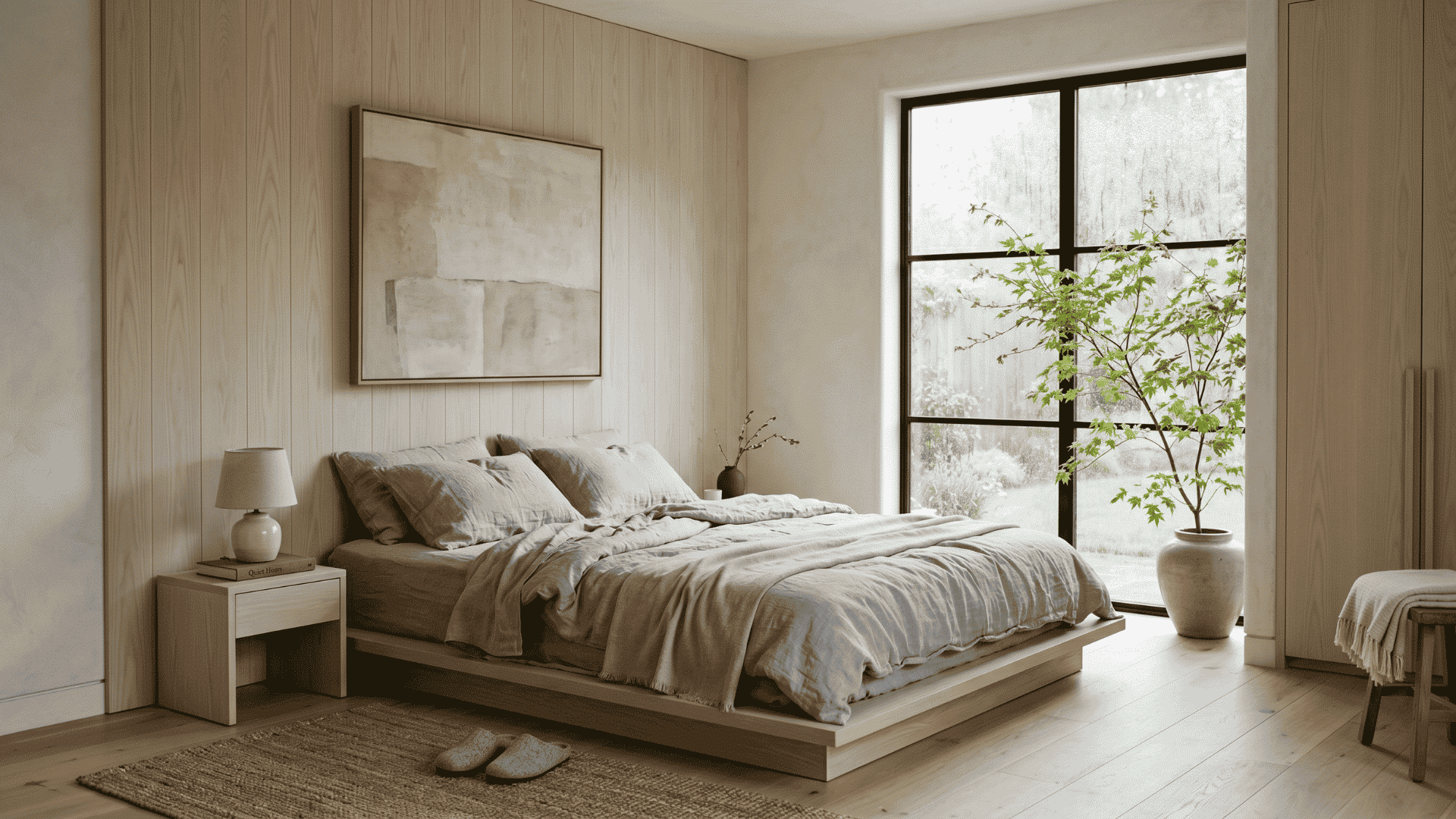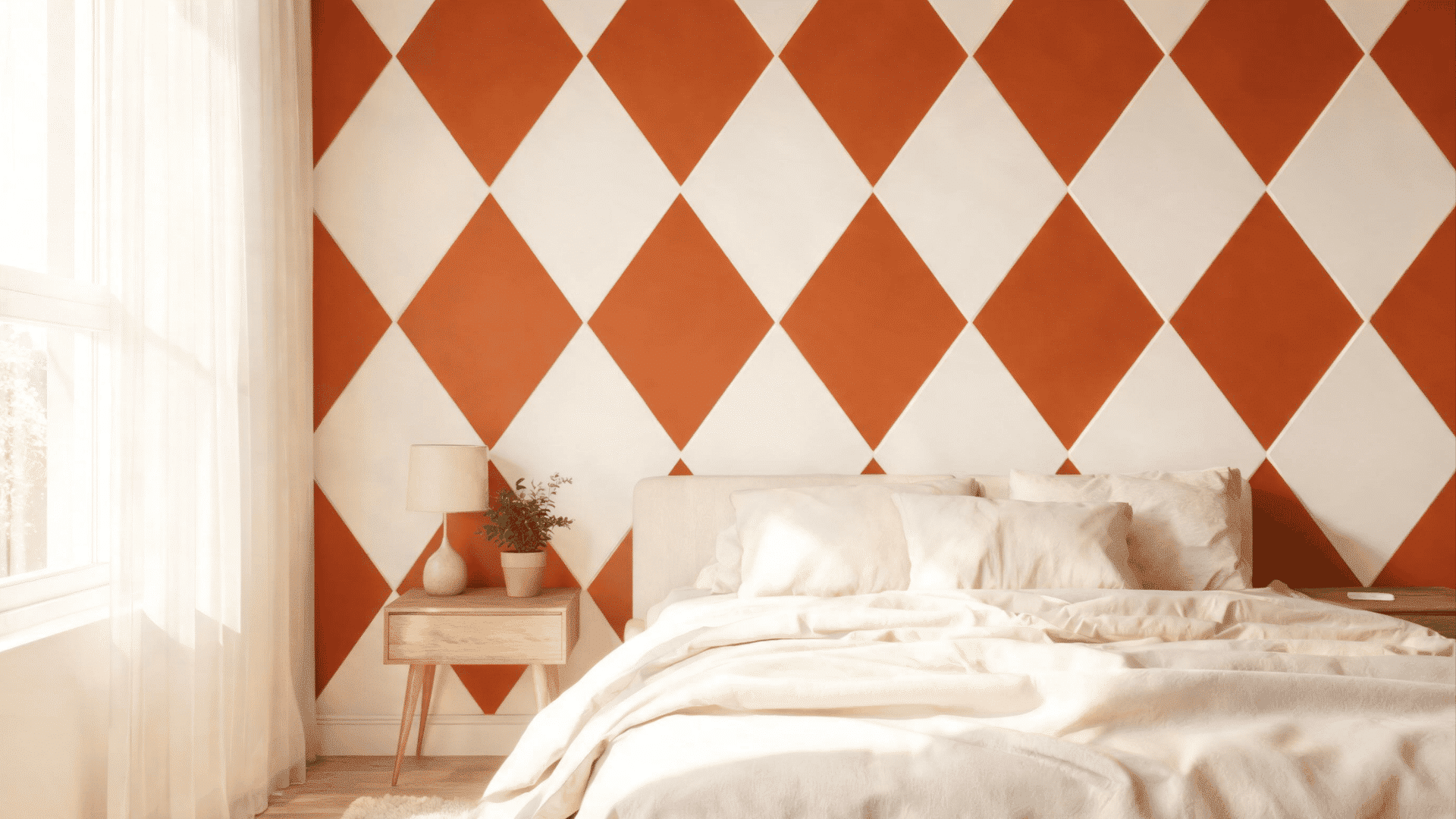
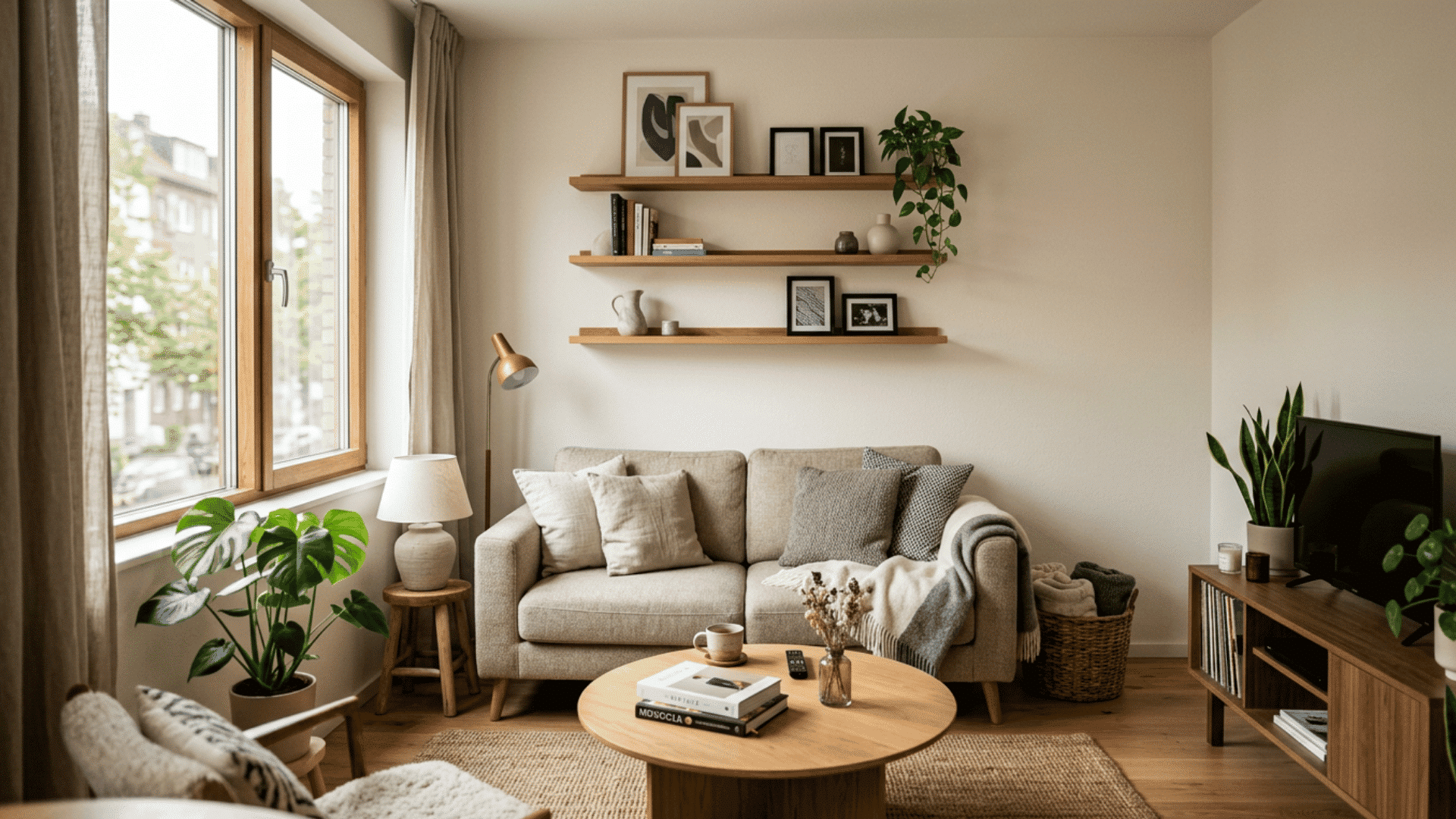
A small living room can feel hard to decorate when every inch matters. The right setup can make the space feel open, comfortable, and easy to use without spending too much money.
I know how frustrating it is when a room feels crowded even after cleaning or rearranging furniture. That’s why simple changes often make the biggest difference.
This article shares clever small living room decor ideas that help you save space while adding style and comfort.
You’ll find smart furniture tips, wall decor inspiration, lighting ideas, storage solutions, color suggestions, and budget-friendly updates that work in real homes.
If your style is modern, cozy, or minimal, these ideas can help you create a living room that feels bigger, brighter, and more inviting every day.
Small Living Room Decor Ideas
Decorating a small living room becomes much easier when you focus on comfort, function, and smart use of space.
You do not need a large budget or expensive furniture to make your room look clean and inviting. Small changes often have the biggest impact.
A compact sofa, nesting tables, or a storage ottoman can save space while keeping the room useful.
In a small apartment, multi-purpose furniture works especially well because it helps reduce clutter without making the room feel crowded.
Focus on pieces you actually use every day. This helps your living room stay organized, comfortable, and easy to enjoy. Here are 45 ideas to get you started.
Wall Decor for Small Living Room
The right wall decor can make your small living room feel more open, organized, and personal. You do not need to cover every wall to make the space look complete.
Simple updates, smart placement, and a few useful decor pieces can help your room feel balanced without adding clutter.
1. Gallery Wall Arrangements
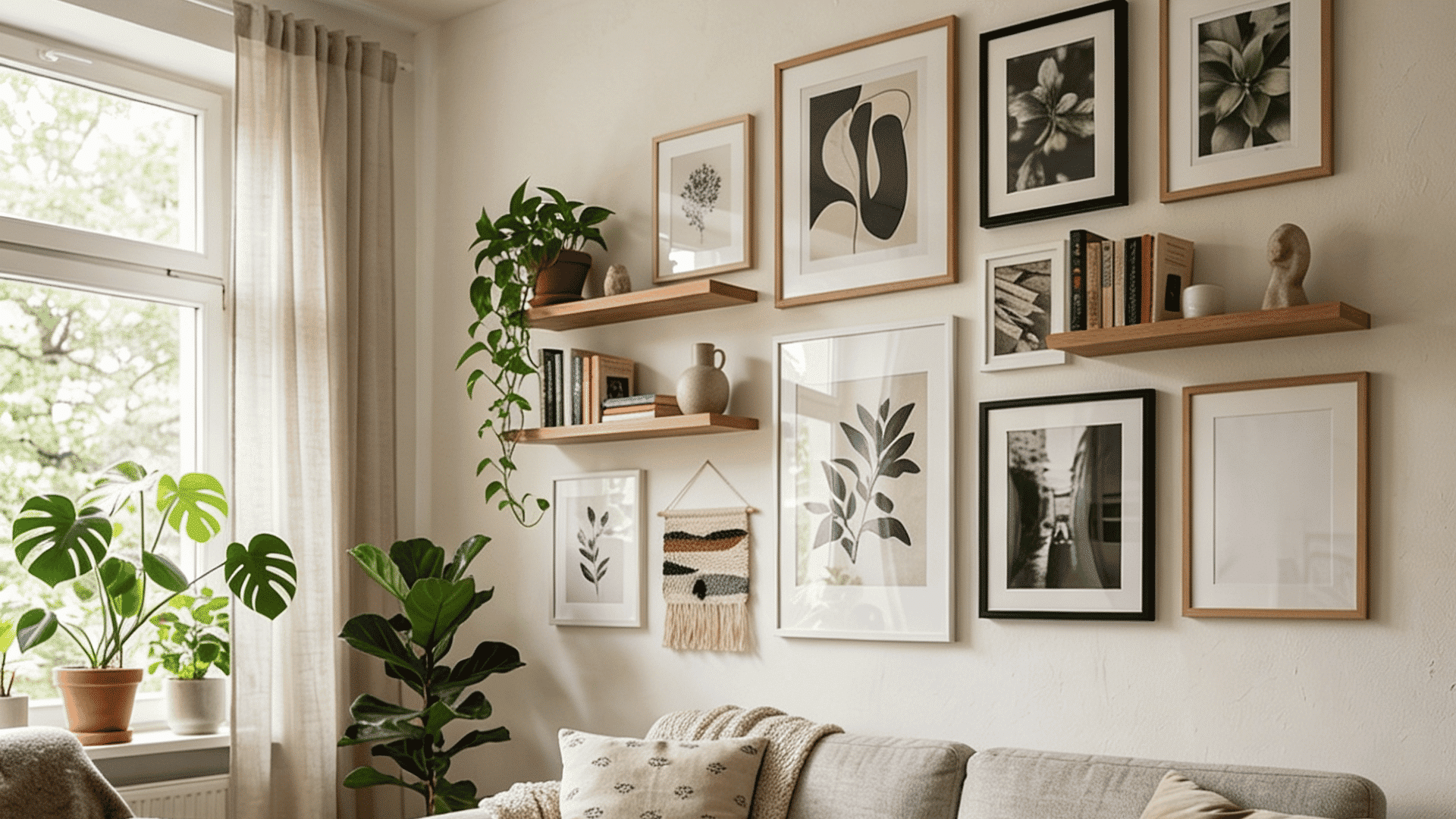
A gallery wall is an easy way to fill empty space without making the room feel crowded. Mix family photos, art prints, and small framed pieces in different sizes.
This keeps the wall interesting while still looking organized. You can use matching frames for a clean style or mix finishes for a more relaxed look.
Keep enough space between each frame so the wall does not feel busy.
2. Oversized Wall Art for Depth
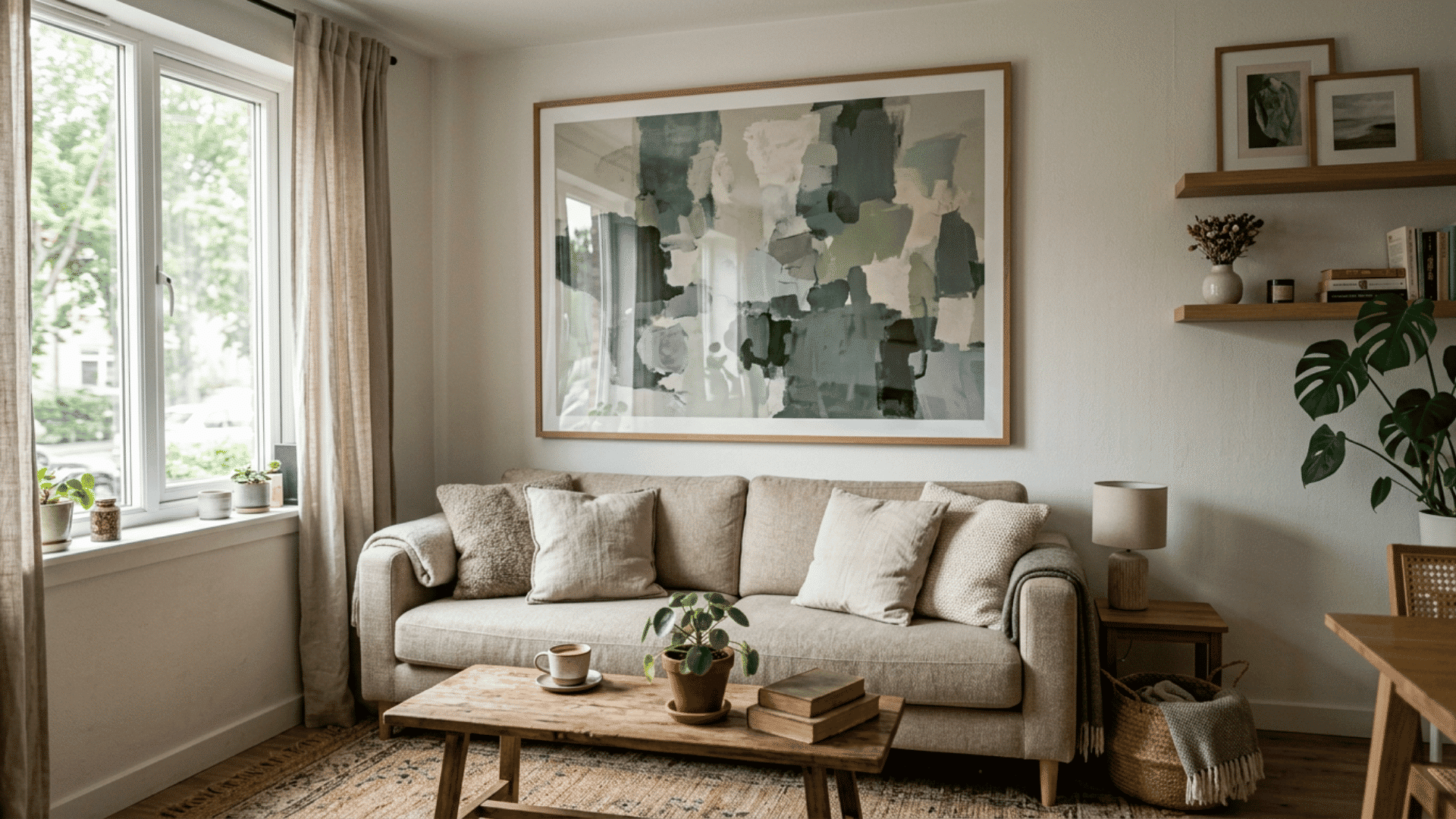
One large art piece can often work better than several small decorations.
I have noticed that oversized wall art helps draw attention upward and makes the room feel more open.
It also reduces visual clutter because you only need one main focal point. Choose artwork with simple colors or soft patterns if your living room already has a lot of furniture or decor.
3. Floating Wall Shelves
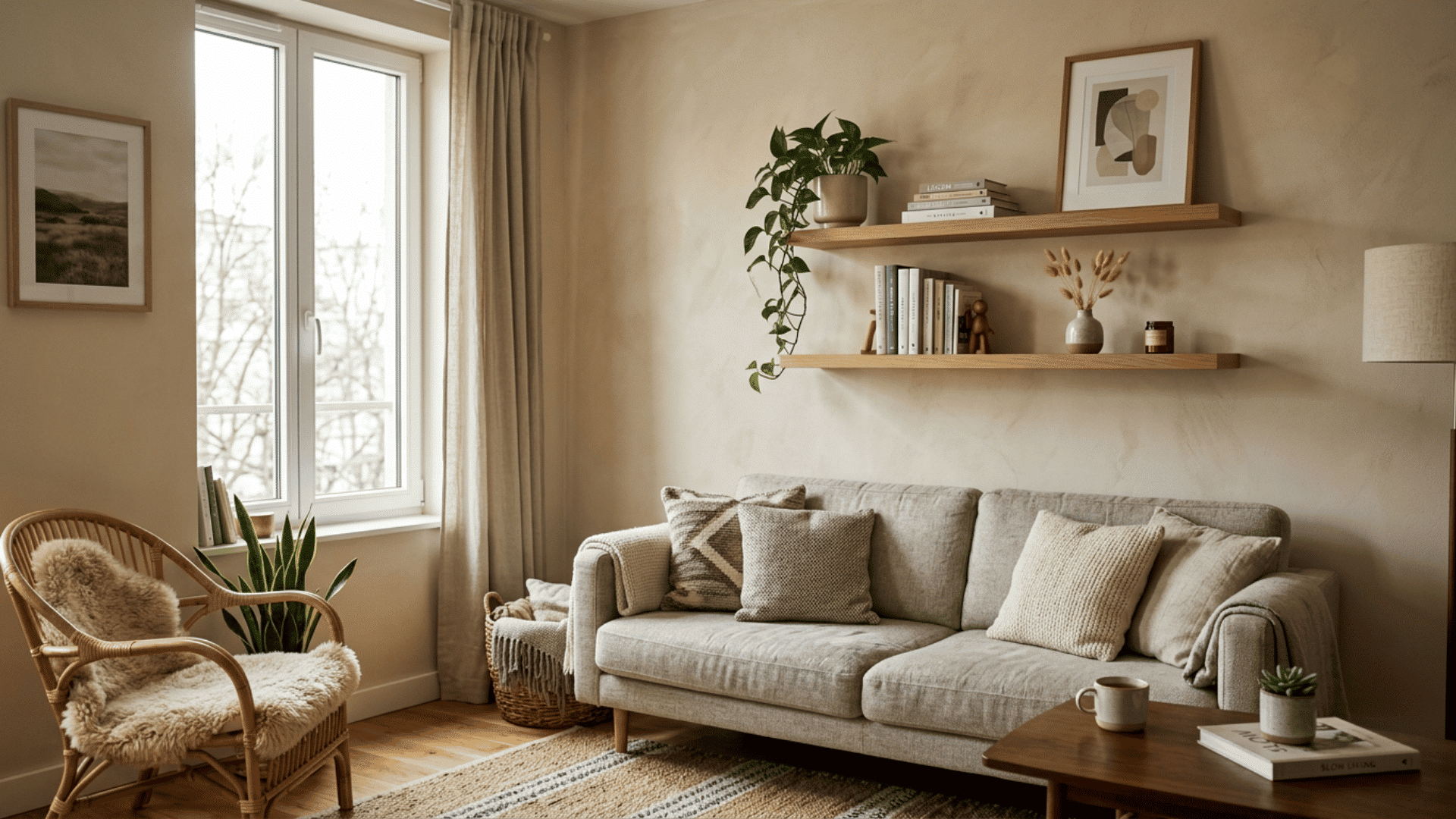
Floating shelves give you extra storage without taking up floor space.
You can use them to display books, candles, framed photos, or small plants. This option is nice because it keeps the room practical while adding personality at the same time.
Try not to overload the shelves with too many items. A few carefully placed pieces usually look better in a small living room.
4. Decorative Mirrors to Reflect Light
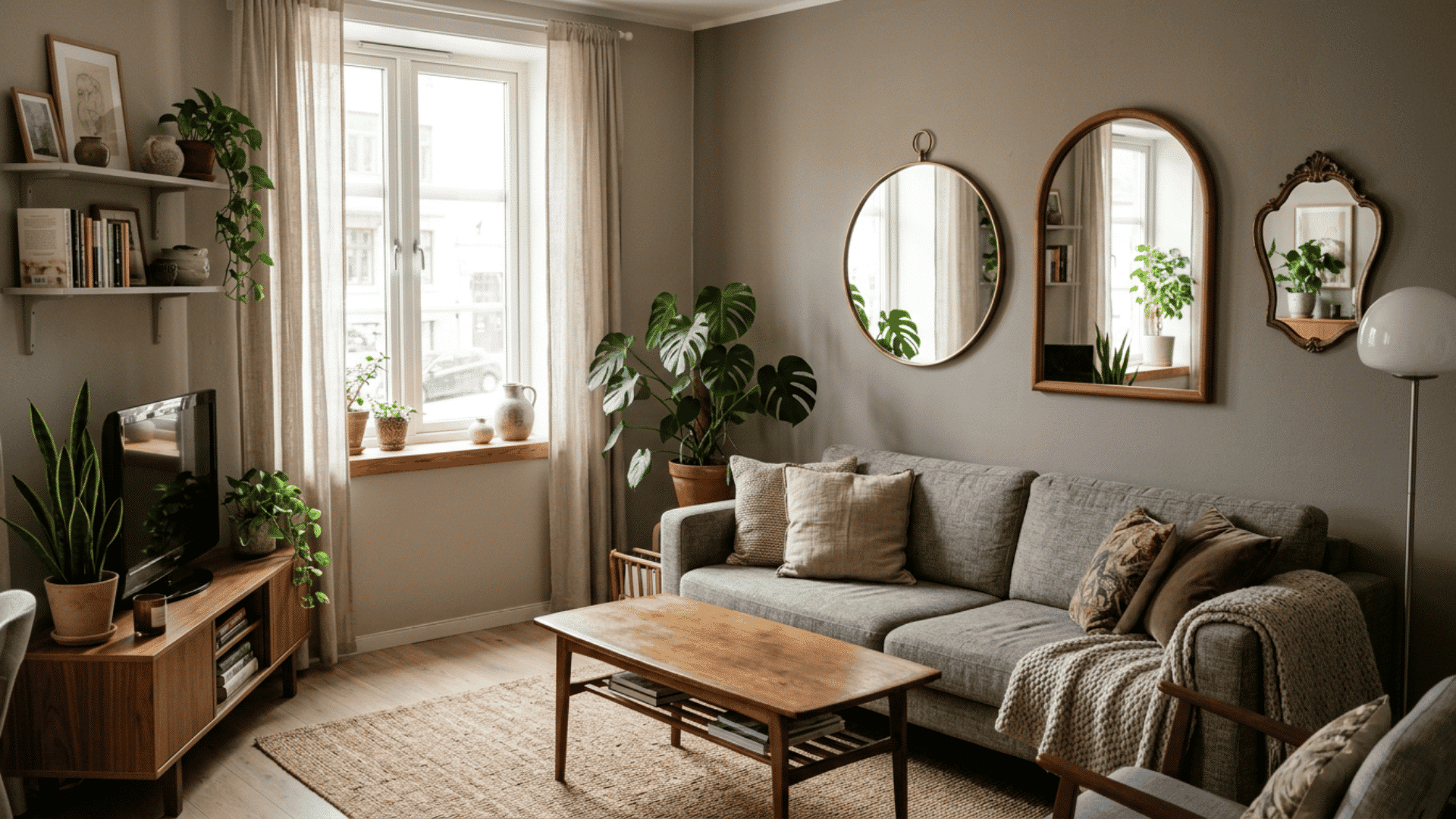
Mirrors are one of the easiest ways to make a small living room feel brighter. Placing a mirror across from a window helps reflect natural light around the room.
This simple trick can make the space look larger without changing the layout.
Choose a mirror shape that fits your style, If it is round, rectangular, or arched. Large mirrors usually create the strongest effect in small spaces.
5. Peel-and-Stick Wallpaper Accents
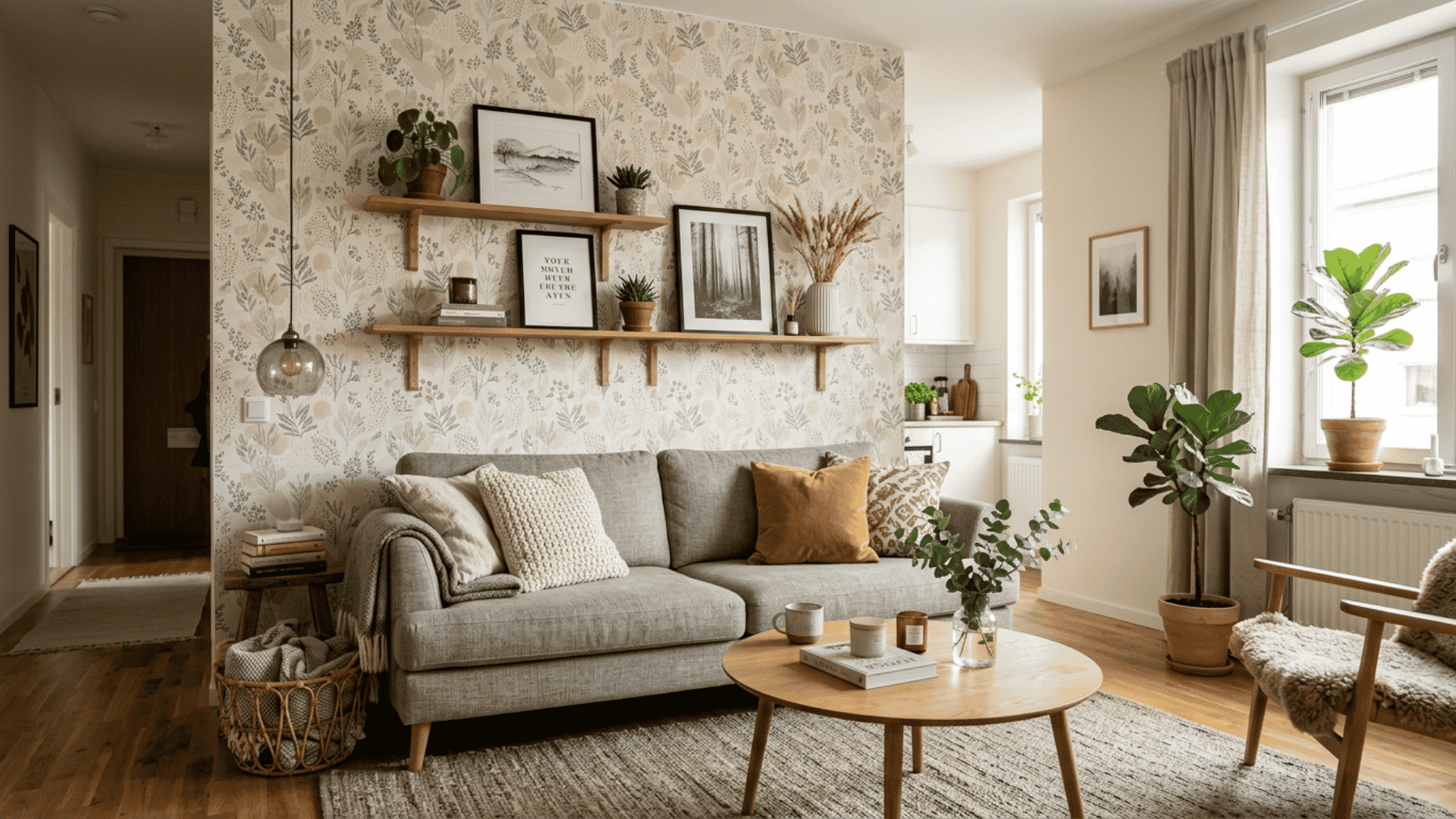
Peel-and-stick wallpaper is a simple option if you want to change the look of your walls without permanent paint or expensive work.
It is easy to apply and remove when you want something different later.
You can use wallpaper on one wall behind the sofa or around a TV area for a subtle accent. Soft patterns and light colors usually work best in smaller rooms.
6. Vertical Wall Planters
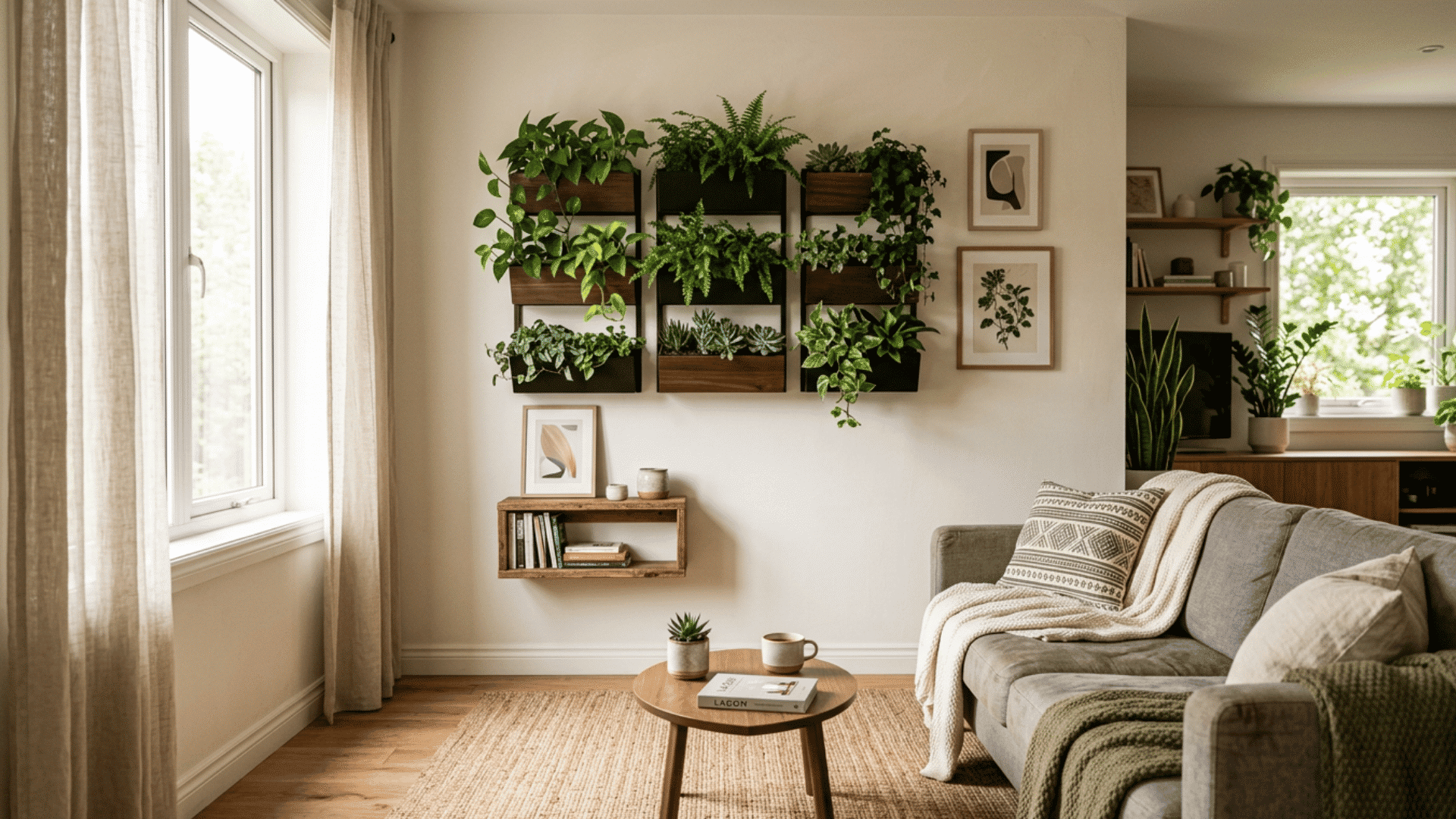
Wall planters are useful when you want greenery but do not have much floor space.
Hanging plants vertically keeps surfaces clear while still adding color and texture to the room. This is especially helpful in smaller homes where every corner matters.
Choose low-maintenance plants if you do not want extra work. Small planters with trailing greenery can make blank walls feel less empty without looking heavy.
8. Accent Wall Paint Ideas
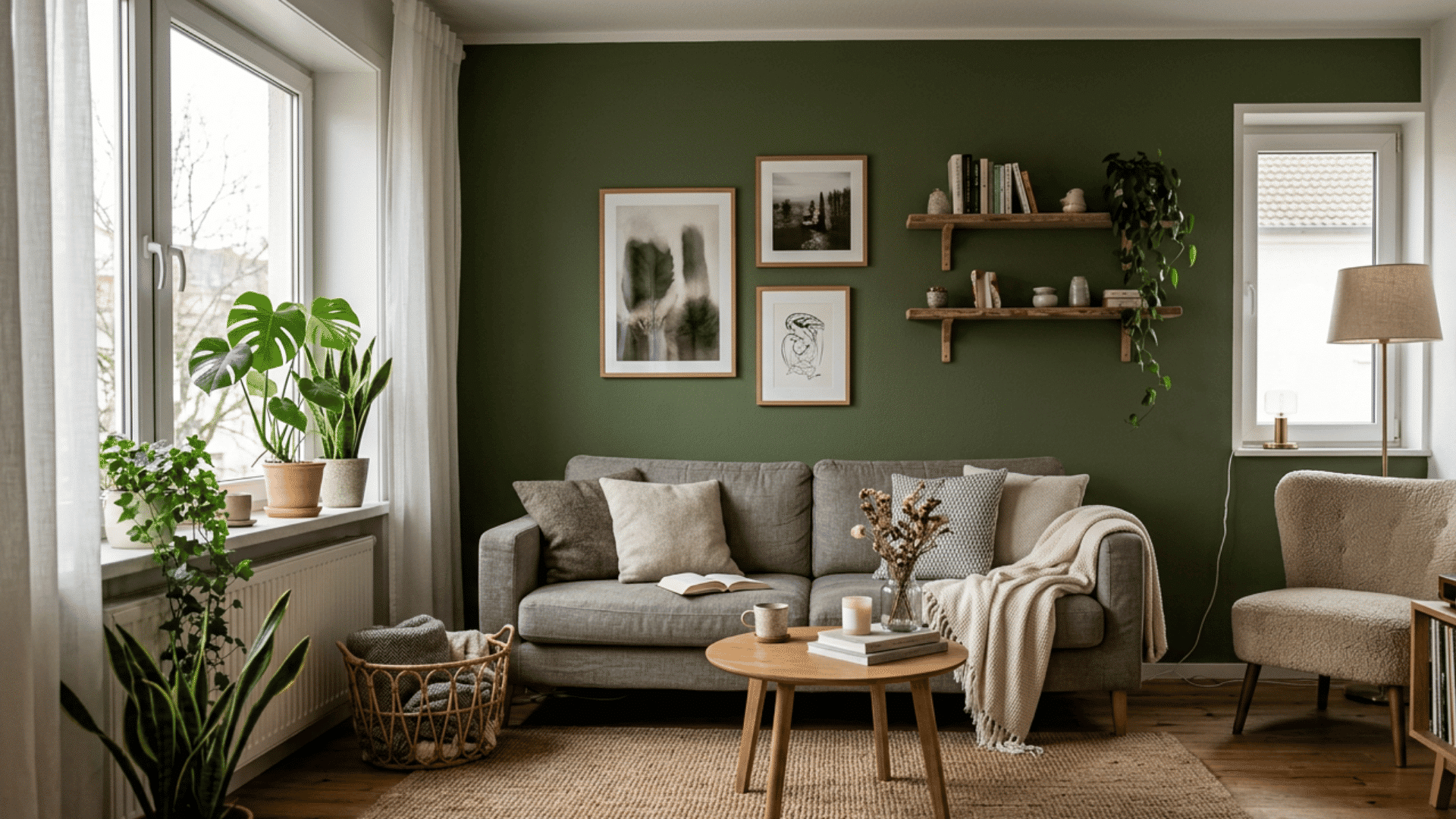
An accent wall can add style without requiring you to repaint the whole room. Choosing one wall behind the sofa or TV as the main focus area.
Soft earthy shades, muted greens, or warm neutrals often work well in smaller living rooms. One painted wall is often enough to add contrast and depth.
Furniture Decor Ideas
The right furniture can make a small living room feel more comfortable and easier to use every day. You do not need large pieces to create a stylish and functional space.
Smart furniture choices help you save space, reduce clutter, and make the room feel more open without losing comfort or storage.
9. Storage Ottomans
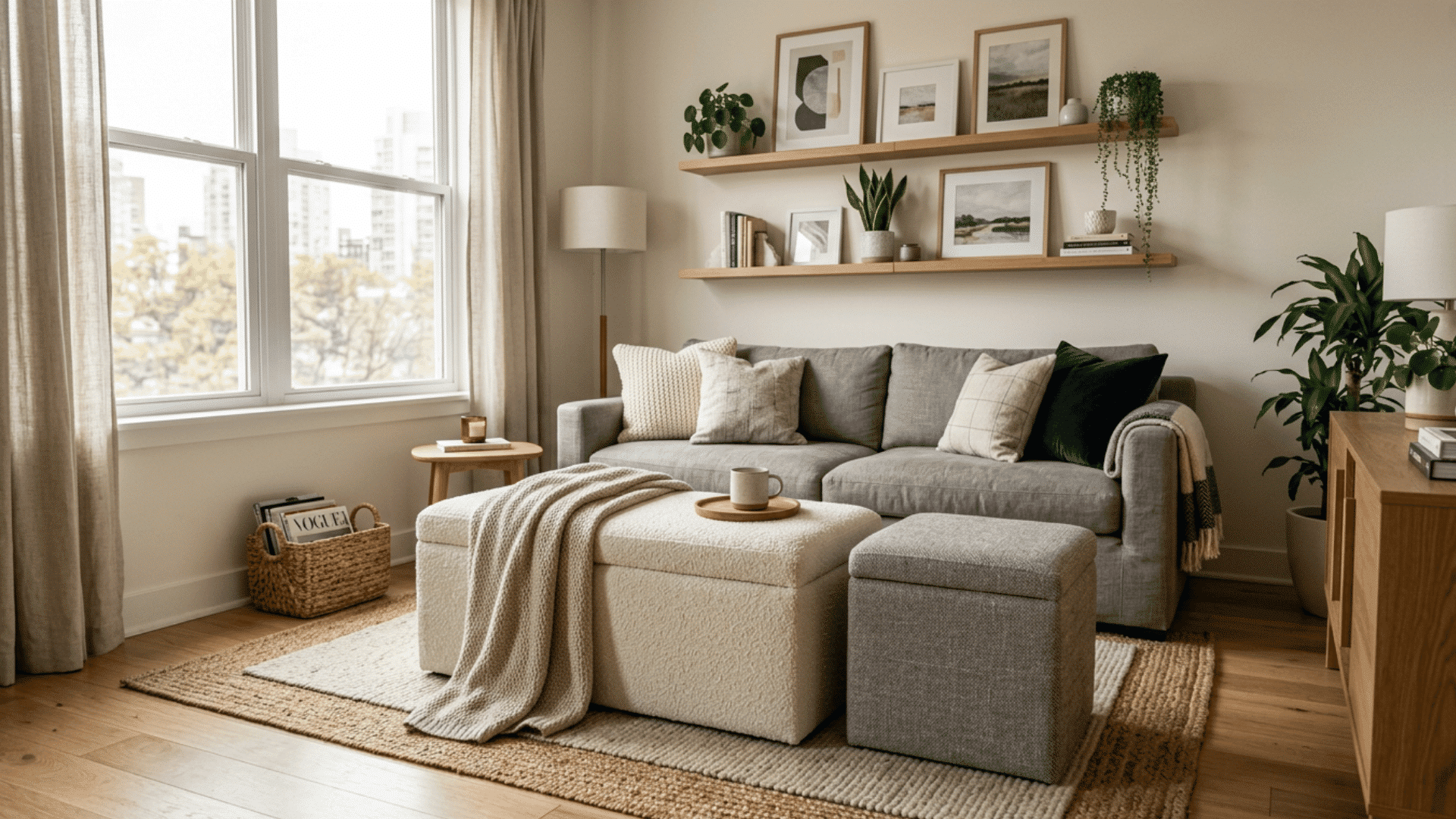
Storage ottomans are useful because they give you seating, storage, and style in one piece.
Using them in smaller living rooms helps reduce clutter without taking up extra room. You can store items inside while still using the top as a seat or footrest.
Choose a fabric or color that matches your sofa for a more connected look. Hidden storage helps your living room stay cleaner and easier to manage.
10. Compact Sectional Sofas
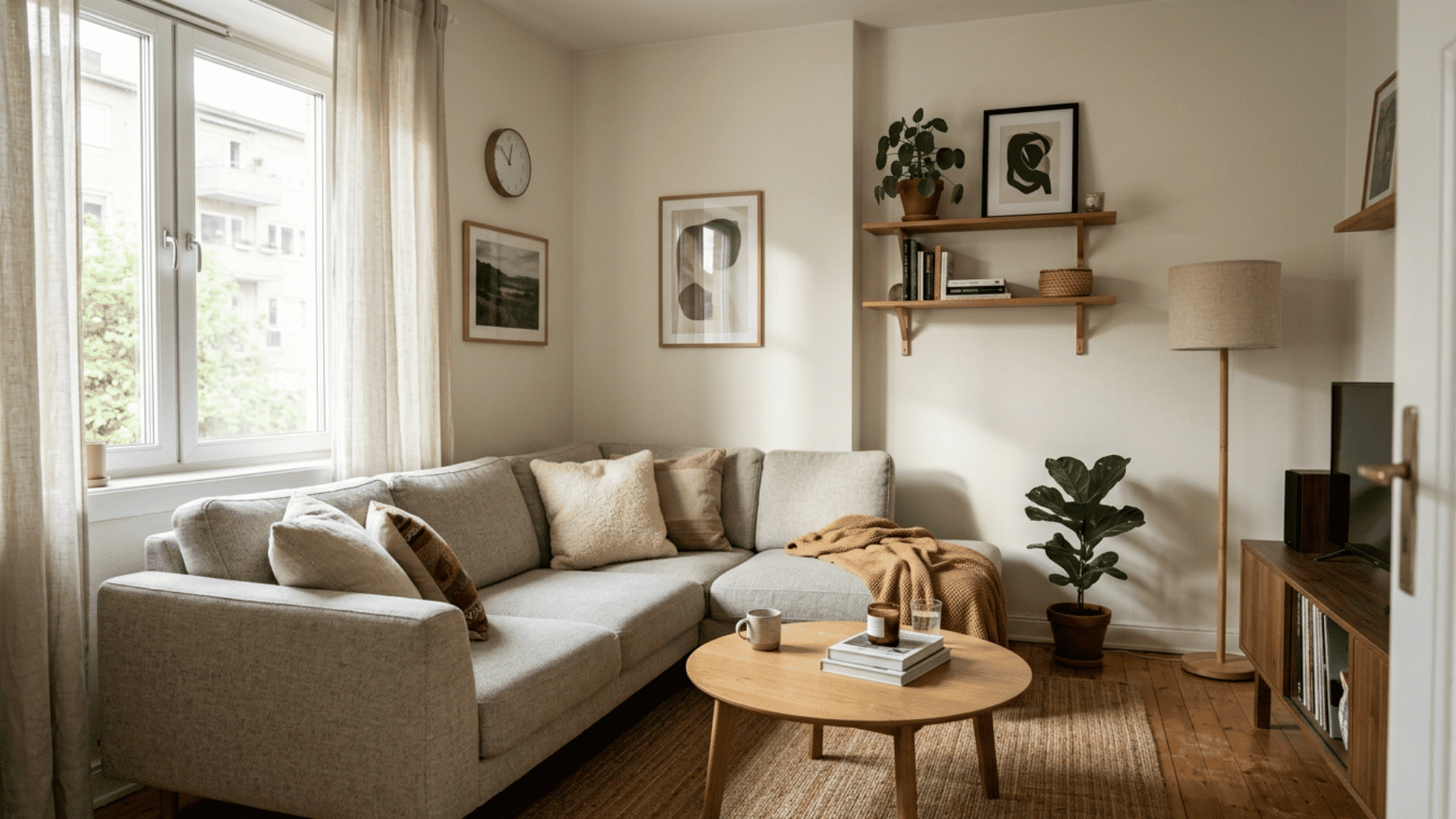
A compact sectional sofa can provide enough seating without making the room feel overcrowded.
Choose smaller L-shaped sectionals because they help define the living area while still leaving space to move comfortably. They work especially well in apartments or narrow rooms.
Look for slim armrests and raised legs if you want the room to feel more open. Large, bulky sofas can quickly overpower a small space.
11. Nesting Tables
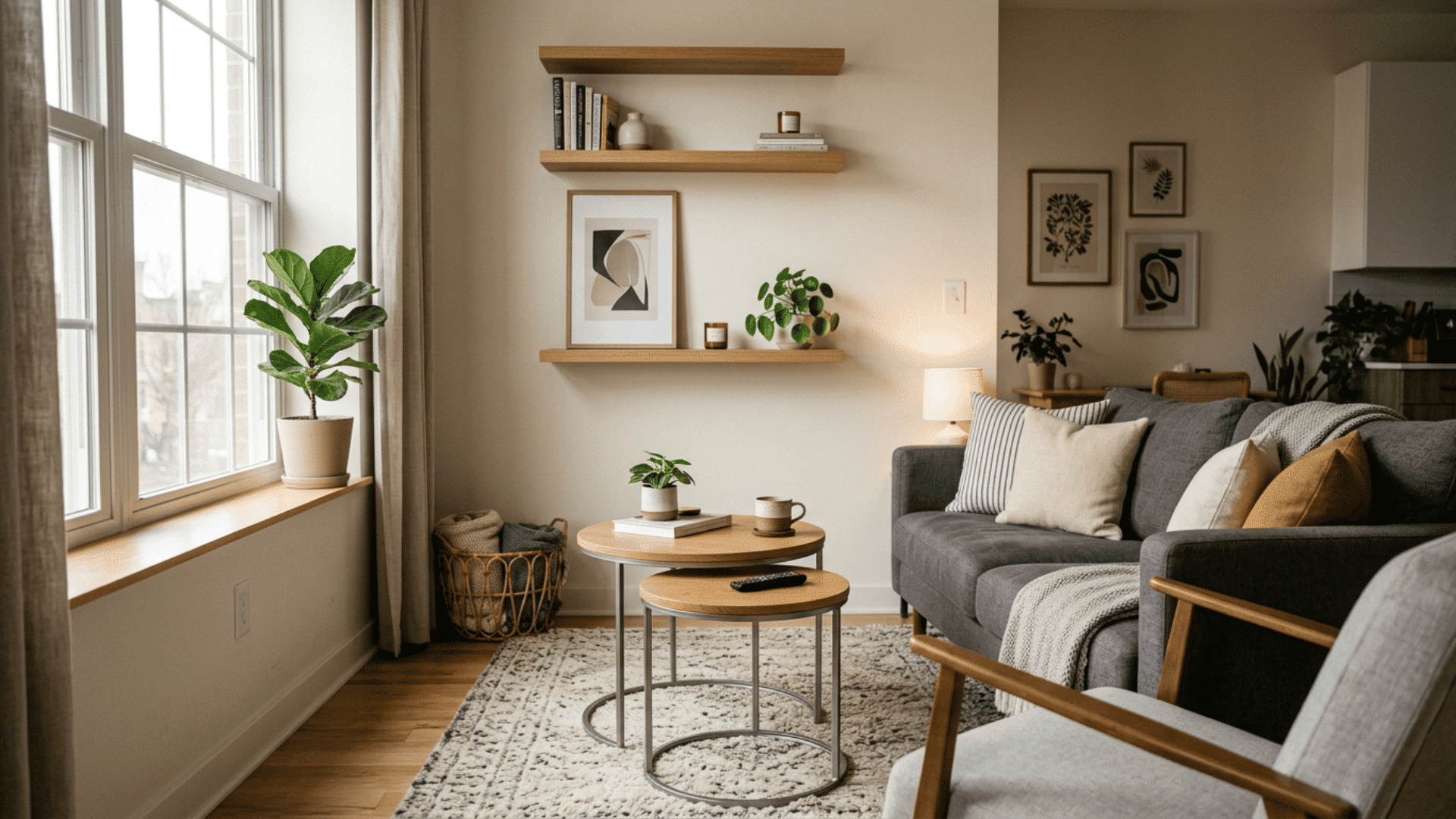
Nesting tables are practical because you can pull them out when needed and tuck them away later.
I recommend them for smaller living rooms where extra table space is useful, but permanent furniture feels too crowded.
Flexible furniture helps your room adapt to different needs throughout the day.
Glass or light wood finishes can also help nesting tables blend into the room without making the area feel heavy.
12. Foldable Furniture Ideas
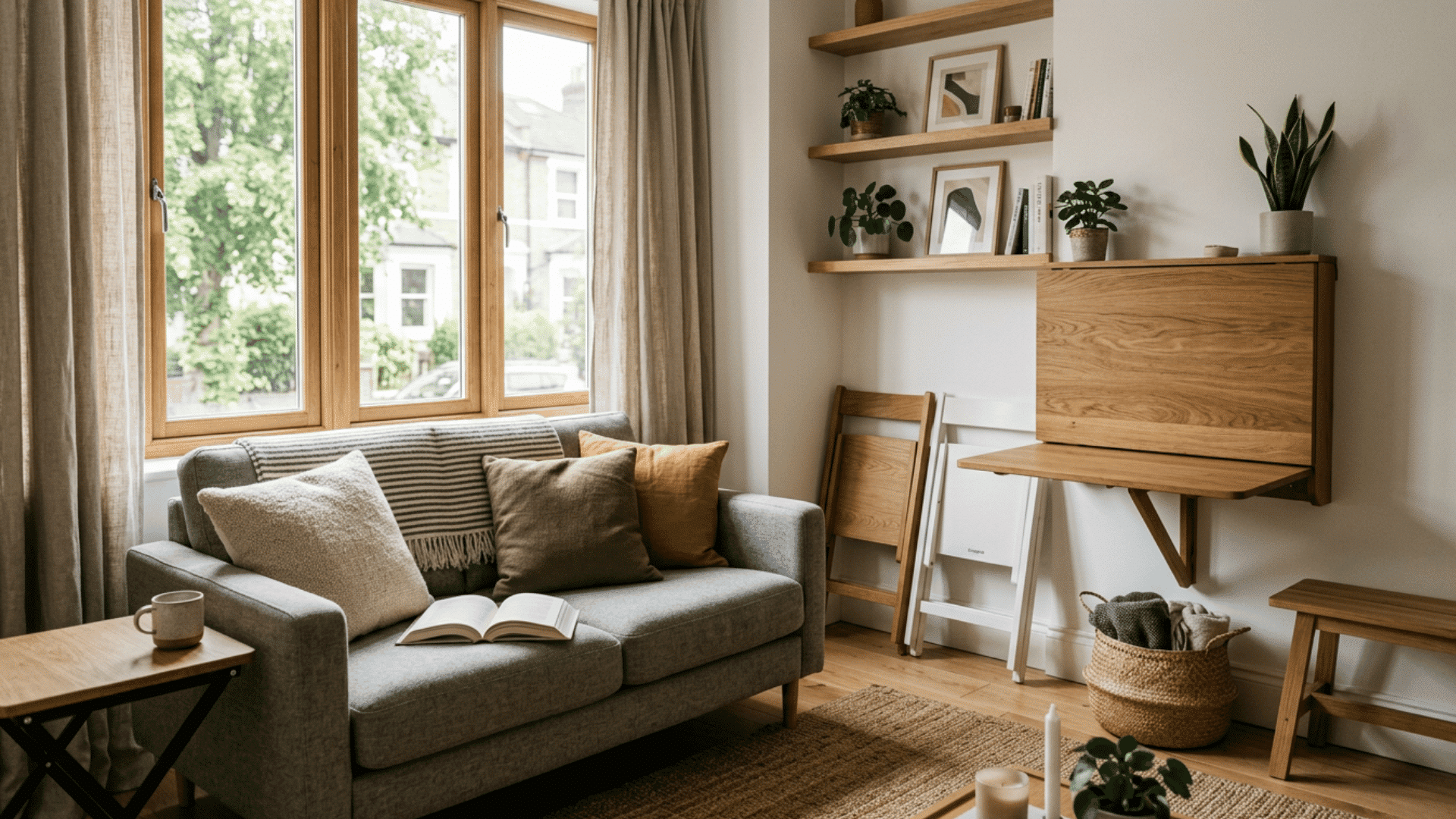
Foldable furniture works well when you need flexibility in a small living room. Pick pieces that can be easily stored away, such as folding side tables, chairs, or desks.
This helps you create more space whenever the room feels too full or when guests visit.
Foldable pieces are especially useful if your living room also needs to function as a workspace or dining area sometimes.
13. Modular Seating Options
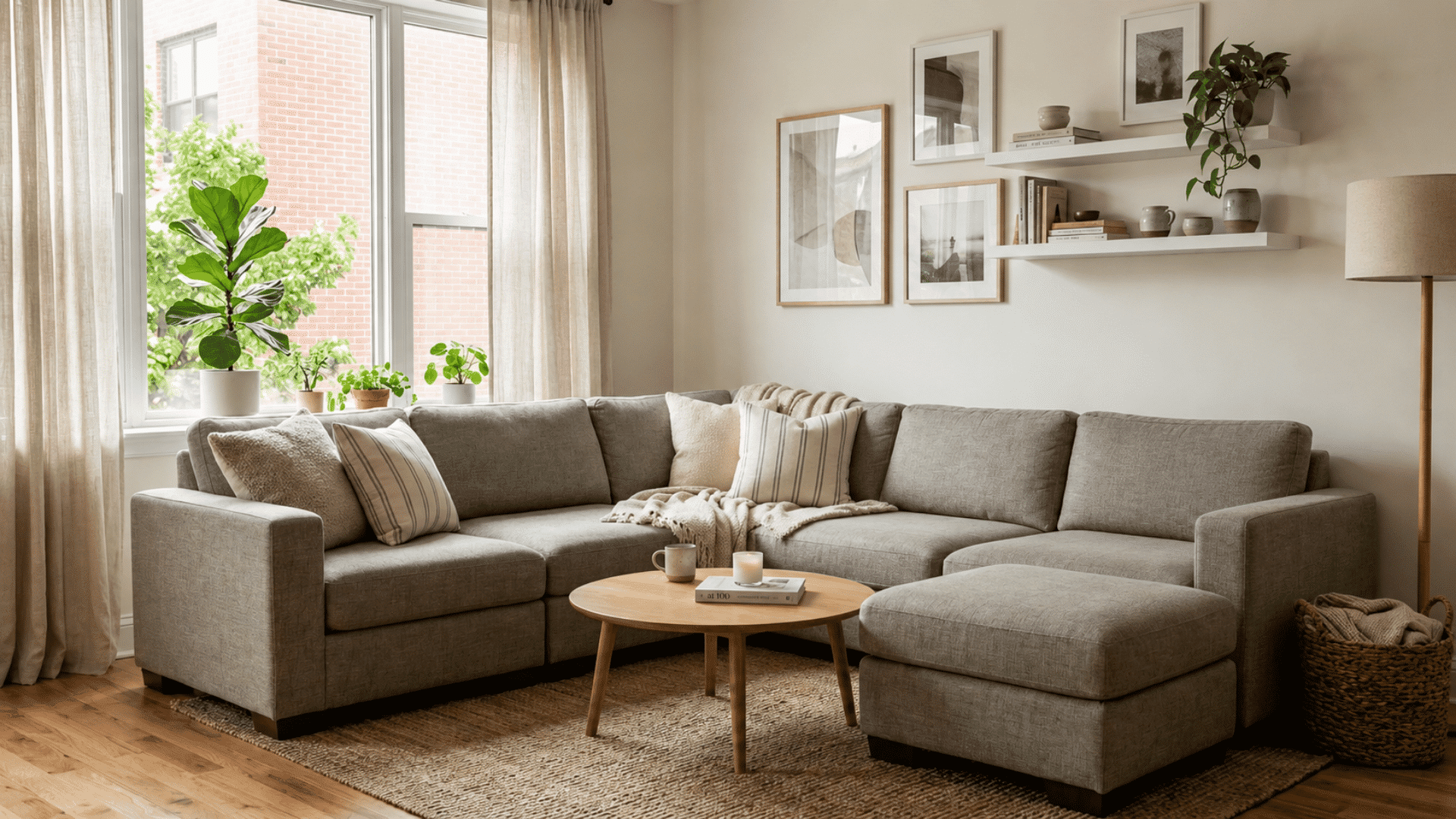
Modular seating gives you the freedom to rearrange your living room whenever needed.
This is helpful because smaller spaces often need flexible layouts depending on how you use the room.
You can create different arrangements for relaxing, watching TV, or hosting friends. Furniture that adapts to your space makes small rooms more functional.
14. Acrylic Furniture for an Airy Look
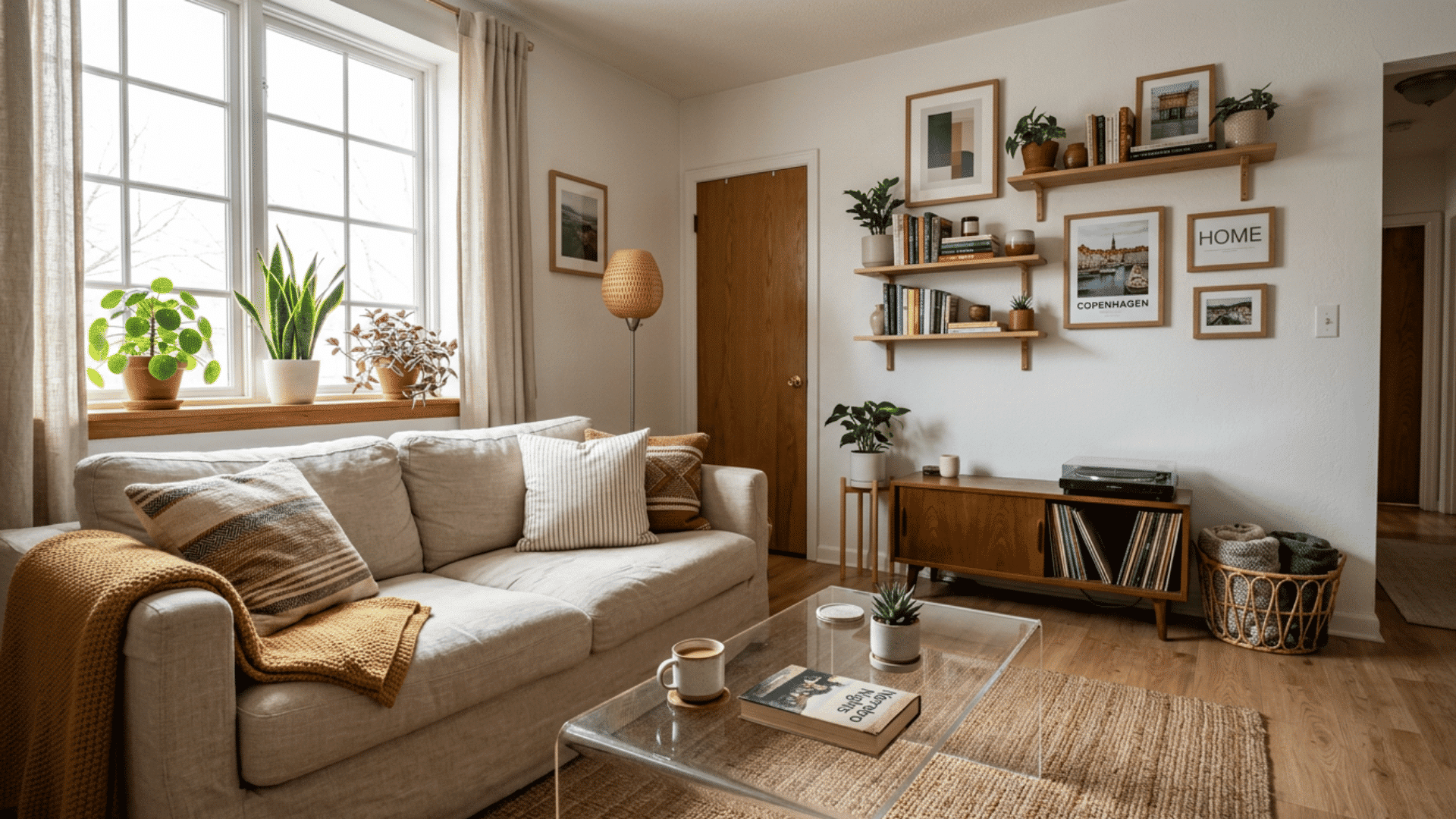
Acrylic furniture can help a small living room feel less crowded because it takes up less visual weight.
I often suggest acrylic side tables or chairs when you want the room to appear more open without removing useful furniture.
Keep the surrounding decor simple so the furniture stands out naturally.
Acrylic pieces also pair easily with modern, minimal, or neutral living room styles without looking too heavy.
15. Built-In Seating Solutions
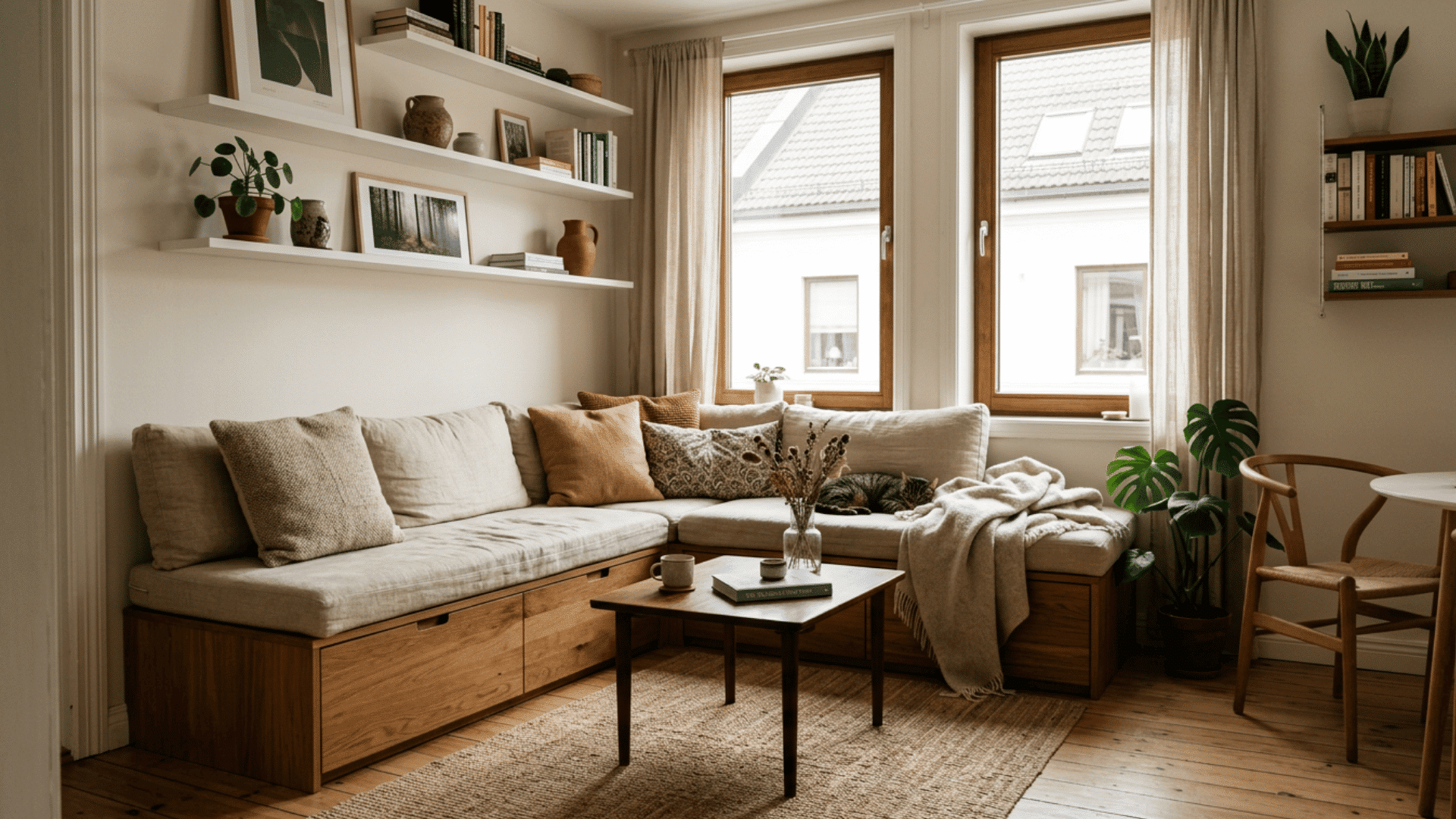
Built-in seating can help you use every inch of a small living room more effectively. It combines seating and storage while keeping the layout clean and organized.
Add cushions or pillows to keep the seating comfortable and inviting. Custom seating solutions can reduce the need for extra bulky furniture.
Built-in designs also help the room feel more structured while still leaving enough open floor space for daily movement and comfort.
Lighting Decor Ideas
Good lighting can completely change how a small living room feels. The right setup helps the room look brighter, more open, and more comfortable without needing a full makeover.
You can mix different light sources to improve both function and style while keeping the room simple and easy to use every day.
16. Layered Lighting Setups
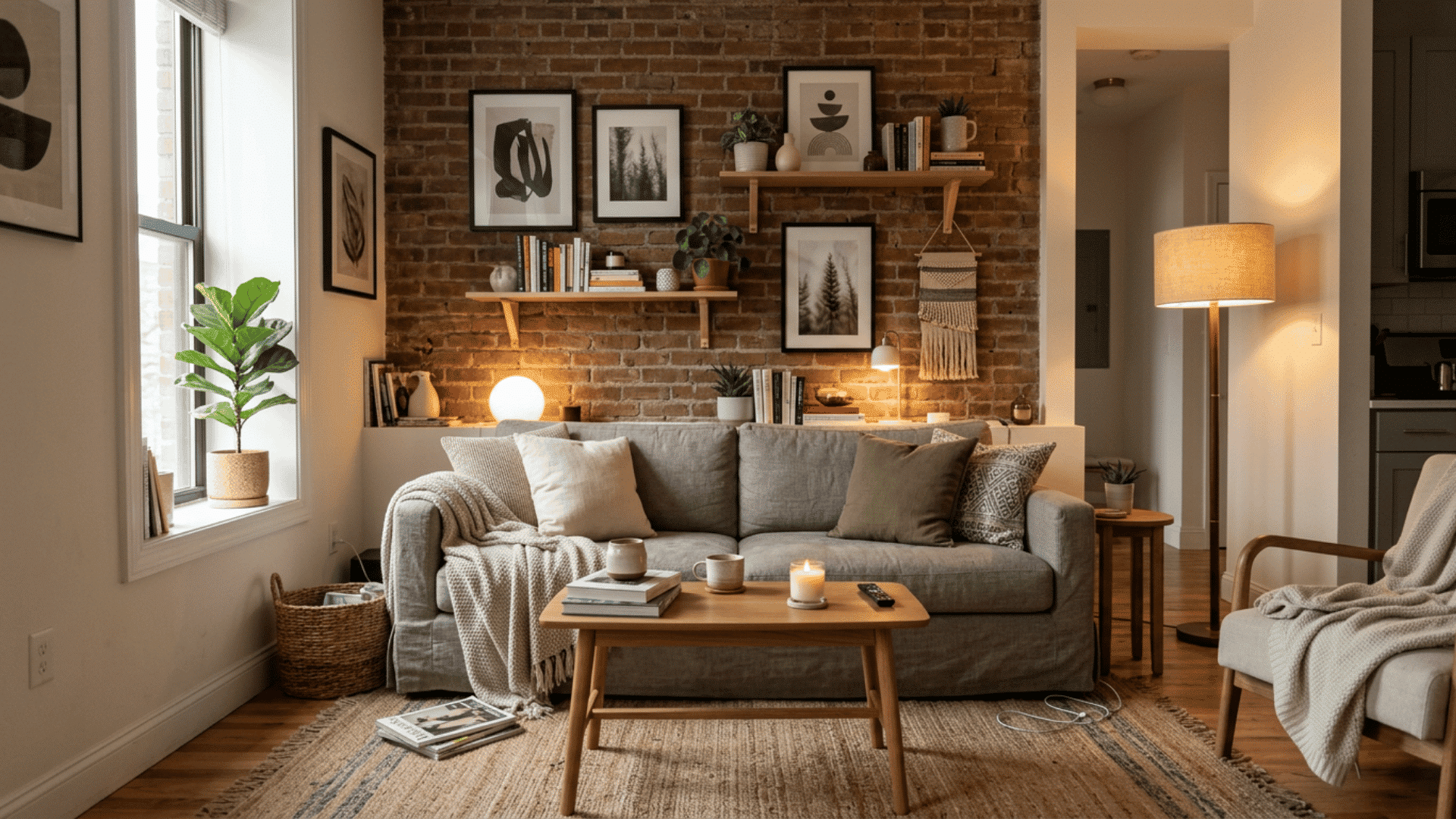
Layered lighting helps a small living room feel balanced and practical throughout the day. Combine ceiling lights, lamps, and smaller accent lights instead of relying on one bright fixture.
This setup gives you better control over the mood and brightness of the room . You can use softer lights in the evening and brighter lighting during work or cleaning.
17. Pendant Lights for Style
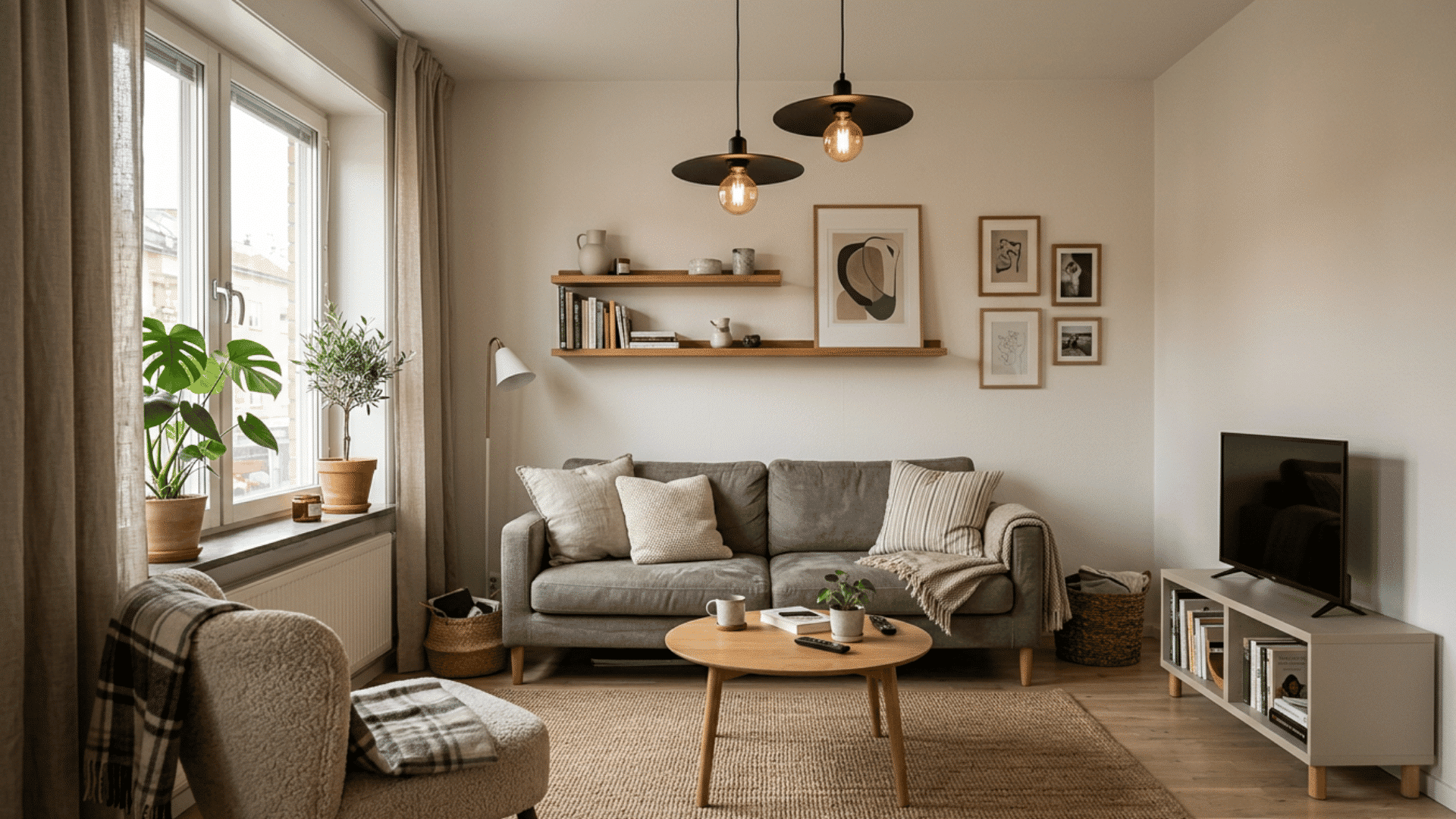
Pendant lights can add style to a small living room without taking up much room. Hang them above a coffee table or in a corner where extra light is needed.
They help draw the eye upward, which can make the ceiling feel taller.
Stick to smaller pendant designs so the room still feels balanced. Oversized hanging lights can quickly overpower a compact space.
18. Natural Light Enhancement Tips
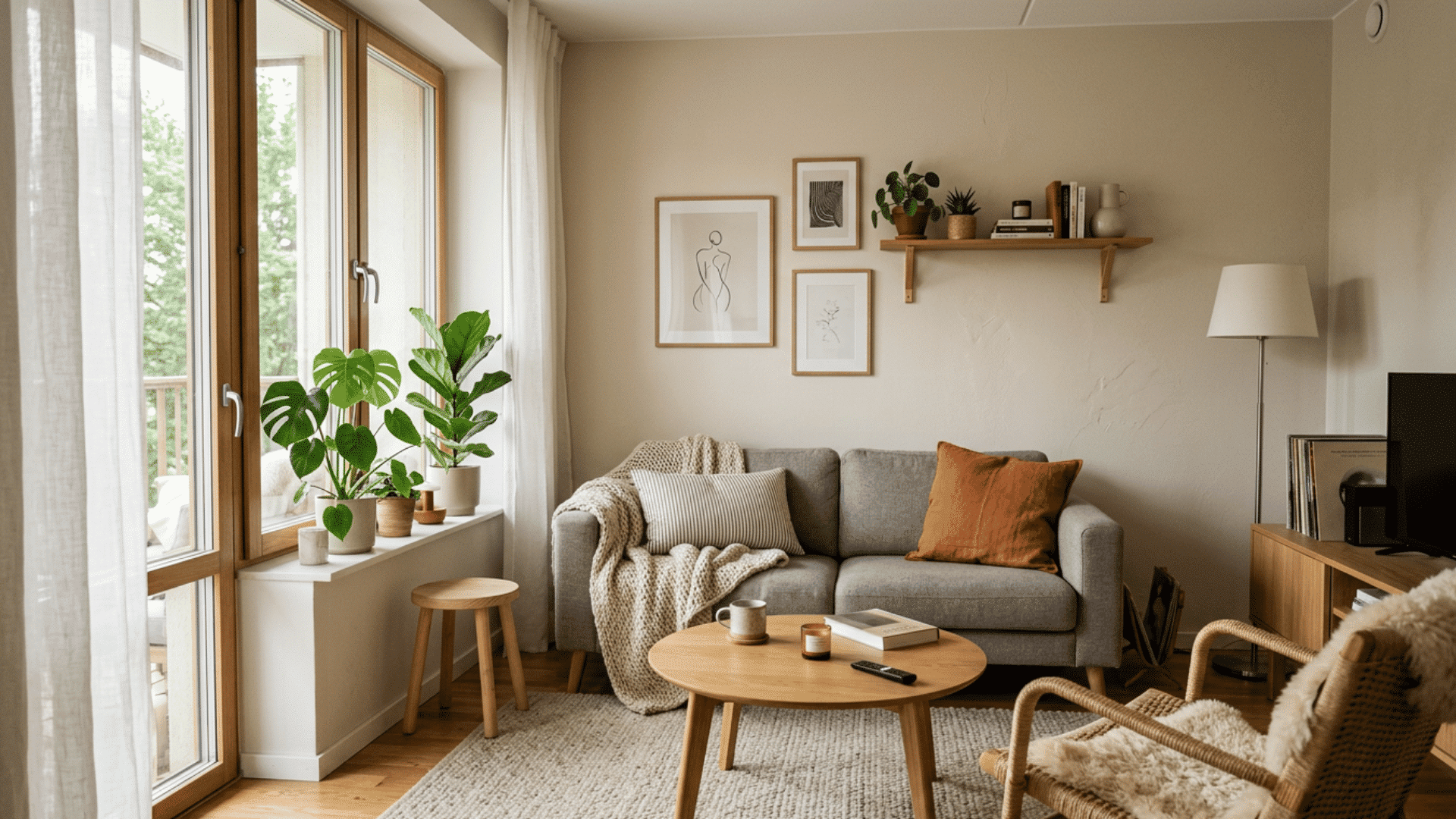
Natural light can make a small living room feel bigger and fresher. Keep windows as open as possible during the day and avoid heavy curtains that block sunlight.
Sheer curtains usually work better because they still provide privacy while letting light pass through.
Keeping windows clean and reducing clutter near them can also help maximize the amount of natural light entering the space.
19. Table Lamps for Cozy Vibes
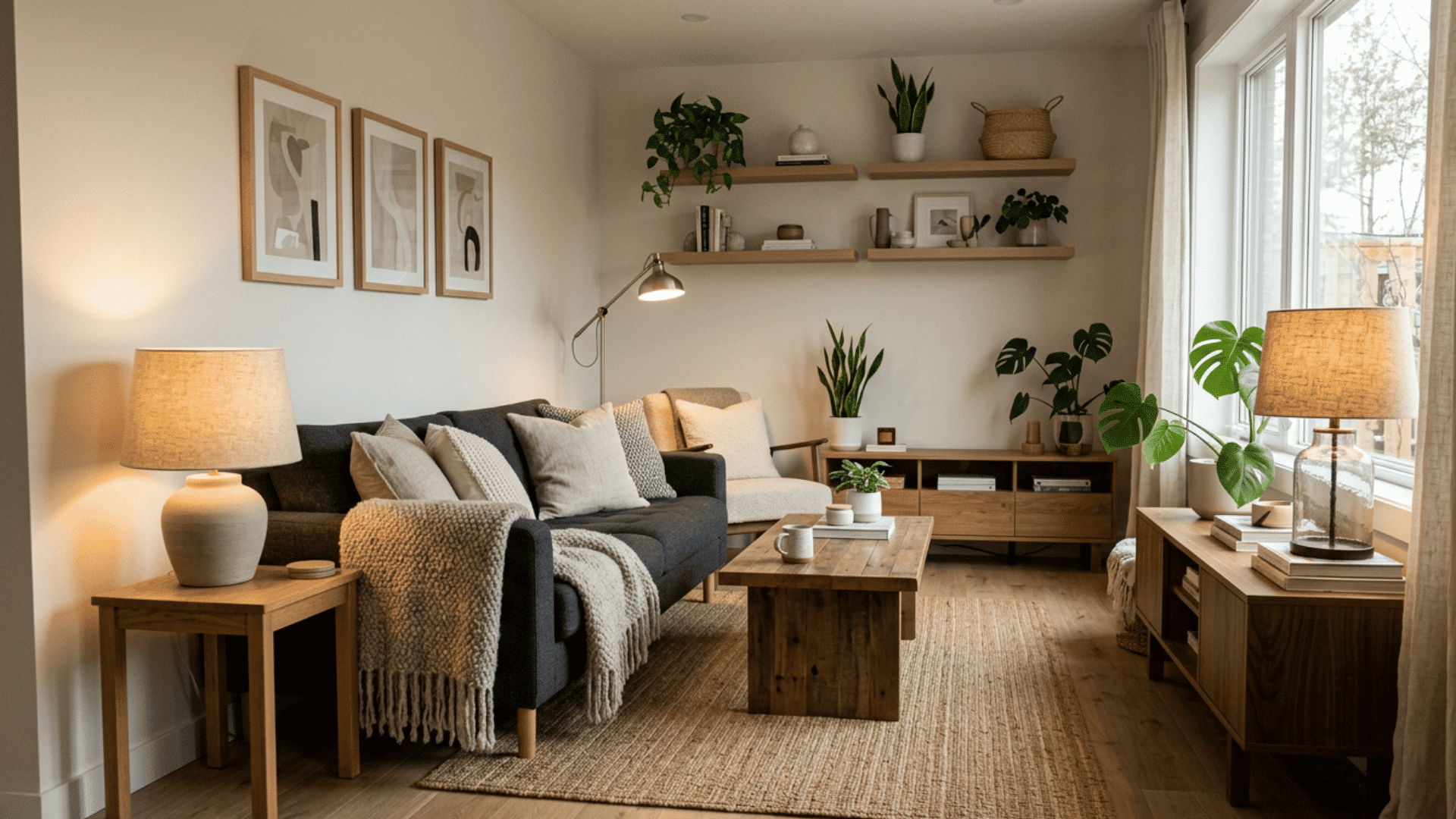
Table lamps are an easy way to add softer lighting to your living room.
Placing them on side tables, shelves, or console tables helps because they create a relaxed and comfortable atmosphere during the evening. Smaller lamps usually fit better in compact spaces.
Choose lamp shades that spread light evenly without feeling too harsh. Warm lighting often makes a living room feel calmer and more welcoming.
Storage & Organization Ideas
Good storage can make a small living room feel cleaner and easier to manage every day. The goal is not to hide everything but to keep the room organized without adding bulky furniture.
Smart storage ideas help you use empty spaces better while still keeping the room comfortable, functional, and visually open.
20. Hidden Storage Furniture
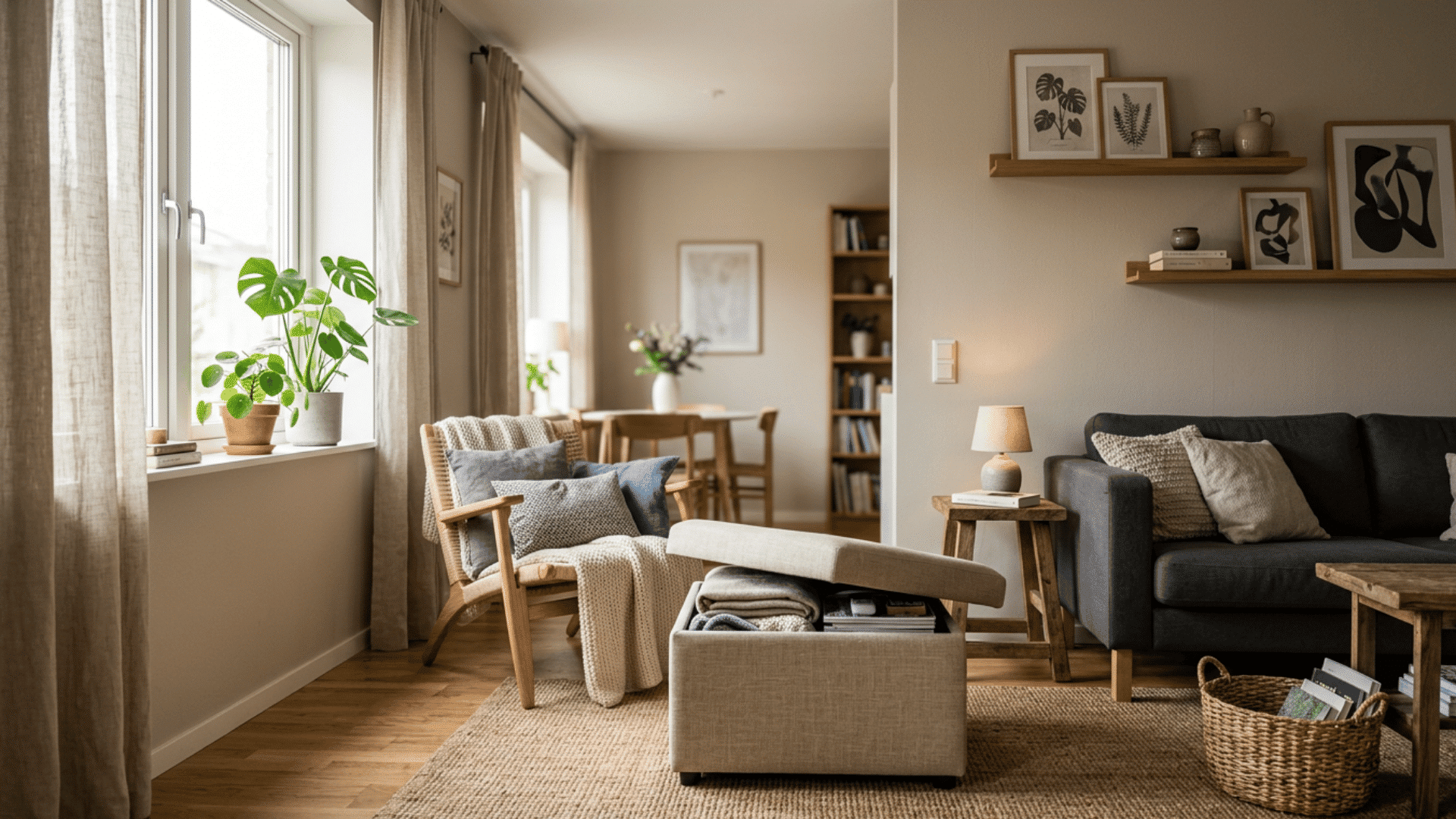
Hidden storage furniture helps you reduce clutter without filling the room with extra cabinets or shelves.
Pieces like storage benches, lift-top coffee tables, or sofas with built-in compartments keep everyday items out of sight while still being easy to access.
You can store blankets, remotes, books, or seasonal decor inside without making the room feel crowded.
Furniture with hidden storage keeps your living room looking cleaner and more organized.
21. Under-Sofa Storage Hacks
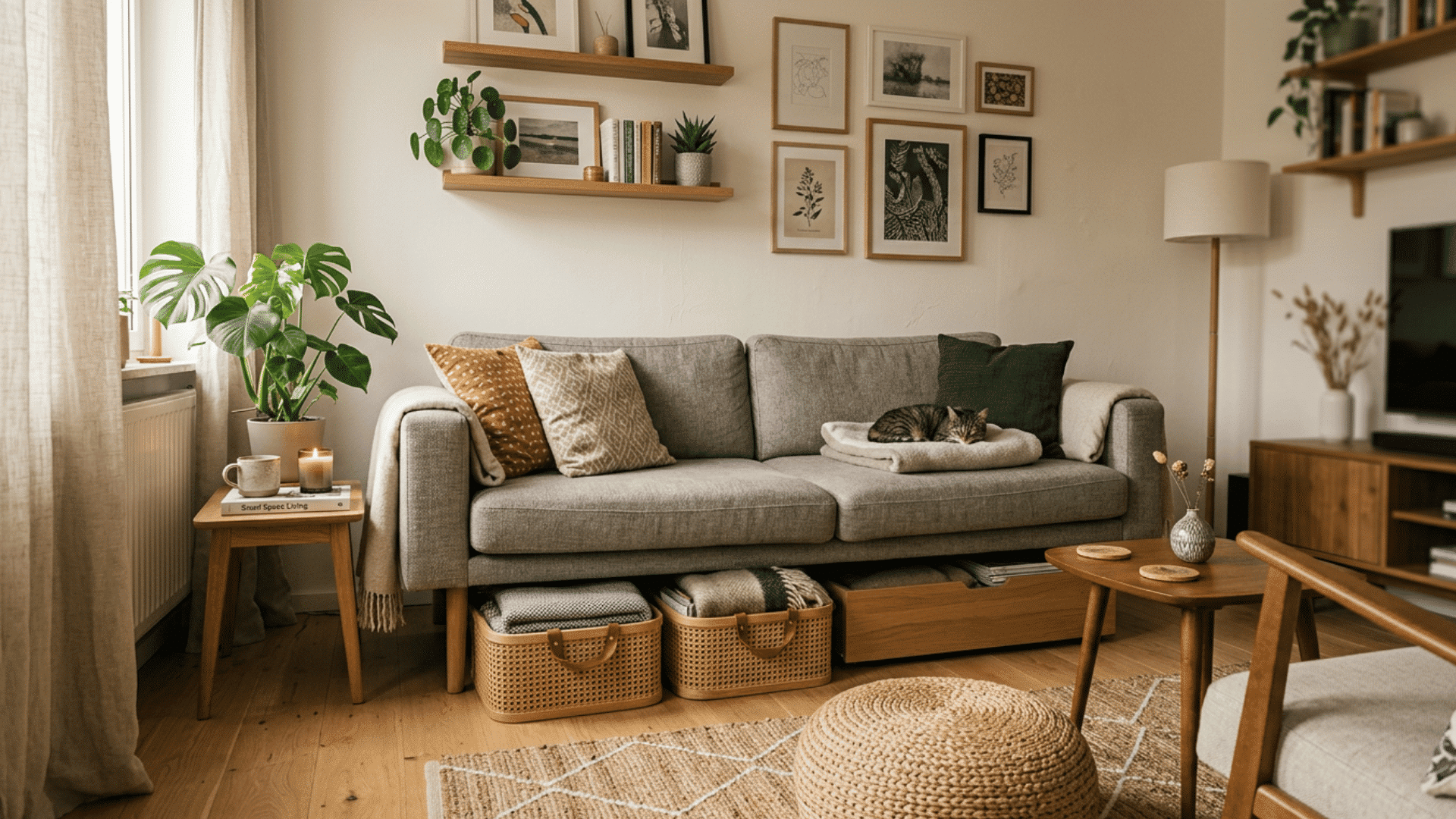
The space under your sofa can be useful if you need extra storage in a small living room.
Choose containers that slide in and out easily so the setup stays practical. Unused spaces can become valuable storage areas in smaller homes.
Sofas with raised legs usually work best because they create enough room underneath without making the furniture look too bulky or heavy.
22. Vertical Storage Cabinets
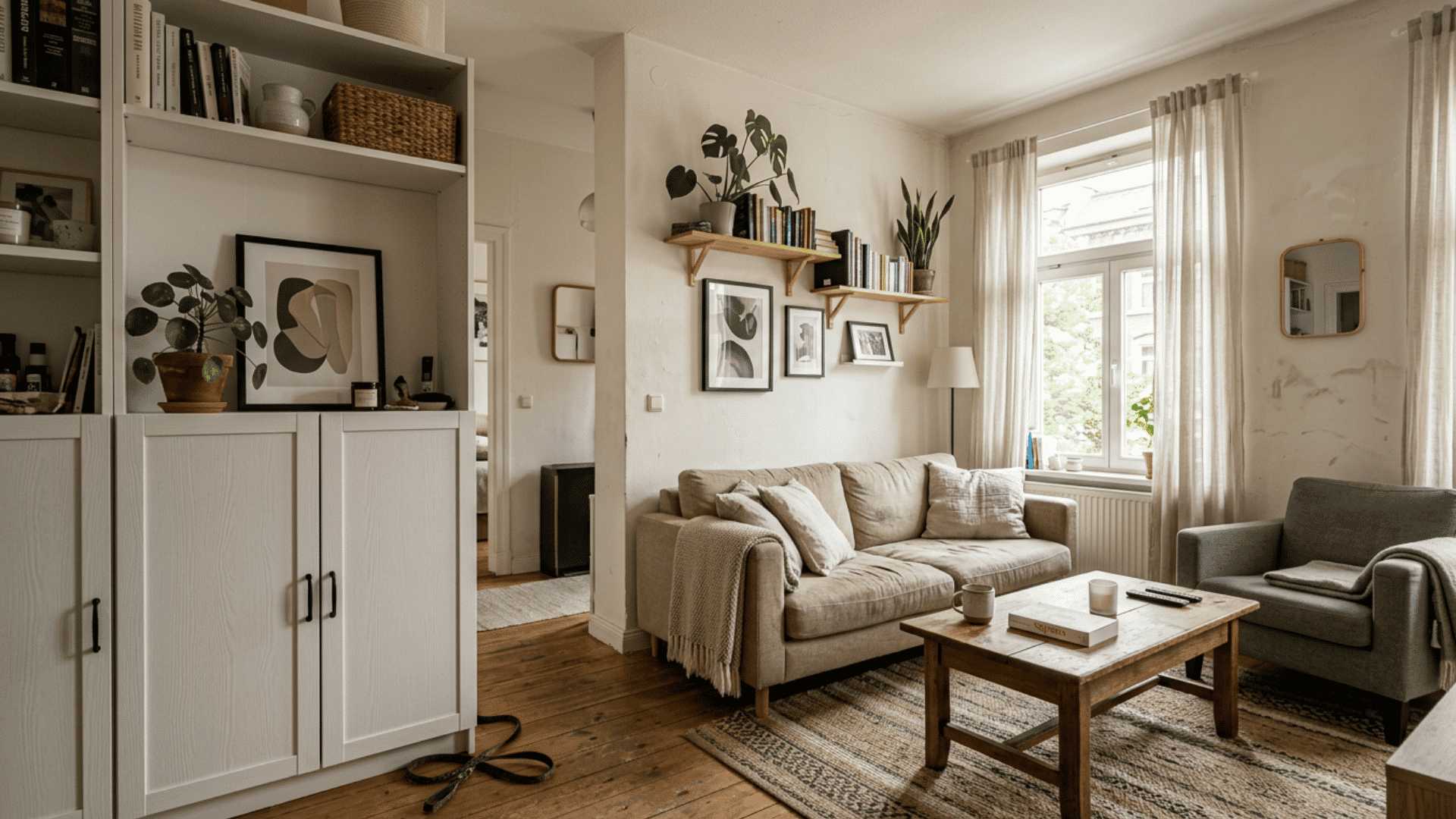
Vertical storage cabinets help you use wall height instead of taking up too much floor space.
Tall and narrow cabinets provide storage without making the room feel overcrowded. They work well for books, decor, baskets, or other household items.
Choose open or light-colored designs if you want the room to feel less heavy. Using vertical space is one of the best ways to improve storage in small living rooms.
23. TV Unit Storage Solutions
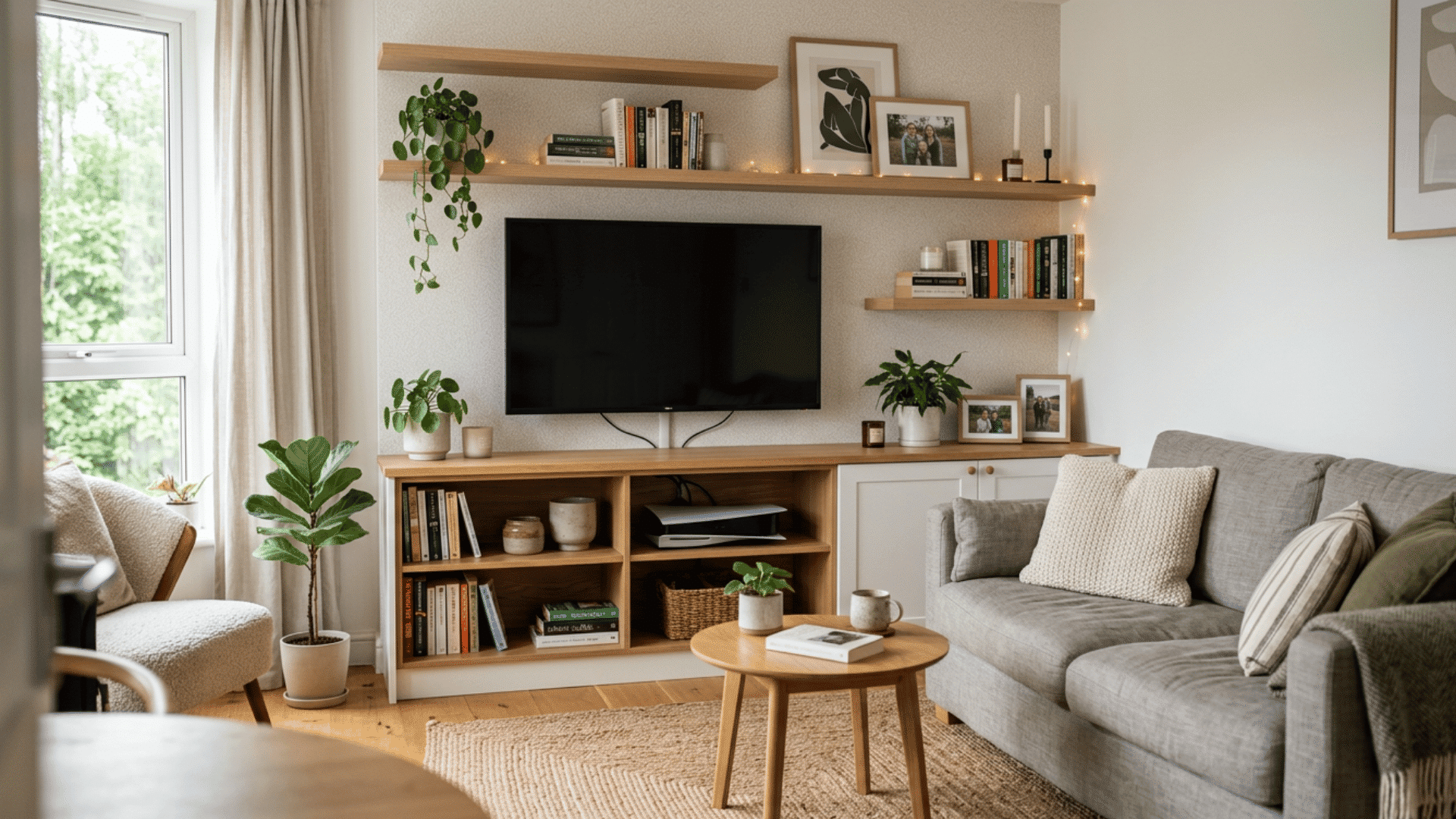
A TV unit can provide much more than a place for your television.
Choose designs with drawers, cabinets, or shelves because they help hide cables, remotes, gaming accessories, and other small items that usually create clutter in living rooms.
Keep decorations simple, so the TV area still feels clean and balanced. Organized TV storage helps the whole room look tidier.
24. Corner Storage Hacks
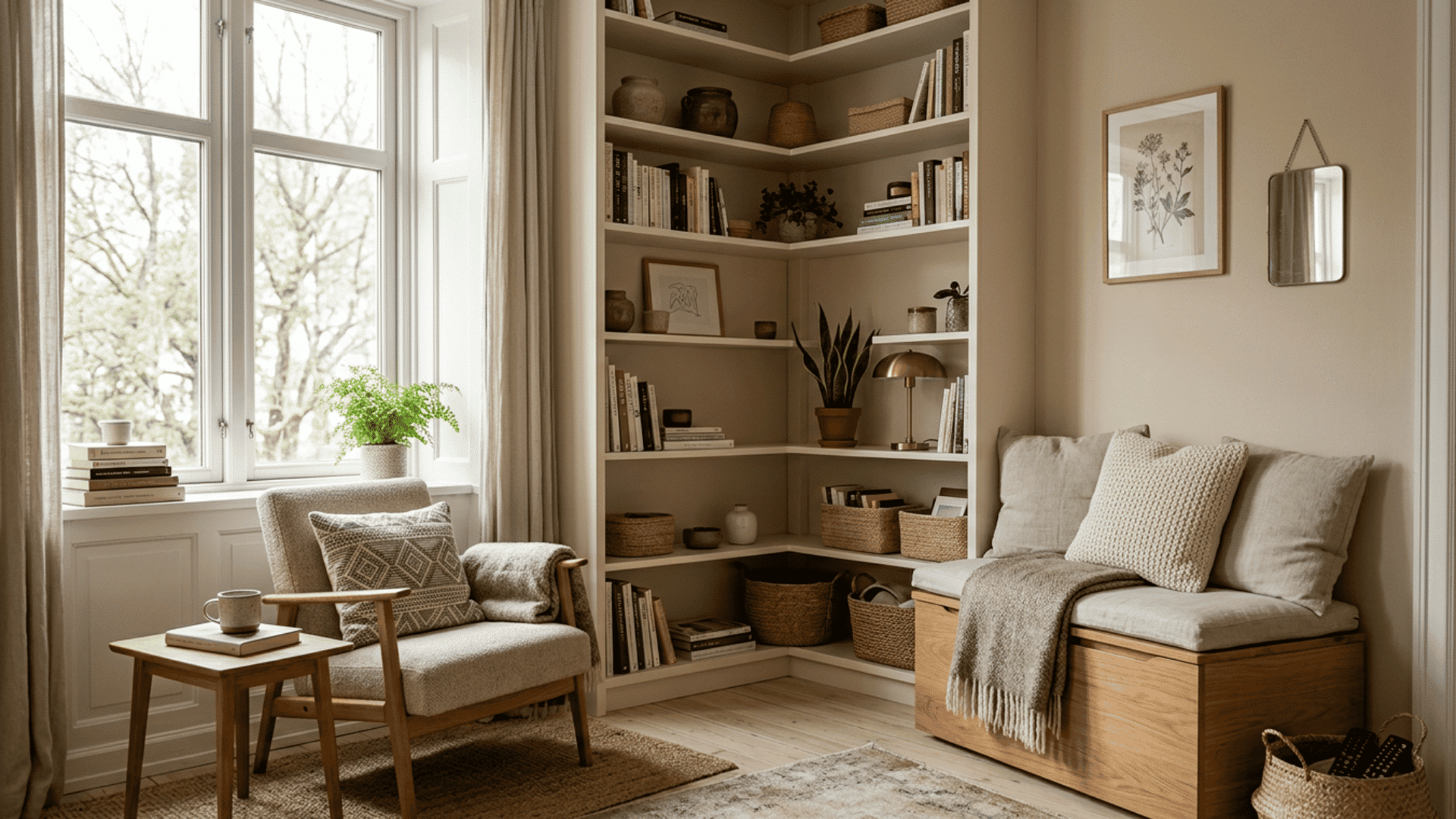
Corners are often wasted in small living rooms, but they can become useful storage areas with the right setup.
Corner shelves, narrow cabinets, or small ladder shelves fit neatly without blocking movement around the room.
You can use corner storage for plants, books, baskets, or small decorative pieces. Making use of unused corners helps maximize every part of the room.
Color & Paint Ideas
The colors you choose can change how your small living room feels without moving any furniture around. The right shades help the space look brighter, calmer, and more open.
Simple paint choices and balanced color combinations can make the room feel more comfortable while still matching your personal style.
25. Neutral Color Palettes
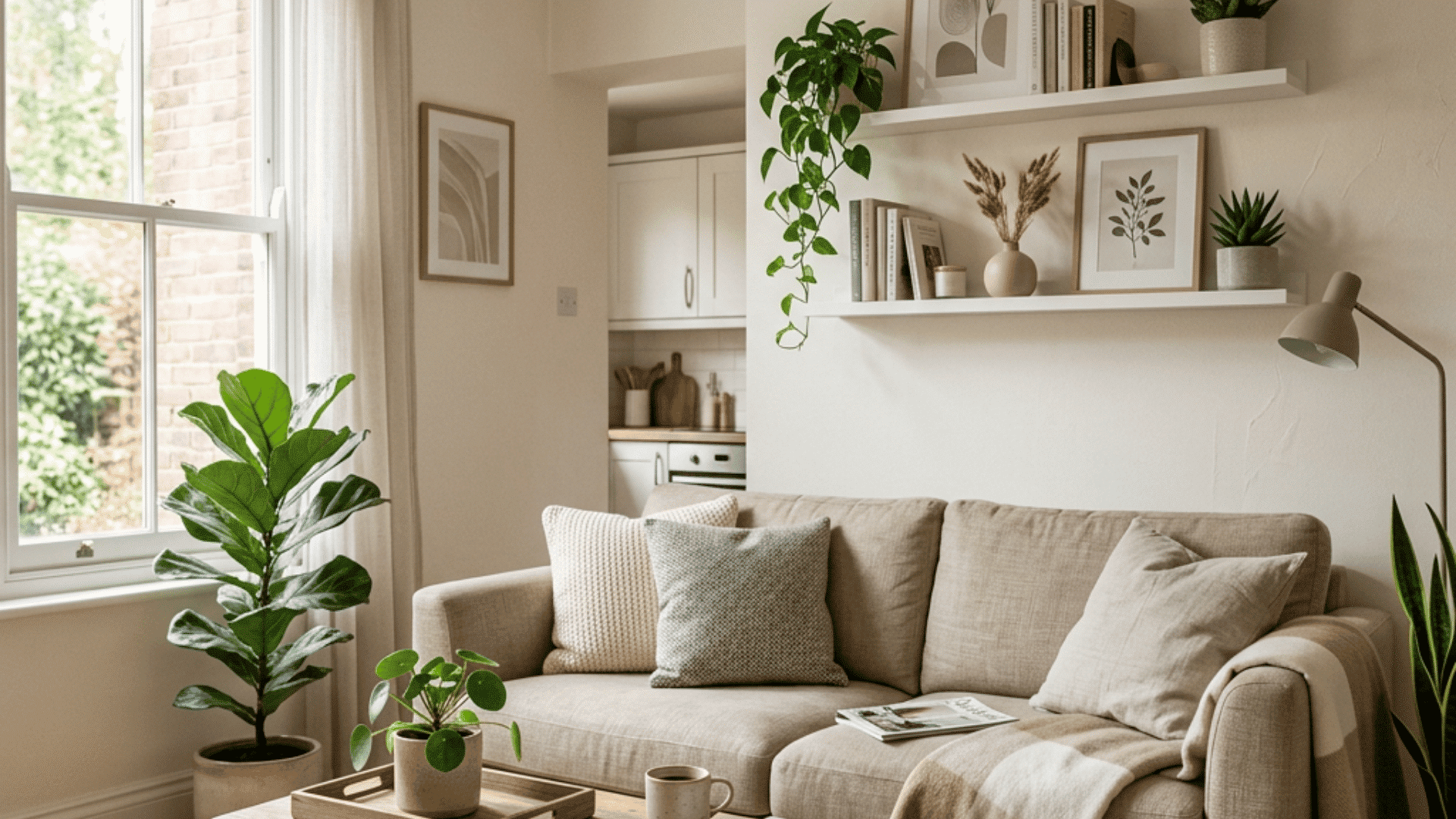
Neutral colors work well in small living rooms because they help the space feel calm and less crowded.
Shades like beige, white, cream, light gray, and soft taupe can easily match different furniture and decor styles.
Try mixing a few neutral tones instead of using only one color throughout the room. Soft neutral palettes usually make compact spaces feel more open.
Adding texture through pillows, rugs, or curtains can also help prevent the room from looking too plain or flat.
26. Light Colors to Expand Space
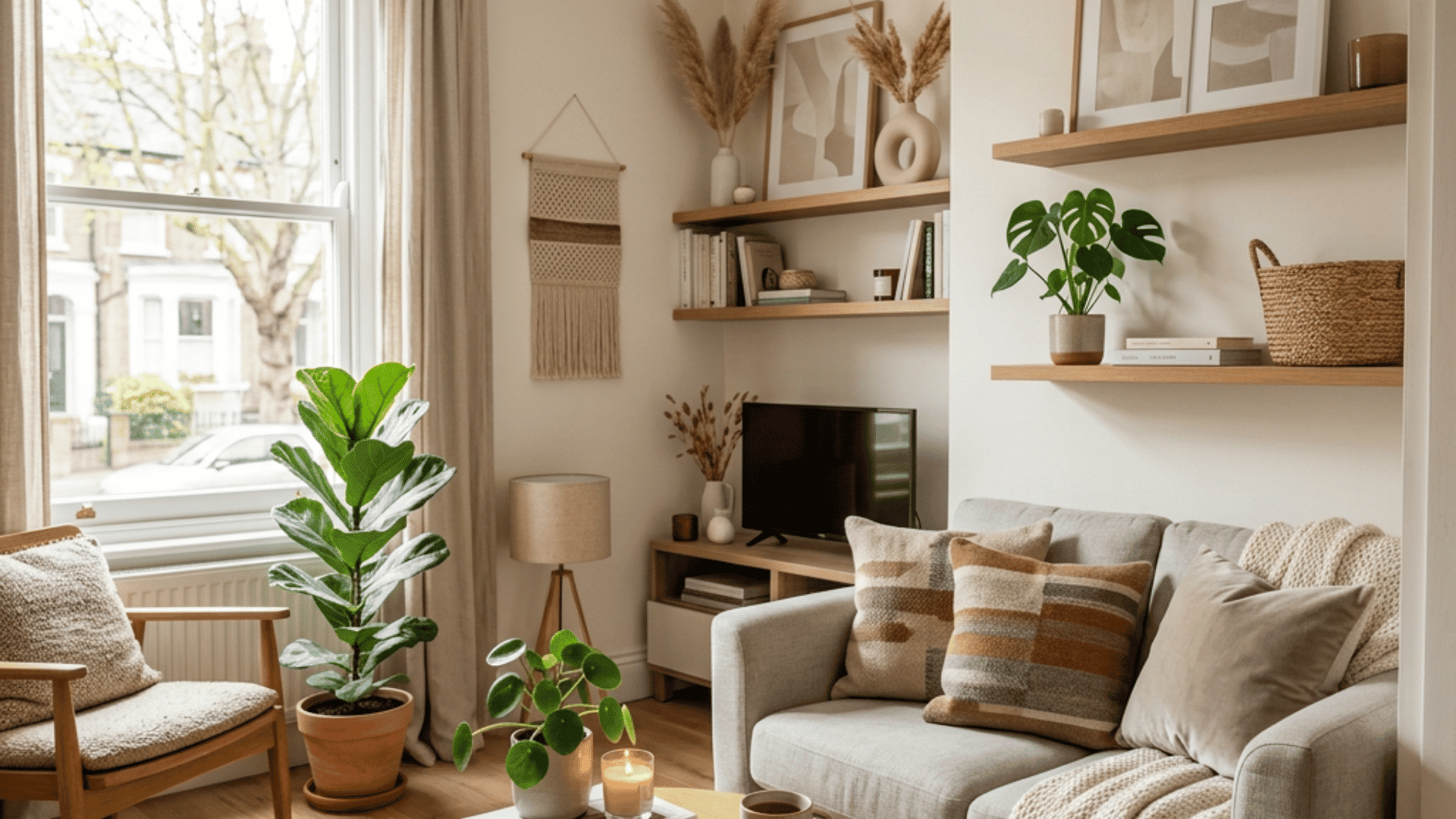
Light paint colors can help a small living room appear larger and brighter.
Shades like soft white, pale gray, light beige, or muted cream reflect more light and keep the room from feeling closed in.
Avoid combining too many dark tones in a compact room. Lighter shades often create a cleaner and more open feel.
Pairing light walls with natural lighting and mirrors can also help make the space feel less cramped during the day.
27. Monochrome Living Room Themes
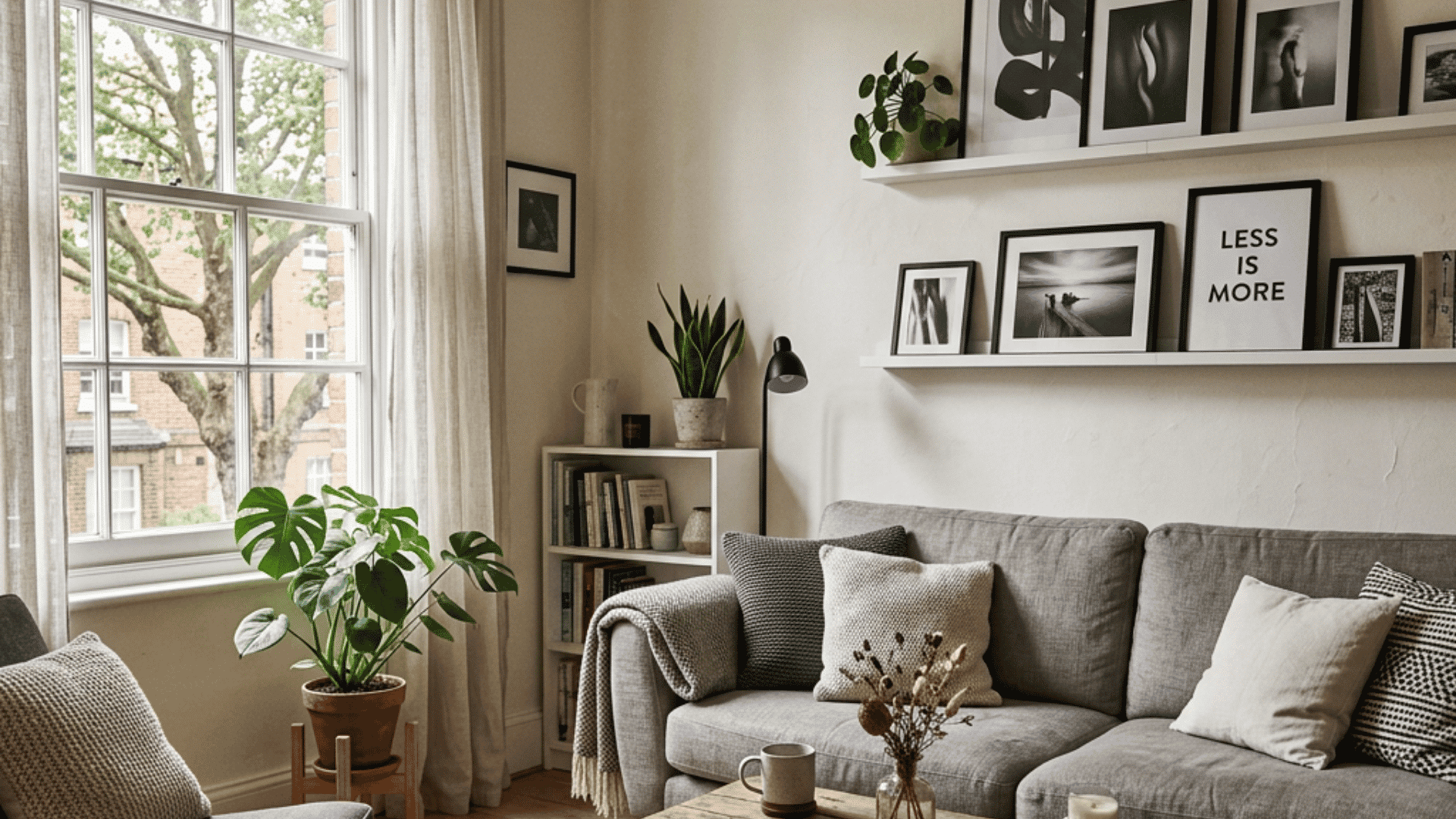
A monochrome color scheme uses different shades of the same color throughout the room.
This helps the space feel more connected and visually balanced. You can use lighter and darker versions of gray, beige, or soft brown to create depth without adding too many competing colors.
Keep furniture and decor within the same color family for a cleaner look. Consistent color schemes can help small rooms feel less busy.
28. Earth-Tone Decor Inspiration
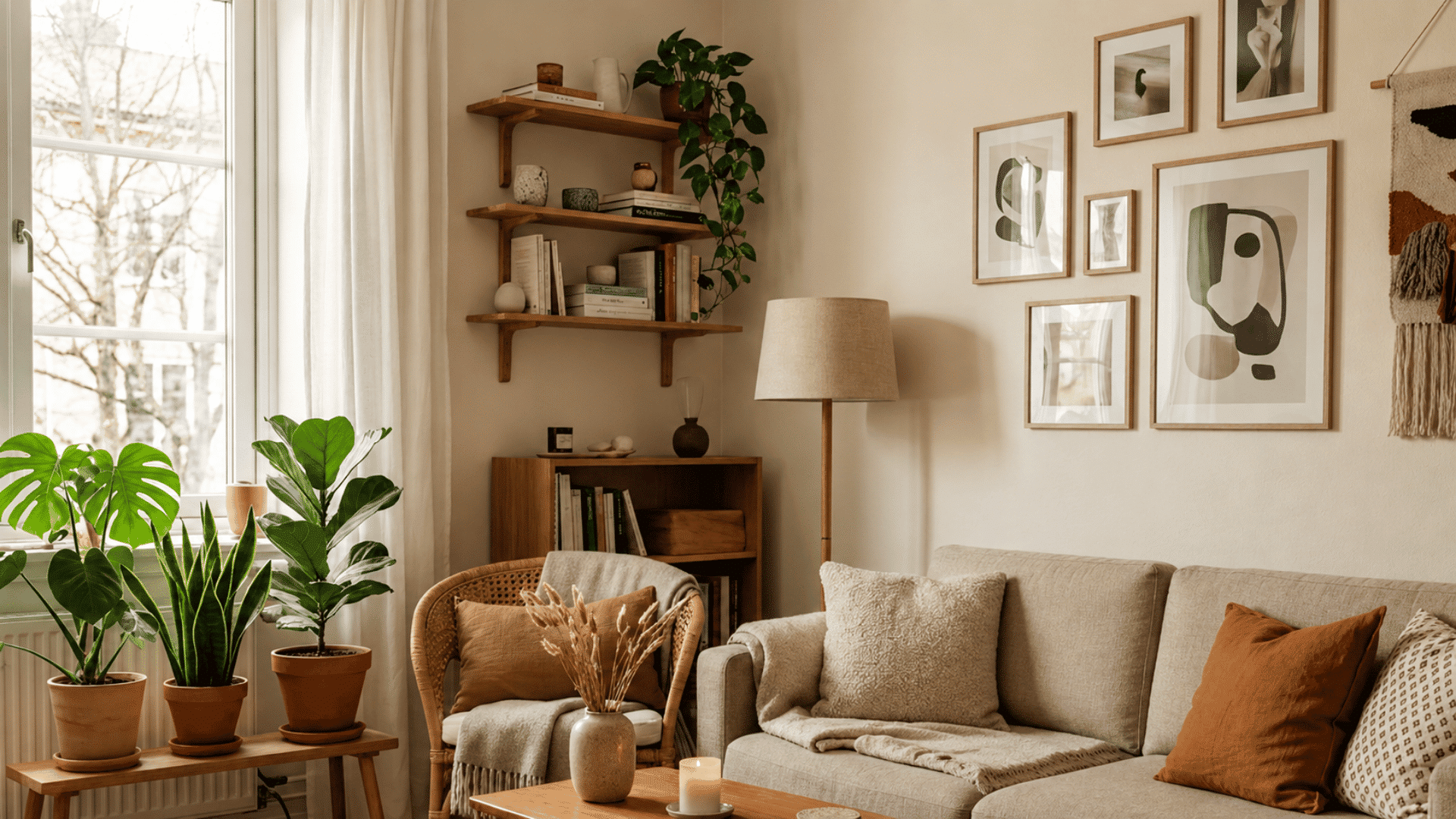
Earth-tone colors can make a small living room feel warm and comfortable without looking heavy.
Shades like olive green, clay, warm brown, sand, and muted terracotta work well with natural materials such as wood, linen, or woven decor.
You do not need to use every earthy shade at once.
Earth-tone decor also pairs well with plants, textured rugs, and neutral furniture, helping the room feel balanced without becoming too dark or crowded.
28. Bold Accent Color Styling
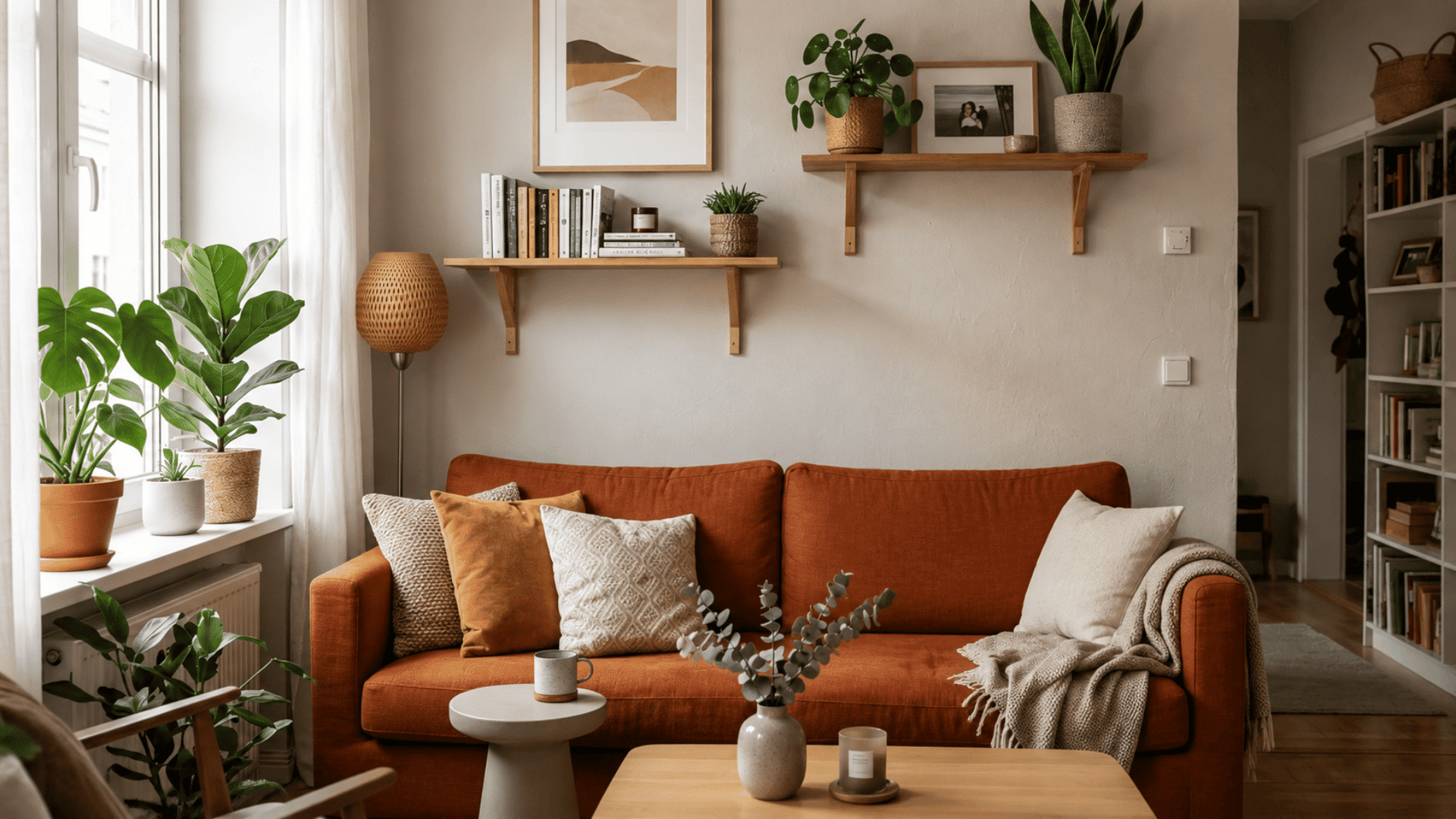
Bold colors can still work in a small living room when used carefully. Instead of painting every wall, you can add strong colors through cushions, artwork, rugs, or one accent wall.
Deep blue, forest green, or burnt orange can add contrast without making the room feel smaller.
Keep the rest of the decor more neutral to balance the bold shade. Too many strong colors can make compact spaces feel cluttered.
Small pops of color usually create a cleaner and more comfortable overall look.
Textile & Soft Furnishing Ideas
Soft furnishings can make a small living room feel more comfortable without taking up extra space. Simple fabric updates can also help the room look warmer, cleaner, and more put-together.
The right mix of blankets, rugs, cushions, and curtains can add texture and style while still keeping the space easy to manage every day.
29. Cozy Throw Blanket Styling
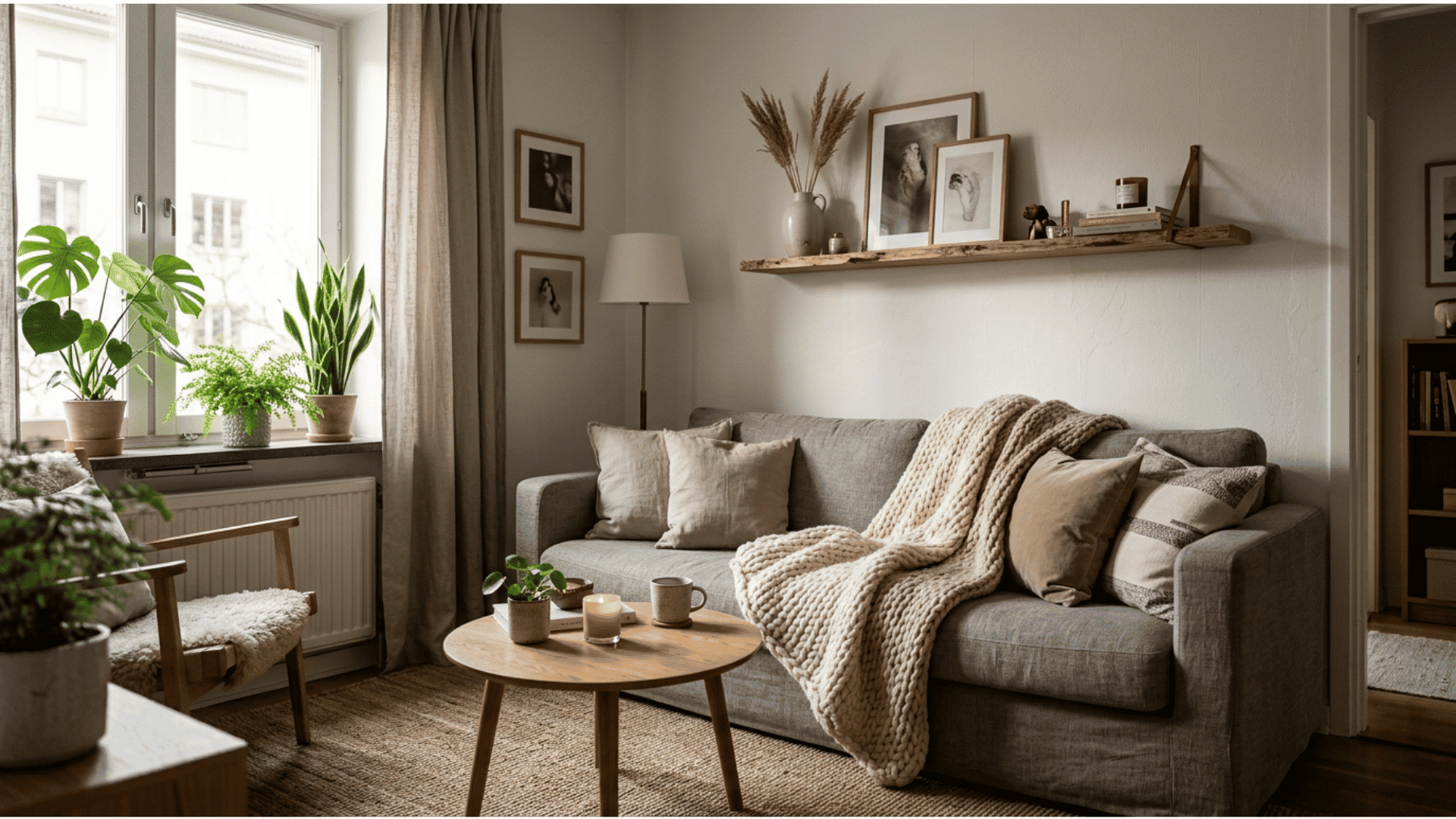
Throw blankets are an easy way to make your living room feel more comfortable and lived-in.
You can drape one over the sofa arm, fold it neatly in a basket, or layer it across a chair for a relaxed look. Soft fabrics like cotton or knit materials usually work best in smaller spaces.
Stick to one or two blankets instead of adding too many layers. Simple styling often looks cleaner in compact living rooms.
Choosing colors that match your sofa or cushions can also help the room feel more balanced and organized overall.
30. Sheer Curtains for Airy Spaces
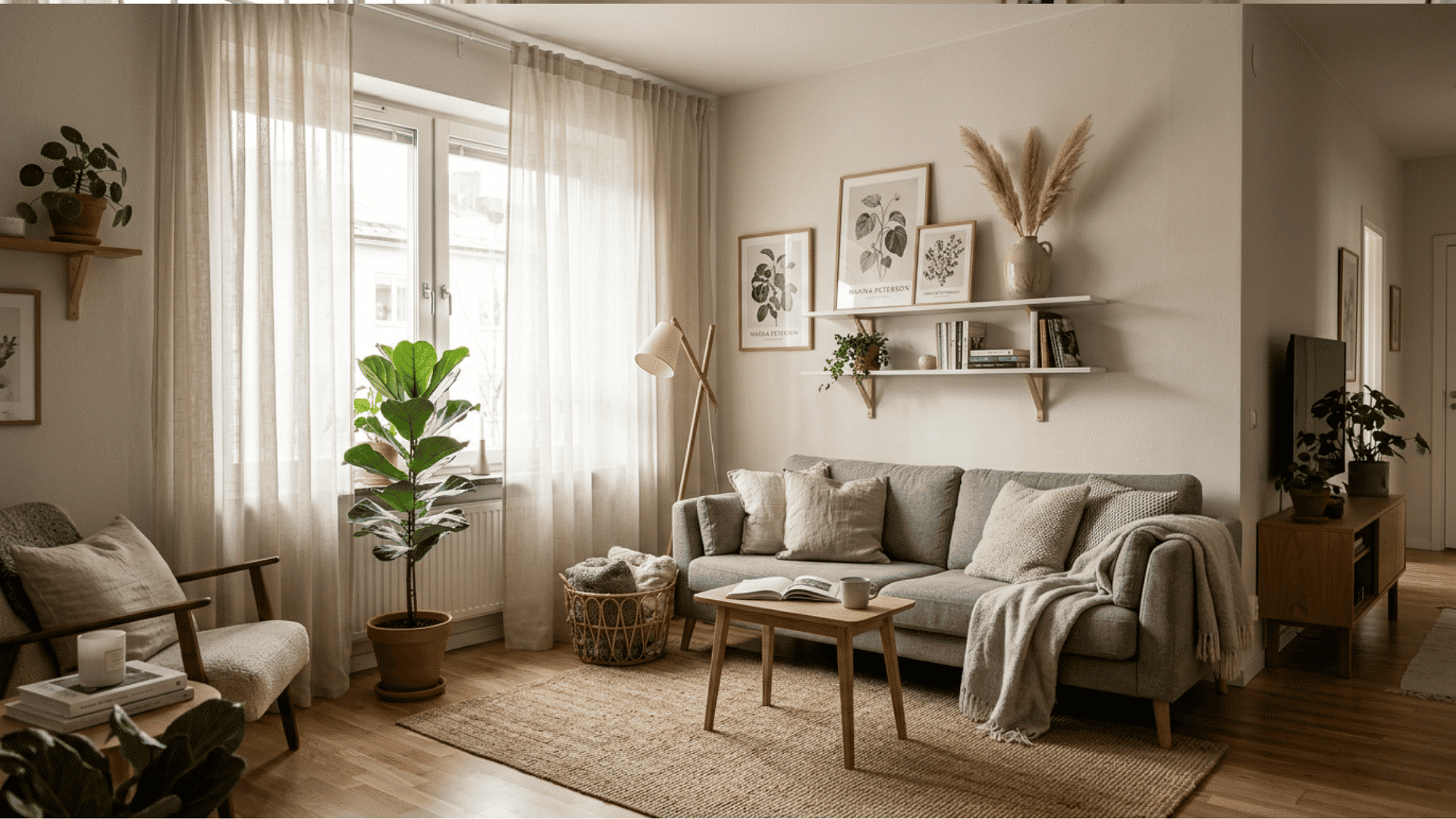
Sheer curtains help natural light move through the room while still giving you some privacy.
They work especially well in small living rooms because they make the space feel brighter and less closed in. Light fabrics like linen or voile usually create the best effect.
Hang curtains slightly higher than the window frame to make the room feel taller.
Natural light can help small spaces appear larger and more open. Soft white or cream curtains also blend easily with different decor styles without making the room feel heavy.
31. Patterned Cushions for Texture
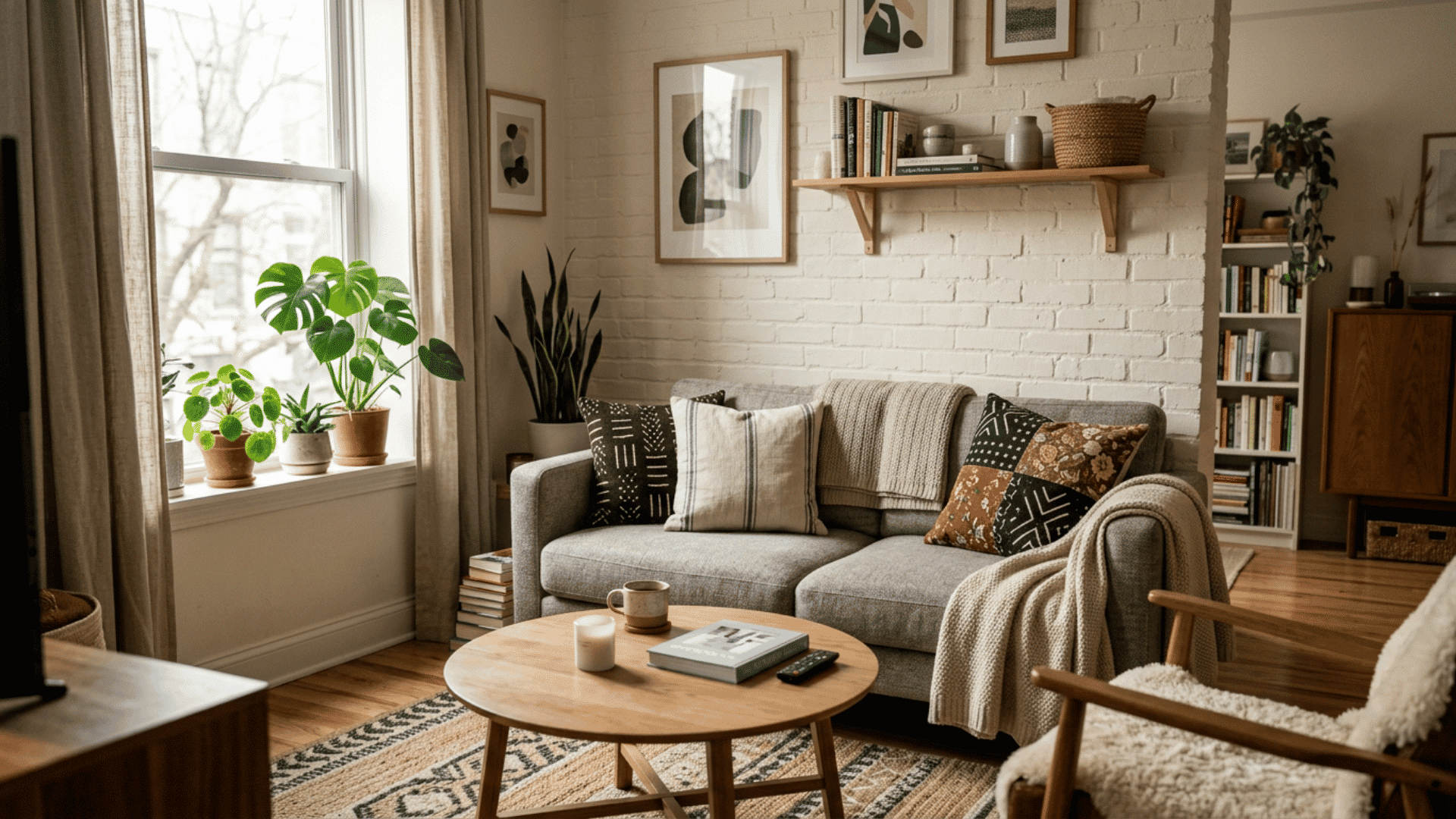
Patterned cushions can add texture and personality without requiring major decor changes.
You can mix simple prints, stripes, or geometric patterns to make the seating area feel more complete.
Small touches like cushions are also easy to update whenever you want a fresh look.
Avoid overcrowding the sofa with too many pillows. A few well-chosen cushions usually look better in compact spaces.
Using colors that connect with your rug, curtains, or wall decor can also help the room feel more organized and visually balanced.
32. Seasonal Fabric Decor Updates
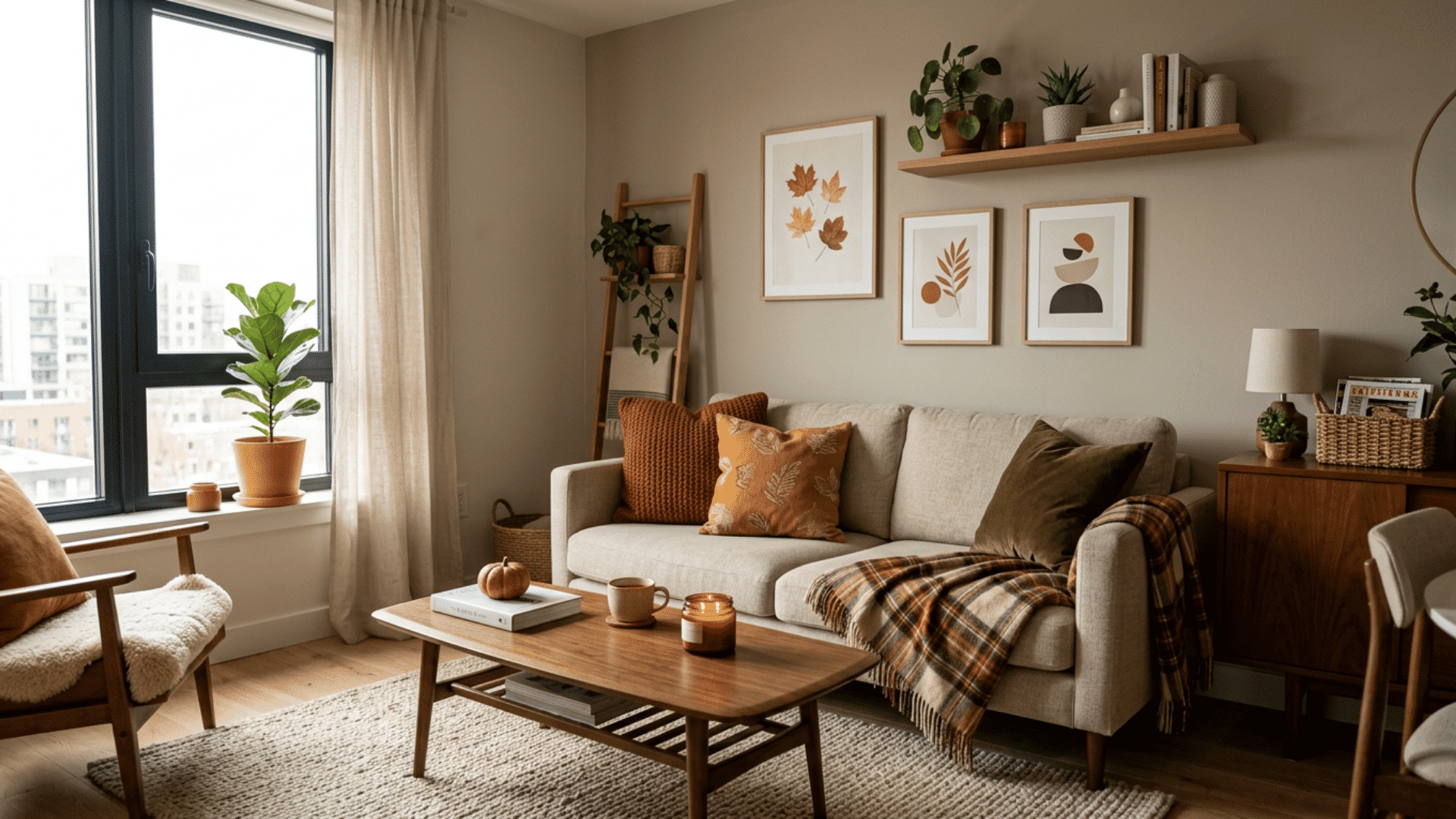
Changing fabrics by season is a simple way to refresh your living room without buying new furniture.
You can switch cushion covers, blankets, or curtains to match warmer or cooler months, like this living room with fall decor.
Lightweight fabrics often work better during summer, while thicker textures feel more comfortable in colder weather.
Keep the updates small so the room still feels consistent throughout the year. Simple seasonal changes can keep your space feeling fresh without much effort.
Neutral base furniture also makes it easier to swap fabrics without needing to redesign the entire room.
Plant & Natural Decor Ideas
Plants and natural materials can make a small living room feel fresher and more comfortable without adding too much clutter. Even a few simple touches can help the room look more balanced and relaxed.
You do not need a large collection of plants or expensive decor. Small updates with greenery and natural textures often make the biggest difference.
33. Indoor Plants for Small Living Rooms
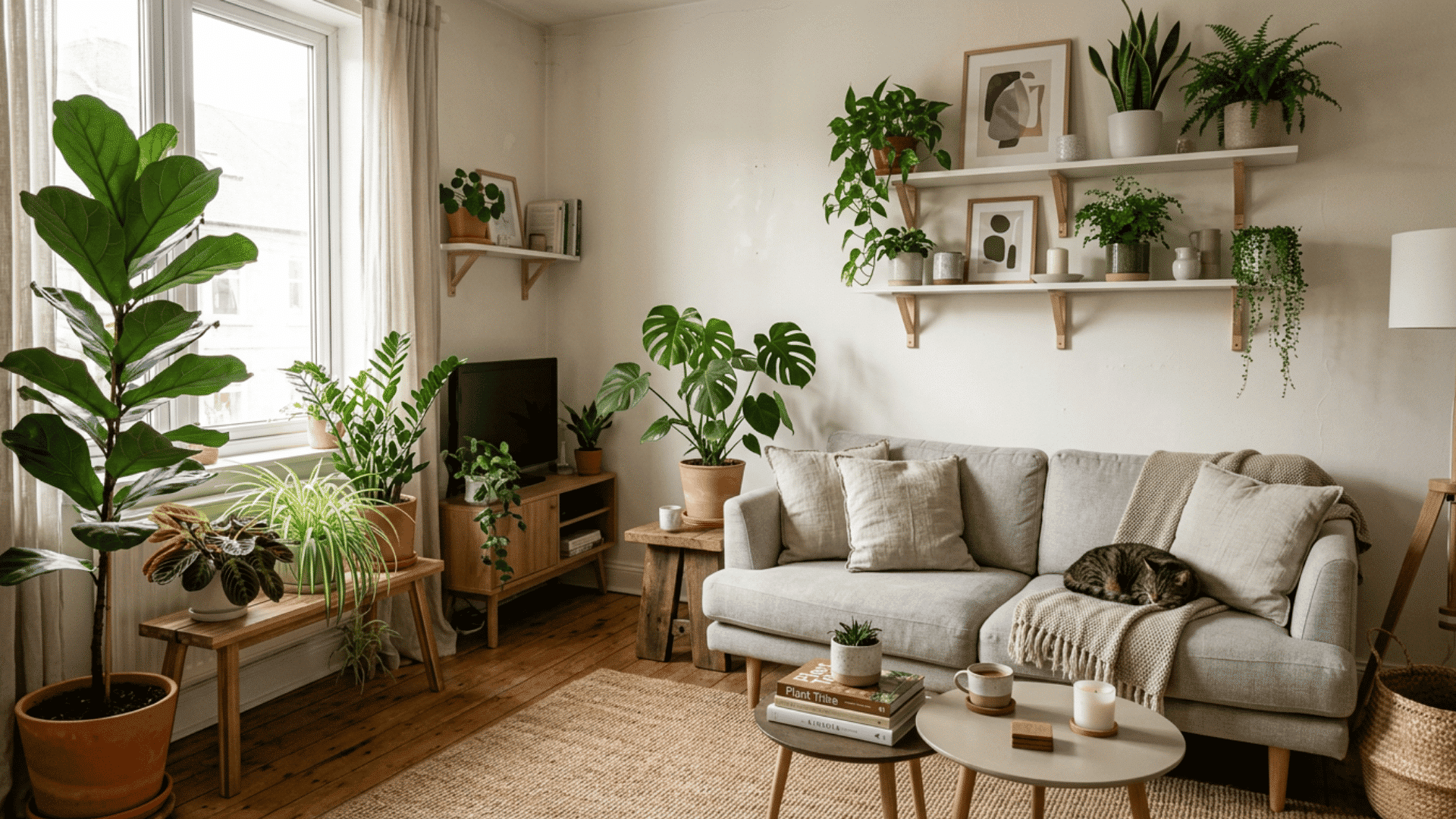
Indoor plants can add color and freshness to a small living room without taking up much space.
You can place small plants on shelves, side tables, or window ledges to make the room feel more lively.
Snake plants, pothos, and peace lilies are popular because they are easy to maintain.
Avoid filling every corner with plants, especially in compact spaces. A few well-placed plants usually look cleaner and more balanced.
Choosing simple pots in neutral shades can also help your greenery blend naturally with the rest of the room decor.
34. Small Succulent Arrangements
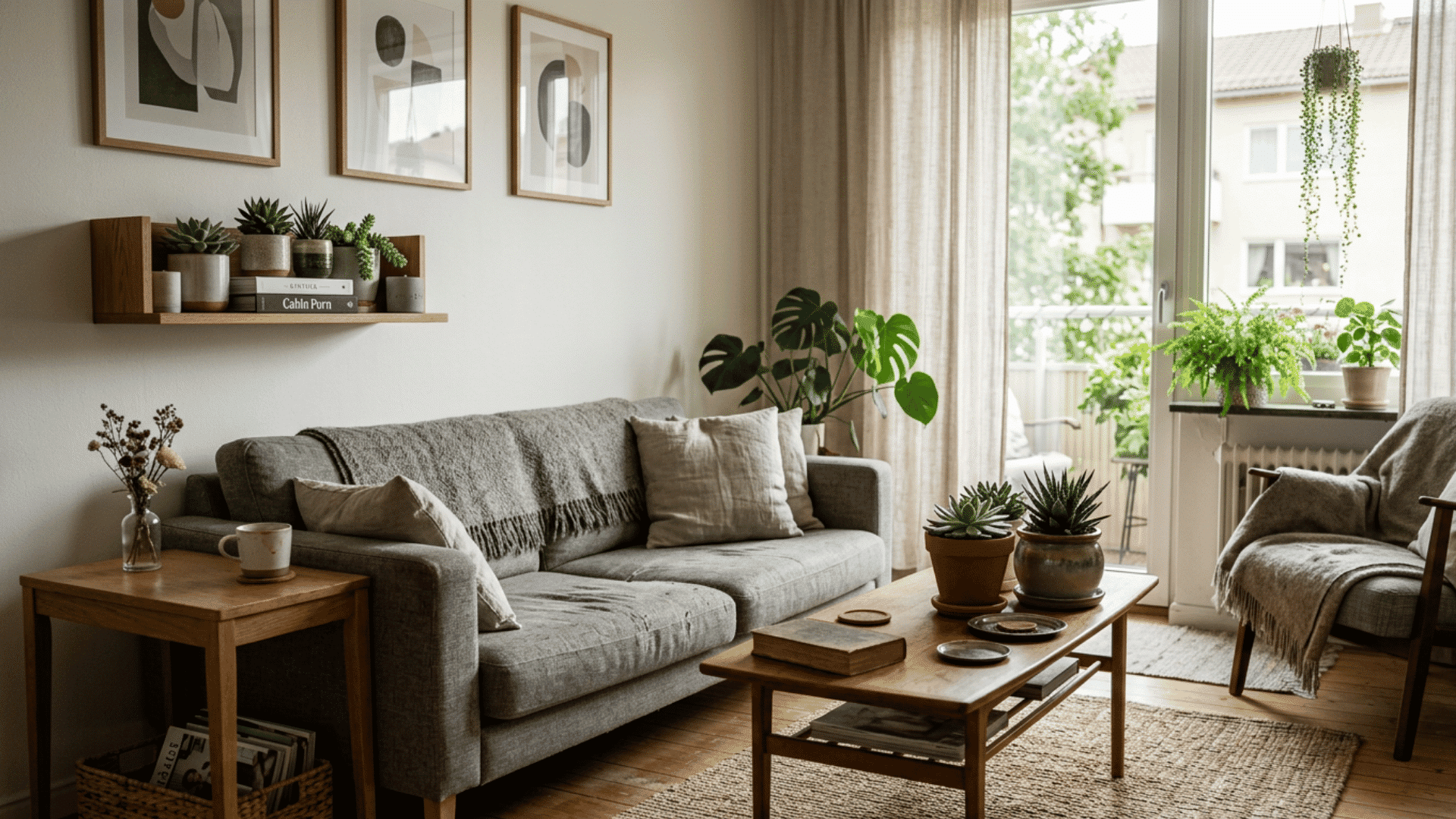
Succulents are a practical choice for small living rooms because they need very little maintenance.
You can group a few together on a coffee table, shelf, or TV unit to add greenery without taking up much room.
Their compact size works well in apartments and smaller homes.
Choose simple containers that match your existing decor style. Small plant arrangements often look more organized in compact spaces.
Succulents also work well because they do not require frequent watering, making them easier to care for during busy routines or travel.
35. Natural Wood Decor Accents
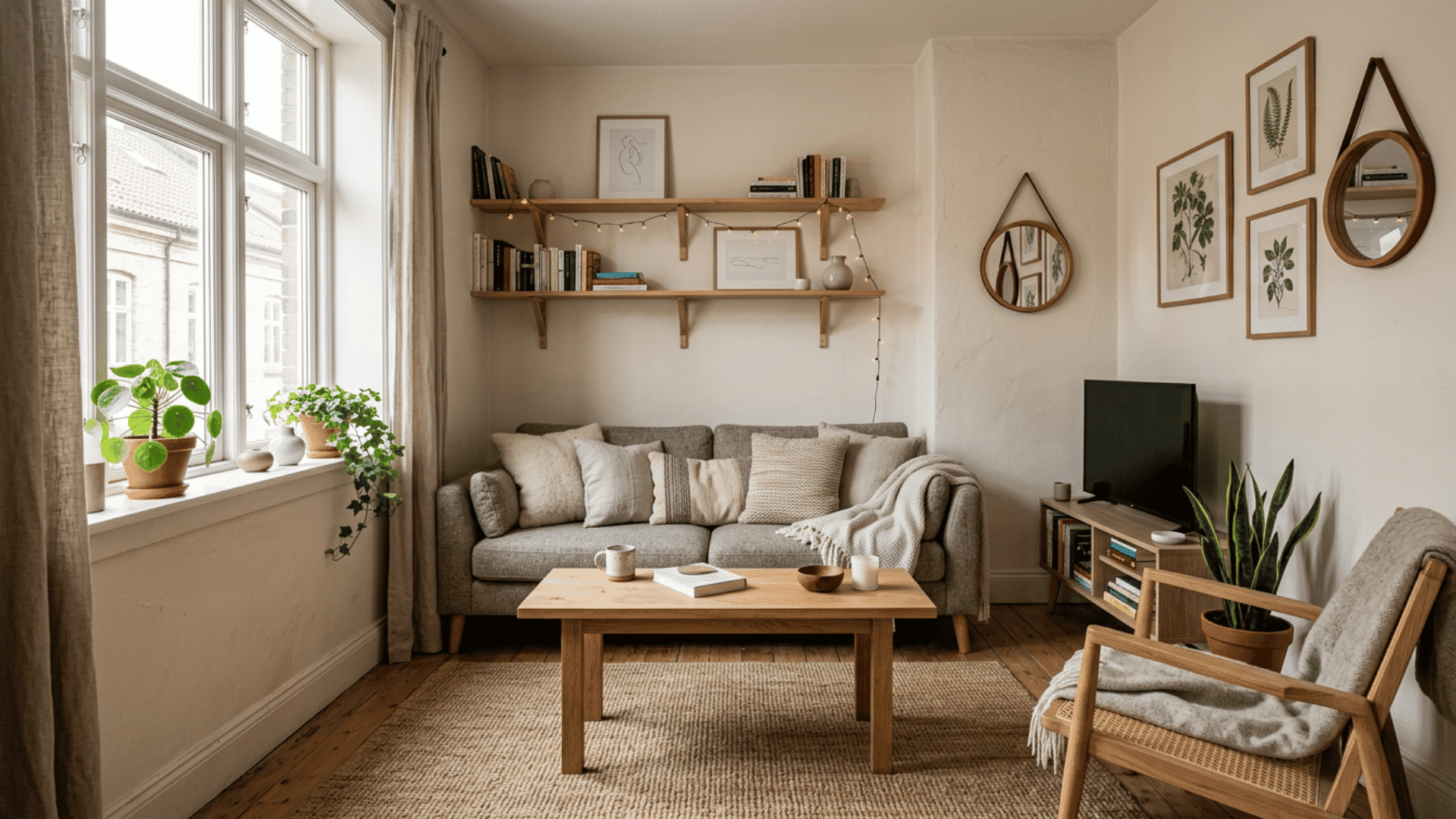
Natural wood accents can make a small living room feel warmer and more comfortable without adding too much decoration.
You can use wooden shelves, side tables, frames, or trays to bring subtle texture into the room. Light wood tones often work especially well in smaller spaces.
Try mixing wood with neutral fabrics and simple furniture for a balanced look. Natural materials help rooms feel relaxed without becoming overly styled.
Keeping the wood finishes consistent can also make the space feel cleaner and more connected overall.
36. Bamboo and Rattan Styling
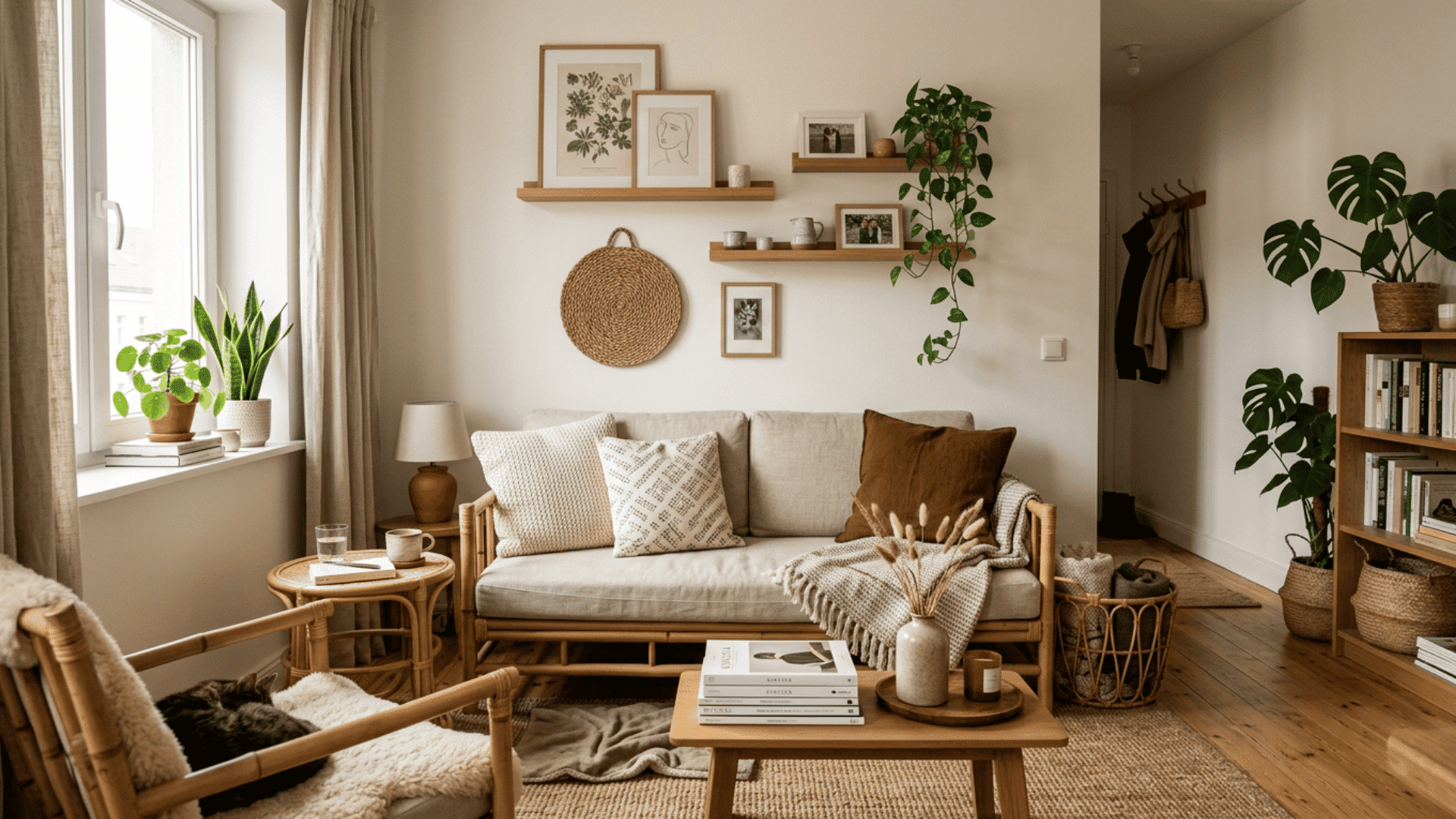
Bamboo and rattan decor can add texture while still keeping your living room light and airy.
You can use rattan chairs, woven baskets, bamboo shelves, or small decorative pieces to create a natural and relaxed feel.
These materials work well with both modern and cozy decor styles.
Avoid using too many woven items in one room. A few natural texture pieces usually create the best balance.
Bamboo and rattan also pair easily with plants, neutral colors, and soft fabrics, helping small living rooms feel comfortable without looking too busy.
Layout & Space Planning Ideas
The way you arrange furniture can change how your small living room feels every day. A good layout helps the room feel more open, comfortable, and easier to move through.
You do not always need new furniture to improve the space. Sometimes moving things around in a smarter way makes the biggest difference.
37. Open-Concept Furniture Layouts
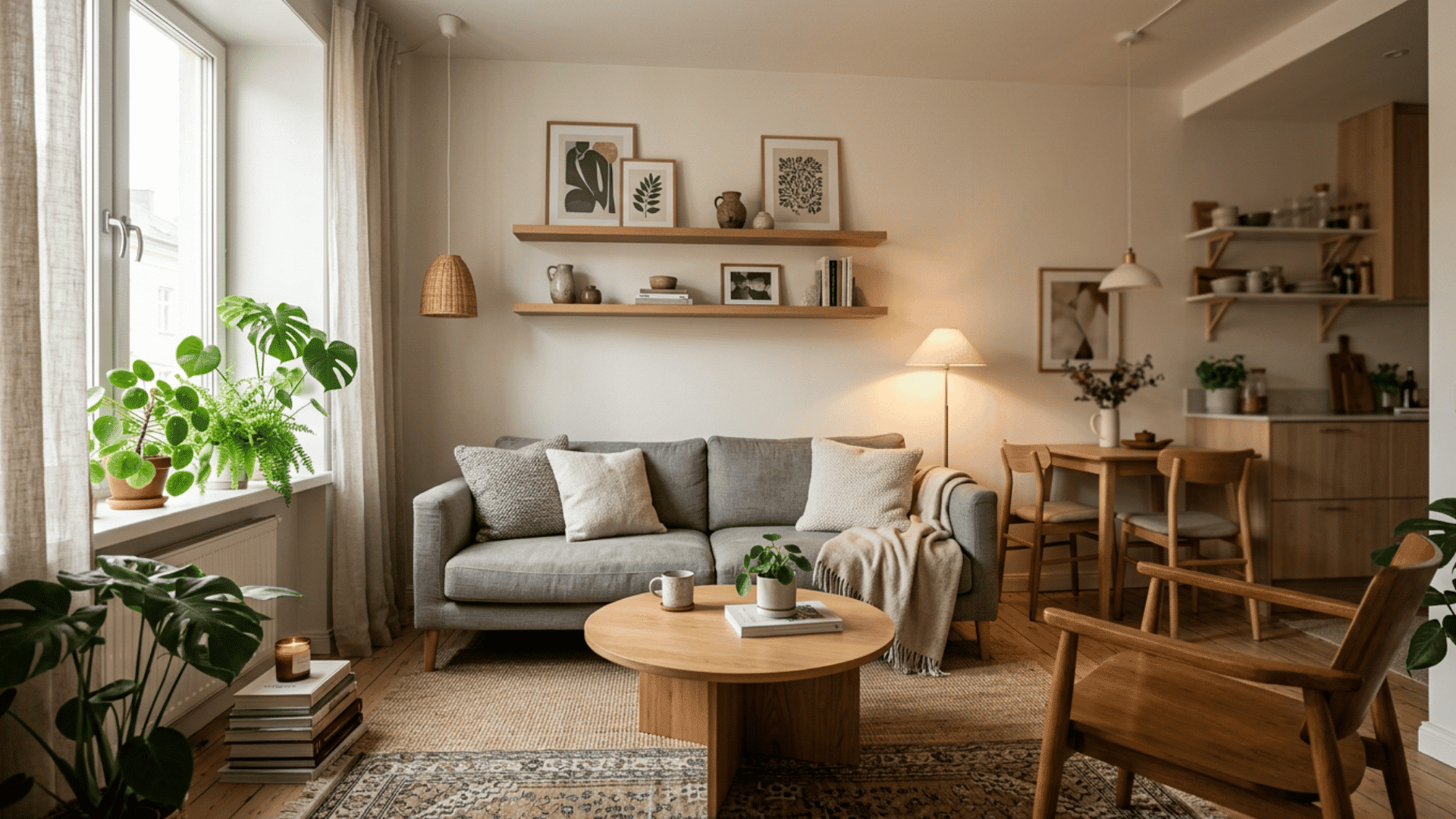
Open-concept layouts help small living rooms feel less crowded by creating better flow between furniture pieces.
You can leave small gaps between seating, tables, and walls so the room feels lighter and easier to move through.
Keeping the center area more open also helps the space feel larger.
Try avoiding oversized furniture that blocks movement or divides the room too much. Open layouts usually make compact spaces feel calmer and more functional.
Using furniture with raised legs can also help create a more open look because more floor space stays visible.
38. Corner Seating Arrangements
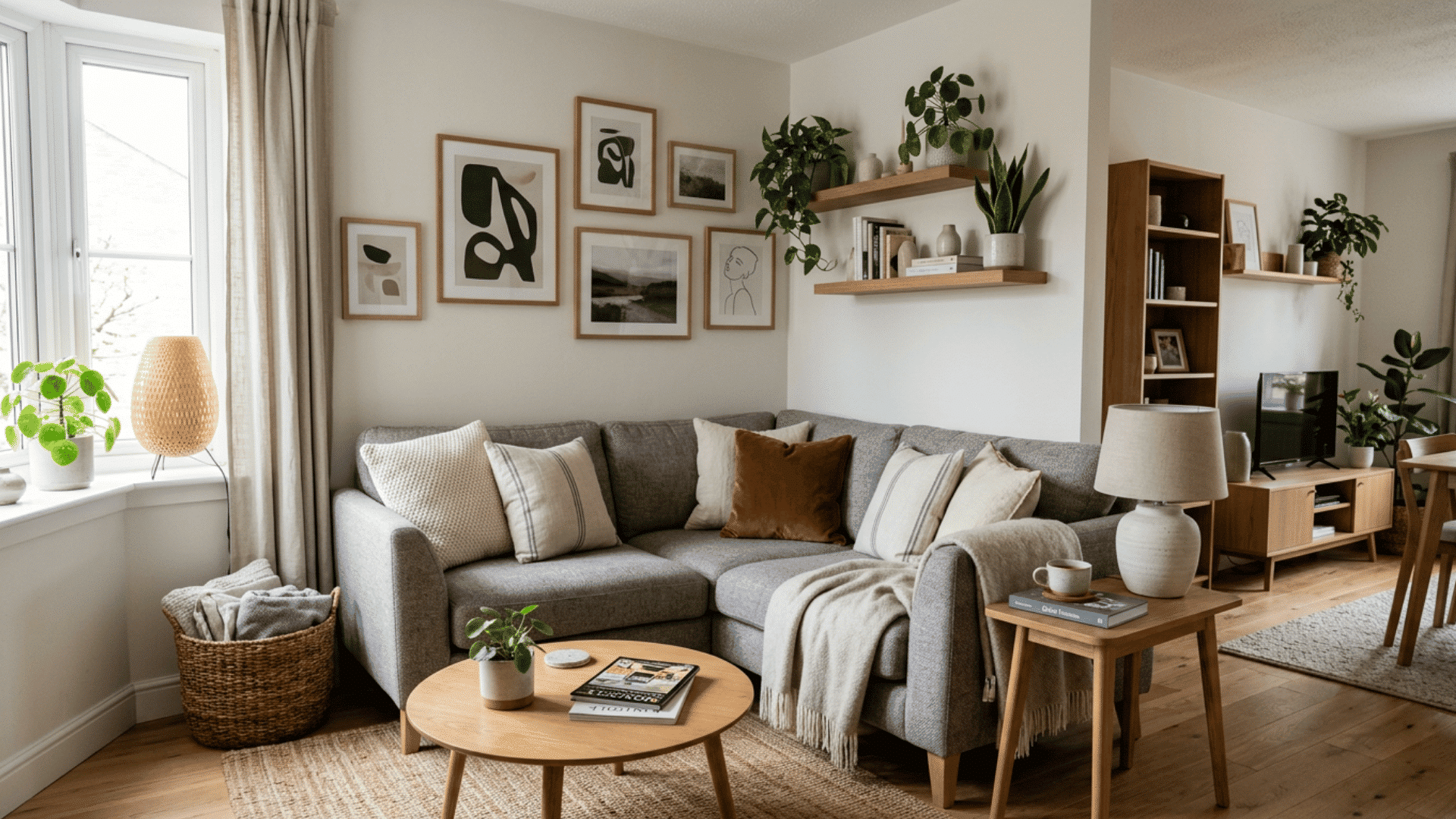
Corner seating is a smart way to use space that often gets ignored in smaller living rooms.
You can place a sectional sofa, bench, or pair of chairs into a corner to free up the middle of the room.
This helps create a better balance while keeping enough walking space open. Add a small side table or floor lamp nearby for extra function.
Using corners efficiently helps maximize every part of the room. Lighter furniture colors can also keep the seating area from feeling too heavy or crowded visually.
39. Symmetrical Decor Layouts
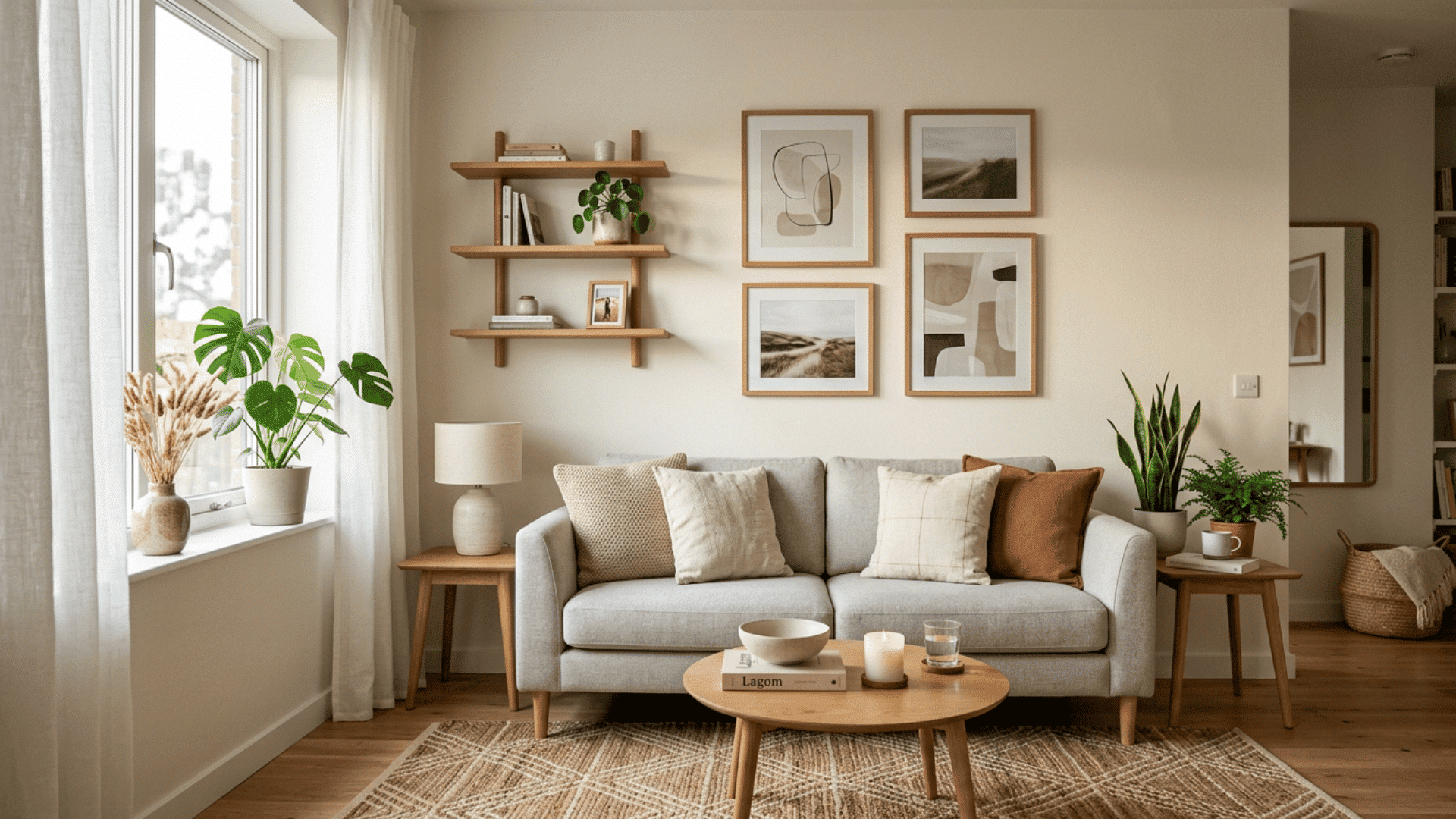
Symmetrical layouts can make a small living room feel more organized and visually balanced.
You can place matching lamps, chairs, or decor pieces on both sides of a sofa or table to create a cleaner arrangement.
This setup often helps the room feel calmer without requiring extra decoration.
Keep the design simple so the space still feels open. Balanced furniture placement can make compact rooms look less cluttered.
Symmetry also works well with neutral colors and minimal decor because it helps everything feel more connected and intentional.
40. Small Living Room Zoning Ideas
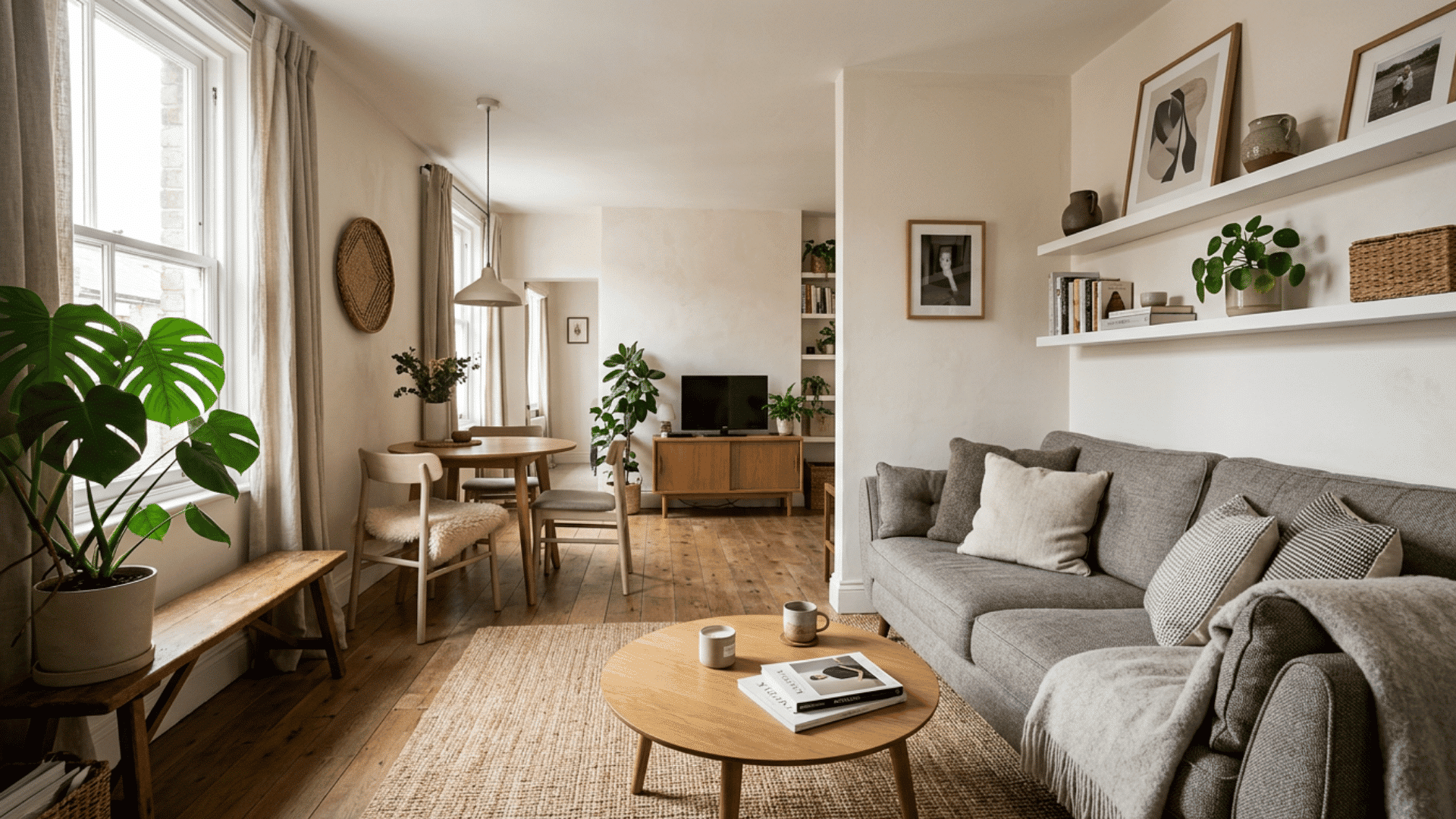
Zoning helps separate different uses in a small living room without adding walls or bulky dividers.
You can use rugs, lighting, or furniture placement to create clear areas for relaxing, reading, or working. Even small spaces can feel more organized when each section has a purpose.
Avoid adding too many barriers between zones. Simple layouts usually work best in compact living rooms.
Keeping colors and furniture styles consistent across the room also helps the different zones feel connected instead of crowded or disconnected.
41. Traffic-Flow-Friendly Arrangements
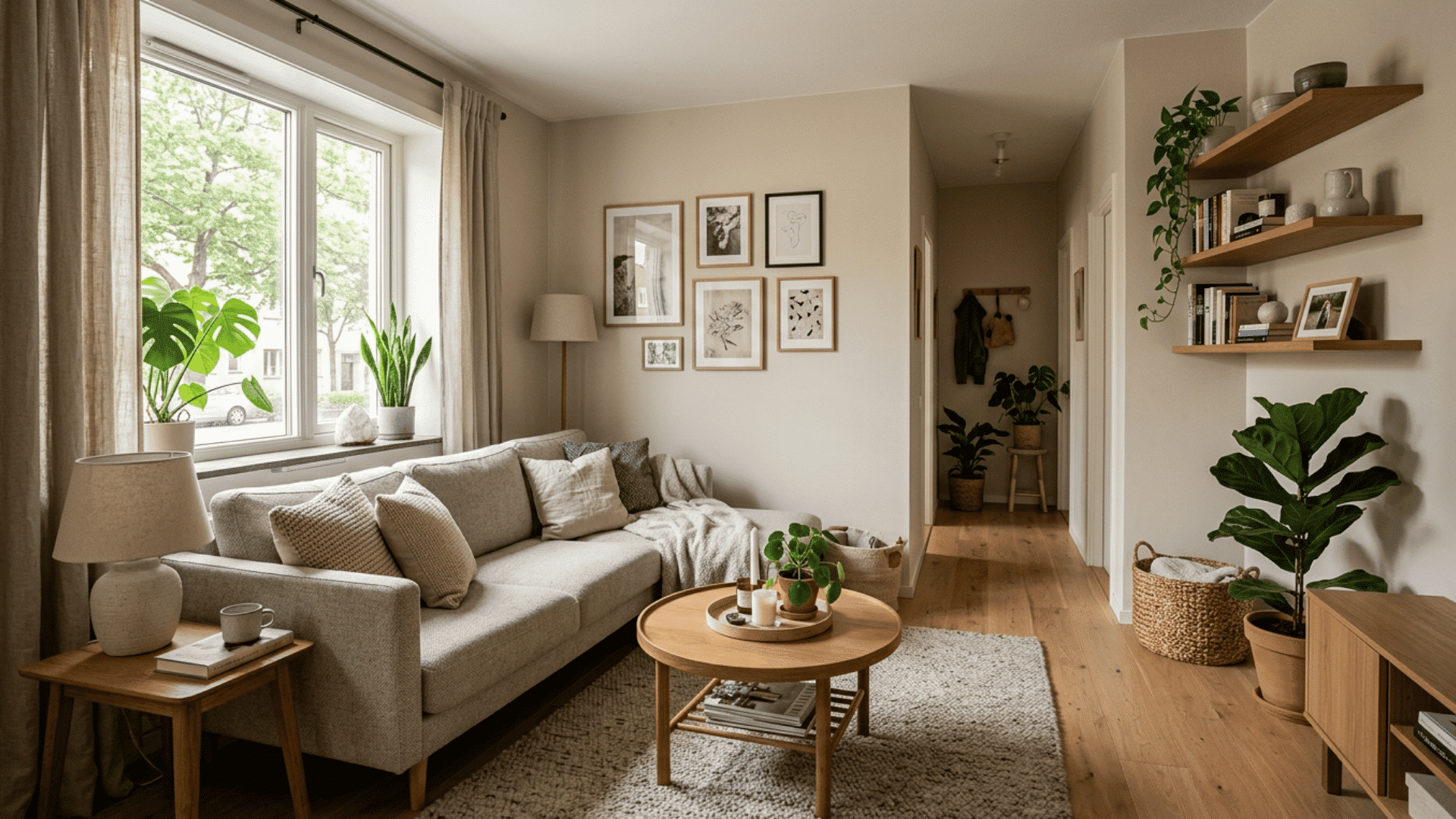
A good furniture layout should make it easy to move around the room comfortably.
Arrange your living room furniture to leave clear walking paths between sofas, tables, and shelves so the space feels less cramped during daily use.
Even small adjustments can improve how open the room feels.
Avoid blocking windows, doorways, or main pathways with bulky furniture. Easy movement makes a small living room feel more practical and comfortable.
Choosing smaller tables and slimmer furniture pieces can also help maintain better flow without sacrificing function or seating space.
DIY & Budget-Friendly Living Room Decor Ideas
Refreshing your living room does not always require expensive furniture or a full renovation. Small DIY updates and budget-friendly decor changes can still make the space feel fresh and more personal.
Simple projects, secondhand finds, and creative furniture updates can help you improve your living room while staying within your budget.
42. DIY Wall Art Projects
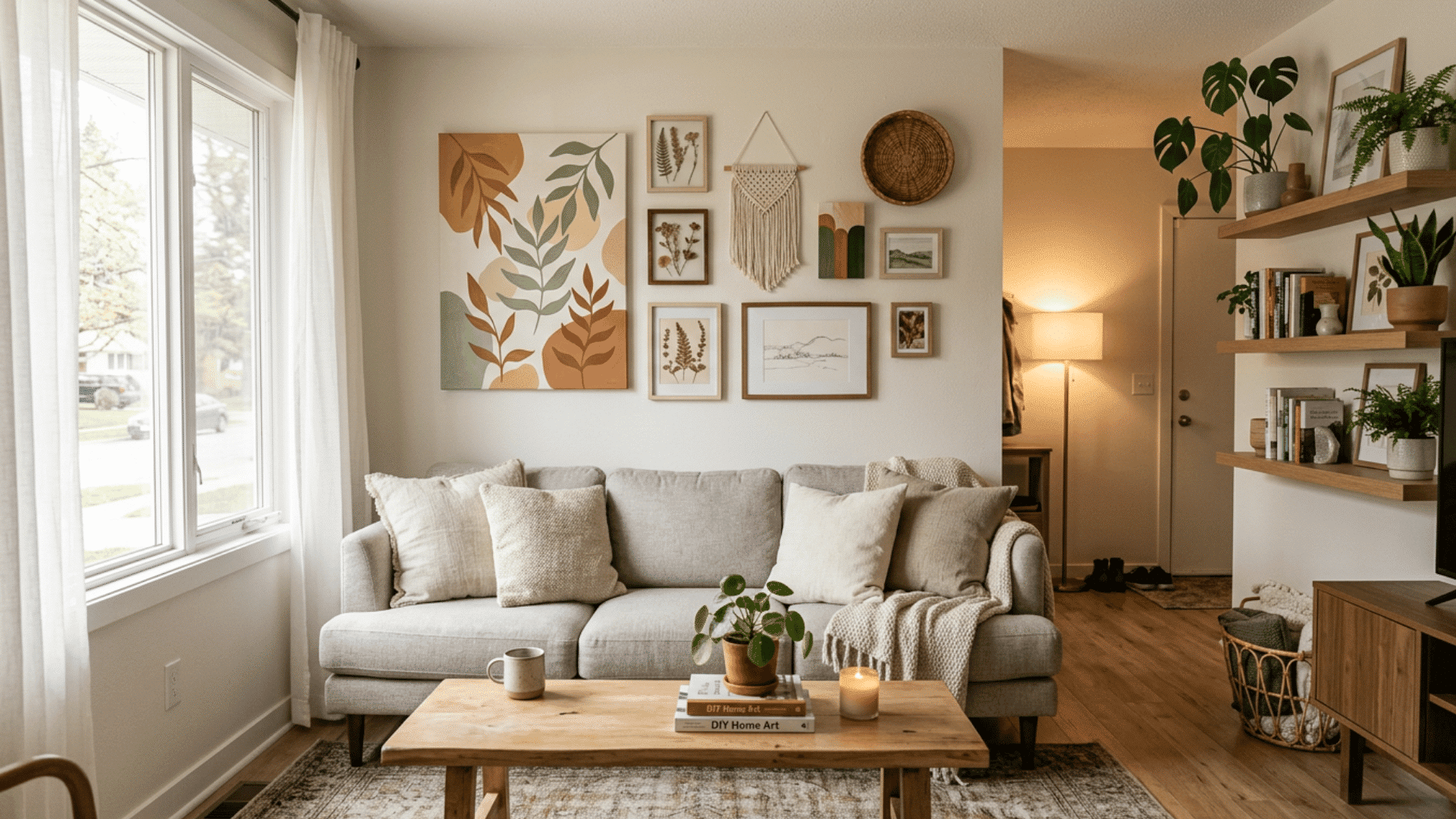
DIY wall art is an easy way to add personality to your living room without spending too much money.
You can create simple framed prints, painted canvases, fabric art, or photo displays using affordable materials.
Handmade decor often feels more personal because it reflects your own style and interests.
Keep the designs simple so the room still feels clean and balanced. Too many wall decorations can make small spaces feel cluttered.
43. Thrifted Decor Styling
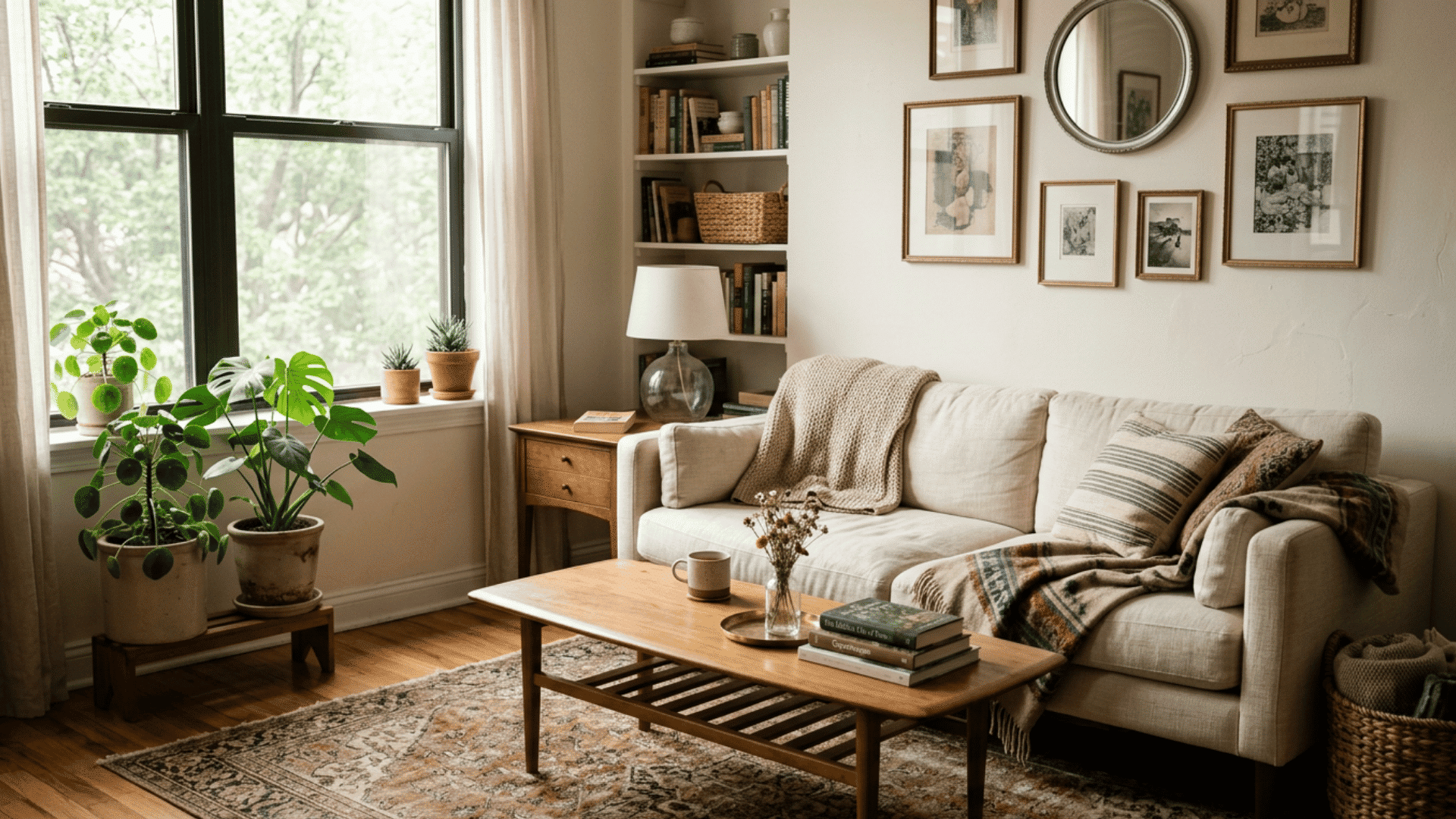
Thrifted decor can help you decorate your living room affordably while adding unique pieces that feel more personal.
You can find mirrors, lamps, side tables, baskets, or framed art at secondhand stores for much lower prices than buying new items.
A few carefully chosen pieces usually create a cleaner look. Mixing secondhand decor with modern furniture can also help the room feel balanced and updated.
44. Affordable Makeover Ideas
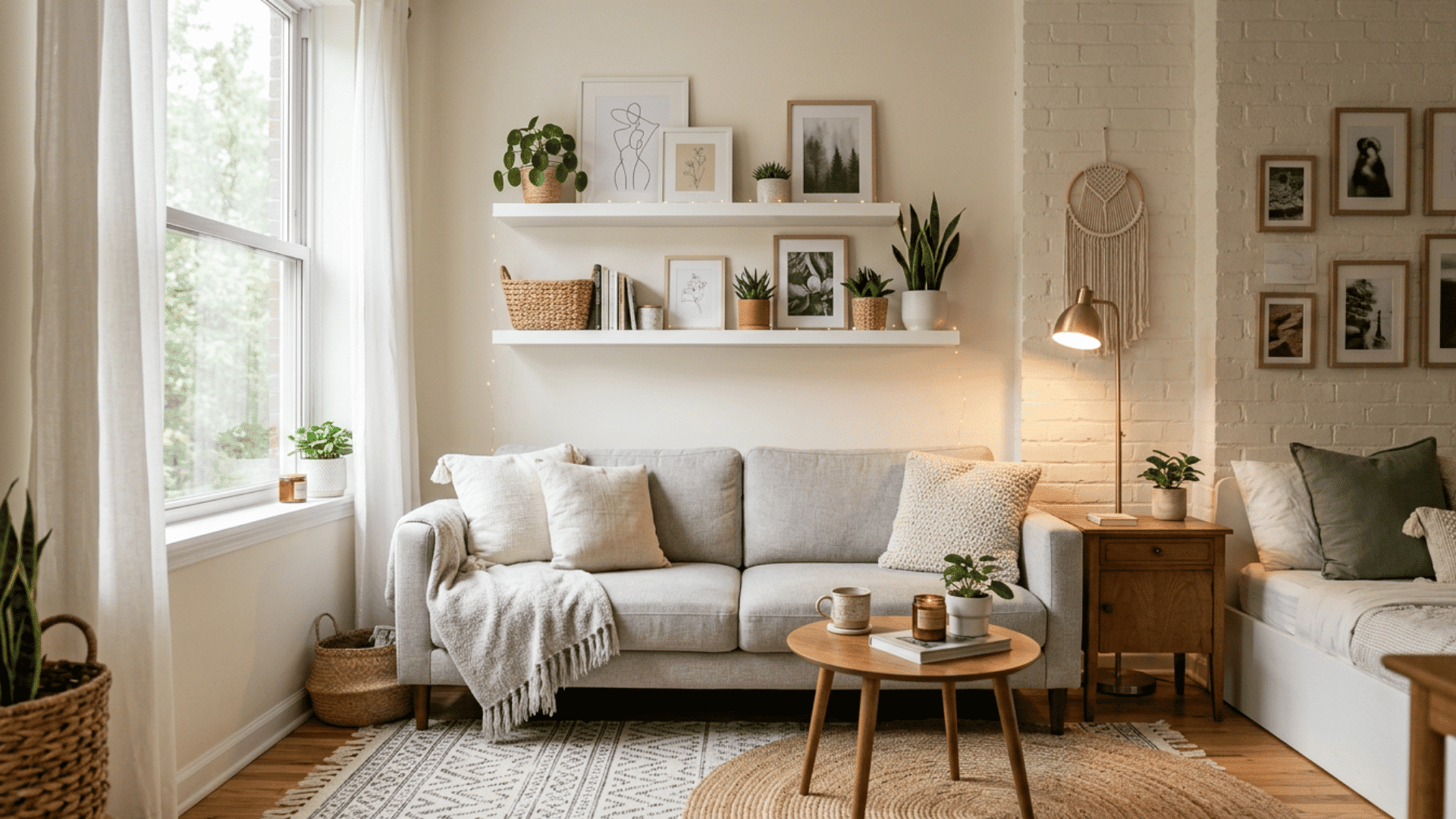
Small and affordable changes can make your living room feel refreshed without replacing all the furniture.
You can update cushions, rugs, curtains, lighting, or wall paint to give the room a different look while staying within budget.
Focus on one or two updates at a time to avoid unnecessary costs. Simple changes often have the biggest impact in small living rooms.
Neutral base furniture also makes it easier to refresh the room later with smaller decor updates.
45. Upcycled Furniture Decor Hacks
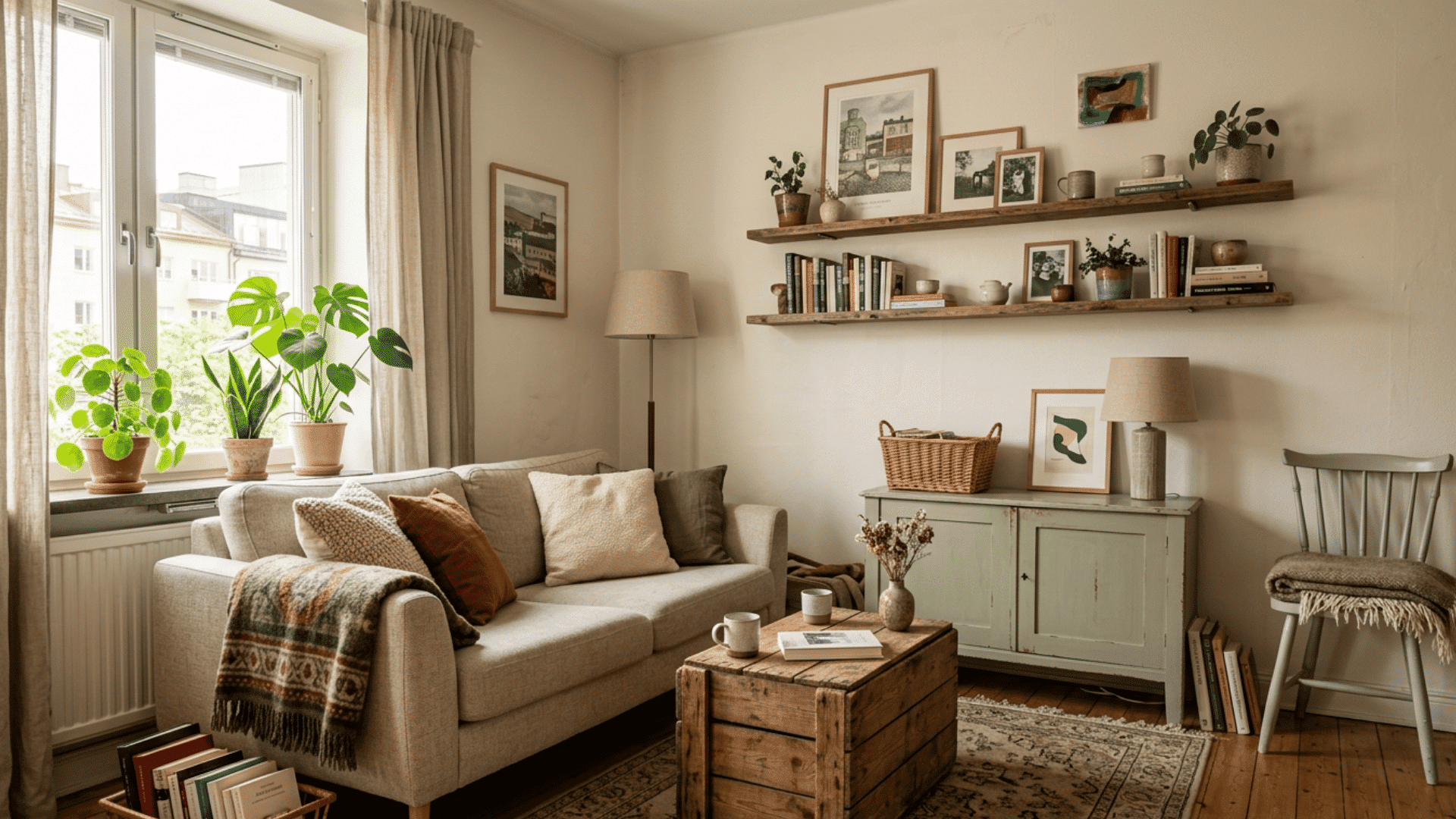
Upcycling old furniture is a practical way to save money while giving your living room a more custom look.
You can repaint side tables, replace cabinet handles, add peel-and-stick finishes, or turn unused furniture into storage pieces.
Small upgrades can make older items feel newer without requiring major work.
Choose projects that still keep the furniture functional and easy to use. Upcycled decor works best when it feels simple and practical.
Space-Saving Tricks for Tiny Living Rooms
Here are some space-saving tricks you can use for your living room.
| Space-Saving Trick | How It Helps |
|---|---|
| Multi-Functional Furniture | Saves space by combining storage and seating in one piece |
| Open Furniture Layout | Makes the room feel less crowded and easier to move through |
| Vertical Storage | Uses wall space instead of filling the floor with furniture |
| Floating Shelves | Adds storage without taking up extra room |
| Nesting Tables | Provides extra surface space only when needed |
| Light Color Palette | Helps the room look brighter and more open |
| Mirrors for Reflection | Reflects light and creates the illusion of more space |
| Slim Furniture Designs | Keeps the room feeling lighter and less bulky |
| Clear Walking Paths | Improves movement and makes the layout feel comfortable |
| Natural Light Usage | Makes tiny living rooms appear bigger and fresher |
Final Thoughts
A small living room does not have to feel limited or difficult to decorate. With the right layout, smart storage, better lighting, and a few thoughtful decor choices, you can create a space that feels comfortable, functional, and personal.
The best part is that you do not need a huge budget or a complete makeover to see a real difference.
Even simple updates like rearranging furniture, adding plants, or changing colors can improve how your living room looks and feels every day.
The ideas shared in this article are meant to help you find practical solutions that fit your style and your space.
Start with a few changes that feel manageable and build from there.
Which small living room decor idea worked best for your space? Share your experience and favorite tips in the comments below.
Frequently Asked Questions
Are Dark Colors Good for Small Living Rooms?
Dark colors can work in small living rooms when used as accents. Too many dark shades may make the space feel smaller and less open overall.
What Type of Lighting Works Best in Small Living Rooms?
Layered lighting with ceiling lights, floor lamps, and table lamps works best because it improves brightness and makes the room feel more balanced and welcoming.
How Can I Decorate a Small Living Room on a Budget?
You can use DIY decor, thrifted furniture, affordable textiles, and simple paint updates to refresh your living room without spending too much money on renovations.
Do Mirrors Really Make Small Living Rooms Look Bigger?
Yes, mirrors reflect natural light and create visual depth, which helps small living rooms feel brighter, larger, and more open without changing the layout.