Kitchen cabinets can make or break your space. Either you have way too many, or they’re packed so tight you can’t find anything.
That’s where minimalist kitchen cabinets come in. This article covers what storage actually matters, which designs work best, and how to arrange everything so it flows.
I’m not talking about going extreme or sacrificing function. I’ve done this in my own home and watched readers simplify theirs too.
By the end, you’ll learn: smart layout choices, materials that stay clean-looking, storage tricks that save space, and exactly what to change first.
What Makes a Kitchen Cabinet “Minimalist”?
A minimalist kitchen cabinet strips away anything that doesn’t serve a purpose. Instead of ornate carvings, raised panels, or oversized knobs, you get flat surfaces, simple lines, and hardware that hides or disappears. Four features define the look:
- Flat-panel or slab doors with full overlay, so the door covers most of the cabinet face for a seamless front.
- Hidden or handleless hardware, including edge pulls, recessed grips, and push-to-open systems.
- Neutral color palettes built on whites, warm woods, taupes, and muted tones.
- Integrated appliances behind matching panels for a continuous, uncluttered surface.
Get these four right, and the rest of the design falls into place. Everything below builds on this foundation.
Minimalist Kitchen Cabinet Ideas
Clean cabinet designs create kitchens that look calm and organized. Here are some ideas to show how minimalist kitchen cabinets transform spaces with a simple, functional style:
1. Flat-Panel White Cabinets
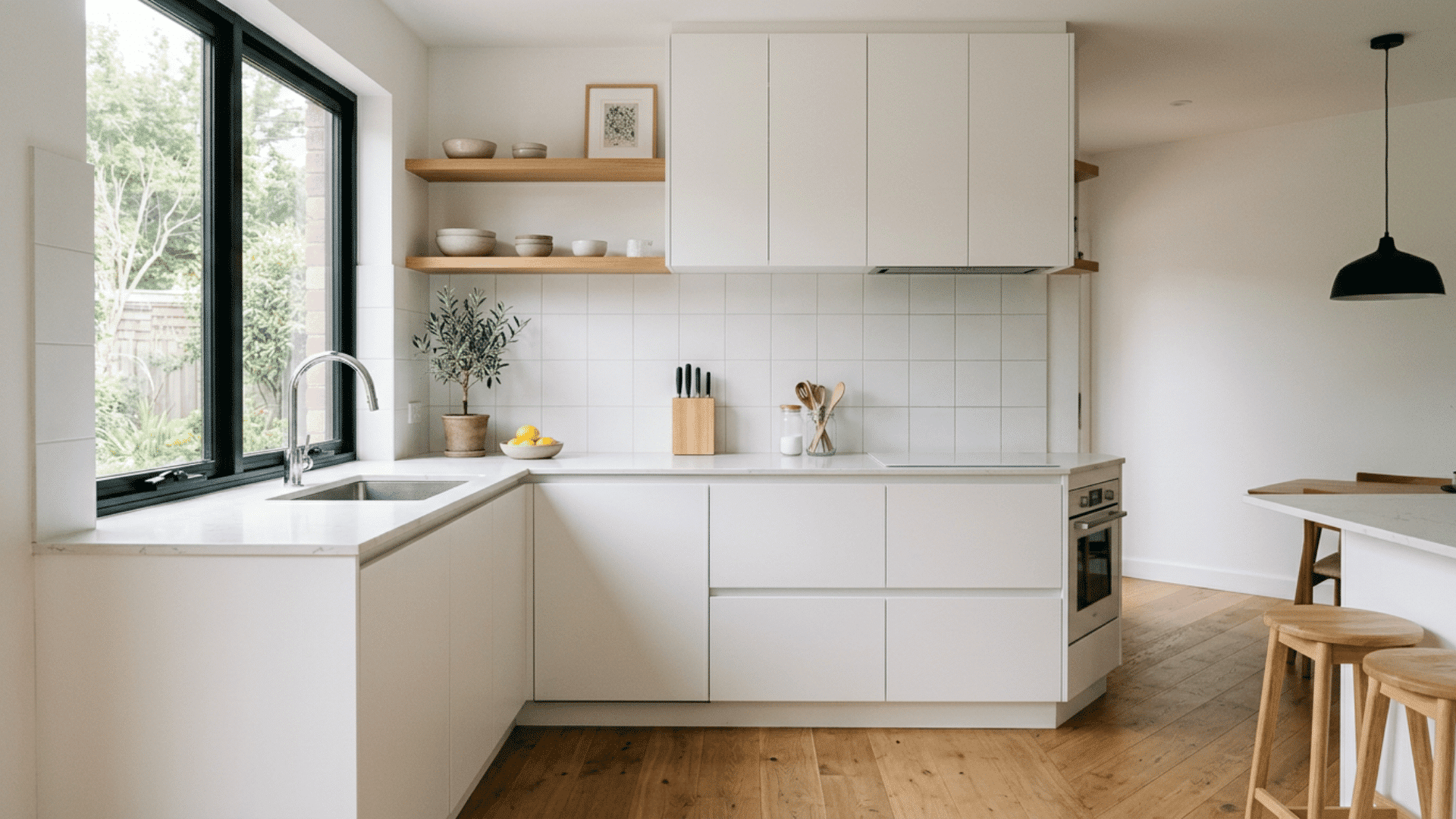
Flat-panel white minimalist kitchen cabinets define modern kitchen design with clean lines. No raised details or decorative trim exist, just smooth, flat surfaces.
The unadorned style works with any countertop or backsplash choice. Hardware sits flush or hidden entirely.
These cabinets never feel trendy or dated. White reflects light, making smaller kitchens appear bigger. Maintenance involves simple wiping with mild soap and water.
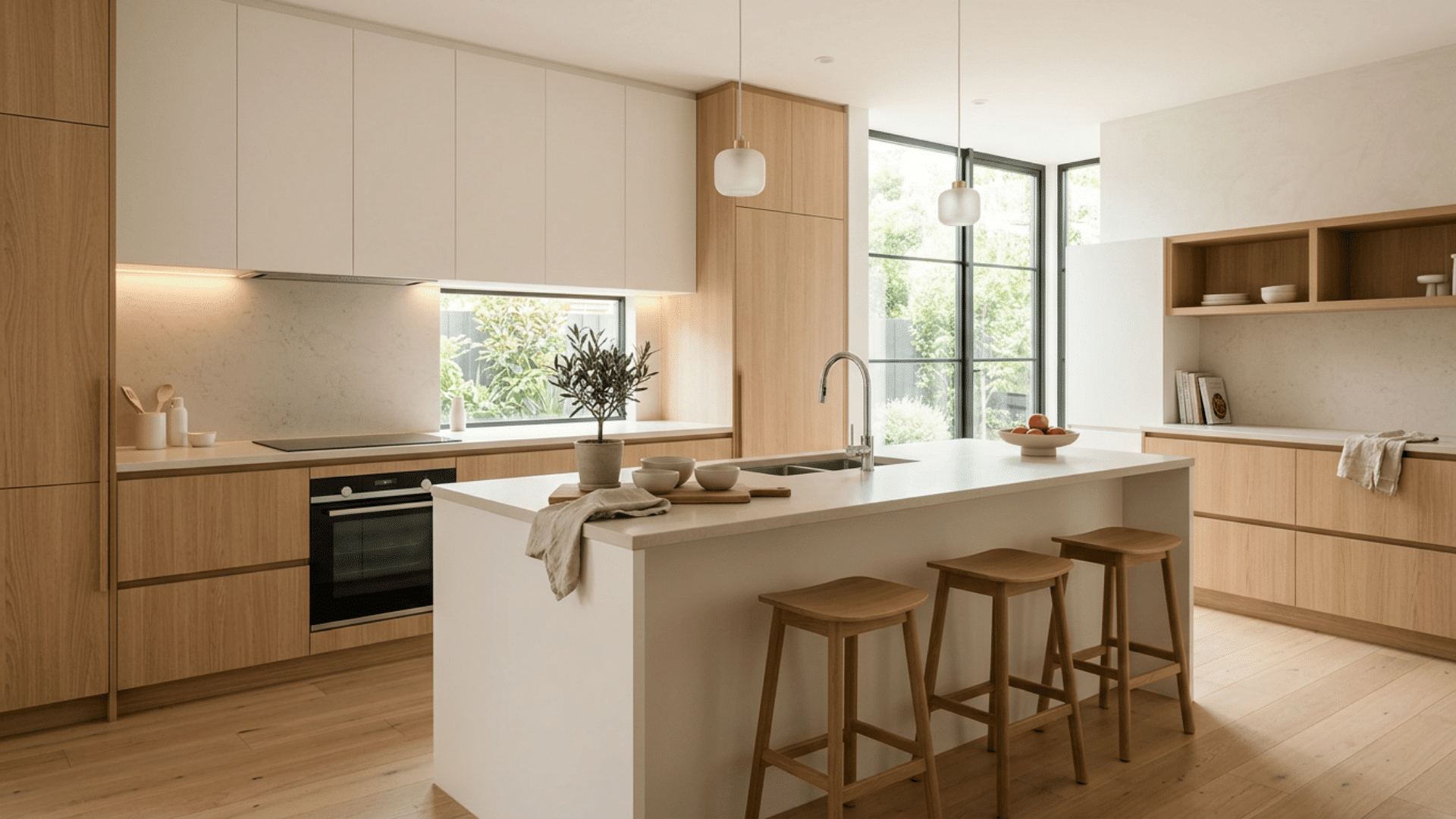
2. Warm Wood Minimalist Cabinets
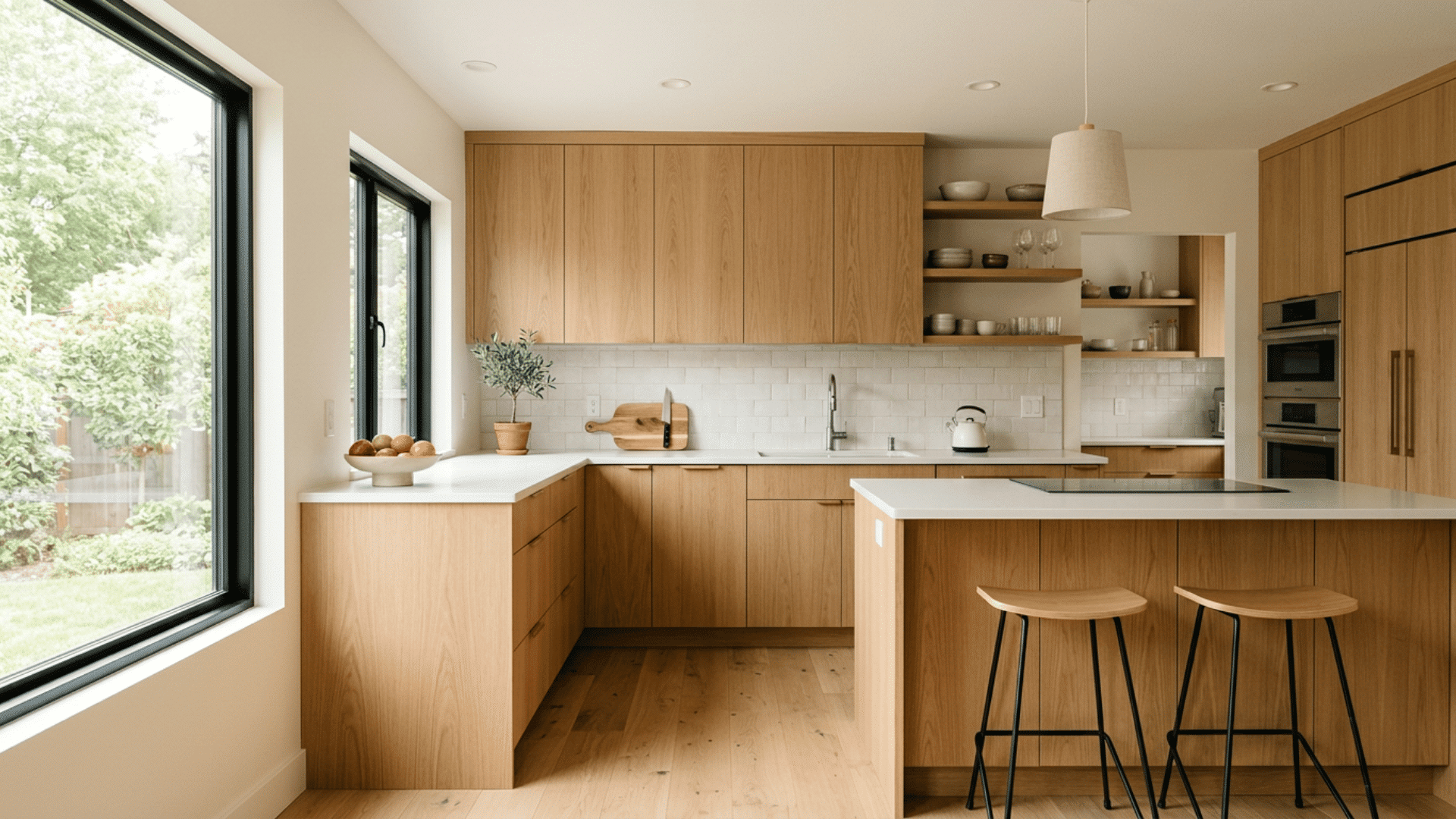
Warm wood beautifully brings natural character to minimalist kitchen cabinet designs. Medium-to-light wood tones create inviting kitchens without excessive detail.
The grain pattern provides visual interest without the need for carved details. Wood handles complement the vibe naturally. These cabinets hide dust less visibly than white finishes.
Warm wood works beautifully in kitchens with natural light from windows. The material costs more but delivers lasting beauty and warmth that welcomes guests.
3. Handleless Kitchen Cabinets
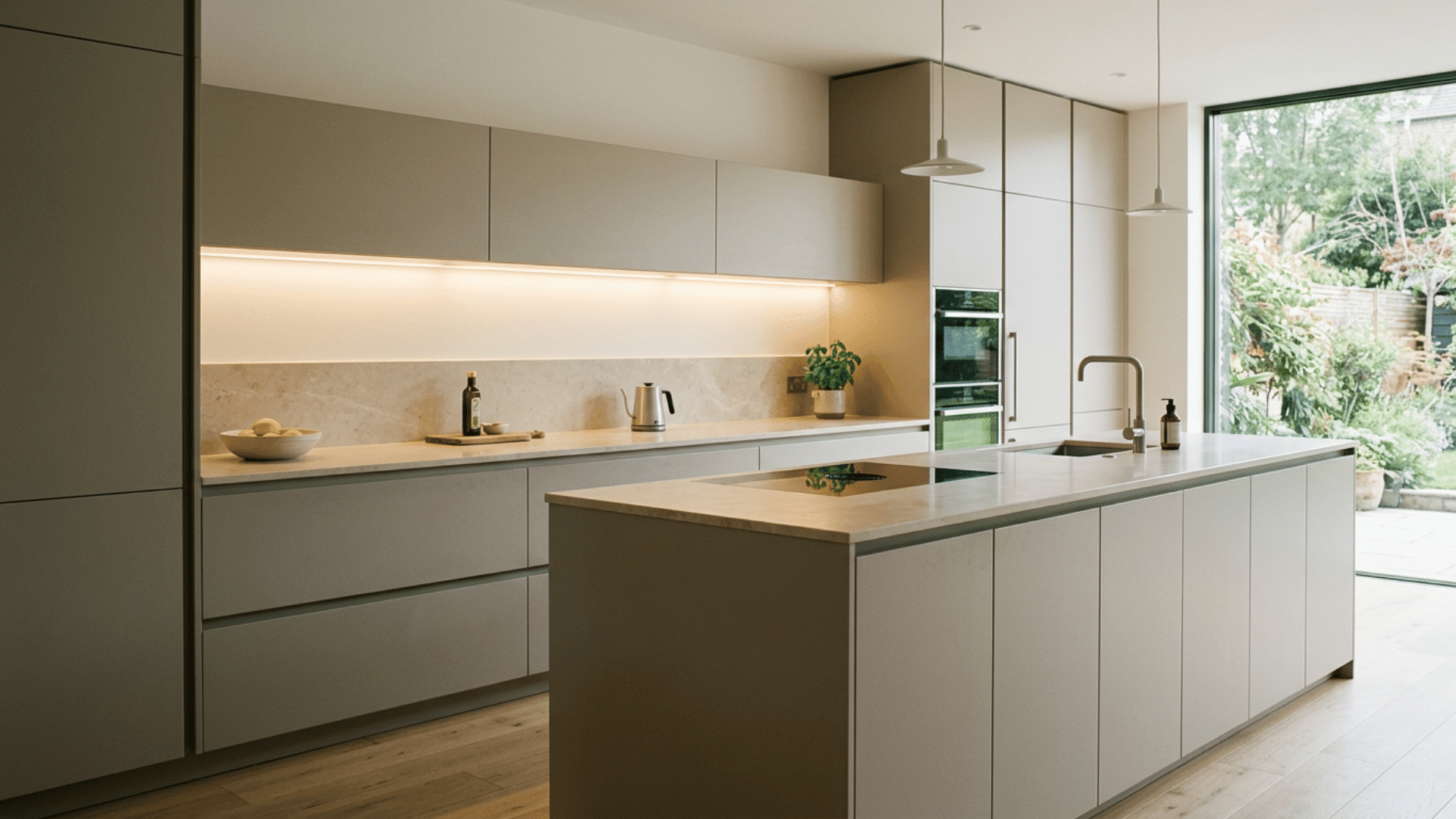
Handleless minimalist kitchen cabinets create the smoothest, most modern appearance possible.
Push-to-open mechanisms open doors without any visible hardware. These designs eliminate finger grips that easily collect grease and dust.
I did a renovation using handleless cabinets throughout and loved the seamless look. The unbroken lines make kitchens feel more spacious visually. Installation requires investing in quality mechanisms that last for years.
Cabinet fronts stay cleaner longer without handles to touch repeatedly. Handleless designs work especially well in contemporary and minimalist homes.
4. Floor-to-Ceiling Cabinet Wall
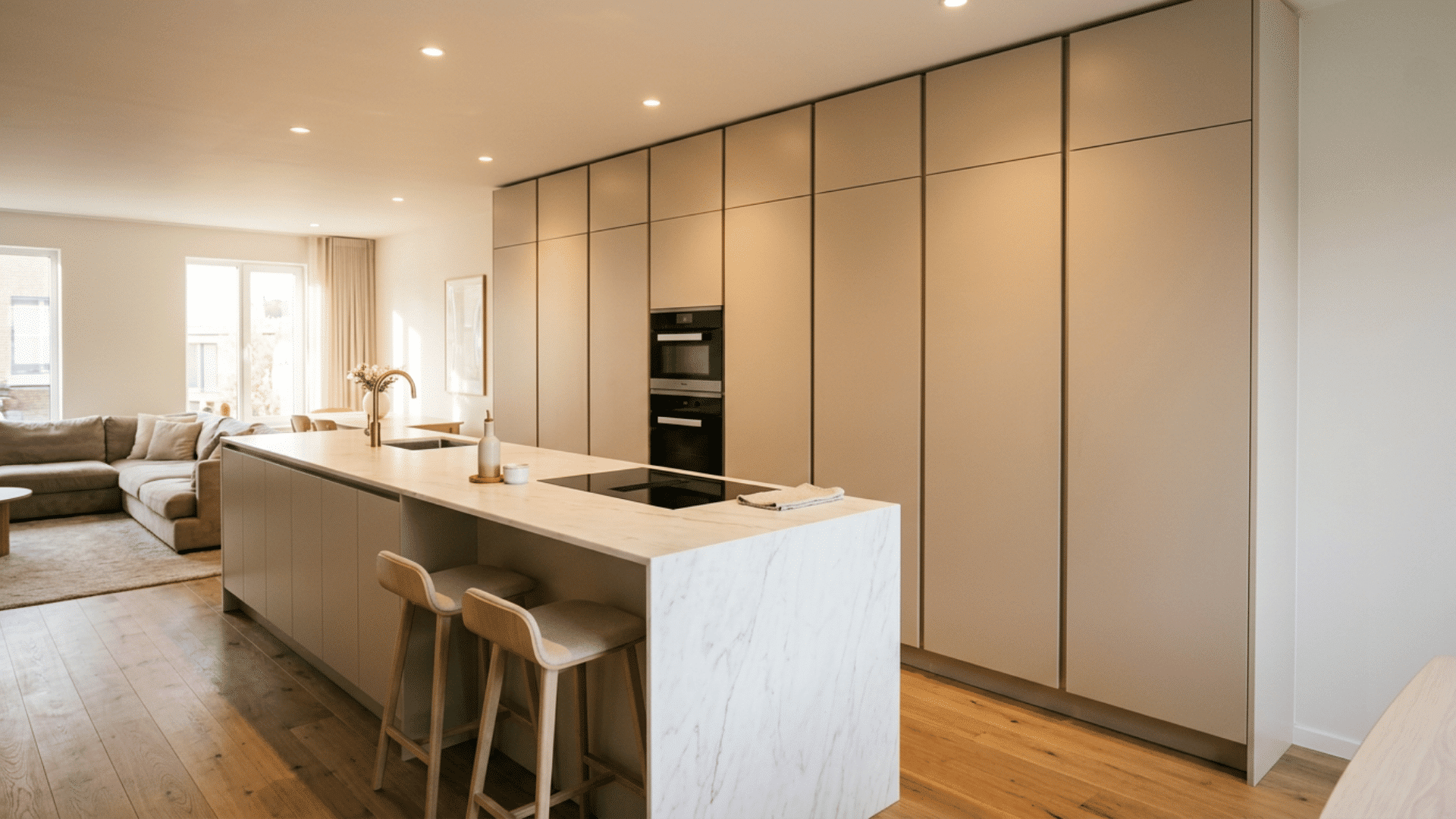
Floor-to-ceiling minimalist kitchen cabinets maximize storage in vertical spaces effectively. This approach works best in kitchens with adequate ceiling height.
Extended height eliminates awkward gaps above standard cabinet lines. Clean lines extend from floor to top, creating striking visual unity.
The design requires careful planning to reach high shelves safely. Pull-down shelves make it easier to access upper storage areas without ladders. This approach suits open-concept homes where the kitchen is highly visible.
5. Matte Black Minimalist Cabinets
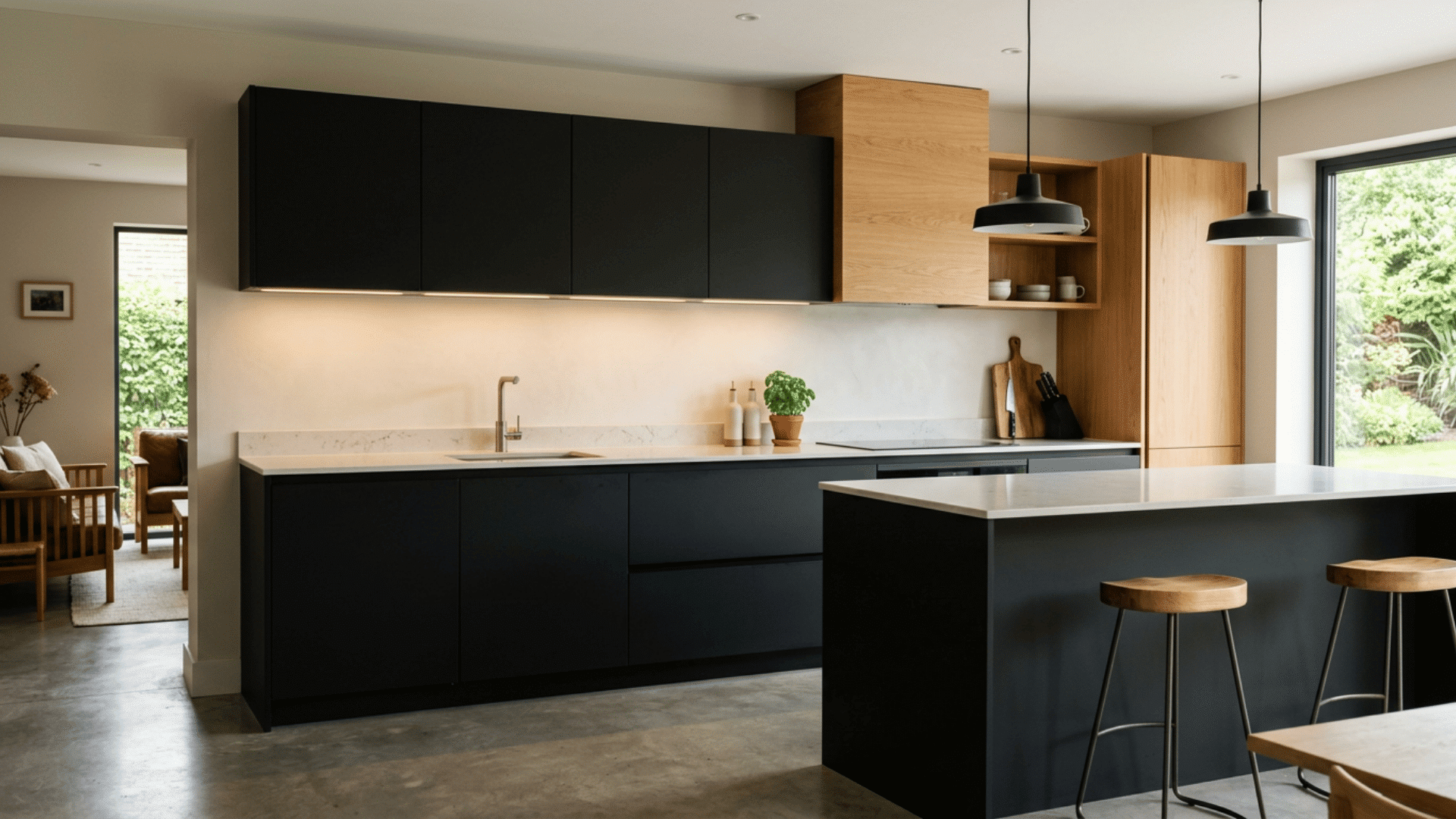
Matte black minimalist kitchen cabinets create bold kitchen statements instantly. The dark finish contrasts dramatically with light countertops and walls.
These cabinets pair beautifully with natural wood accents or stainless steel. Minimalist black cabinets work equally well in contemporary and industrial spaces.
The finish hides fingerprints and dust remarkably well compared to white. Proper lighting becomes important when using dark cabinets to keep spaces bright and inviting.
6. Beige or Cream Minimalist Cabinets
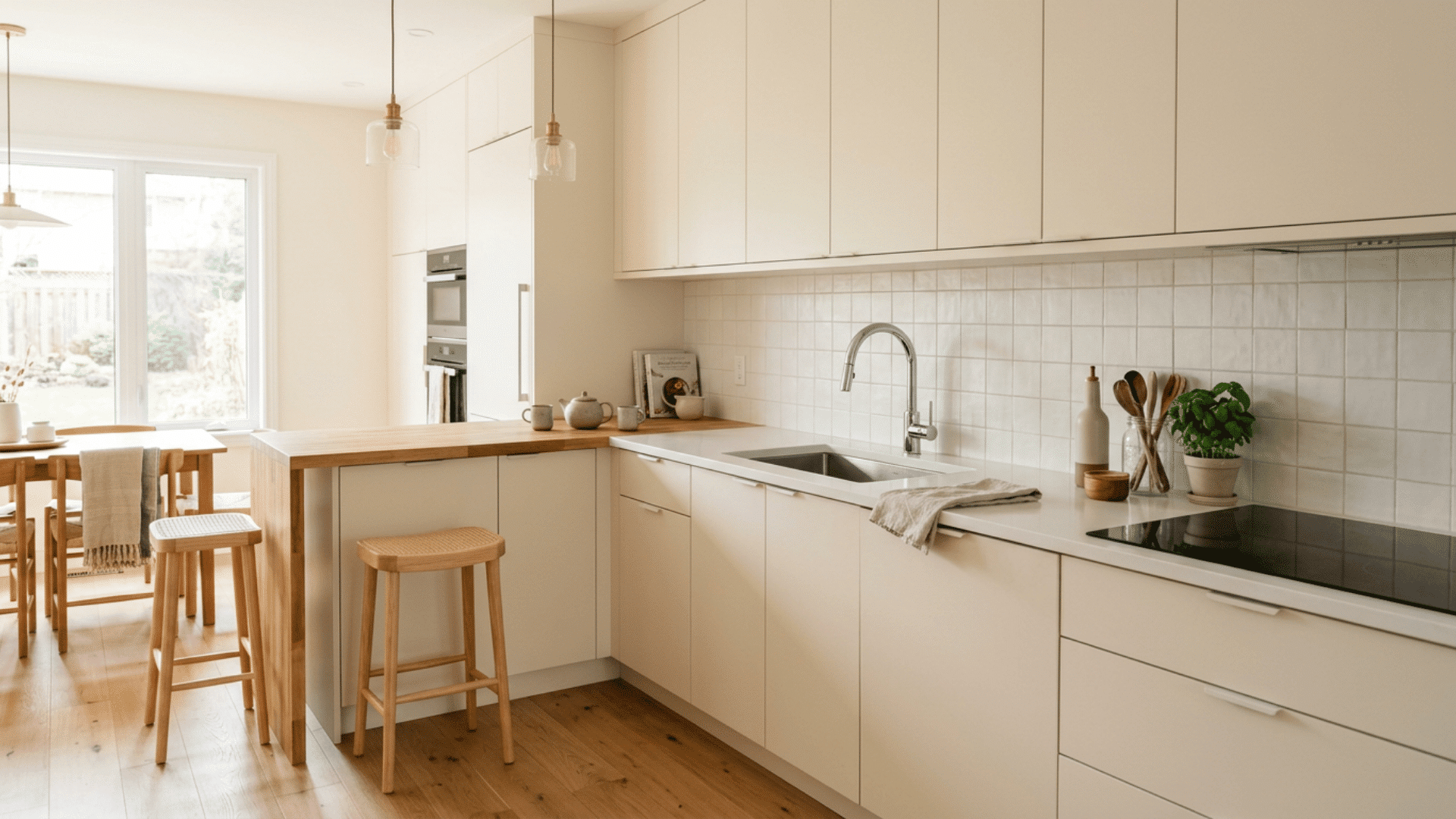
Beige and cream minimalist kitchen cabinets offer a neutral warmth between white and wood tones. These soft tones work in both traditional and contemporary kitchens.
Minimalist kitchen cabinets in neutral beige suit homes with varied decor styles. The color hides minor stains better than bright white finishes do.
Cream creates calm kitchen environments without feeling cold or clinical at all. These tones pair naturally with wood floors and granite countertops. The understated appearance allows other kitchen elements to shine visually.
7. Floating Base Cabinets
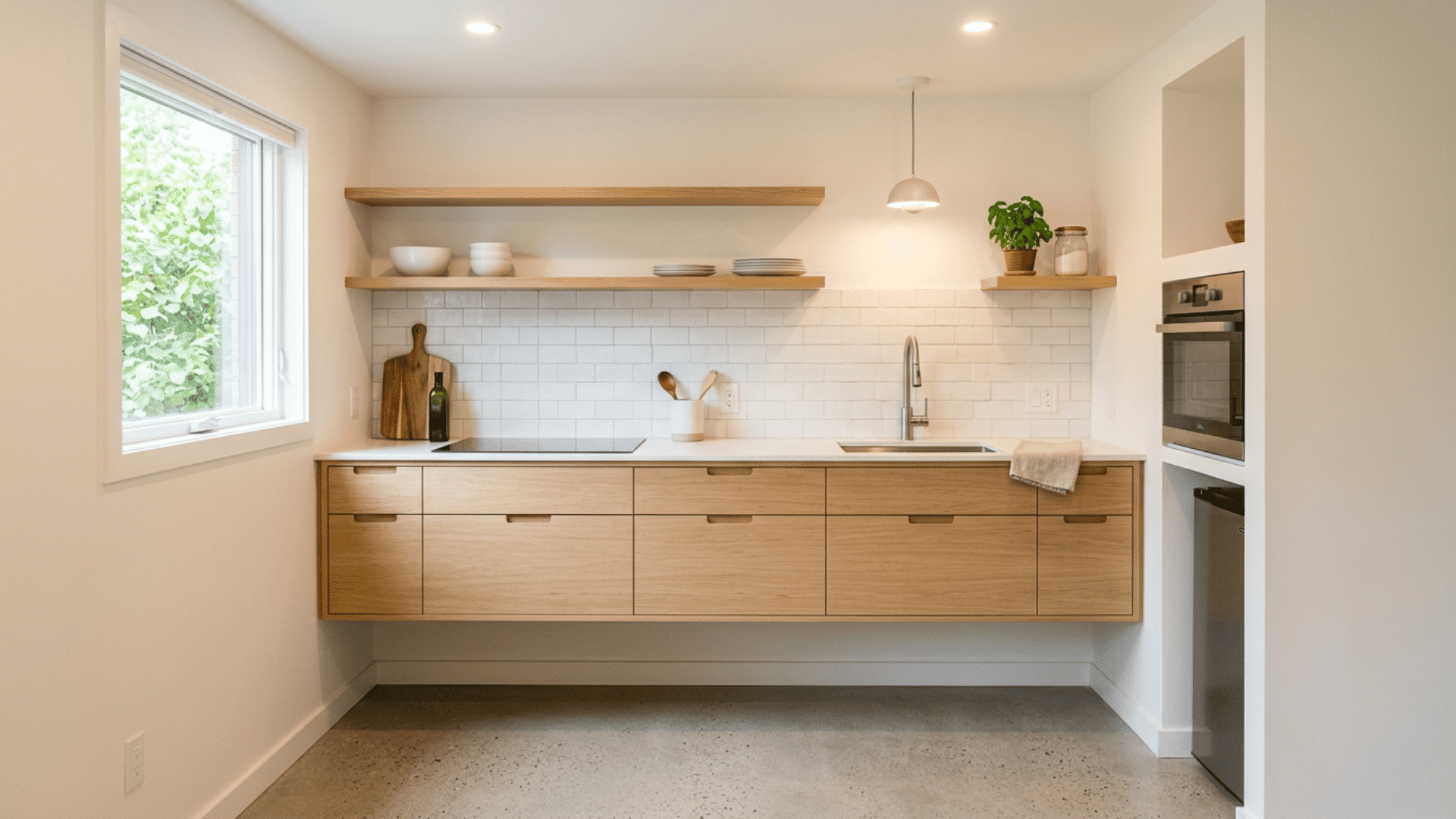
Floating base minimalist kitchen cabinets create space underneath for visual lightness.
These cabinets mount directly to walls, eliminating the need for traditional toe-kick areas. The gap underneath allows easy floor cleaning and a modern appearance.
The space below can accommodate tall appliances or storage baskets creatively. Floating cabinets work best in kitchens without young children for safety reasons.
8. Minimalist Cabinets With Open Shelving
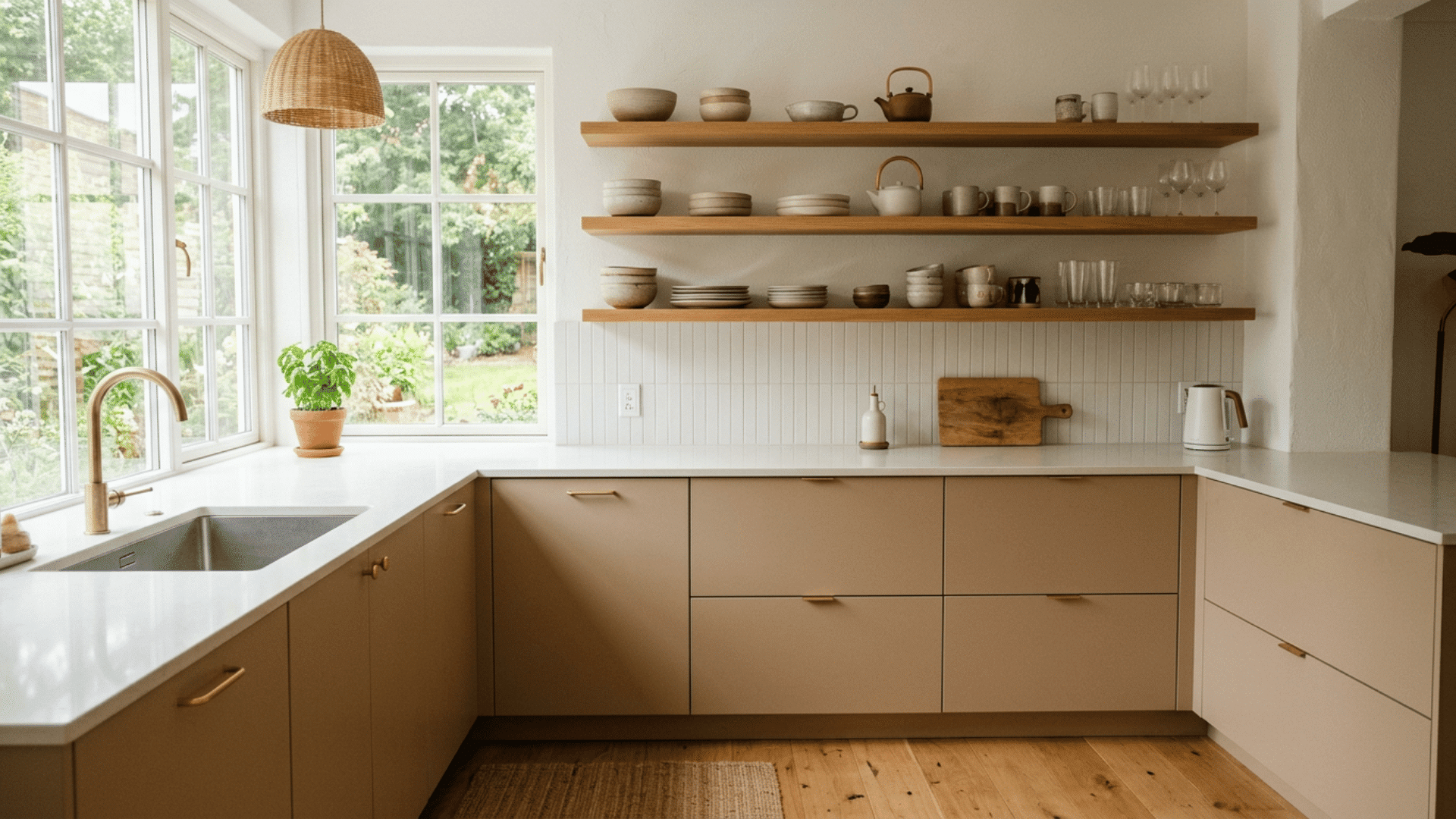
Some shelves display beautiful items while closed cabinets hide daily messiness. This hybrid approach balances style and practicality without compromise.
Open areas require organized, attractive items that withstand dust collection. Closed cabinets below keep appliances and less-beautiful necessities out of sight. This combination appeals to organized homeowners who enjoy kitchen styling projects.
Tip: keep open shelving to one short run, ideally near natural light.
Every extra shelf is another surface to style and dust, and too many quickly undo the calm you were after. The mix prevents kitchens from feeling too uniform or monotonous in appearance.
9. Hidden Appliance Cabinets
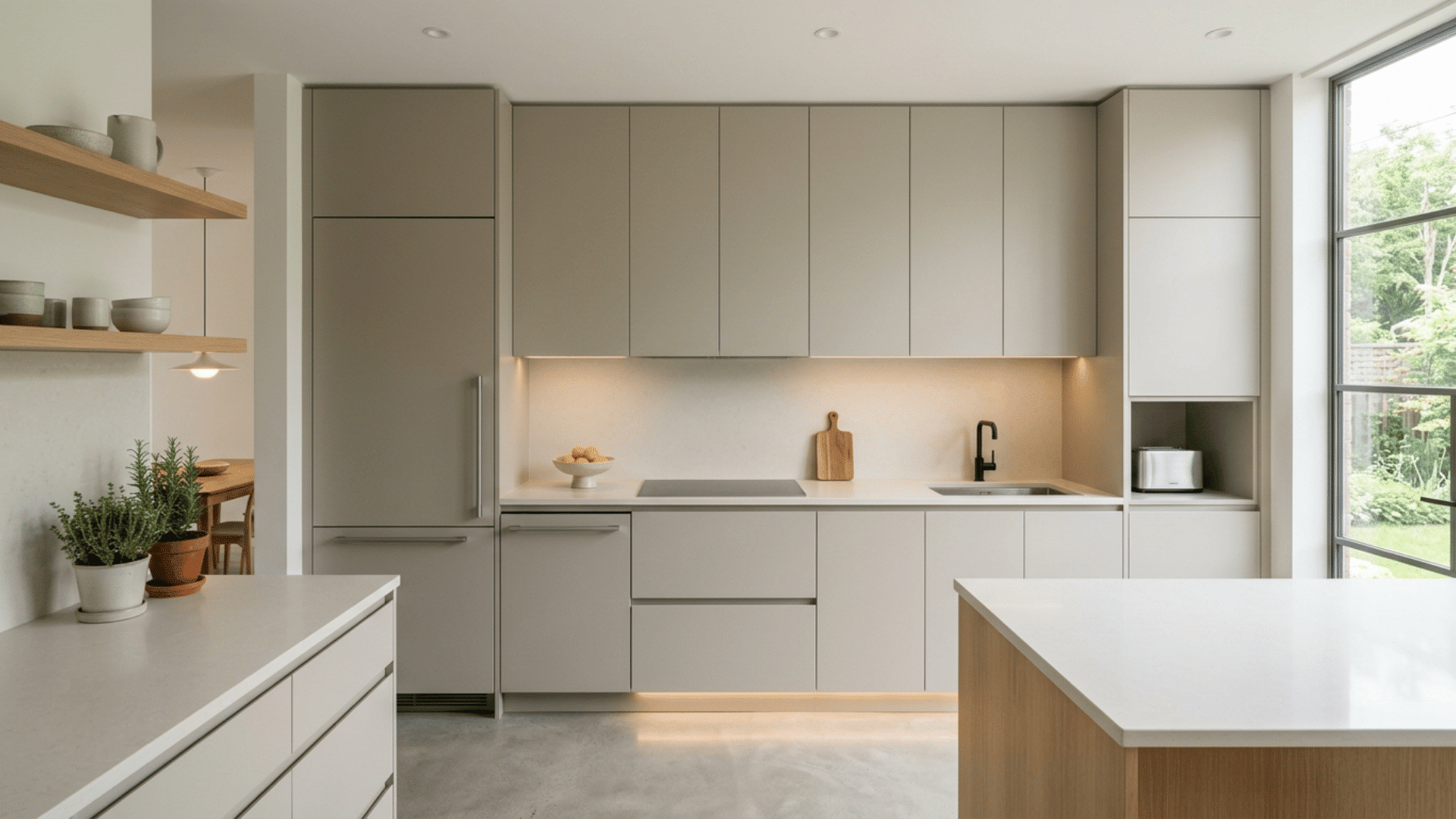
Minimalist kitchen cabinets integrated with panel-ready appliances look exceptionally cohesive and unified. The unified appearance creates striking visual continuity throughout the entire space.
Panel-ready appliances cost more than standard models initially but provide value. The investment pays off in kitchen aesthetics and long-term resale value.
Hidden appliances work best in homes where the kitchen isn’t the primary gathering space.
10. Curved Cabinet Ends
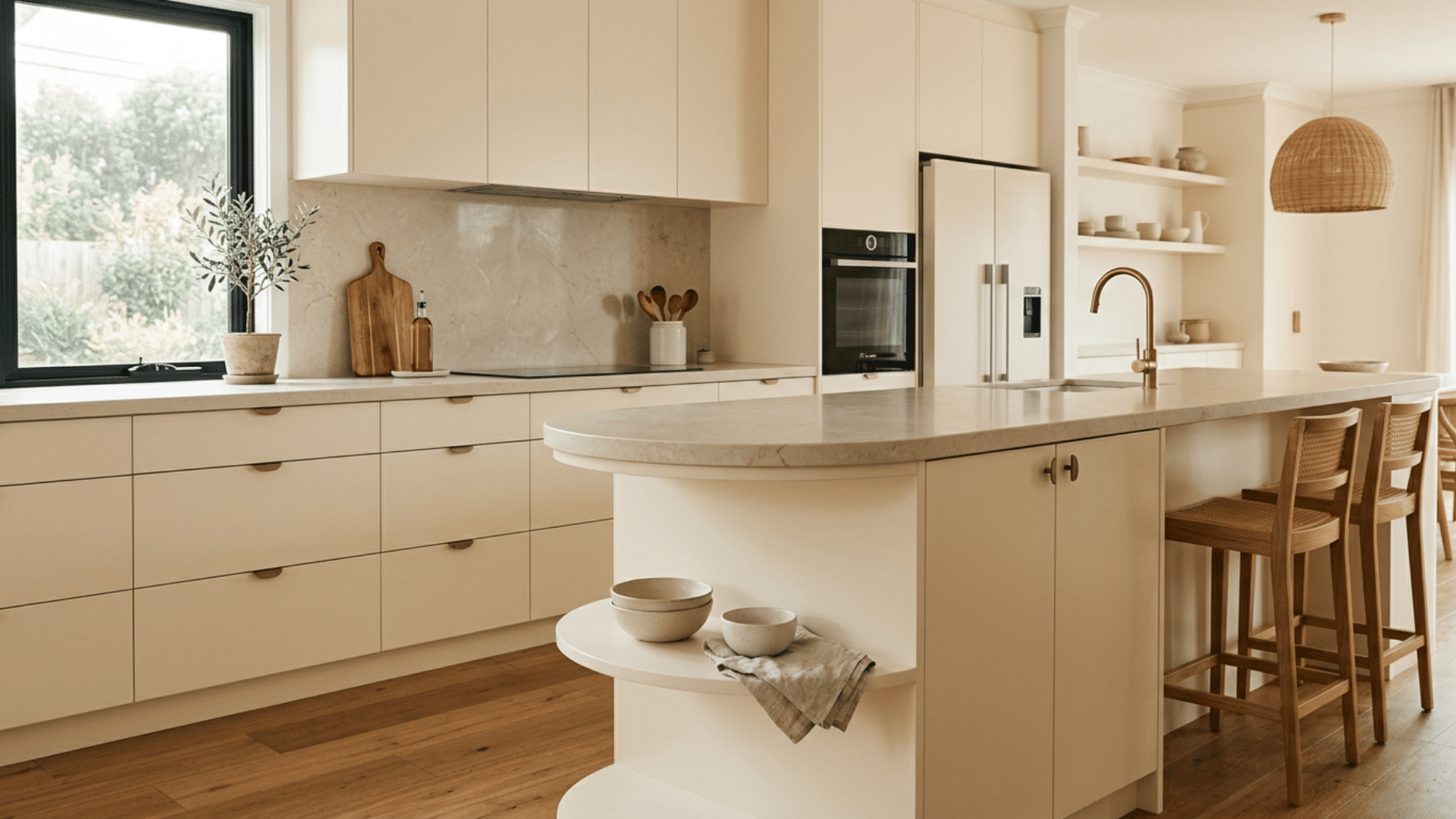
Curved cabinet ends naturally add subtle softness to minimalist kitchen designs. Gentle curves contrast effectively with the otherwise straight, angular minimalist kitchen cabinets.
This design element prevents spaces from feeling too rigid or institutional. Curved details maintain minimalist principles while adding personality and warmth.
The subtle curves work especially well on island cabinets and feature areas. Minimalist kitchen cabinets with gentle curves suit Scandinavian design styles perfectly.
11. Light Oak Scandinavian Cabinets
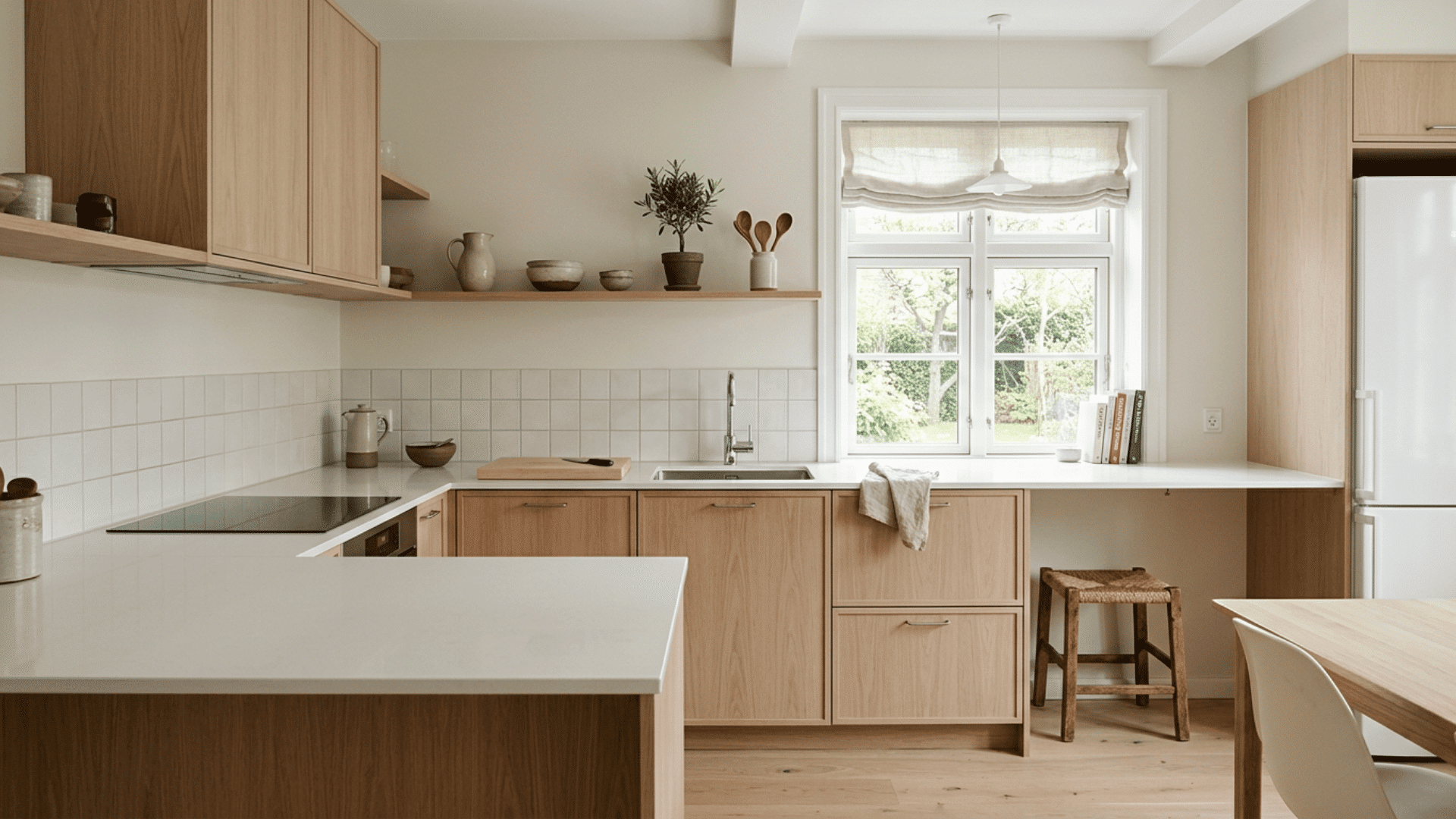
Light-oak minimalist kitchen cabinets perfectly define the Scandinavian design philosophy. Pale wood tones with simple profiles create naturally bright, airy kitchens.
Minimalist kitchen cabinets in light oak suit homes emphasizing hygge and comfort. The wood grain provides visual interest without any ornate carved details. This finish works beautifully with white subway tiles and stainless steel.
Light oak reflects light effectively, brightening darker kitchens naturally and dramatically. The pale tone pairs well with natural fibers and warm lighting choices.
12. Walnut Minimalist Cabinets
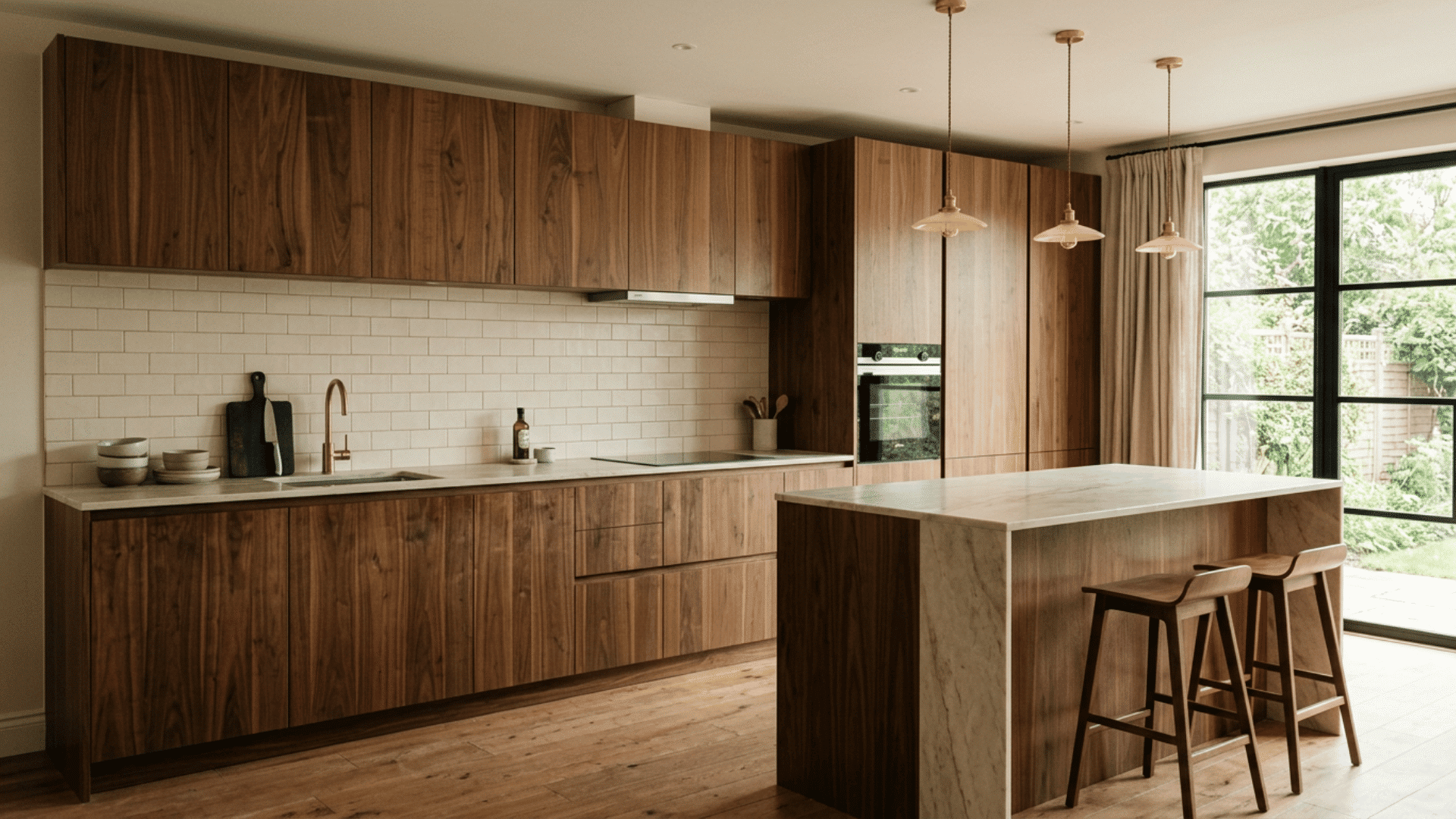
Walnut brings rich, deep character to minimalist kitchen cabinet designs. The darker wood tone instantly creates a upscale kitchen atmosphere.
Minimalist walnut kitchen cabinets suit contemporary and mid-century modern homes. I did a kitchen with walnut cabinets that looked more expensive than the budget allowed. The deep brown tones hide dust and fingerprints exceptionally well compared to light finishes.
The grain pattern provides natural visual interest without busy, distracting details. Walnut creates warm, inviting kitchens that feel grounded and stable throughout.
13. Two-Tone Minimalist Cabinets
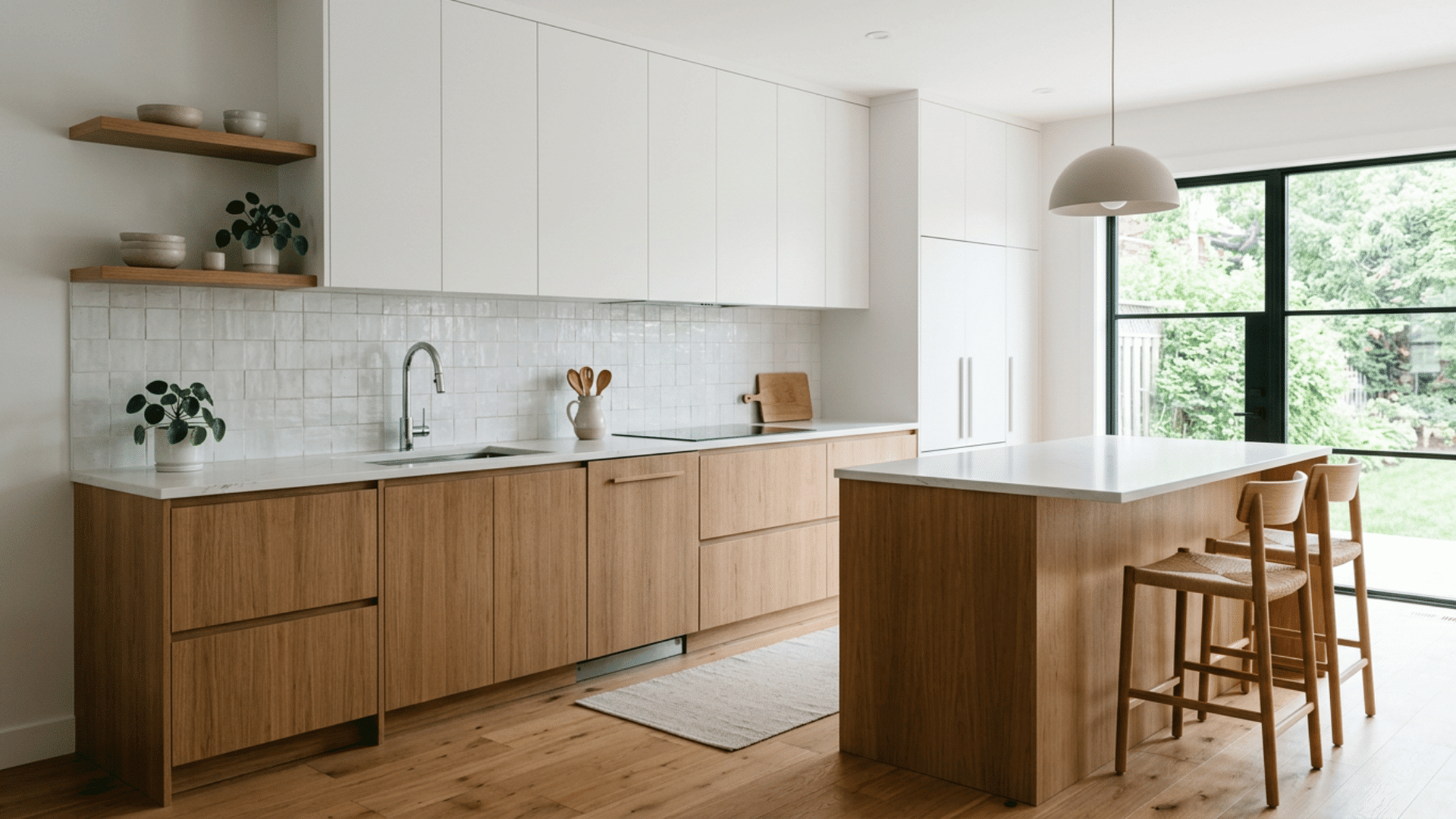
Two-tone minimalist kitchen cabinets strategically combine different colors or finishes. Lower cabinets in one tone contrast with upper cabinets in another.
This approach adds visual interest while maintaining minimalist simplicity throughout. Minimalist kitchen cabinets in two-tone designs prevent monotony and visual boredom. The contrast naturally guides the eye beautifully around kitchen spaces.
Lower and upper cabinets often serve different purposes, justifying color separation. Two-tone minimalist cabinets cost slightly more than single-color options but provide dimension.
14. Minimalist Cabinets With Glass Inserts
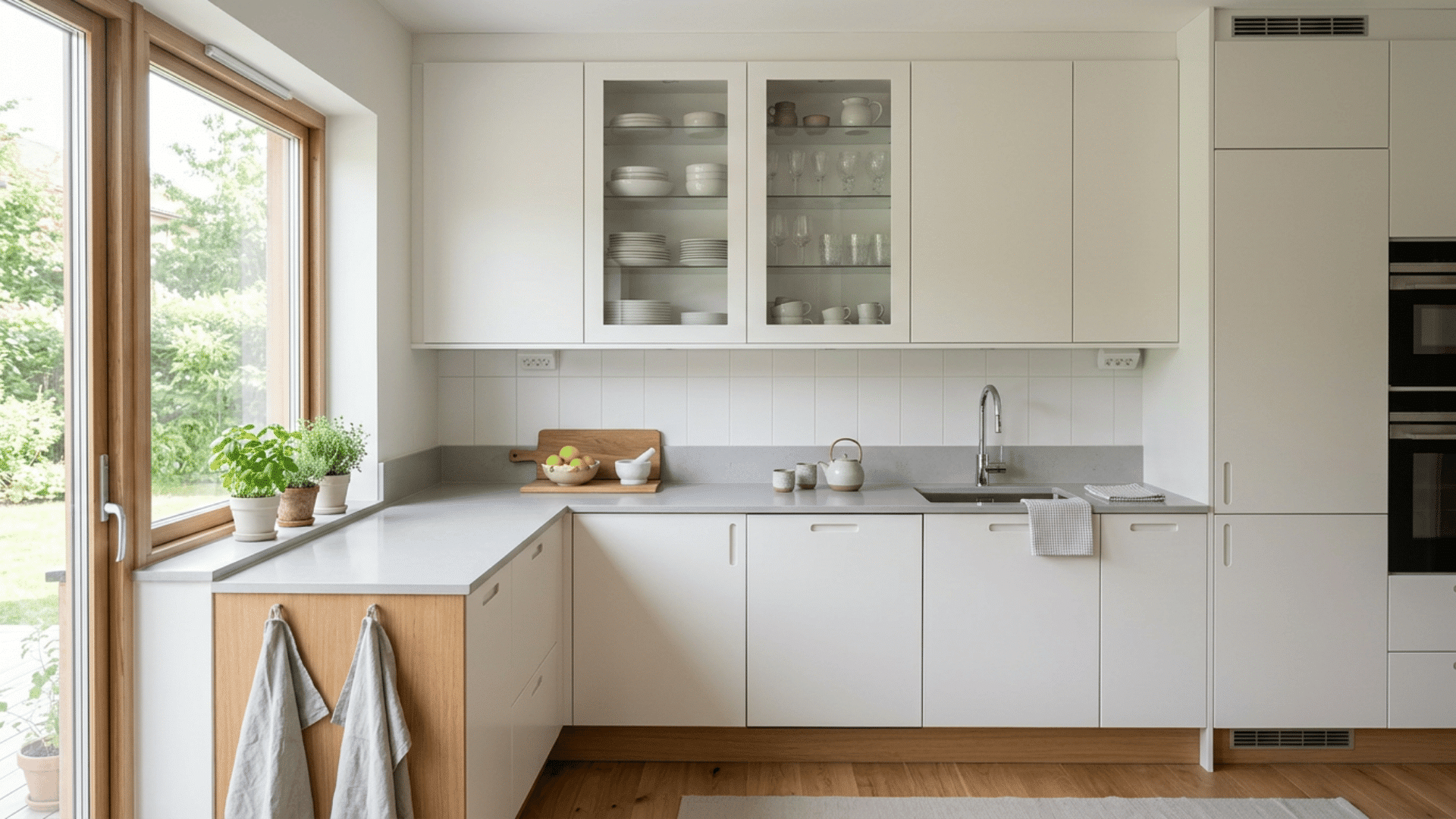
Glass inserts in minimalist kitchen cabinet doors create strategic display opportunities. Selected dishes and glassware show through while maintaining a clean appearance.
The glass lets light pass through, brightening kitchen spaces naturally throughout. Minimalist designs work best with only a few strategically placed glass inserts.
Tempered glass ensures durability and safety in busy, active kitchens. Glass inserts require that displayed items be kept neat and organized consistently.
This option suits homeowners who want to display beautiful dishware prominently for guests.
15. Slim Shaker Minimalist Cabinets
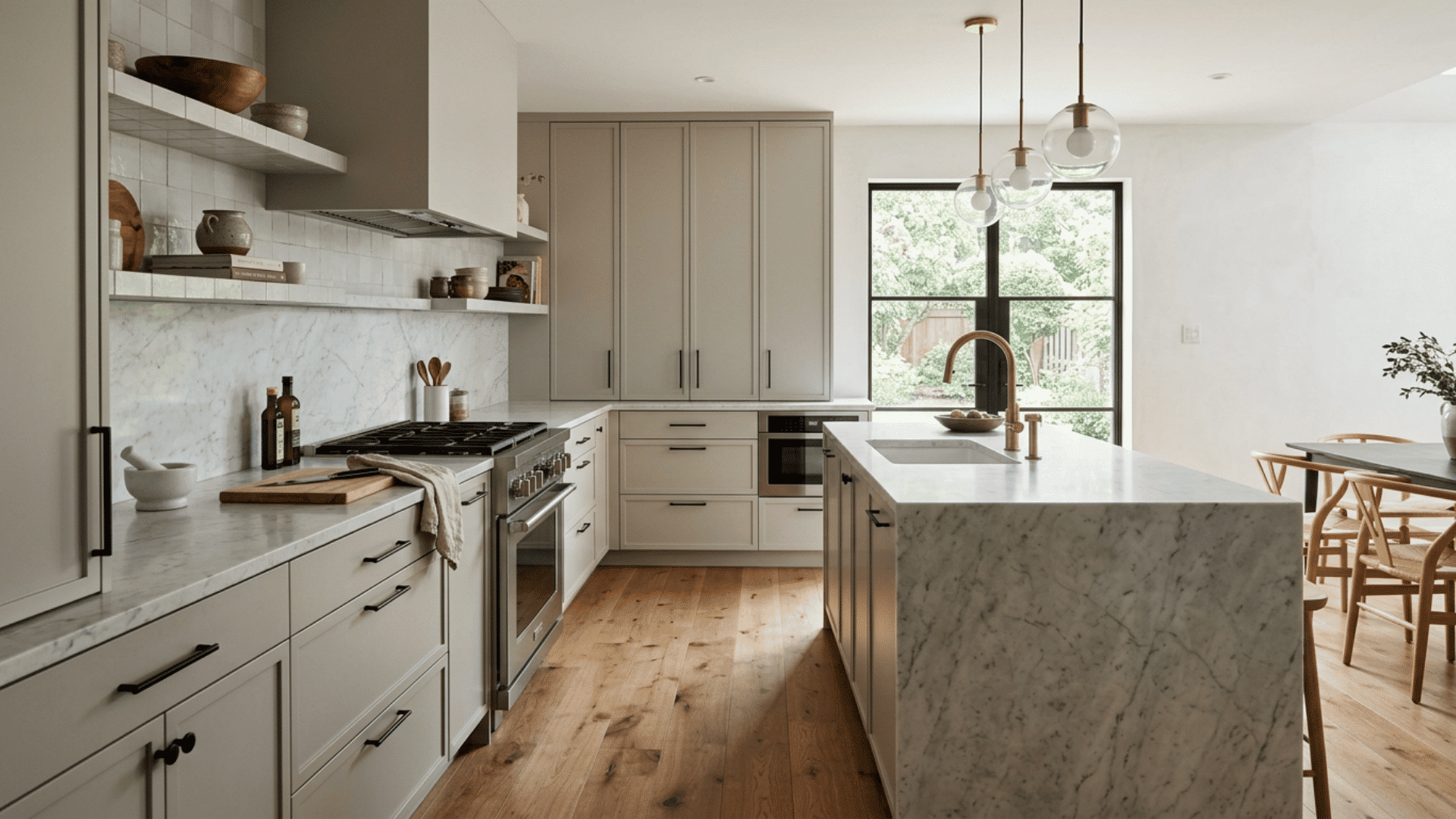
Minimalist kitchen cabinets with Shaker styling suit transitional kitchen designs well. Slim versions maintain clean lines without heavy traditional details weighing them down.
The understated Shaker vibe appeals to homeowners seeking warmth with simplicity. These cabinets pair beautifully with butcher block counters or stone surfaces naturally.
16. Stone Backsplash With Simple Cabinets
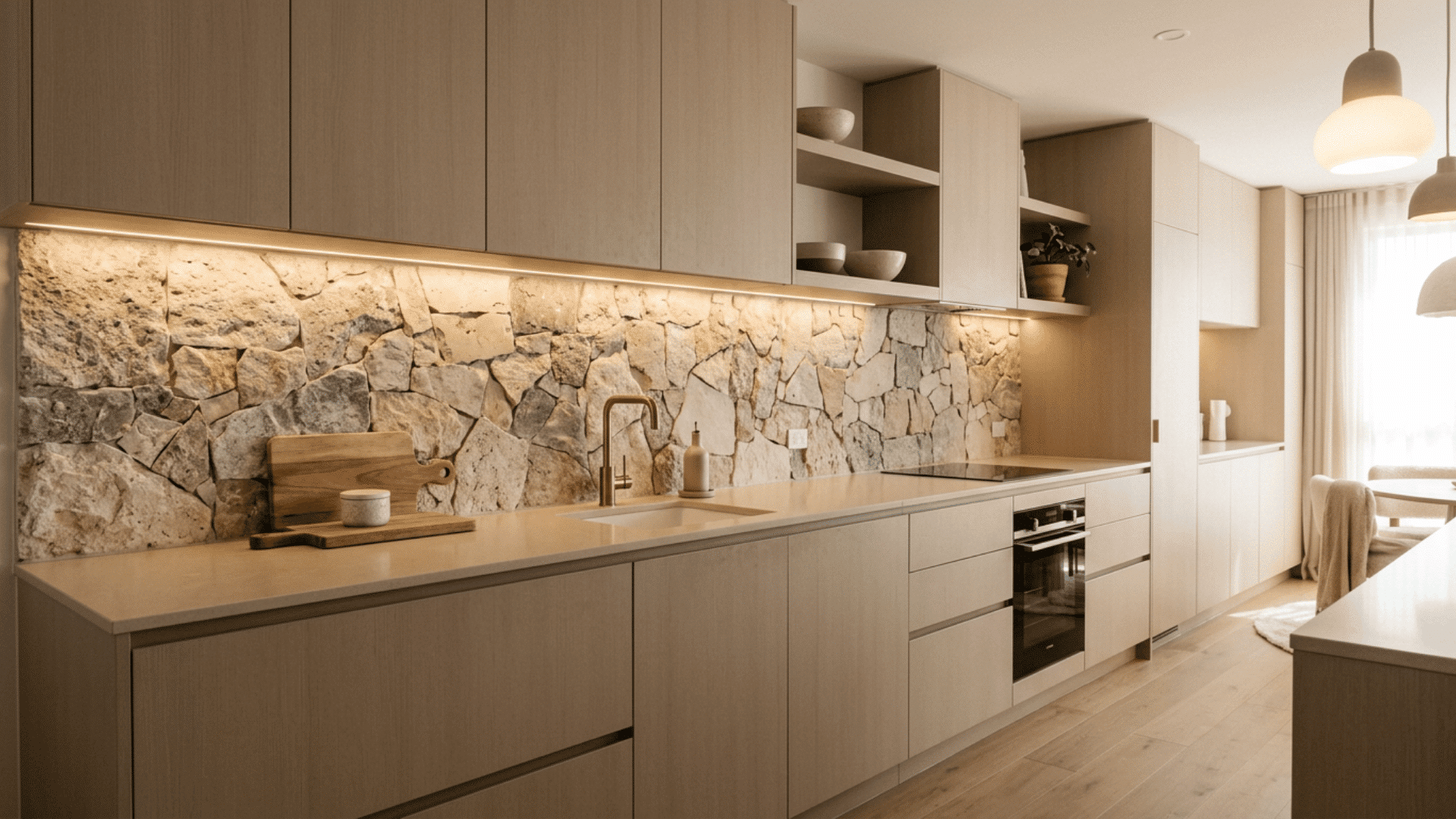
Stone backsplashes pair beautifully with minimalist kitchen cabinets for visual drama. Simple cabinet designs let striking backsplash materials become the focal point.
This combination works best when cabinets stay neutral in tone. Slate, marble, and granite backsplashes create visual interest with simple cabinets.
Minimalist kitchen cabinet designs ensure the backsplash remains the design hero. Stone backsplashes require proper sealing and maintenance for longevity and beauty.
17. Cabinet-Matched Kitchen Island
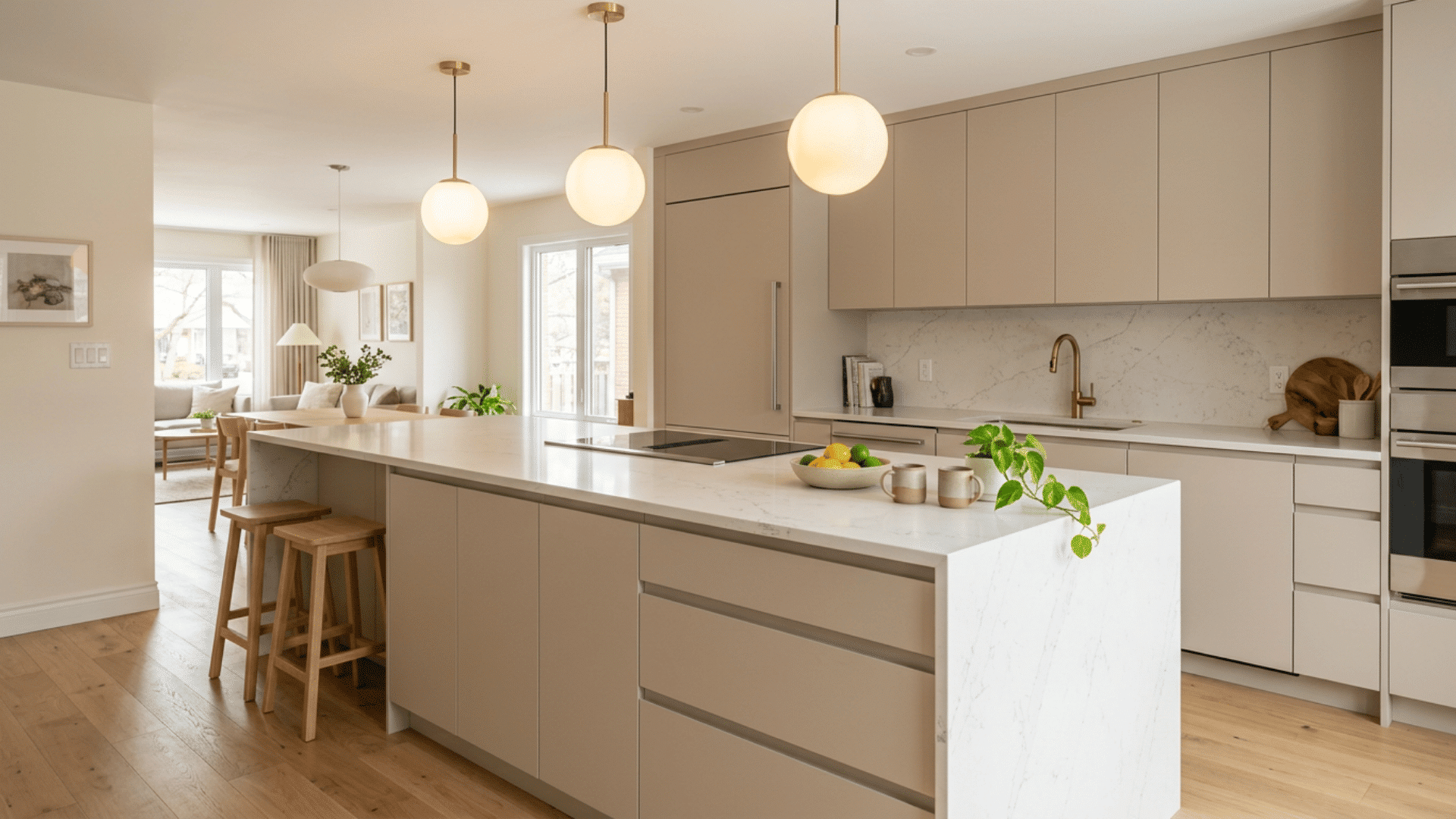
Cabinet-matched kitchen islands create seamless minimalist kitchen designs. Islands finished identically to the surrounding minimalist kitchen cabinets unify the space.
Matching materials eliminates visual confusion and creates harmony throughout. The unified appearance works best in open-concept kitchen layouts.
Matching finishes allow the island to blend rather than stand out. This approach suits homeowners seeking cohesive, organized-looking kitchens.
18. Panel-Ready Fridge Cabinets
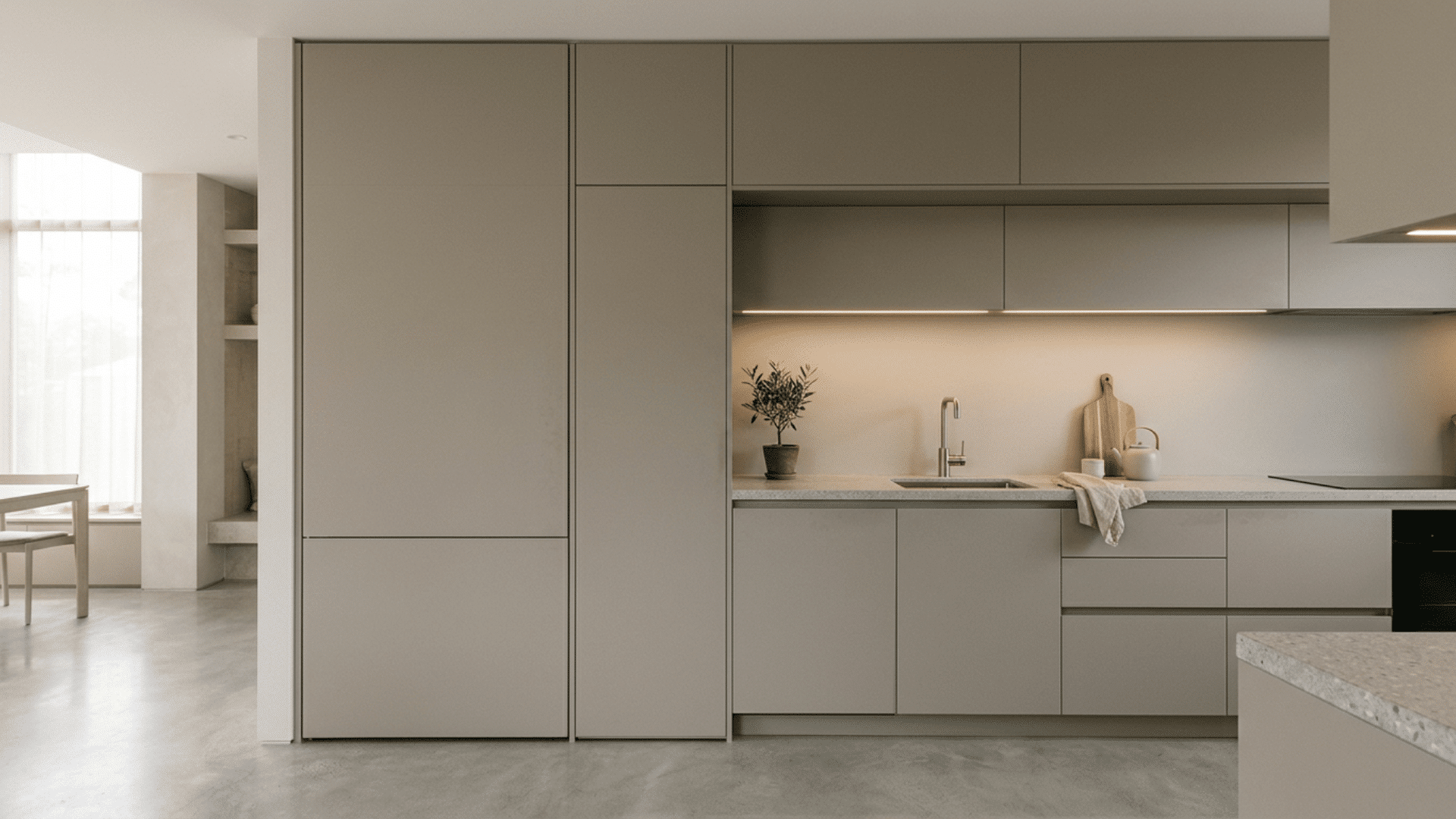
Panel-ready refrigerators integrate completely with minimalist kitchen cabinet designs. Cabinet panels match the surrounding minimalist kitchen cabinets perfectly for a seamless appearance.
The appliance essentially disappears behind matching cabinetry and hardware. Panel-ready fridges cost more than standard models but provide great value.
The investment pays off in visual cohesion and resale appeal. The seamless design prioritizes visual harmony over appliance visibility completely.
19. Minimalist Pantry Cabinet Wall
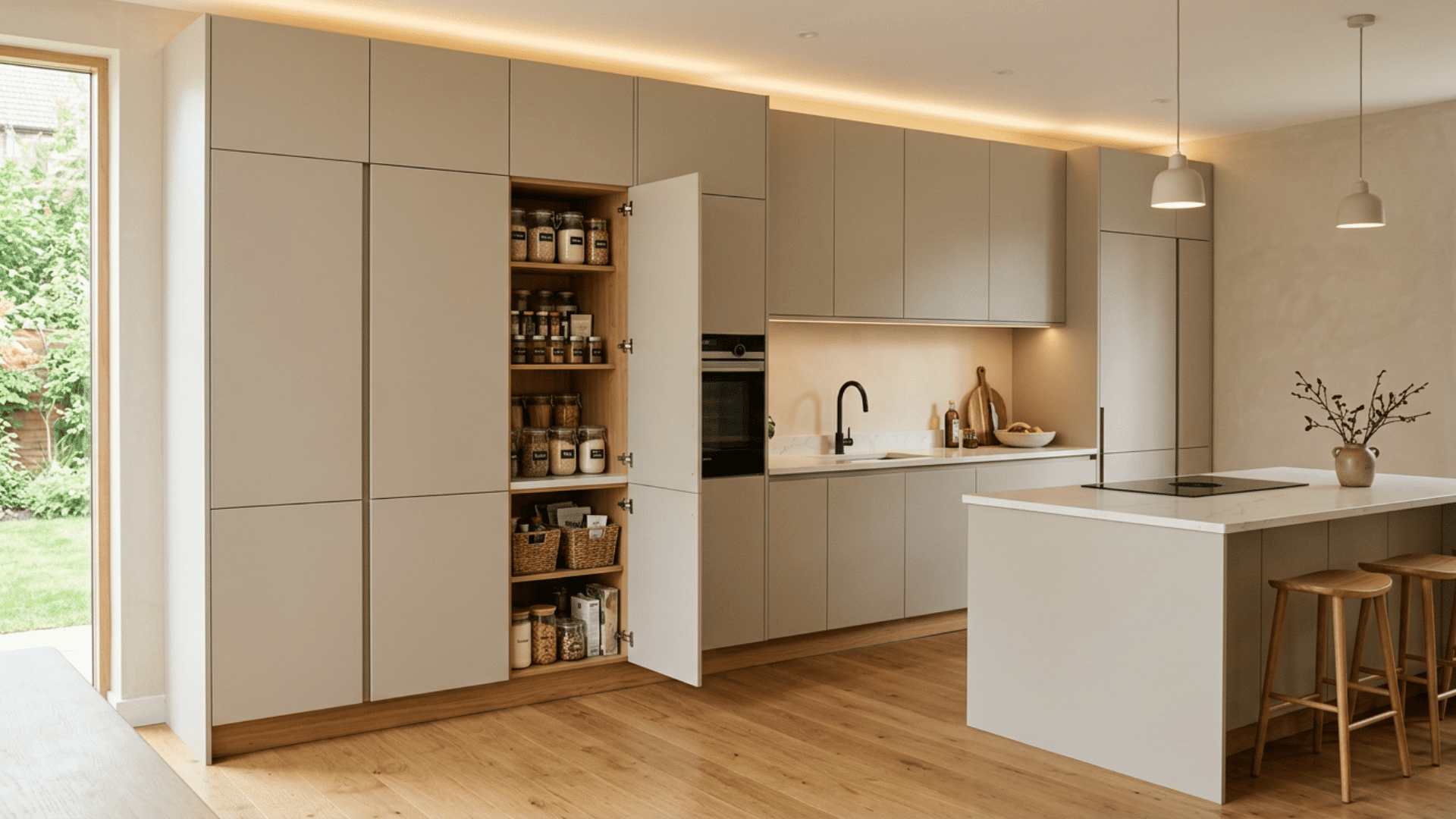
Minimalist pantry cabinet walls organize kitchen storage efficiently and beautifully. Floor-to-ceiling minimalist kitchen cabinets dedicated to pantry storage maximize space.
Deep cabinets with pull-out shelves effectively organize dry goods and supplies. Minimalist kitchen cabinets in pantry walls eliminate visible food packaging clutter.
The unified design maintains the kitchen’s appearance while hiding storage necessities. Proper organizational systems inside keep everything accessible and neat.
20. Soft Gray Minimalist Cabinets
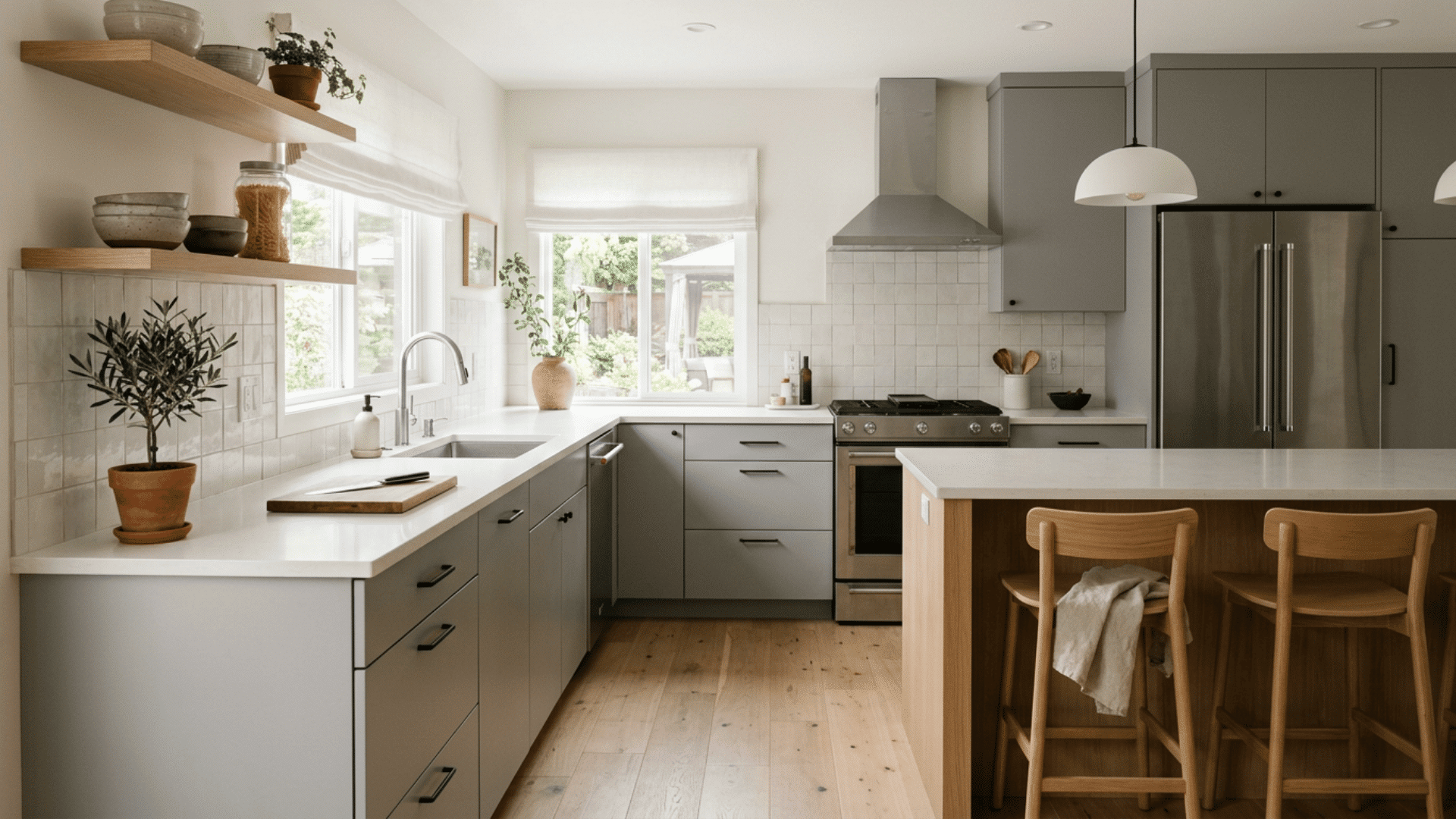
Soft gray minimalist kitchen cabinets offer a neutral vibe without a cold feel. The gentle tone beautifully bridges warm and cool vibes.
Minimalist kitchen cabinets in soft gray suit modern and transitional homes. The color hides minor imperfections better than pure white finishes do.
Soft gray pairs naturally with white trim, wood, and stainless steel. Minimalist kitchen cabinets in this shade create calm, balanced kitchen environments.
Common Mistakes to Avoid With Minimalist Kitchen Cabinets
Many homeowners make cabinet decisions without proper planning. Learning from these pitfalls helps ensure minimalist kitchen cabinet designs work effectively for years.
- Underestimating Storage Capacity: Planning should include measurements for every frequently used item, appliances, and daily essentials. Knowing your minimalist kitchen essentials first makes it easier to size cabinets around the tools actually used.
- Ignoring Proper Lighting: Dark, minimalist kitchen cabinets in poorly lit spaces instantly feel gloomy and unwelcoming.
- Choosing the Wrong Finishes: White minimalist kitchen cabinets show every fingerprint, dust particle, and smudge visibly. Matte finishes hide marks and wear patterns better than glossy options do.
- Selecting Poor-Quality Hardware: Handleless cabinets with poor push-to-open systems fail and quickly frustrate users. Quality materials cost more initially but last significantly longer.
- Neglecting Workflow Planning: Poorly positioned minimalist kitchen cabinets create awkward workflows and inconvenient storage. Planning should consider the triangle workflow among the sink, stove, and refrigerator.
- Overcomplicated Organization Systems: A simple, accessible organization keeps minimalist designs functional in the long term.
What Minimalist Kitchen Cabinets Cost
Budget drives most cabinet decisions, so it helps to know the rough ranges before you shop. The figures below combine national cost data with the routes I most often recommend to clients.
| Route to the Minimalist Look | Typical Cost | Best For |
| Reface existing boxes with slab fronts | ~₹6,00,000 ($4,234–$10,226 approx.) | Strong cabinet boxes, tight budget, same kitchen layout |
| New stock or semi-custom flat-panel cabinets | Mid-range (varies by linear foot) | When you want layout changes and more finish options |
| Full custom handleless/integrated design | Highest cost, premium pricing | Seamless luxury look with panel-ready appliances |
Refacing figures come from HomeAdvisor’s 2025 refacing cost data. Worth noting on the resale side: per the 2025 Zonda Cost vs. Value Report, a minor kitchen remodel recoups roughly 113% of its cost nationally, the strongest return of any interior project.
A restrained, minimalist refresh tends to fall squarely in that high-ROI zone rather than the full-gut category
Minimalist Kitchen Cabinets for Small Kitchens
Minimalist kitchen cabinets maximize storage while keeping small kitchens feeling open and spacious. Simple designs make tight spaces work harder and look better without cluttering the visual flow.
Small kitchens benefit tremendously from clean cabinet lines and smart organization.
Minimal hardware and flat-panel doors take up less visual space, creating an airier feel. Every inch matters in compact kitchens, so handleless cabinets eliminate protruding hardware that eats into walkways. Light colors like white or pale wood reflect light around the room, making spaces appear larger than they actually are.
Vertical storage becomes essential in small kitchens. Floor-to-ceiling minimalist kitchen cabinets use wall space efficiently and provide ample storage.
Open shelving, strategically mixed with closed cabinets, breaks up visual weight without overwhelming limited square footage. Corner cabinets and pull-out drawers solve common problems in small kitchens. These solutions access deep storage that would otherwise waste space.
The key is choosing minimalist kitchen cabinets that serve double duty. Storage and style combine into one efficient system that works for apartments and starter homes alike.
Quick Checklist Before Choosing Minimalist Kitchen Cabinets
Before purchasing minimalist kitchen cabinets, complete a planning checklist to prevent costly mistakes. Use this organized checklist to thoroughly evaluate minimalist cabinet options. Review each item before making final cabinet selections and design commitments.
| Checklist Item | |
| Measure Kitchen Space | Document exact dimensions and ceiling height for accurate cabinet planning and placement. |
| Assess Storage Needs | List every item that requires storage to ensure that kitchen cabinets provide sufficient capacity. |
| Evaluate Lighting | Test the kitchen lighting to determine if the kitchen cabinets need additional illumination. |
| Set Budget | Include installation, hardware, and materials when calculating the total investment |
| Research Finish Maintenance | Understand the learning and maintenance requirements |
| Compare Hardware Options | Evaluate handleless systems and mechanisms for kitchen cabinet durability and functionality. |
| Get Professional Quotes | Obtain multiple estimates from installers experienced with minimalist kitchen cabinet installations. |
Final Thoughts
Minimalist kitchen cabinets offer far more than just a clean vibe.
They simplify daily life, reduce stress, and create kitchens that actually function the way families need them to. The beauty lies in choosing designs that suit individual spaces and lifestyles, rather than unthinkingly following trends.
The process toward minimalist kitchen cabinets is personal. What works perfectly in one kitchen might need adjustments in another.
The best part? Minimalist kitchen cabinets create space for what actually matters. Cleaner countertops mean easier meal prep. Organized storage reduces frustration. Simple designs never go out of style.
What changes did minimalist cabinets bring to your kitchen? Comment below.
Frequently Asked Questions
Which Cabinet Style is Best for a Kitchen?
The best cabinet style for a kitchen is Shaker because its simple, versatile design works with any layout and design theme.
What Color is Best for Minimalist Kitchen Cabinets?
The best color for minimalist kitchen cabinets is white (or other neutral tones like gray/taupe) for a timeless, clean, and spacious look.
What are the Three Grades of Cabinets?
The three cabinet grades are stock, semi-custom, and custom, which differ in customization, quality, and price.
Do Minimalist Kitchens Work for Families?
Yes. Hidden storage and durable matte finishes make minimalist kitchens well-suited to busy households.