In years of helping homeowners style their spaces, few materials come up as often or cause as much confusion as wicker.
Wicker is the easy way for that relaxed beach style home, but it’s also a high-risk investment if you don’t know which patterns flourish in the rain and which ones belong strictly behind glass.
As someone who has sourced wicker pieces for everything from breezy coastal sunrooms to urban apartment balconies, I’ve seen this confusion firsthand.
Many people assume wicker is a specific material, when in fact it refers to something quite different.
This guide will explain everything you need to know: what wicker furniture is, the materials it’s made from, how it holds up outdoors, and how to keep it looking great for years to come.
What is Wicker Furniture?
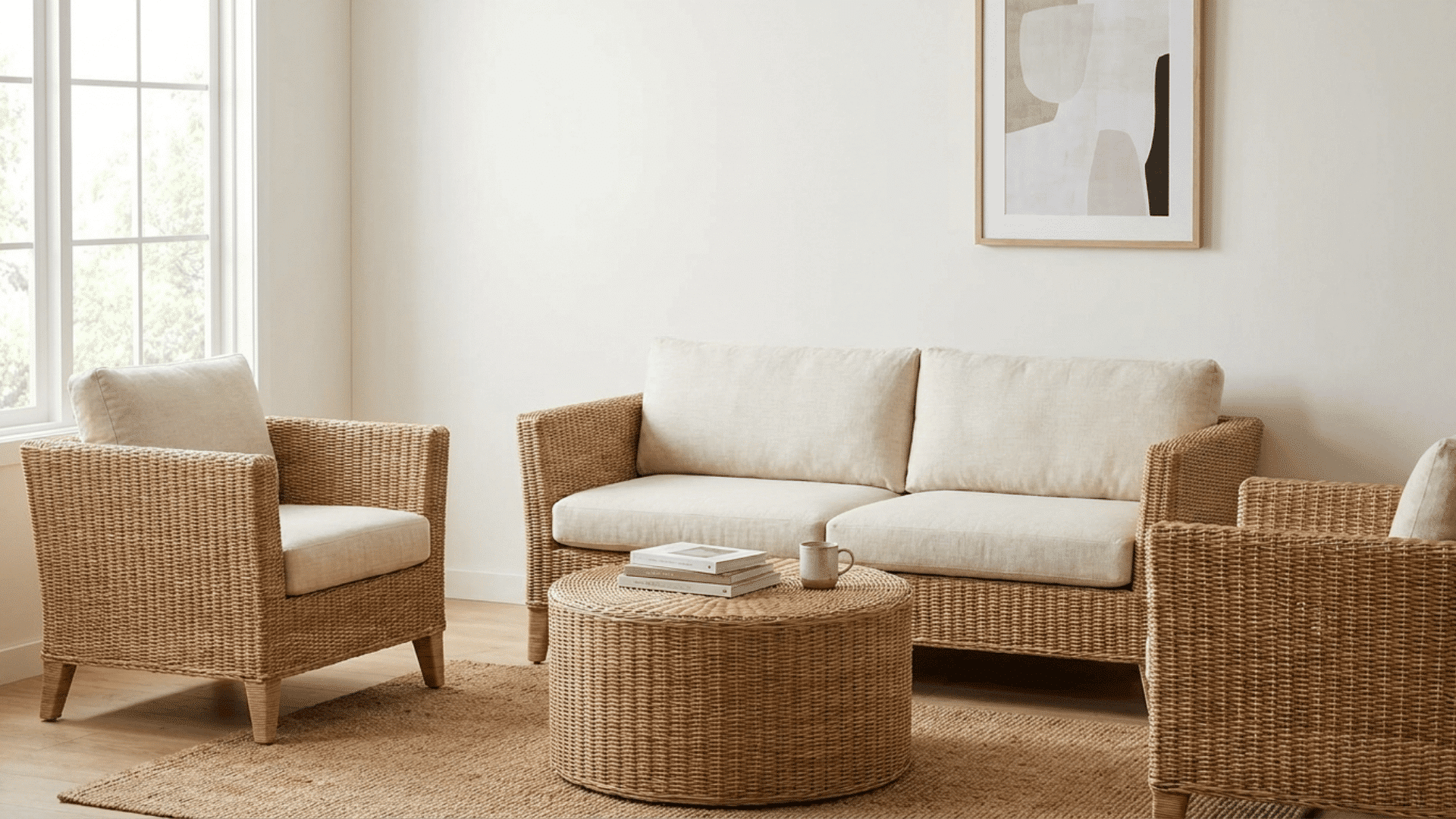
Wicker furniture is any piece of furniture created by weaving flexible plant-based or synthetic strands over a sturdy frame.
The weaving process, interlacing and overlapping strands in specific patterns, gives wicker its signature textured, airy appearance.
Synthetic resin wicker is now popular for outdoor furniture as it mimics natural patterns and resists moisture, making it more durable in harsh weather.
The frame itself is usually made of a rigid material, such as metal or wood. At the same time, the woven portions can be made from rattan peel, bamboo strips, reed, willow, seagrass, or modern synthetic resin.
Key Benefits of Wicker Furniture
So why do so many homeowners and interior designers keep coming back to wicker? Here are some of its most compelling advantages:
- Lightweight and Easy to Move: Its low weight makes it work well for sunrooms and living rooms where you might want to reconfigure the layout for entertaining or seasonal use.
- long-lasting and practical: Wicker has a natural warmth and texture that suits a wide range of decor styles. The woven texture adds visual depth without overwhelming a space.
- Comfortable: Wicker chairs and sofas pair beautifully with cushions, allowing you to customize both comfort and color.
- Customizable: Swap out cushion covers seasonally to refresh the look of your space without replacing the furniture.
- Available for Indoor and Outdoor Use: Wicker furniture is available in natural and synthetic materials, making it suitable for both indoor and outdoor spaces.
- Durable When Properly Maintained: High-quality wicker furniture, especially synthetic varieties, is remarkably durable when properly maintained.
With the right care, a good wicker set can last for a decade or more, making it a worthwhile long-term investment.
Some of the Main Wicker Furniture Materials
The material used in wicker furniture directly affects its strength, appearance, and suitability for different environments:
| Type of Wicker Furniture | Material Used | Features | Best For |
| Natural Wicker Furniture | Rattan, bamboo, cane, reed | Warm, earthy appearance with handcrafted texture | Indoor spaces and covered patios |
| Synthetic Wicker Furniture | PVC or resin wicker | Weather-resistant, UV-resistant, durable | Outdoor patios, balconies, and gardens |
| Indoor Wicker Furniture | Mostly natural wicker with protective finishes | Lightweight and decorative | Living rooms, bedrooms, sunrooms |
| Outdoor Wicker Furniture | Synthetic resin wicker over metal frames | Resistant to rain, sunlight, and temperature changes | Outdoor seating and dining areas |
| Painted Wicker Furniture | Natural wicker with lacquer or paint coating | Extra protection and polished appearance | Decorative indoor furniture |
| Resin Wicker Furniture | Polyethylene resin fibers | Mimics natural wicker with higher durability | All-weather outdoor use |
Popular Styles in Modern Wicker Furniture
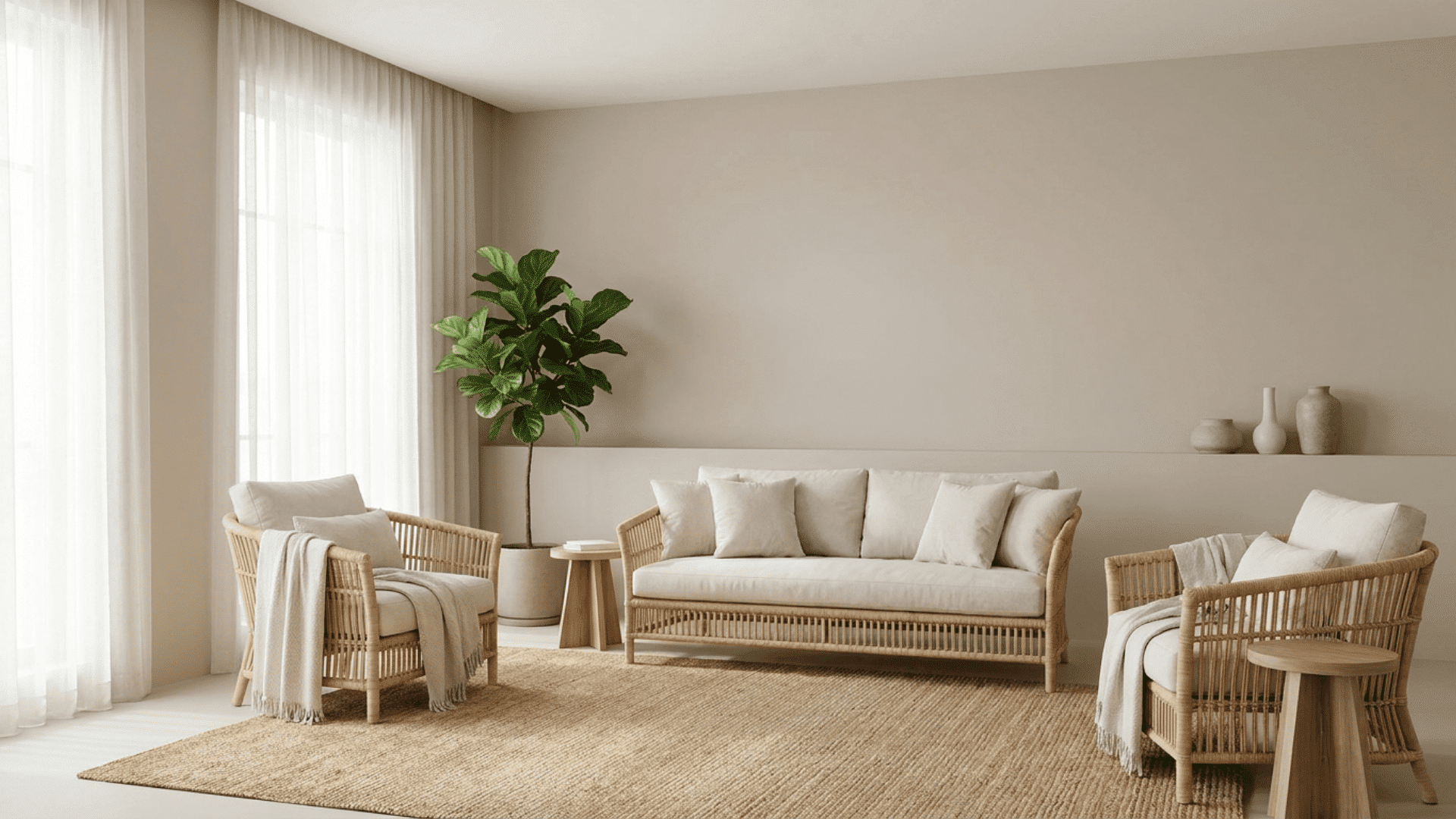
Wicker furniture has evolved well beyond the traditional look of your grandmother’s porch chair.
Today’s wicker pieces span a wide spectrum of design styles, making them easy to incorporate into modern interiors and outdoor spaces.
1. Bohemian Wicker
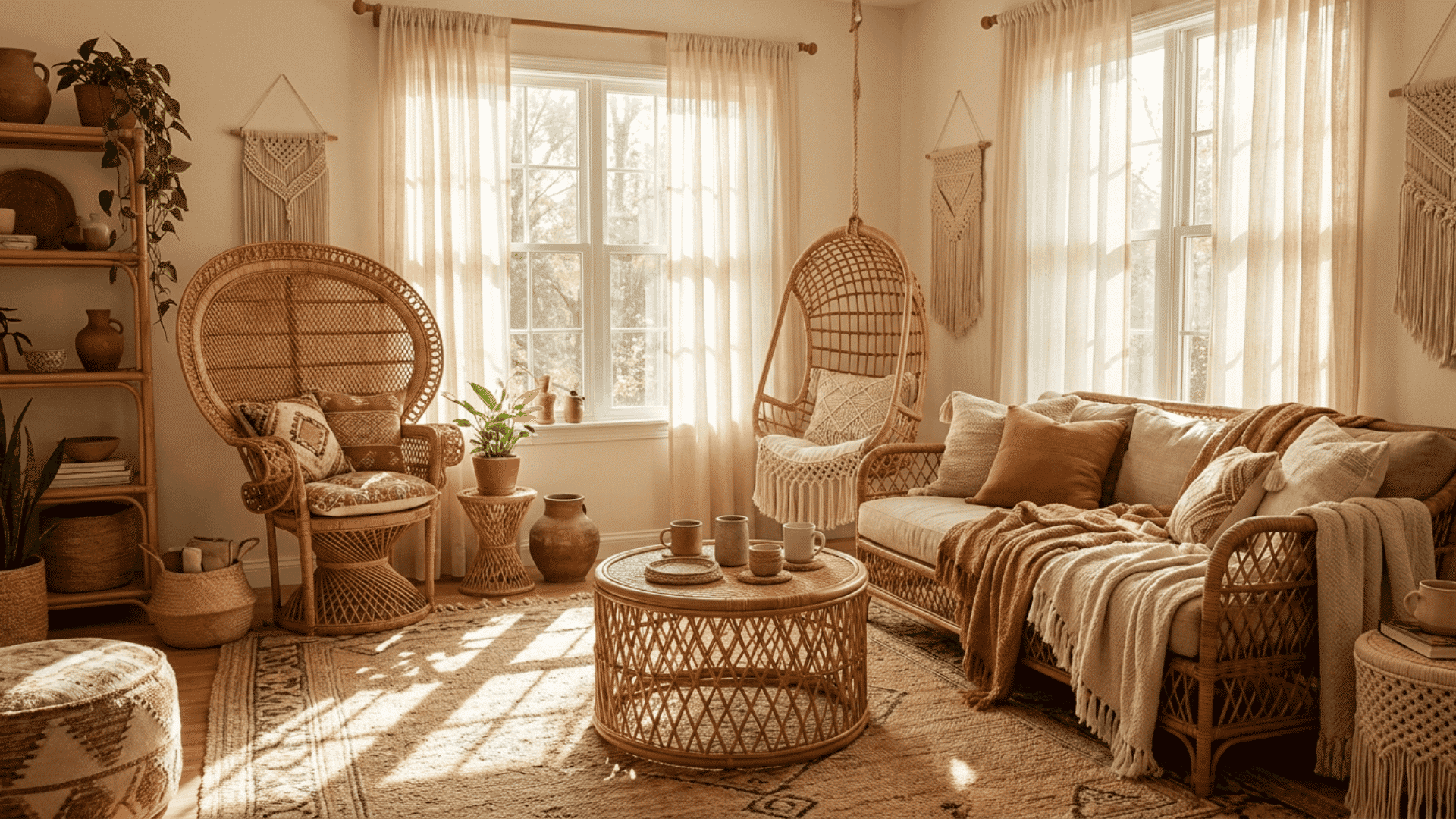
Bohemian-style wicker furniture leans into organic shapes, natural textures, and layered patterns.
Think oversized rattan hanging chairs, peacock chairs, and round accent pieces paired with macrame throws and tropical plants.
Honey brown and natural tan tones dominate this vibe, evoking a relaxed, free-spirited feel. Woven textures take center stage, from tightly coiled basket-weave frames to loosely braided seagrass ottomans.
Toss in a batik-print pillow or a Moroccan-style pouf to give the space a well-traveled, personal touch.
2. Coastal and Farmhouse Styles
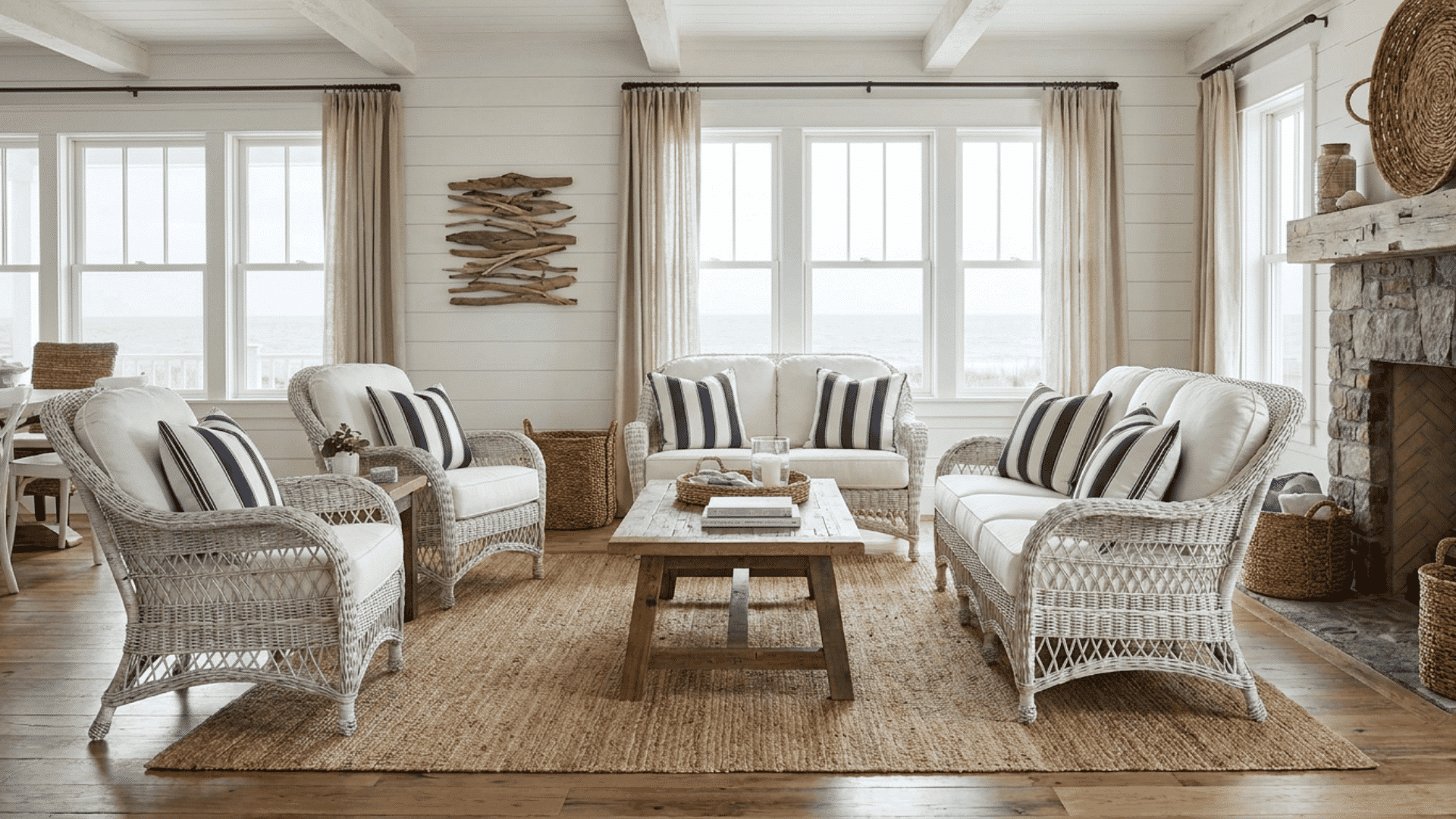
Coastal and farmhouse wicker furniture often features white or bleached finishes, giving it a breezy, clean appearance.
Paired with navy cushions, linen fabrics, or cotton throws, this style conveys the warmth of beach cottages and rural retreats.
Whitewashed wicker dining chairs and white wicker storage baskets are popular choices for this vibe.
When I’m curating a coastal palette for a client, a whitewashed wicker chair is almost always my first pick: it grounds the space without competing with bolder textiles.
3. Minimalist Outdoor Patio Furniture
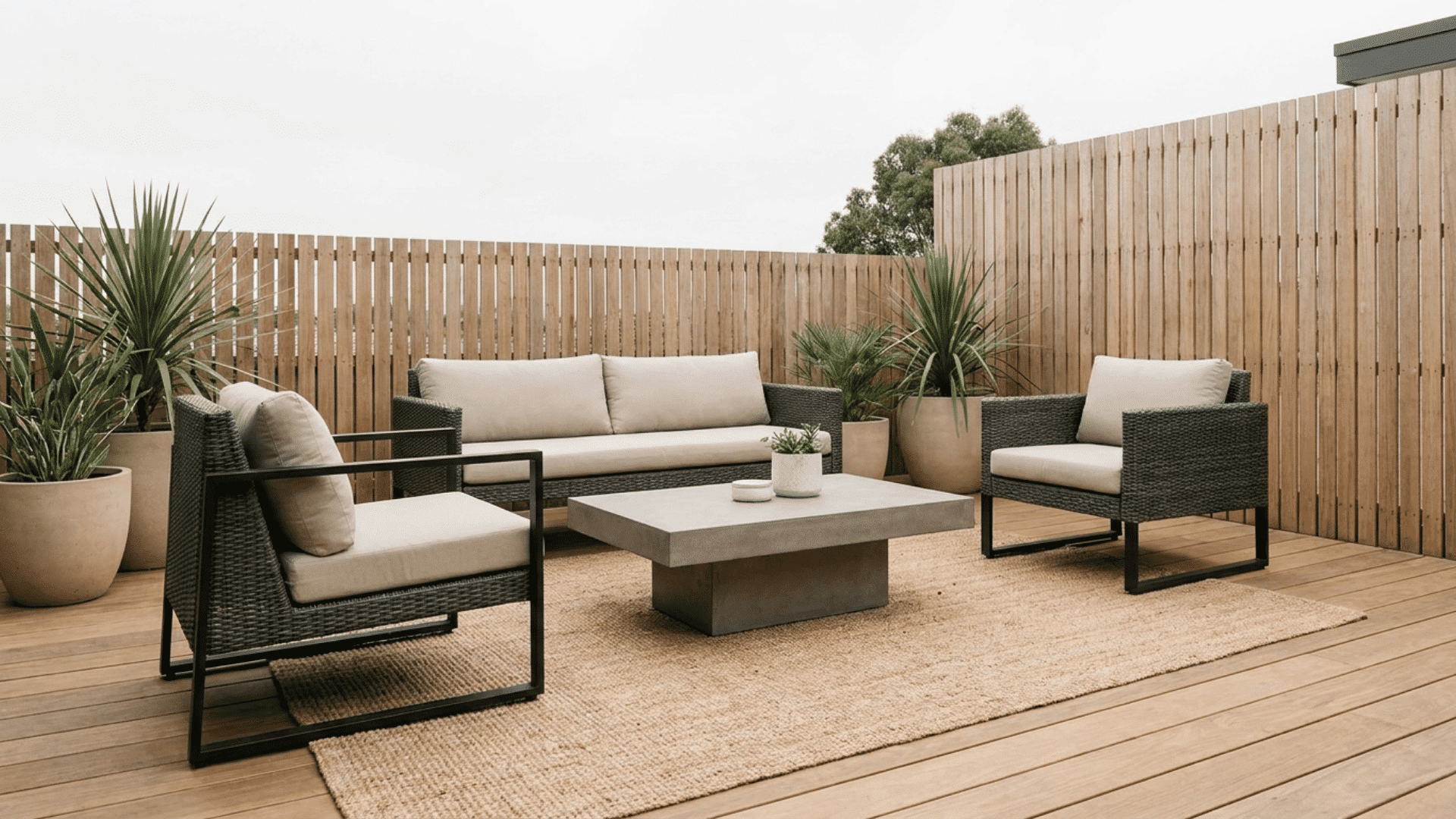
For contemporary outdoor spaces, grey, black, and charcoal synthetic wicker furniture provides a sleek, modern look.
Clean lines, slim frames, and neutral cushions allow the wicker texture to add warmth without overwhelming a minimalist design scheme.
These sets pair well with concrete or composite decking and modern garden landscaping. Across all styles, popular wicker colors include natural brown, honey, white, off-white, gray, and black.
How to Clean Wicker Furniture?
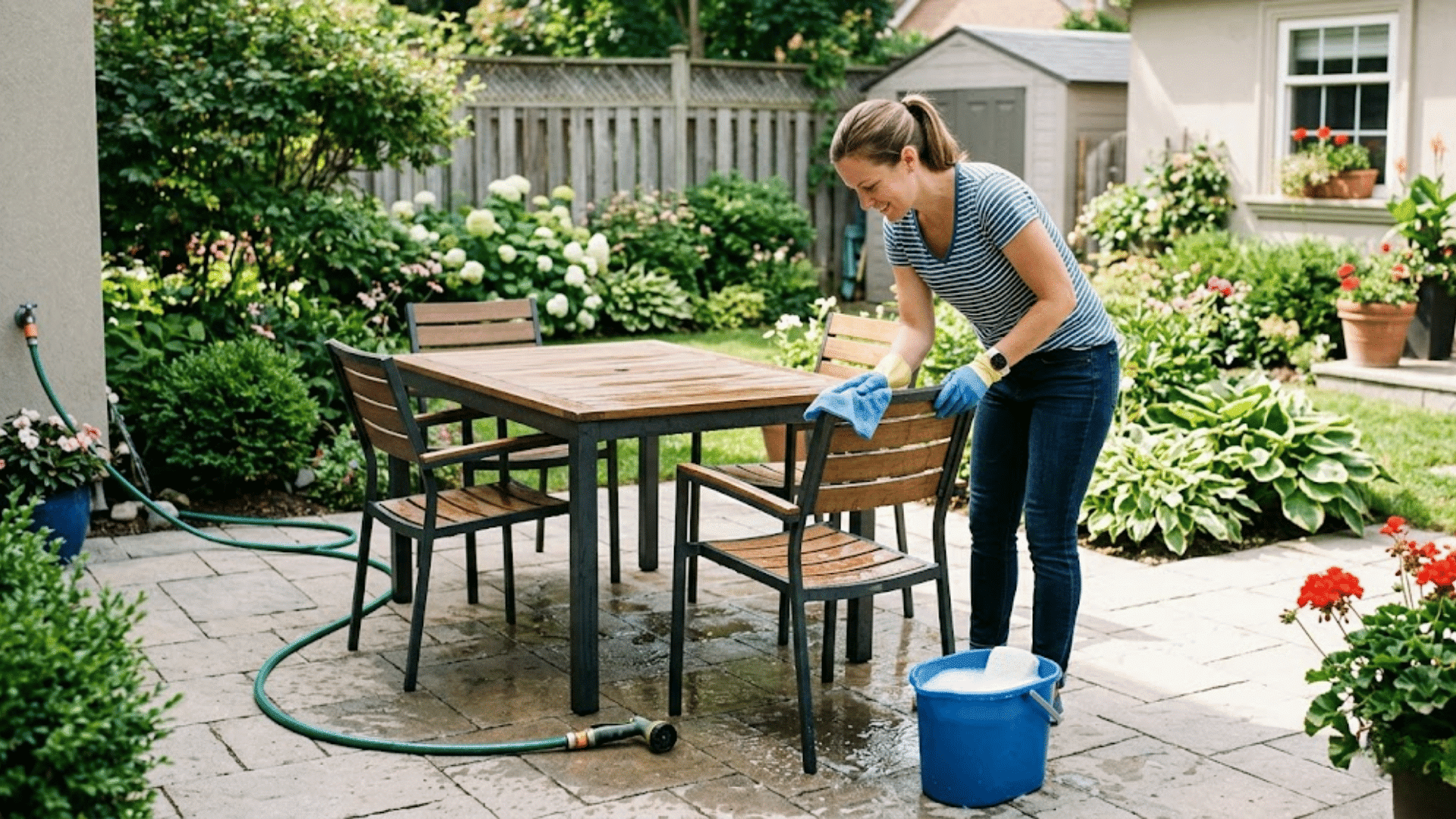
Keeping wicker furniture clean is straightforward, but the right approach does vary between natural and synthetic types.
1. Regular Dusting and Vacuuming
Dust and debris can settle into the woven gaps of wicker furniture.
For routine upkeep, use a soft brush or a vacuum cleaner with a brush attachment to gently clear out dust from the weave.
This is especially important for indoor wicker, where fine dust can accumulate quickly.
2. Mild Soap and Water Cleaning
For a deeper clean, mix a small amount of mild dish soap with warm water. Use a soft cloth or sponge to scrub the surface gently.
Avoid saturating natural wicker with too much water. Use a lightly dampened cloth, then allow the piece to dry thoroughly in a well-ventilated area or outdoors in the sun.
Synthetic wicker can get wet without concern, making it easier to hose down or wipe with a wet cloth.
3. Removing Mold or Mildew
If mold or mildew develops, particularly on natural wicker kept in damp conditions, mix equal parts white vinegar and water in a spray bottle.
Apply to the affected area, let it sit for a few minutes, and scrub gently with a soft brush. Rinse lightly and allow to dry completely.
This is an important reason why natural wicker furniture should not be left wet for extended periods.
4. Avoiding Harsh Chemicals
Never use bleach, abrasive cleaners, or industrial solvents on wicker furniture. These can damage the fibers, strip protective finishes, and cause discoloration.
For painted or lacquered natural wicker, even strong soap solutions can dull the finish over time; stick to gentle, diluted products.
Caring for Wicker Patio Furniture
Proper long-term care is what separates wicker furniture that lasts a decade from a set that begins to deteriorate after a couple of seasons.
Here are the most important maintenance habits to adopt.
- Use Furniture Covers; Invest in high-quality, waterproof furniture covers for your outdoor wicker set.
- Protect from Excessive Rain and Sunlight: Position your furniture in partially shaded areas when possible, or use a patio umbrella to reduce direct UV exposure.
- Protect from Excessive Sunlight;Even UV-resistant synthetic wicker can fade gradually under intense, unrelenting sun exposure.
- Proper Winter Storage: In climates with harsh winters, bring your wicker patio furniture indoors or store it in a garage or shed between seasons.
Can Wicker Furniture Get Wet?
This is one of the most common questions about wicker, and the answer depends on the material.
Natural wicker furniture should not get wet for extended periods. A drizzle or brief splashing is usually manageable, but sustained exposure to rain or high humidity can cause the fibers to swell, weaken, crack, or even develop mold and mildew.
Synthetic wicker furniture, on the other hand, handles moisture very well. HDPE resin wicker is non-porous, which means water cannot be absorbed into the strands.
It can get wet repeatedly without warping, cracking, or fading. For the best outdoor experience, opt for synthetic wicker furniture with UV-stabilized resin strands and an aluminum frame.
Add waterproof cushion covers and a furniture cover for extra protection when the set is not in use.
Preventing Cracking and Fading
Natural wicker can dry out and crack in very dry or hot environments. To prevent this, apply a light coat of linseed oil or furniture polish once or twice a year to keep the fibers supple.
For outdoor wicker in sunny climates, consider using a furniture wax or UV-protective spray to maintain the color and flexibility of the strands.
One thing I always advise clients during a staging consultation: treat your natural wicker the way you would a wooden surface. A little oil goes a long way toward preserving it for years.
Recommended Maintenance Schedule:
| Frequency | Maintenance Task |
|---|---|
| Weekly | Dust or brush away surface debris |
| Monthly | Wipe down with a damp cloth, inspect for cracks or loose weaving |
| Seasonally | Deep clean with mild soap solution,re-oil natural wicker if needed |
| Annually | Inspect the frame and cushions, and apply UV protector to the outdoor synthetic wicker. |
Is Wicker Furniture Right for You?
Wicker furniture can be a great choice for a relaxed, textured, and long-lasting look, especially for patios, balconies, sunrooms, or comfortable indoor corners.
The key decision is whether you want natural wicker (more decorative and indoor-friendly) or synthetic/all-weather wicker (better for outdoor durability).
Experts consistently point out that climate, maintenance tolerance, and intended use matter most when deciding if wicker is right for you.
Final thoughts
Wicker furniture is one of those rare furniture styles that manages to feel both long-lasting and thoroughly modern, making it a smart investment for any home.
If you are furnishing a comfortable reading corner indoors or creating an inviting outdoor entertaining area, the key is choosing the right type of wicker for the environment.
Natural wicker shines inside the home. Synthetic wicker is the better choice for patios, gardens, and poolside areas.
Wicker has outlasted every trend I’ve worked with in eight years. The homes I’ve styled with it still look considered and current today.
When you choose the right type and care for it properly, it doesn’t just hold up, it gets better with time.
With proper care, regular cleaning, seasonal maintenance, and sensible protection from the elements, wicker furniture can reward you with years of beauty and comfort.
Frequently Asked Questions
Is Wicker Furniture Good Quality?
Yes, wicker furniture can be of good quality if it has a sturdy frame and, for outdoor use, weather-resistant synthetic wicker.
What Is the Difference Between Wicker and Rattan Furniture?
Rattan is a natural vine material; wicker is the weaving technique using Rattan or synthetics.
How Long Will Rattan Last?
Yes, wicker furniture can be good quality if it has a sturdy frame and, for outdoor use, weather-resistant synthetic wicker.