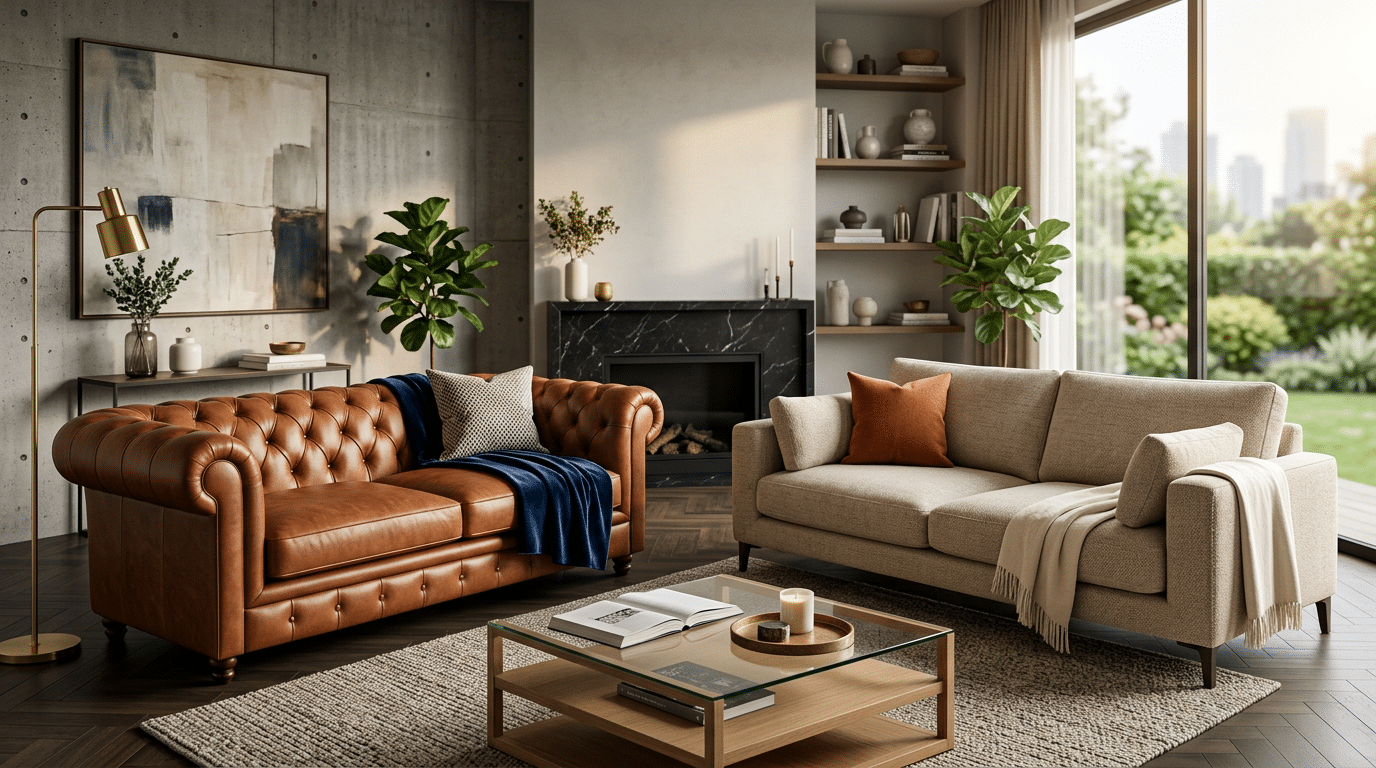
Buying a new sofa feels exciting until one question suddenly becomes much harder than expected: Should you choose leather or fabric?
Leather sofas look polished, last for years, and are easier to clean after everyday spills or messes. Fabric sofas, however, feel softer, warmer, and often create a more relaxed and inviting atmosphere at home.
The right choice affects far more than appearance alone.
Your sofa material can influence comfort, maintenance, durability, allergy concerns, and how well it handles pets, children, or daily use.
Since a sofa is one of the most used pieces of furniture in any home, making the right decision matters in the long run.
After comparing sofa materials for different homes, I start with one simple question: Do you need easier cleaning or softer everyday comfort?
This guide breaks down the key differences clearly, helping you choose a sofa that genuinely fits your lifestyle, routine, and living space.
Quick Answer: Leather or Fabric Sofa?
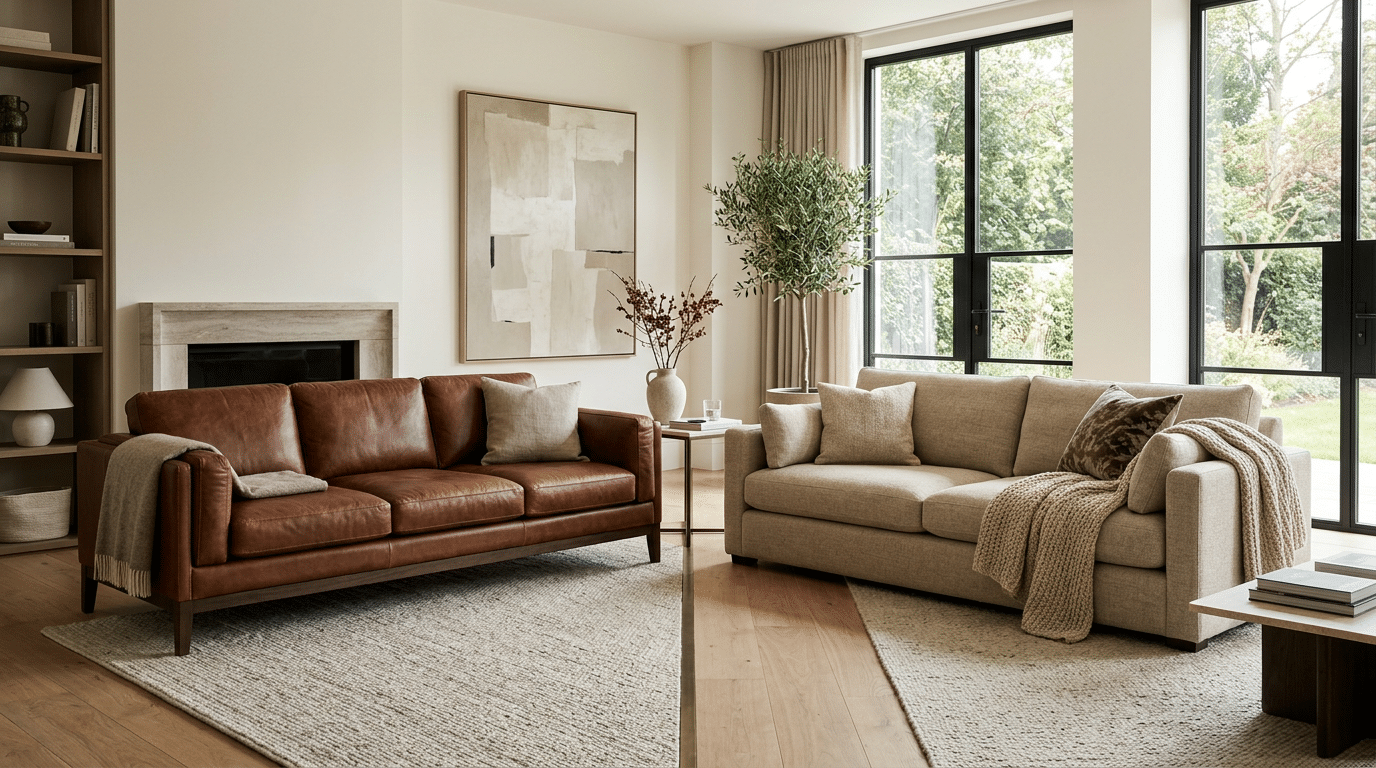
If you do not want to spend hours comparing sofa materials, here is the simple version.
Leather sofas work best for people who want easy cleaning, long-lasting durability, and a polished look that never really goes out of style.
Fabric sofas, on the other hand, are perfect for cozy living rooms, relaxed lounging, and homes where comfort matters most.
Here is a short comparison table for quick decision-making:
| Feature | Leather | Fabric |
|---|---|---|
| Best For | Long-lasting, polished homes | Cozy family living |
| Comfort | Firm support | Soft comfort |
| Durability | 15–20 years with care | Durable with good fabric |
| Cleaning | Easy to wipe clean | Needs more stain care |
| Style | Classic and formal | Warm and casual |
| Allergies | Less dust buildup | Holds more dust |
| Climate | Better in cool climates | Better in hot climates |
| Pets & Kids | Not great for scratching cats | Better for kids and dogs |
| Design Choices | Fewer colors and textures | More colors and patterns |
| Cost | More expensive | More budget-friendly |
| Best Choice If… | You want durability and low maintenance | You want comfort and flexibility |
Who Should Choose a Leather Sofa?
Leather sofas are a smart pick for busy homes where spills, dust, and daily messes happen often. They are easy to wipe clean and usually hold up well for years with proper care.
Many people also love how leather develops character over time instead of looking worn out.
- Easy wipe-clean maintenance makes leather sofas highly practical for busy households, especially for families with children or pets where spills and stains are common.
- A classic and timeless look allows leather sofas to fit beautifully into both modern and traditional interiors without going out of style over the years.
- Long-term durability is one of the biggest advantages of leather, as high-quality leather sofas can handle everyday use and still maintain their strength and appearance for decades.
- Better allergy resistance helps reduce dust, pet hair, and allergens, making leather sofas a smart option for people with allergies or sensitive living environments.
- A sofa that ages beautifully over time develops a rich natural patina, giving the furniture more character, warmth, and luxury as the years go by.
Who Should Choose a Fabric Sofa?
Fabric sofas are a popular choice for homeowners who want comfort, warmth, and flexibility in design. They create a soft and inviting atmosphere that makes living spaces feel more relaxed and welcoming.
With a wide range of colors, textures, and patterns available, fabric sofas make it easier to match different interior styles and personal preferences.
They are especially ideal for homes where the sofa is used daily for movie nights, reading, naps, or casual family time.
- A softer and cozier feel that makes everyday lounging more relaxing and comfortable for families and guests.
- More colors, textures, and style options allow greater flexibility to match modern, classic, or playful interiors.
- Better comfort in warm climates because the fabric feels breathable and less sticky compared to leather during hot weather.
- A more budget-friendly option that offers stylish designs and comfort at a lower price point.
- A family-friendly sofa choice that works well for movie nights, naps, and daily living room use.
- Key Differences Between Leather and Fabric Sofas
The choice between leather and fabric sofas affects comfort, maintenance, durability, and the overall feel of your living space.
While leather sofas are known for their long-lasting finish and simple cleaning process, fabric sofas are often preferred for their softer feel and wider design variety.
Understanding these differences can help you choose a sofa that matches your lifestyle, interior style, and everyday comfort needs.
| Feature | Leather Sofas | Fabric Sofas |
|---|---|---|
| Comfort | Smooth feel with temperature sensitivity. | Softer and warmer throughout the year. |
| Durability | Long-lasting and resistant to wear. | May fade or wear faster over time. |
| Maintenance | Simple to wipe and clean. | Needs regular vacuuming and care. |
| Style Choices | Classic and polished appearance. | More colours, textures, and patterns. |
| Allergy-Friendly | Traps less dust and pet hair. | Can collect allergens more easily. |
| Best For | Homes with pets or children. | Homes focused on comfort and texture. |
| Price | Usually costs more depending on quality. | Available in affordable and premium options. |
Both materials offer their own advantages depending on your household needs and design preferences.
Leather suits homes looking for durability and easier maintenance, while fabric works well for cosy seating and flexible styling options.
The right sofa choice ultimately depends on how you use your space and the level of comfort and upkeep you prefer.
One Simple Question Makes the Choice Easier
If you still feel stuck, ask yourself one simple question:
Do I care more about easy cleaning or everyday comfort?
- If cleaning matters most, go with leather.
- If comfort matters most, go with fabric.
That single question solves the decision for many people.
Comfort: Leather or Fabric Sofa, Which One Feels Better?
Comfort is one of the biggest factors when choosing between leather and fabric sofas. Both can feel great, but they offer very different everyday experiences.
Fabric sofas usually feel softer and cozier right away. Leather sofas often feel firmer but can become more comfortable over time.
Fabric Sofas are Softer
- Fabric sofas are popular for their soft and cozy feel.
- They are usually warmer in winter and ideal for long movie nights or relaxing evenings.
- Leather sofas often feel firmer at first and may soften over time with regular use.
- Some people prefer the supportive feel of leather over extra softness.
- Comfort also depends on cushion quality; a well-made leather sofa can be more comfortable than a cheap fabric sofa with poor padding.
Cleaning and Maintenance
A sofa may look amazing on day one, but everyday messes tell the real story. Spills, dust, pet hair, and daily use can make one material much easier to live with than the other.
Leather is Easier for Everyday Cleaning
Leather sofas are easy to clean because most spills stay on the surface. In many cases, a quick wipe with a cloth is enough.
Fabric sofas usually need more care since liquids can soak in faster. Some materials stain more easily than leather.
Modern performance fabrics are much better today and can resist stains surprisingly well. Still, leather is usually simpler for daily maintenance.
Leather Maintenance Tips
Leather sofas are easy to maintain, but they still need a little care to keep their soft feel and prevent drying or cracking over time. A small amount of upkeep can help the sofa stay beautiful for many years.
It also helps to keep leather away from strong sunlight and direct heat, since both can dry the material out faster than expected. Gentle cleaning works best for everyday care.
- Condition leather every 6–12 months
- Keep away from direct sunlight
- Avoid placing near heat vents
- Protect from extra moisture
- Use soft cloths for cleaning
Fabric Maintenance Tips
Fabric sofas usually need a bit more regular care, especially in busy homes with pets, kids, or daily use. Simple habits like vacuuming can help keep the fabric looking clean and fresh for longer.
The type of fabric also makes a big difference. Performance fabrics and removable covers can make cleaning much easier and help the sofa handle everyday wear better.
- Vacuum often to remove dust and pet hair
- Performance fabrics are easier to clean
- Removable covers help with washing
- High rub-count fabrics last longer
- Clean spills as quickly as possible
Durability
Durability matters when you are spending serious money on a sofa. Some sofas may look beautiful at first, but start sagging, fading, or wearing out much sooner than expected.
The sections below compare leather and fabric sofas in durability, wear resistance, and lifespan.
Leather Lasts Longer than Fabric
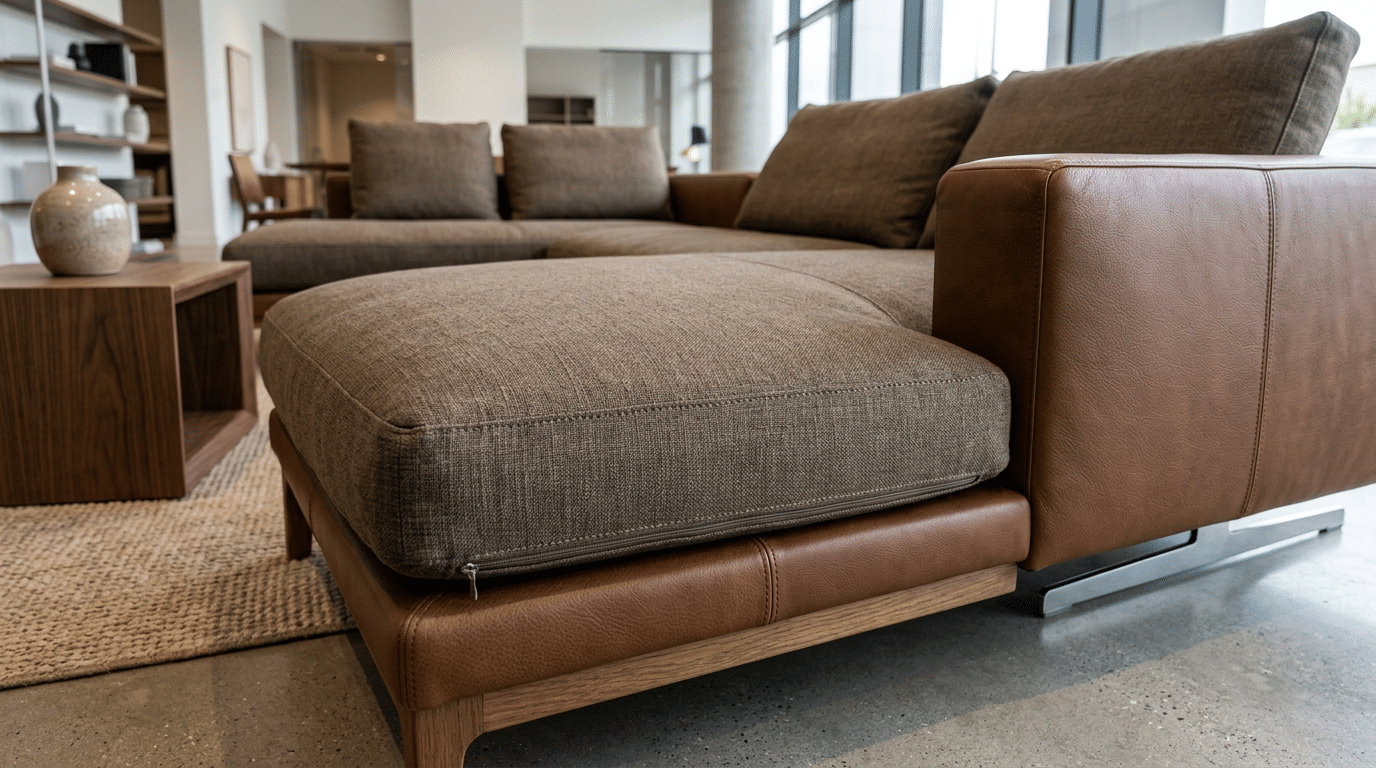
High-quality leather sofas are built to last, especially full-grain and top-grain leather. A well-made leather sofa can often stay in good shape for 15 to 20 years.
Fabric sofas can also last many years, but durability depends on fabric quality, frame strength, and daily use. Cheap bonded leather may wear out faster than a good fabric sofa.
- Full-grain leather lasts the longest
- Fabric sofas usually last 7–15 years
- Cushion and frame quality matter a lot
- Bonded leather wears out quickly
Why Material Quality Matters:
Helps you make a smarter long-term investment by choosing materials that offer better durability, comfort, and overall value over time.
Prevents you from buying a sofa that may look stylish initially but quickly loses its comfort, appearance, and durability with regular everyday use.
Whether you prefer leather or fabric, knowing the difference between premium and low-quality materials can help you find a sofa that matches your lifestyle, budget, and everyday comfort needs.
Best Sofa for Homes with Pets and Kids
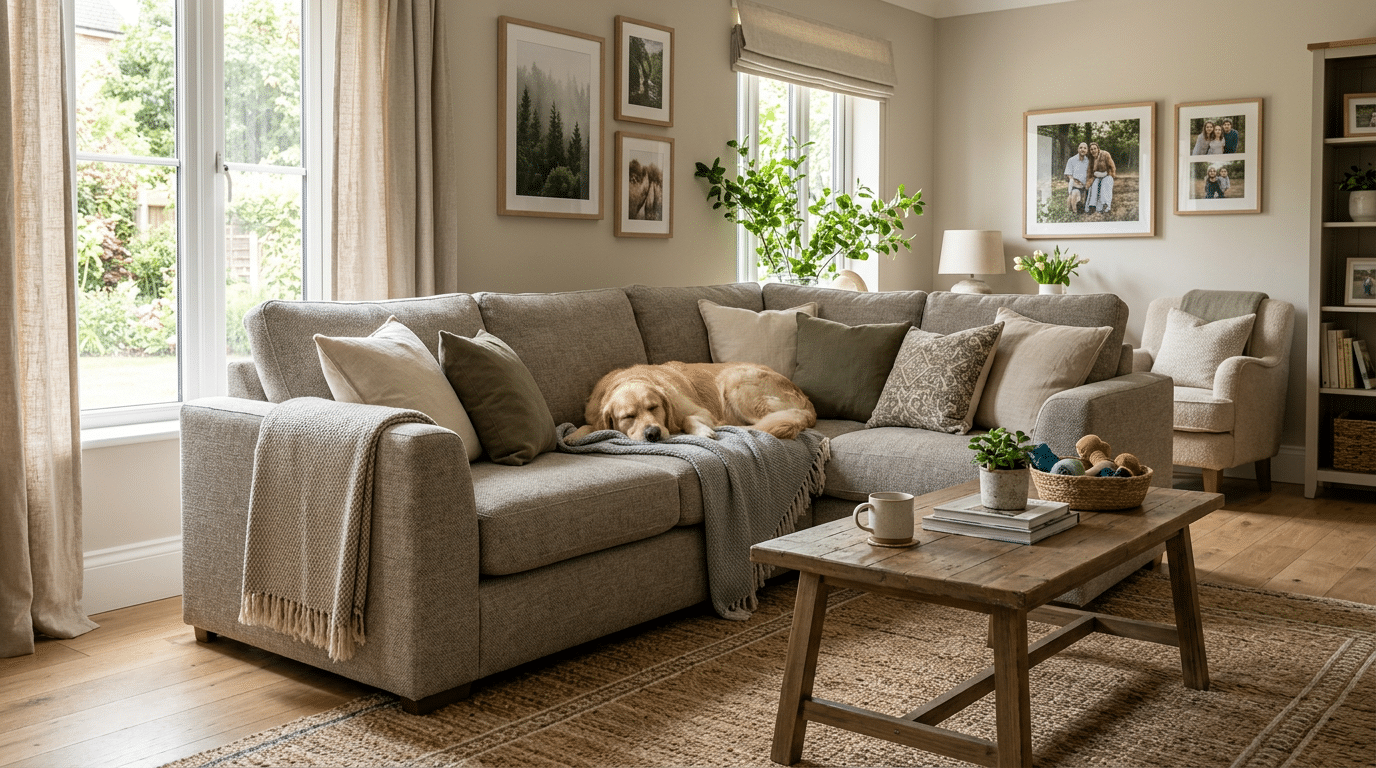
Pets and kids can quickly test how durable a sofa really is. Fur, scratches, spills, and daily messes make material choice much more important.
Performance fabric and microfiber are usually the safest choices for busy homes. They resist stains, scratches, and heavy use better than thin or damage-prone materials.
These fabrics also hide pet hair and small marks more easily. Darker colors and textured materials can make everyday maintenance feel much simpler.
Leather works well for quick spill cleanup and daily wiping. However, cat claws can leave visible scratches that become harder to hide over time.
Many families also prefer fabric sofas because they feel softer and less slippery. This can make everyday lounging more comfortable for children.
- Performance fabric handles heavy use well
- Microfiber resists scratches better
- Leather wipes clean quickly
- Dense fabrics work better for cats
- Textured fabrics hide marks better
Hot and Cold Climates: Leather Vs Fabric Sofa
Many people focus only on style and price when buying a sofa, but the climate can completely change how comfortable the material feels every day. A sofa that feels perfect in one climate may become frustrating in another.
Leather Reacts More to Temperature Changes
Leather and fabric sofas also react differently to weather and room temperature, which can affect their comfort throughout the year.
- Leather can feel sticky in the heat
- Leather may feel cold during winter
- Fabric stays comfortable year-round
- Indoor temperature affects leather more
- Breathable fabrics feel softer in warm weather
Best Sofa Material for Hot Climates
Hot and humid weather can make some sofa materials uncomfortable much faster than expected. Breathable fabrics usually provide a cooler and more relaxed seating experience in warmer regions.
Fabric Works Better in Warm Weather
Climate and temperature can also affect comfort, especially since fabric sofas usually feel cooler and less sticky in hot or humid conditions.
- Linen feels breathable and airy
- Cotton blends stay cooler in the heat
- Lightweight fabrics improve comfort
- Fabric handles humidity better
- Better for long lounging sessions
Best Sofa Material for Cold Climates
Cold weather changes how a sofa feels, especially during long winter months. Warm and cozy materials often become much more appealing in cooler environments.
Fabric is Warmer During Winter
Both materials suit cold climates, but fabric sofas feel warmer instantly, while leather becomes comfortable over time with proper indoor heating.
- Fabric feels cozy during winter
- Softer and warmer right away
- Leather works well in heated homes
- Stable indoor temperatures help leather
- Fabric usually feels more inviting in cold weather
Style and Appearance
Your sofa is usually one of the biggest visual pieces in the room, so its material has a major impact on the overall style of your space.
Leather and fabric create very different moods and design styles.
Leather Creates a Timeless and Polished Look
- Leather sofas have a clean and classic appearance that rarely goes out of style.
- They work especially well in spaces that feel modern, refined, or slightly formal.
- Many homeowners also love how leather develops more character and richness as it ages naturally over time.
Fabric Gives You More Style Flexibility
- Fabric sofas offer much more variety when it comes to colors, textures, and overall personality.
- They are ideal for people who enjoy changing their decor or refreshing their living room style more often.
- From soft neutrals to bold statement colors, fabric makes it easier to match different moods and trends without feeling limited.
Types of Leather Used in Sofas
Not all leather sofas are made the same. Some leather types can last for decades and develop a beautiful aged look, while others may crack, peel, or wear out much faster.
Understanding the differences can help you choose a sofa that matches your budget, lifestyle, and long-term expectations.
| Leather Type | Quality Level | Main Advantage | Main Drawback | Best For |
|---|---|---|---|---|
| Full-Grain | Highest quality | Long-lasting and ages beautifully | Expensive | Luxury and long-term use |
| Top-Grain | High quality | Smooth, durable, easy to clean | Less natural texture | Balanced style and comfort |
| Genuine Leather | Mid-range quality | More affordable real leather | Wears out faster | Budget-friendly leather look |
| Bonded Leather | Lower quality | Cheap and stylish at first | Can crack or peel | Temporary or low-cost furniture |
| Faux/Vegan Leather | Synthetic material | Easy to clean and animal-free | Feels less like real leather | Budget and vegan homes |
Popular Fabric Sofa Materials
Fabric sofas can feel very different depending on the material used. Some fabrics feel soft and luxurious, while others are designed to handle spills, pets, kids, and heavy daily use.
Knowing the strengths and weaknesses of each fabric can help you choose a sofa that fits your lifestyle and comfort needs.
| Fabric Type | Advantage | Drawback | Best For | Best For |
|---|---|---|---|---|
| Linen | Light & breathable | Wrinkles easily | Airy, casual spaces | Long-term luxury |
| Velvet | Soft & luxurious | Flattens over time | Classy interiors | Everyday style |
| Microfiber | Durable & stain-resistant | Attracts lint | Busy homes | Budget buyers |
| Performance Fabric | Resists stains & fading | Higher cost | Families & kids | Temporary use |
| Polyester Blends | Affordable & easy-care | Less natural feel | Budget-friendly use | Vegan and budget homes |
What to Check Before Buying a Sofa
A sofa may look perfect online or in a showroom, but comfort and durability become much clearer once you inspect the details closely. Taking a few extra minutes before buying can save you from years of frustration later.
Important Things to Check Before You Buy
Always test a sofa properly instead of making a quick decision based only on appearance.
Asking a few simple questions in-store can also help you avoid low-quality furniture that may wear out too quickly.
Make sure to do the following:
- Sit on the sofa for several minutes
- Check if the cushions bounce back properly
- Ask about the frame material
- Check the fabric rub count or leather grade
- Look for removable covers if possible
- Read the warranty details carefully
Things to Avoid
Some sofas look attractive at first glance, but hide poor-quality materials underneath. Knowing the warning signs can help you avoid spending money on furniture that may not last very long.
Leather Sofa don’ts:
- Bonded leather materials
- Strong plastic-like smell
- No leather grade listed
- Extremely cheap “real leather” claims
Fabric Sofa don’ts:
- No durability or rub-count rating
- Open fabric construction on high-use sofas
- Visible pilling in-store
- Cushions flatten very quickly
Final Verdict
Choosing the right sofa is really about finding what feels most comfortable and practical for your everyday life.
If you want something durable, easy to clean, and timeless in appearance, a leather sofa is often a reliable long-term choice.
For a softer and more relaxed feel, fabric sofas offer greater comfort along with more colors and texture options to suit your space.
Performance fabric has become a popular middle-ground option for modern homes.
It gives you the cozy feel of fabric while handling spills, stains, and daily use much more effectively.
Before making a final decision, I’d always suggest sitting on different sofa materials in person if possible.
The sofa you choose should not only look good in your living room but also feel right every time you come home and sit down to relax.
Frequently Asked Questions
Does Leather Crack Over Time?
Yes, if it is not conditioned properly or exposed to direct sunlight for years. High-quality leather rarely cracks when maintained correctly.
Does Fabric Pill?
Some lower-quality fabrics pill over time. Performance fabrics and dense fabrics resist pilling much better.
Which Sofa is Easier to Repair?
Fabric sofas are usually cheaper to repair or reupholster. Leather repairs can be more expensive, but minor scratches are often repairable.
Which Sofa is Better for Everyday Use?
For most families, performance fabric is the best balance of comfort, durability, and value. For buyers who prioritize easy cleanup and timeless style, leather is the better choice.