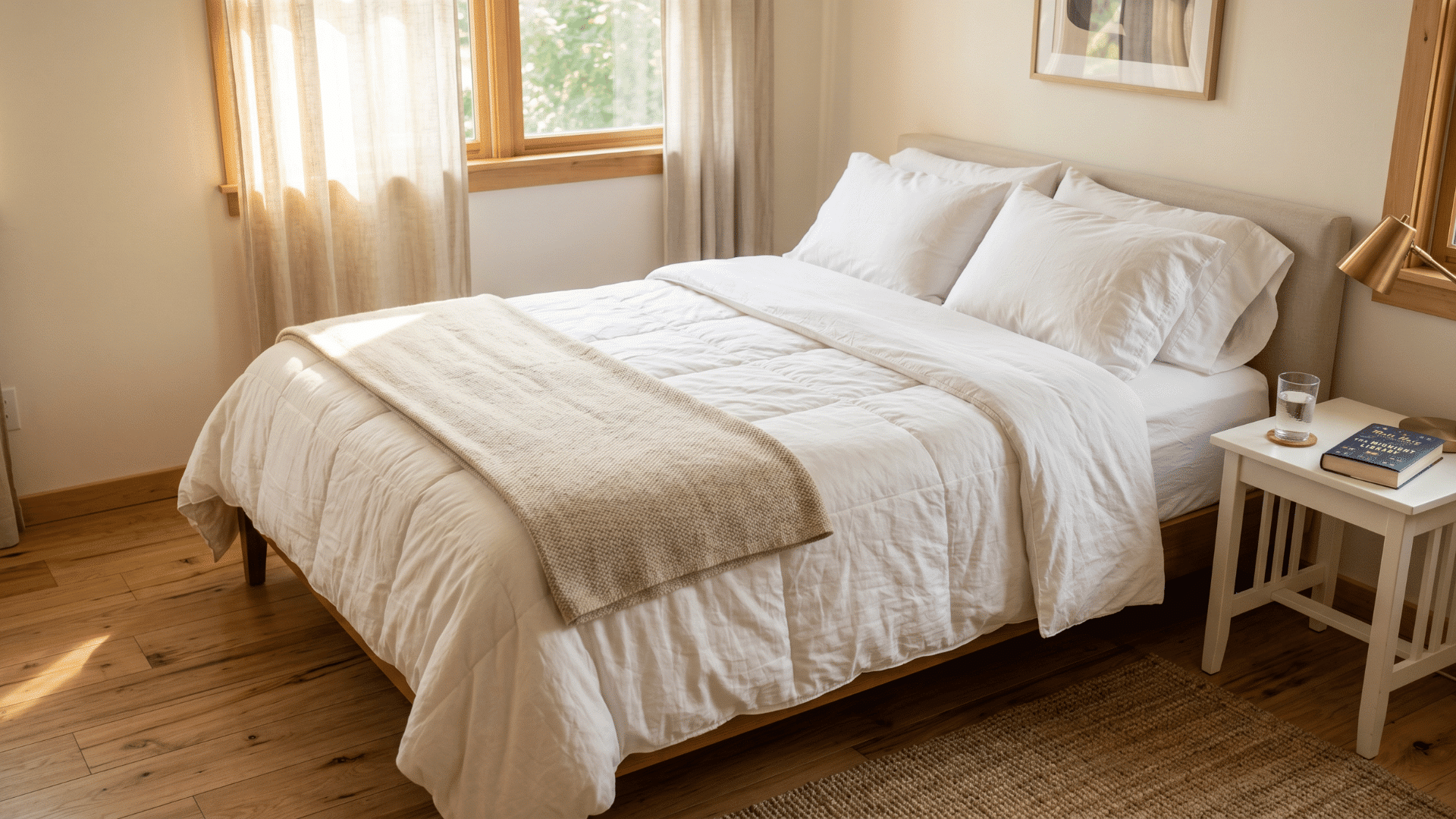
So you bought a queen comforter, or maybe someone gave you one, and now you’re staring at your full bed, wondering if it’ll work. To be honest, there’s a little more to know before you toss it on.
In this blog, I’ll walk you through exactly how much a queen comforter hangs over the sides of a full bed and why the extra length often matters more than the width.
We’ll look at when sizing up is actually worth it, the sheet mix-up that makes comforters slide around, and a few easy tricks I use to keep mine from sliding off at night.
I’ll also cover how the fill type changes the way it looks, plus a quick sizing chart you can save!
Can a Queen Comforter Fit a Full Bed?
Yes, a queen comforter fits a full bed without any trouble.
A full mattress measures 54 by 75 inches, while a queen is 60 by 80 inches. The comforters follow suit. A full comforter runs about 76 by 86 inches, and a queen comforter is around 88 by 92 inches. That makes a queen roughly 12 inches wider and 6 inches longer than a full.
So what’s the catch? You get more coverage and a relaxed, draped look, but the fit is a bit loose instead of snug.
One quick tip: sizes vary by brand, so check the actual numbers on the label before you buy.
The Overhang Math, Per Side
Let’s put real numbers on it. A full mattress is 54 inches wide, so a 76-inch full comforter gives you about 11 inches of hang on each side.
Swap in an 88-inch queen comforter, and that jumps to roughly 17 inches per side. At the foot, the queen adds about 6 extra inches of drop. That’s the difference you’ll actually see.
The Three Drape Zones on a Full Bed
Numbers are useful, but it helps to visualize where all that extra fabric actually lands. A queen comforter on a full bed breaks down into three zones, and each one behaves a little differently.
- The top zone is the flat surface where you sleep. Here, a queen comforter lies smooth, covering the whole mattress with room to spare. You won’t notice any size difference up top, since this is the part that fits no matter which size you pick.
- The side zones are where the extra width shows up. A queen drapes about 17 inches down each side, compared to 11 for a full. This is the zone that reads as cozy and full when centered, or a bit lopsided when it drifts. Most of your styling effort goes here.
- The foot zone is the quiet winner. That extra 6 inches of length covers your feet fully and leaves enough fabric to tuck under the mattress for a clean finish. A full comforter often falls short right here.
Once you see the bed in these three parts, the whole fit makes sense. For a longer, more traditional drop, the size of a full bedspread matters because bedspreads are designed to cover more of the sides and foot than a standard comforter.
Why the Length Gap Matters More Than the Width
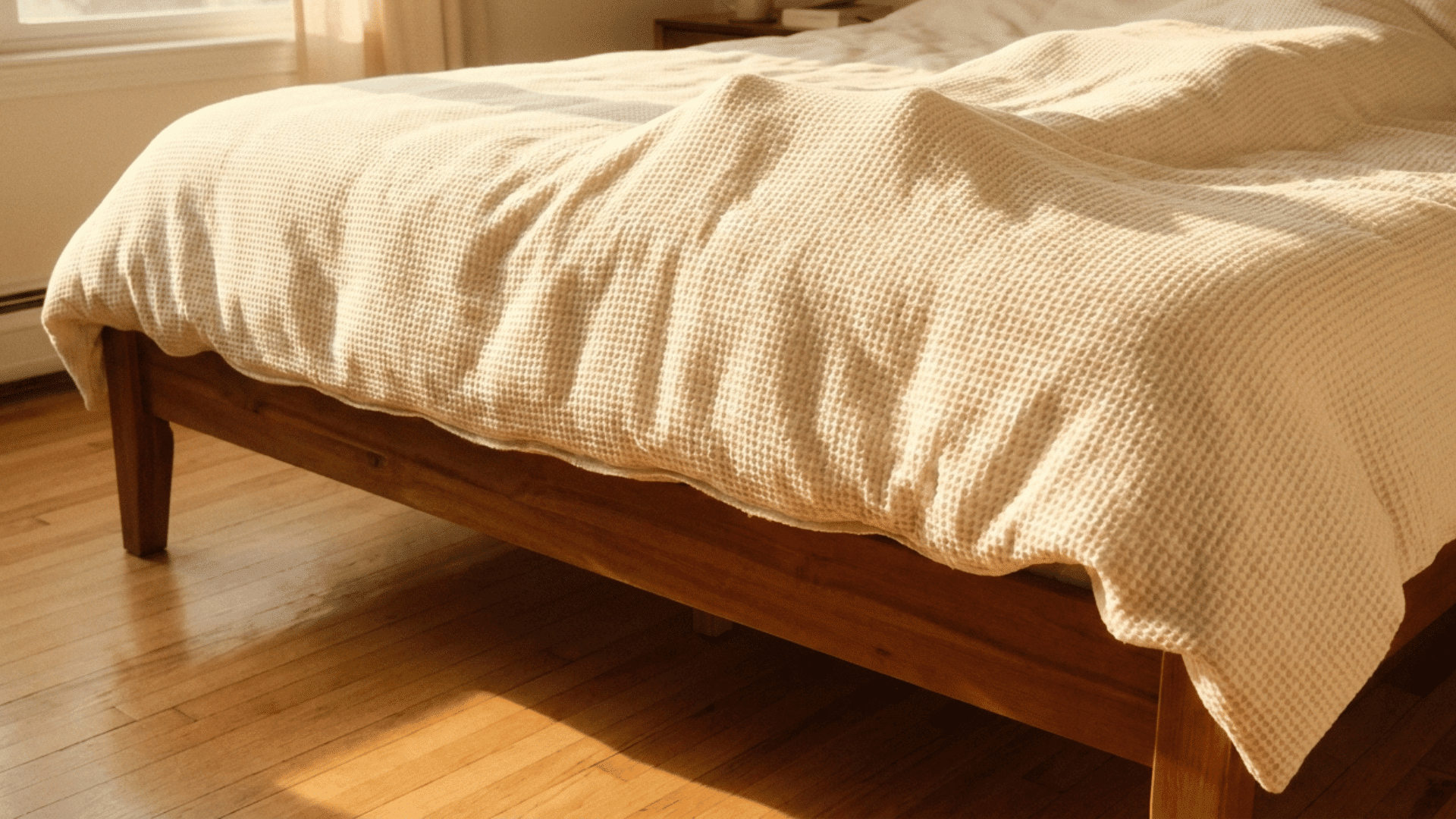
Most size guides obsess over width, but on a full bed, the length is where a queen comforter really earns its spot. That extra 6 inches of length covers your feet if you’re tall, and it gives you enough fabric to tuck the bottom under the mattress for a neat finish.
A full comforter often comes up short there.
The width is a different story. Those extra inches on each side are what can look messy if the comforter isn’t centered. So really, “is it too big?” splits into two questions.
The length? Almost always a win. The width? That depends on how you style it. Once you separate the two, the choice gets a lot easier.
When Sizing Up to Queen is Worth It on a Full Bed
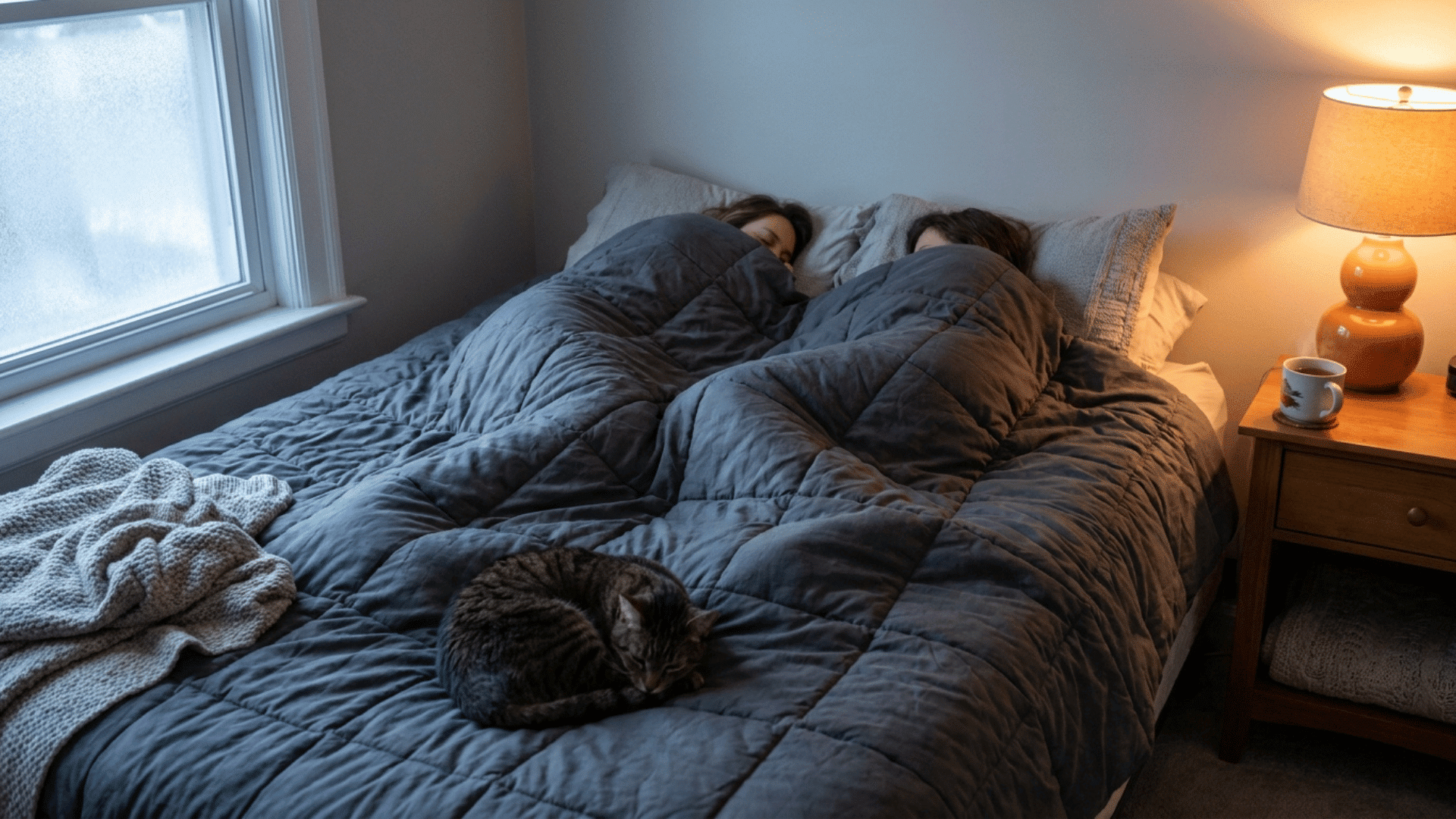
A queen comforter on a full bed makes the most sense in a few specific situations.
It shines in winter, since the extra fabric traps more heat and keeps drafts out. If two of you share a full bed, that added width means fewer late-night blanket tugs-of-war.
Restless sleepers who toss and turn get more coverage to stay wrapped up, and the same goes for anyone with a pet or kid who climbs in. You might also just like the full, draped hotel look it gives.
That said, skip the size-up if your bedroom is small, you prefer a crisp, close fit, or your home washer can’t handle the bulk. In those cases, a full comforter is the easier call.
The Laundry Reality Check
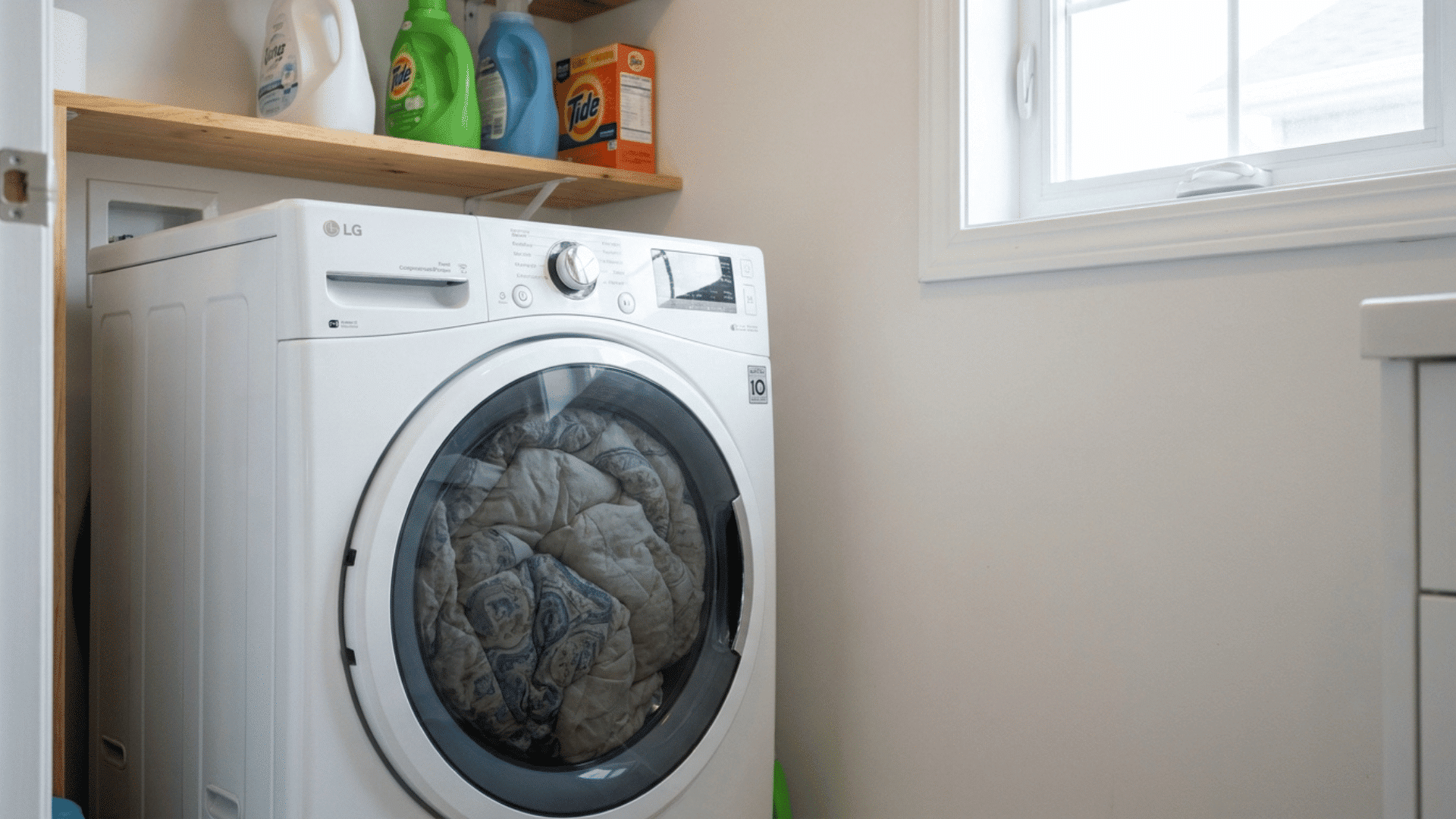
Here’s something people forget: a queen comforter often won’t tumble freely in a standard home washer, which usually holds 3.5 to 4.5 cubic feet. When it’s packed in too tightly, it cleans unevenly, and the fill clumps up.
You really want e around 5 cubic feet or more. If yours is smaller, plan on a trip to the laundromat every few months.
Real Talk: What Sizing Up Actually Costs
Before you commit, here’s the honest math on going queen instead of going full-on with your full bed. None of these are deal-breakers, but they add up, and it’s better to know now.
The comforter itself usually runs a bit more for a queen, often around $10 to $25, depending on the brand and fill. If you add a queen flat sheet for a cleaner drape, that’s another $20 to $40 one-time.
And here’s the part most guides skip: a queen comforter needs a large-capacity machine to wash properly, which at most US laundromats in 2026 means a big front-loader at 4 to 8 dollars per wash, plus 1 to 2.50 dollars to dry.
Do that three or four times a year, and you’re looking at roughly 20 to 40 dollars annually.
| What You Pay For | Rough Cost | How Often |
|---|---|---|
| Queen comforter (vs. full) | $10–$25 more | One time |
| Optional queen flat sheet | $20–$40 | One time |
| Laundromat wash + dry (if needed) | $5–$10 per trip | 3–4x per year |
So the real first-year cost of sizing up lands somewhere around 50 to 105 dollars over staying full. For most people, the extra warmth and the draped look are worth it.
Just go in with your eyes open instead of getting surprised at the register.
The Sheet and Mattress Pad Mismatch No One Warns You About
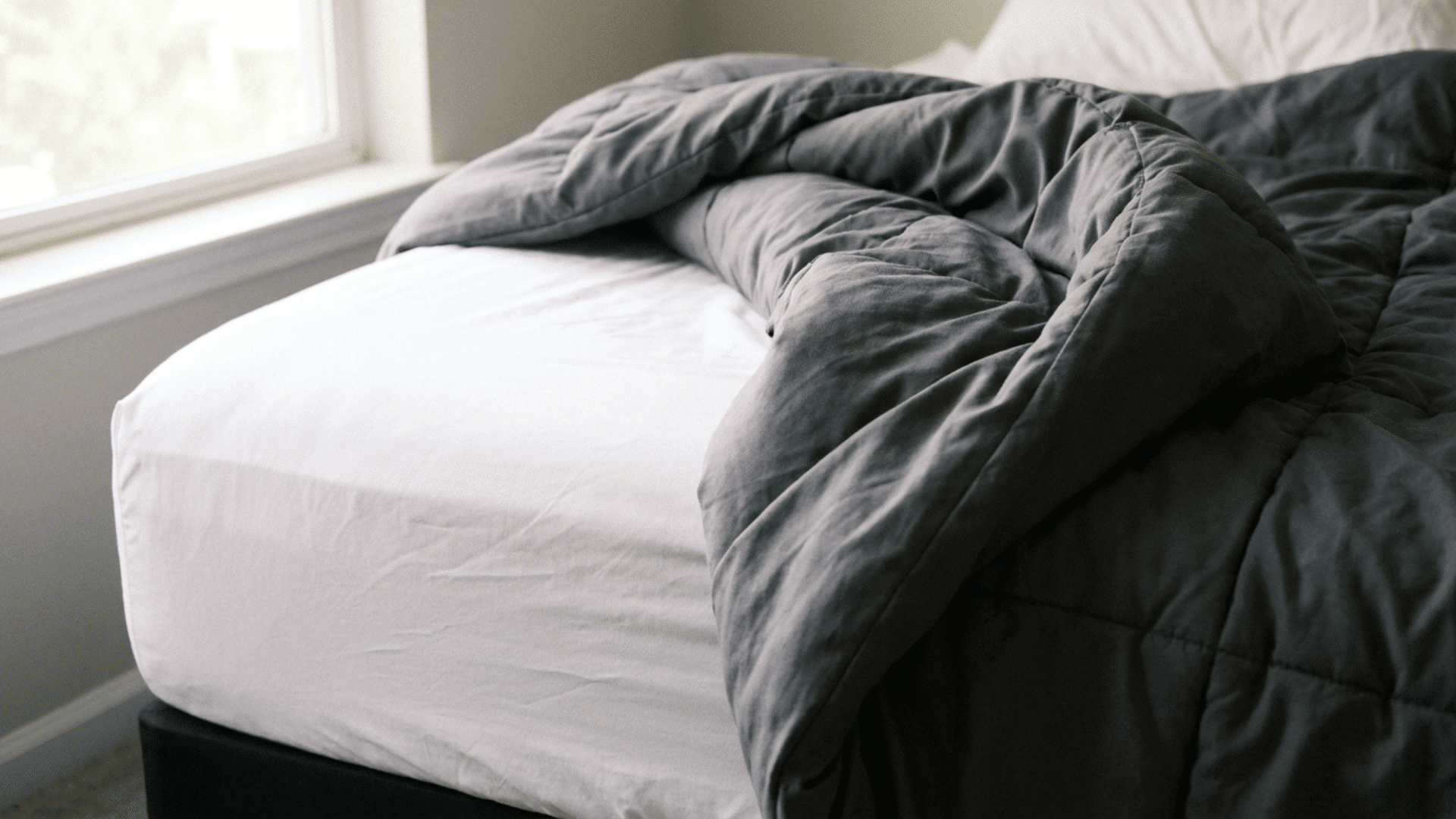
Here’s a snag that catches people off guard. You size up to a queen comforter, but your fitted sheet and mattress pad stay full. Now the layers don’t agree on how big the bed is, and the comforter slides around instead of sitting still.
The fix is simpler than it sounds. Your fitted sheet should always stay full, because it grips the mattress itself, not the look of the bed. A queen fitted sheet on a full mattress just bunches up and pops off the corners.
The comforter is the only layer that’s allowed to size up. Everything underneath stays matched to the mattress.
One tip I’d pass along: if you want the top to feel finished, add a queen flat sheet under the comforter. It drapes to the same width and hides the size gap between the layers.
How to Stop an Oversized Comforter From Sliding Off

The number one gripe with a queen comforter on a full bed is the slow drift off one side overnight. Good news: a few cheap fixes solve it.
Comforter clips are the easiest. They grab the comforter and your fitted sheet underneath so the two move together.
Corner ties work the same way if your comforter has loops. You can also slip the comforter into a duvet cover with inside snaps, which locks it in place and stops the fill from shifting.
For a full bed, I like the lopsided trick: tuck one long side under the mattress and let the other drape free. It anchors the whole thing. Weighting the foot with a folded throw helps too, since gravity does the rest.
How Fill and Loft Change the Fit
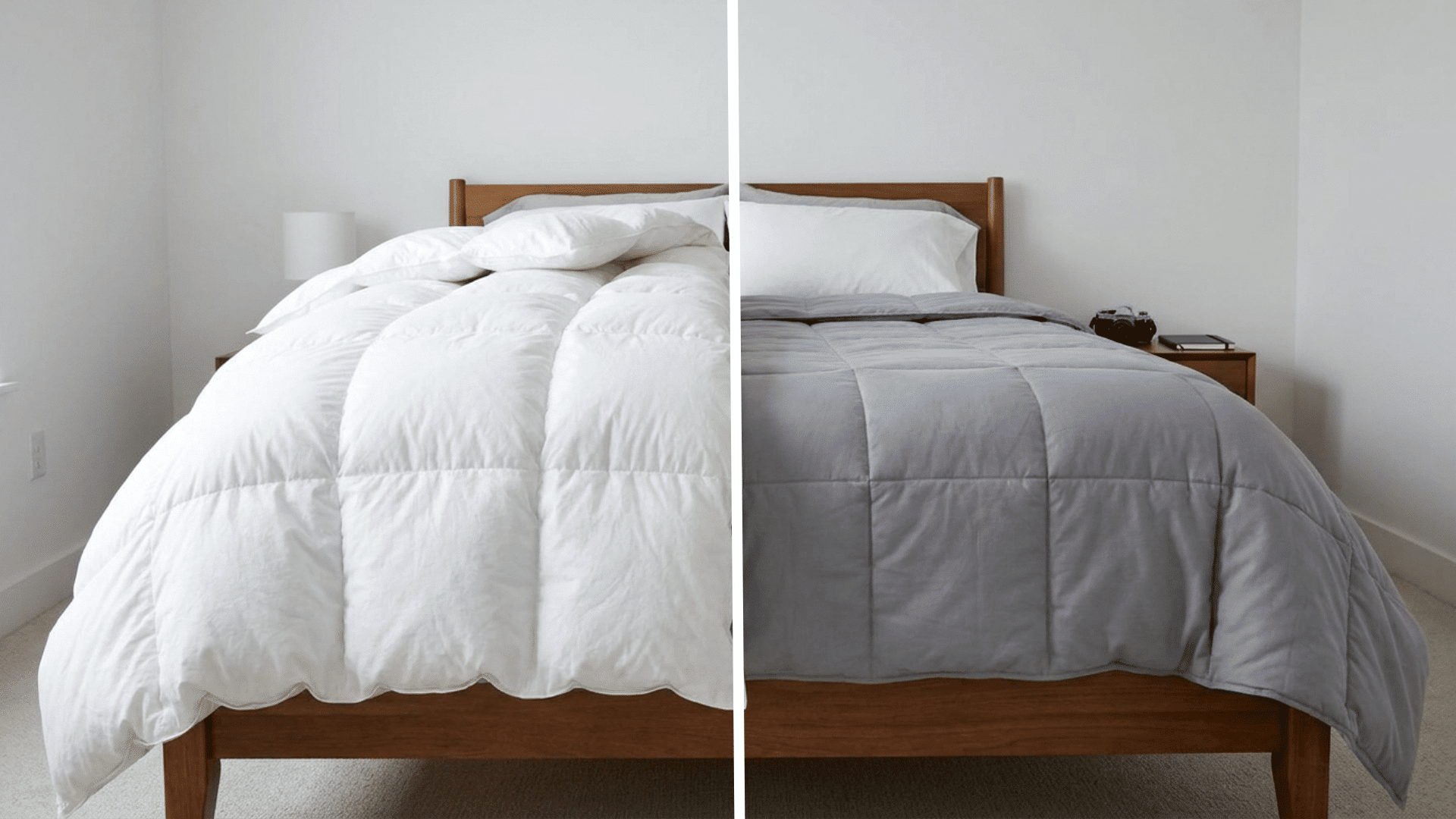
Here’s a detail most guides skip: the fill inside your comforter changes how big it looks on the bed. Loft eats overhang. The puffier the comforter, the more fabric gets pulled upward to cover that height, so less of it spills over the sides.
A high-loft queen down comforter puffs up and reads almost like a full-on your bed, because all that extra width goes into the dome shape on top. A flat down-alternative does the opposite. With no rise to soak up the fabric, every spare inch falls over the edges as a side drape.
So pick your fill with the size-up in mind. Want the queen to look tame? Go high loft. Want that big draped look? A flatter fill shows it off.
Best Fill Type for an Intentional Look
Choosing the right fill is what makes a sized-up comforter look planned rather than accidental. The best choice depends on who you are, the look you want, and the material itself. Here’s how to match all three so your full bed comes together right.
- By sleeper type and climate: Run warm or live somewhere hot? Go with a light down alternative or cotton fill that drapes flat. Cold sleepers in chilly climates do better with high-loft down or feather fill that puffs up and reads cozy.
- By the look, you want: Want the queen to sit tame and neat? Pick high loft, since it pulls fabric upward and tones down the extra width. Want a bold, draped hotel look? A flatter fill shows off every inch of that side drape.
- By fill material: Down and feather give the most loft and the neatest look. Down-alternative and cotton sit flatter for an easy, relaxed drape. Wool lands in the middle, with gentle loft and steady warmth.
Quick Reference: Full Bed Comforter Sizing
Here’s every number from this guide in one place, so you can compare your options at a glance before you buy. The drop-per-side figures show roughly how far each size hangs over the edge of a 54-inch-wide full mattress, which is the part that shapes the whole look.
Save this chart and check it against the label numbers when you shop.
| Comforter Size | Dimensions (inches) | Drop Per Side on a Full Bed | Best For |
|---|---|---|---|
| Full | 76 x 86 | ~11 inches | A snug, neat fit |
| Queen | 88 x 92 | ~17 inches | Extra coverage and a draped look |
| King | 104 x 92 | ~25 inches | Maximum overhang, near floor-length |
Final Thoughts
So there you have it. A queen comforter works on a full bed, and now you know exactly what to expect when you put one on. It hangs about 17 inches per side, gives you that extra length for your feet, and brings a cozy, draped feel that lots of folks love.
The trick is in the small stuff. Keep your fitted sheet full so the layers don’t fight. Use clips or the one-sided tuck to stop it from sliding off.
And pick your fill based on if you want it tame or flowing. Get those right, and a sized-up comforter looks completely on purpose.
Got a fitted full bed and a queen comforter waiting? Give one of these tips a try tonight, then drop a comment and let me know how it turned out.
Frequently Asked Questions
Will a Queen Comforter Look Too Big on a Full Bed?
Not really. The extra width adds side drape that most people find cozy rather than sloppy. Center it well, and it looks intentional, almost like a hotel bed.
Do I Need Queen Sheets if I Use a Queen Comforter on a Full Bed?
No. Keep your fitted sheet and pad full, since they grip the mattress. Only the comforter sizes up. A queen flat sheet is optional for extra drape.
Is a Queen Comforter Warmer Than a Full Comforter?
Usually yes. The extra fabric covers more of you and traps more heat, which makes a queen comforter a smart pick for cold sleepers or winter nights.
Will a Queen Comforter Slide Off a Full Bed at Night?
It can, since it’s roomier than the bed. Comforter clips, corner ties, or tucking one side under the mattress keep it in place while you sleep.
Can I Use a Queen Comforter on a Kid’s Full Bed?
Yes, and it’s a smart move. The extra coverage handles restless sleepers, and the comforter still fits once they grow, so you buy bedding just once.