
You finally buy a bedspread online that looks perfect, only to realize it hangs awkwardly short or pools messily on the floor at home. If you are trying to figure out what size a full bedspread is, you are not alone.
A full bedspread needs much more fabric than a standard full mattress. It must completely cover the sides, fall nicely to the foot of the bed, and sometimes even tuck over the pillow area.
In this post, I will walk you through the standard size range and a helpful formula for measuring to get the perfect fit.
We will also cover drop length, style choices, how drape changes your room’s feel, and common shopping mistakes to avoid.
Full Bedspread Size And Fit Chart
Before measuring anything, I would start with the standard full bed size and the usual bedspread range most shoppers need. A smaller comforter stops just past the edge of the mattress and will not give that floor-length effect.
Bedspreads are purposefully designed to hang much farther down the sides. Here is a quick reference guide:
| Item | Common Size | Best For |
| Full Mattress | 54 in x 75 in | Base measurement |
| Full Bedspread | 90–100 in x 105–115 in | Side drop, foot coverage, pillow tuck |
Measuring Your Bed
Once you know the usual size range, measuring your own bed helps you avoid a bedspread that looks too short or too bulky. I always tell people that measuring takes just a few minutes.
When you are setting up your bedroom, finding the exact measurements for your bedding makes everything much easier. I always keep a quick reference chart handy to check the standard numbers before buying.
Here is a simple table showing the typical mattress sizes alongside the most common bedspread dimensions to help you get that perfect drape:
| Mattress Size | Standard Mattress Dimensions | Common Bedspread Dimensions |
| Twin | 38 in x 75 in | 81 in x 110 in |
| Twin XL | 38 in x 80 in | 81 in x 115 in |
| Full / Double | 54 in x 75 in | 90–100 in x 105–115 in |
| Queen | 60 in x 80 in | 102 in x 118 in |
| King | 76 in x 80 in | 120 in x 118 in |
| California King | 72 in x 84 in | 114 in x 122 in |
Keep in mind that these numbers can change slightly depending on the brand.
I always recommend measuring your specific mattress height and checking the product label to make sure the size fits your room exactly how you want it to.
Measure Width And Drop
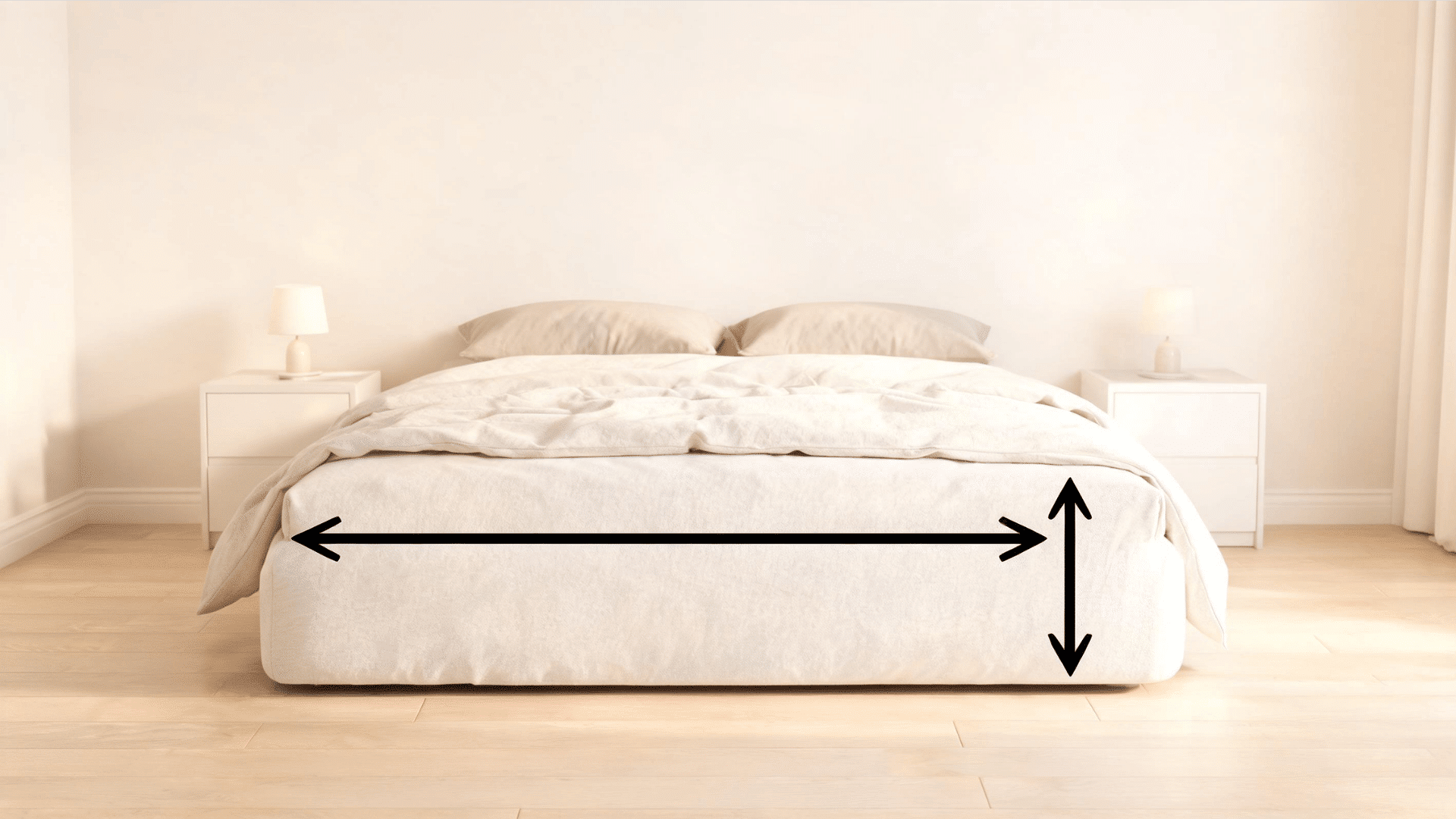
Breaking down the math is simple when you focus on one piece at a time. Here is exactly how I grab those numbers:
- Width: Measure straight left to right across the top of your mattress.
- Drop: Measure from the top edge of the mattress down to your chosen ending point.
- Fit: Add your drop number twice because the fabric hangs down on both sides.
Measure Length And Pillow Tuck

Next, measure the length running straight from the head to the foot of your mattress. If you plan to fold the bedspread over your pillows, you will need extra fabric near the headboard.
Many guides suggest adding about 16 inches to your total length for a neat pillow tuck. I find this simple step gives the bed a finished look without needing extra shams.
Choosing The Right Bedspread
Here are a few key pointers while checking out a new bedspread to liven up your bedroom. The drop decides how the bedspread hangs, so it can change both the fit and the finished look of the bed.
The drop is simply how far the fabric falls down the side of your mattress.
1. Short Drop Vs Long Drop
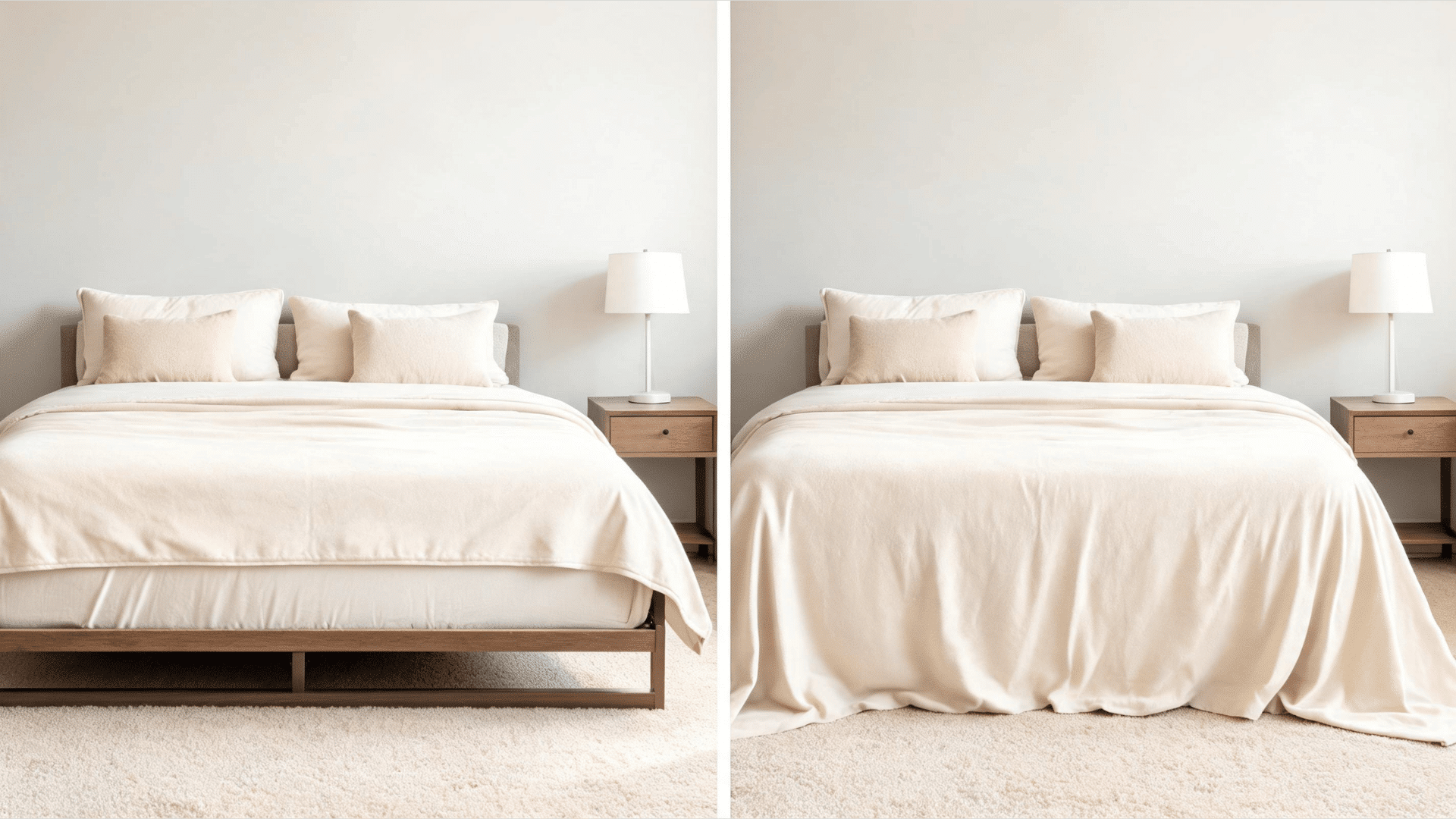
Seeing the exact difference helps you pick what works best for your bedroom setup. I like to match the drop length directly to the amount of floor space I want to show or hide.
| Drop Type | What It Does |
| Short Drop | Shows more frame and floor space |
| Medium Drop | Gives balanced side coverage |
| Long Drop | Hides frame and storage space |
2. Deep Mattresses Need More Fabric

If you have a pillow-top mattress, use a thick topper, or sleep on a tall foundation, a standard bedspread might look surprisingly short.
I always recommend aiming for the higher end of the size range to get the coverage you want. You can also look for oversized full options.
Just remember that “oversized” is only a label, so you still need to check the exact measurements before buying.
3. Longer Drape Feels Fuller

A long drop easily hides under-bed storage bins, metal frame legs, and bulky box springs. This coverage works wonderfully in guest rooms where the bed acts as the main piece of furniture.
However, you should be careful in tight spaces. If too much fabric pools on the floor, the bed might look too heavy and make the room feel crowded.
4. Shorter Drape Opens Space

A shorter drop shows much more of your floor and bed frame. This simple trick helps small rooms feel less crowded by adding visual space around the furniture.
This length is often a better choice for low mattresses, neat metal frames, or bedrooms where you need quick, easy access for cleaning under the bed. It keeps the area looking tidy.
5. Bedspread Styles For Small Bedrooms
If your full bed sits in a smaller room, the right bedspread size can help the bed look neat without taking over the space. When you live in tight apartments, guest rooms, dorm-style spaces, or narrow bedrooms, your bedding choices matter more.
To help you figure out exactly what works for your layout, here is a quick guide on the best choices for different room needs:
| Room Need | Better Choice |
| Small Room | Medium drop |
| Hidden Storage | Long drop |
| Easy Cleaning | Shorter drop |
| Guest Room | Full floor coverage |
6. Pick Lighter Fabric Layers

Thinner bedspreads are much easier to fold, wash, and layer over your sheets. They also sit flatter against your full mattress.
This helps tremendously in bedrooms with limited walking space because the bed occupies less visual space.
When shopping, I suggest checking out breathable cotton, smooth microfiber, or quilted lightweight options that keep you comfortable without adding extra bulk to your small room.
7. Match Pattern To Room Size

Large, busy prints often make a small bedroom feel overly crowded. Instead of loud graphics, smaller patterns, flat solids, or soft color contrasts make the bed much easier on the eyes.
When you keep your buying choices highly practical rather than focusing heavily on design rules, you ensure the bedspread blends into your room instead of completely taking it over.
Full Bedspread Shopping Mistakes To Avoid
Even with the right size range, a few common buying mistakes can still lead to a bedspread that does not fit well.
Many shoppers fail to measure their mattress height, completely forget to allow extra fabric for a pillow tuck, or skip checking the finished dimensions before checking out.
Buying By Label Only
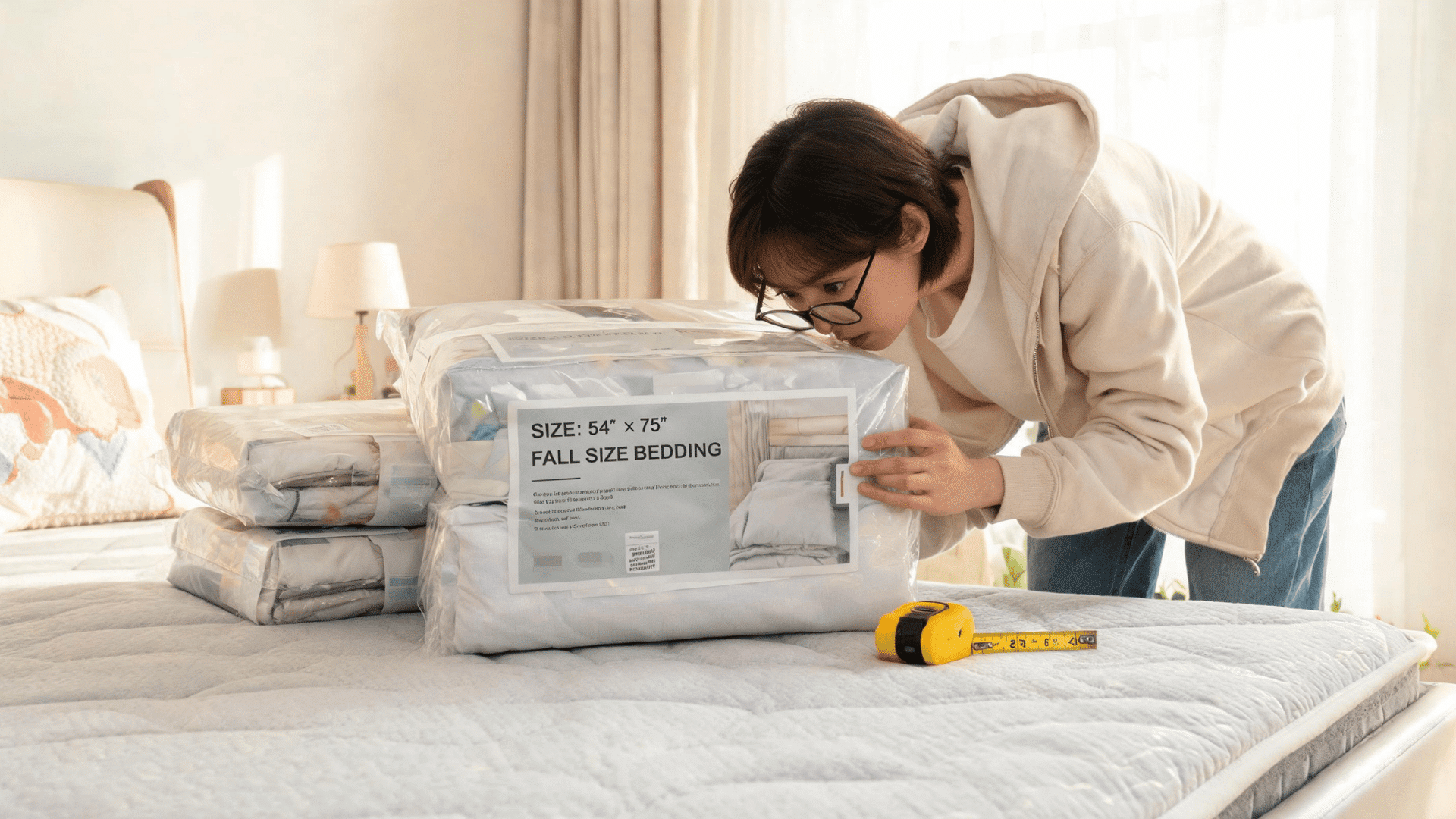
Seeing the word “full” on the packaging is helpful, but it is simply not enough.
One brand might sell a combined full/queen option that hangs awkwardly, while another company might offer a much larger full bedspread designed to touch the floor.
To get the fit you actually want, I always tell readers to check the exact width and length numbers before hitting the buy button.
Confusing Comforters And Bedspreads
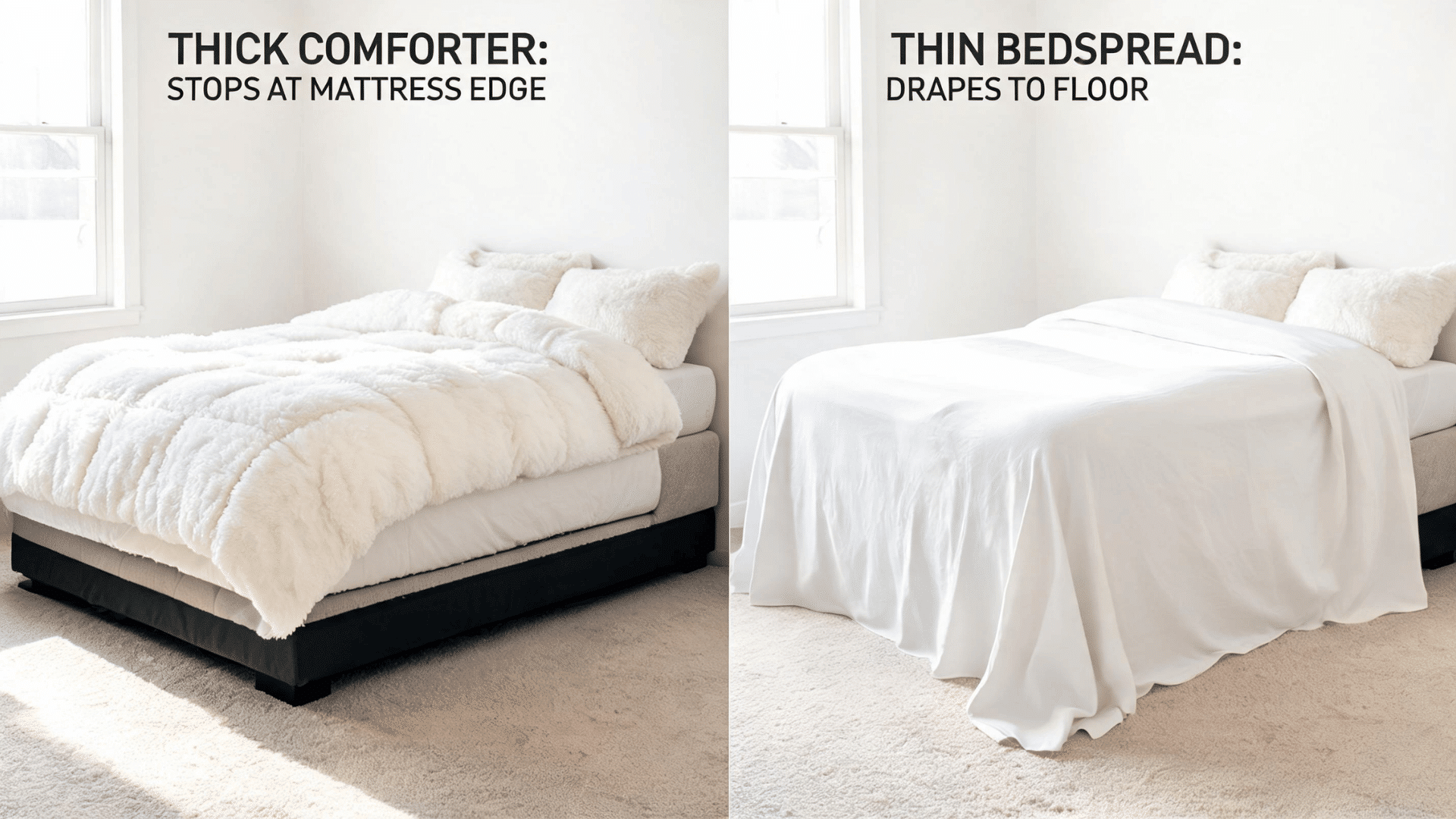
Comforters are usually much thicker and tend to hang much shorter down the sides of your mattress. On the other hand, true bedspreads are specifically designed for wider, floor-length coverage.
Knowing this difference helps you understand why a standard full comforter size will not give you the right answer when you actually want the long, draped look of a traditional full bedspread.
For a thicker layer with less side drop, full-size comforter dimensions usually work better when you want warmth without a floor-length finish.
Care Tips Before First Use
After picking the right full-size bedspread, taking proper care of it before its first use helps keep the fit looking great. If your bedding shrinks even a few inches, it can ruin that side drop and leave your bed frame exposed.
Here is a simple, comprehensive guide to washing and maintaining your new bedspread so it lasts a long time:
- Labels: Always read the tags first, since cotton shrinks easily, microfiber dries quickly, and quilted pieces need a much gentler wash.
- Tracking: Measure the width and length before and after the first wash so you can clearly see if the fabric changes size.
- Temperature: Stick to cold or cool water in the washing machine to protect the threads and keep the colors from fading.
- Drying: Skip the high-heat settings and use a low tumble-dry setting or let it air-dry to hold onto your original drop length.
- Detergent: Use a mild liquid soap instead of harsh bleach or strong powders to keep the material soft against your skin.
- Space: Check that your washer has enough room for the heavy fabric to move around freely, or take bulky items to a commercial laundromat.
- Storage: Keep your folded bedding in a dry closet, inside a breathable cotton bag, to prevent dust buildup and musty odors.
At the End
To wrap things up, a standard full mattress measures 54 inches wide by 75 inches long, but a proper full bedspread needs a much wider and longer range of 90 to 100 inches wide by 105 to 115 inches long to give you full coverage.
Instead of relying only on a package label, it is always best to measure your mattress width, length, drop, and pillow tuck yourself.
The right fit should hang neatly, cover what you want to hide, and suit your specific room size.
Please take a moment to measure your bed before you start shopping, and share your favorite drapery style in the comments section below!
Frequently Asked Questions
Can a Queen Bedspread Fit a Full Bed?
Yes, but it may hang longer on the sides. Measure your bed height first so the extra fabric does not pool on the floor.
Is Full and Double Bedding the Same?
In the US, full and double usually refer to the same mattress size. Bedding labels may still vary by brand and product type.
Should a Bedspread Touch the Floor?
It can, but it does not have to. Floor-length coverage hides the frame, while a shorter drop can make cleaning easier.
Do Full Bedspreads Shrink After Washing?
Some cotton bedspreads may shrink slightly after washing. Always read the care label and avoid high heat when the fabric requires gentle care.
What Fabric is Best for Full Bedspreads?
Cotton feels breathable, microfiber is easy to care for, and quilted fabric adds warmth. The best choice depends on the season and washing needs.