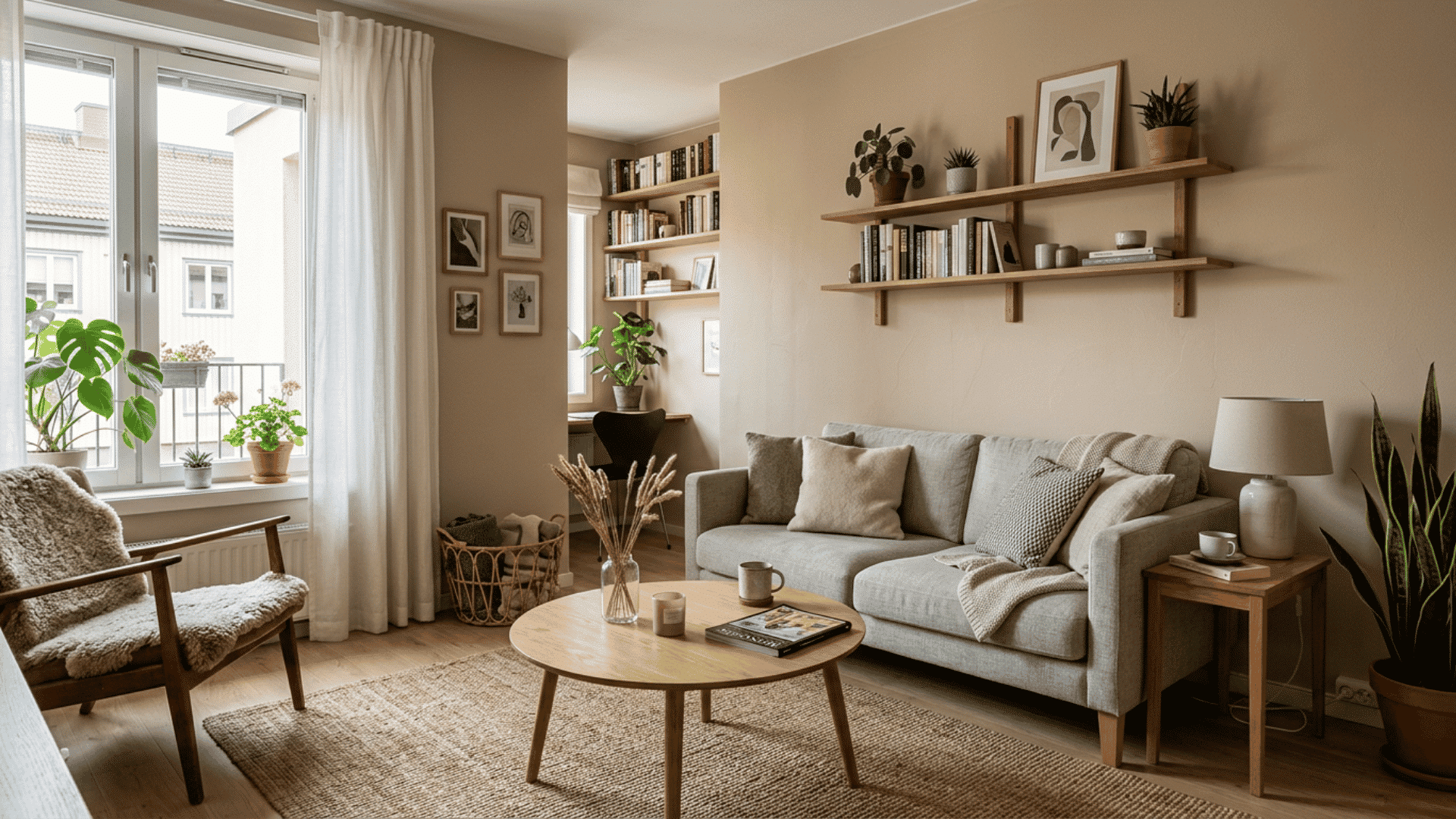
Living in a small apartment can make decorating your living room feel challenging, especially when you have just moved in and are still figuring out the best layout.
Limited space often means you have to think carefully about furniture, storage, and layout choices.
I know how difficult it can be to create a room that feels both comfortable and functional without making it look crowded.
The good news is that a few smart changes can make a big difference.
This guide will help you find practical small apartment living room ideas that help you save space, stay organized, and improve the overall look of your home.
From storage solutions and furniture tips to simple decor ideas for your living room, these are easy to try in any apartment size.
If you want a cozy setup, a modern style, or a cleaner layout, these tips will help you create a living room that feels more open, stylish, and comfortable for everyday living.
Best Small Apartment Living Room Ideas
A small living room does not have to feel cramped or boring. With the right setup, you can make your apartment feel comfortable, organized, and stylish without needing extra square footage.
These simple ideas will help you use your space better while keeping the room practical for daily life. Small changes can often make the biggest difference.
1. Choose Multi-Functional Furniture
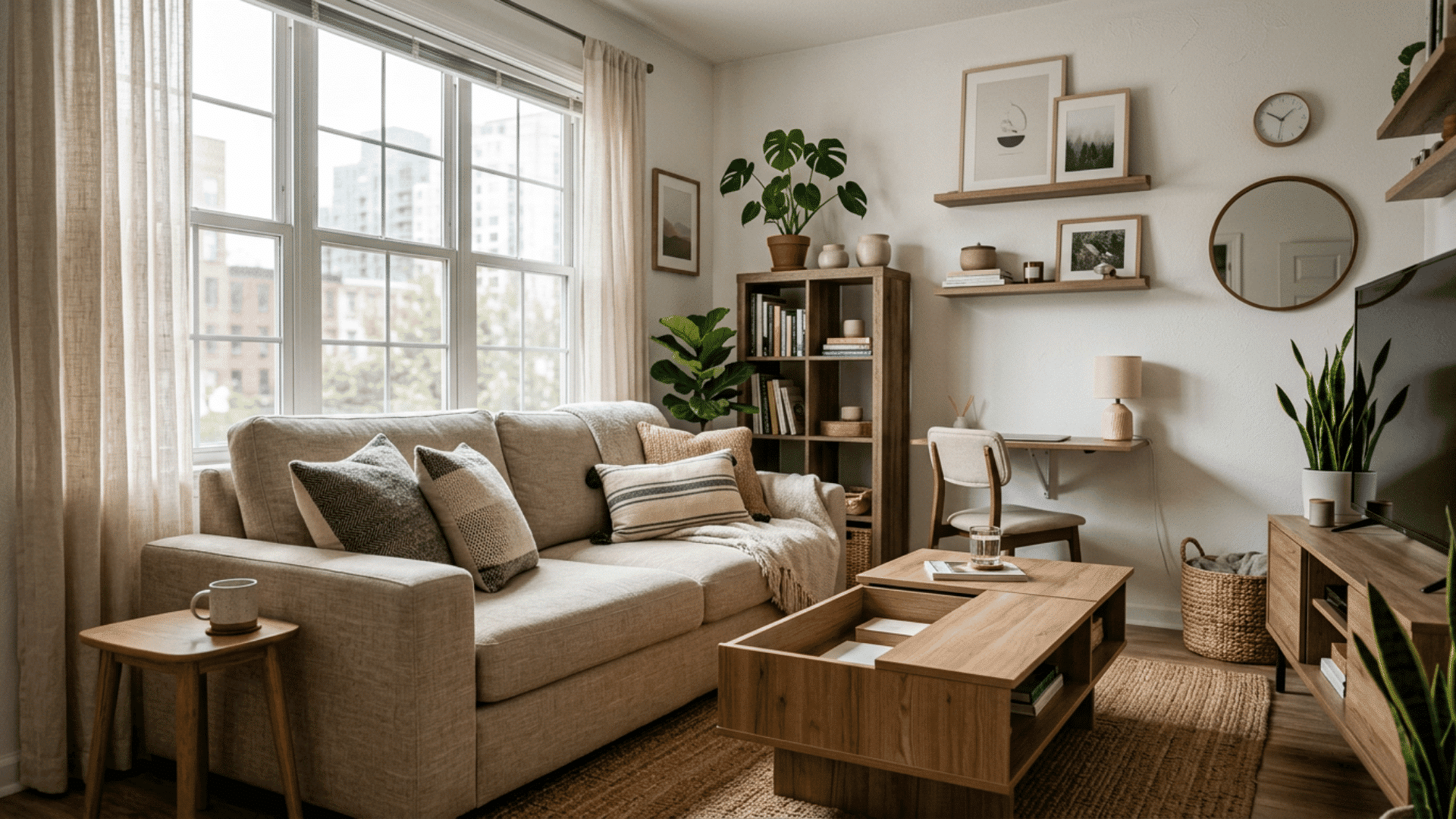
Furniture that serves multiple purposes can save a lot of space in a small apartment.
A storage ottoman gives you a place to sit while hiding blankets, books, or other everyday items. Sofa beds are useful when you have guests but do not have an extra room.
Nesting tables are another smart option because you can move or store them easily when needed. Choosing furniture with built-in storage helps keep your living room clean and organized.
I find that practical furniture often makes small spaces feel less stressful and easier to manage.
2. Use Light Colors to Open Up the Space
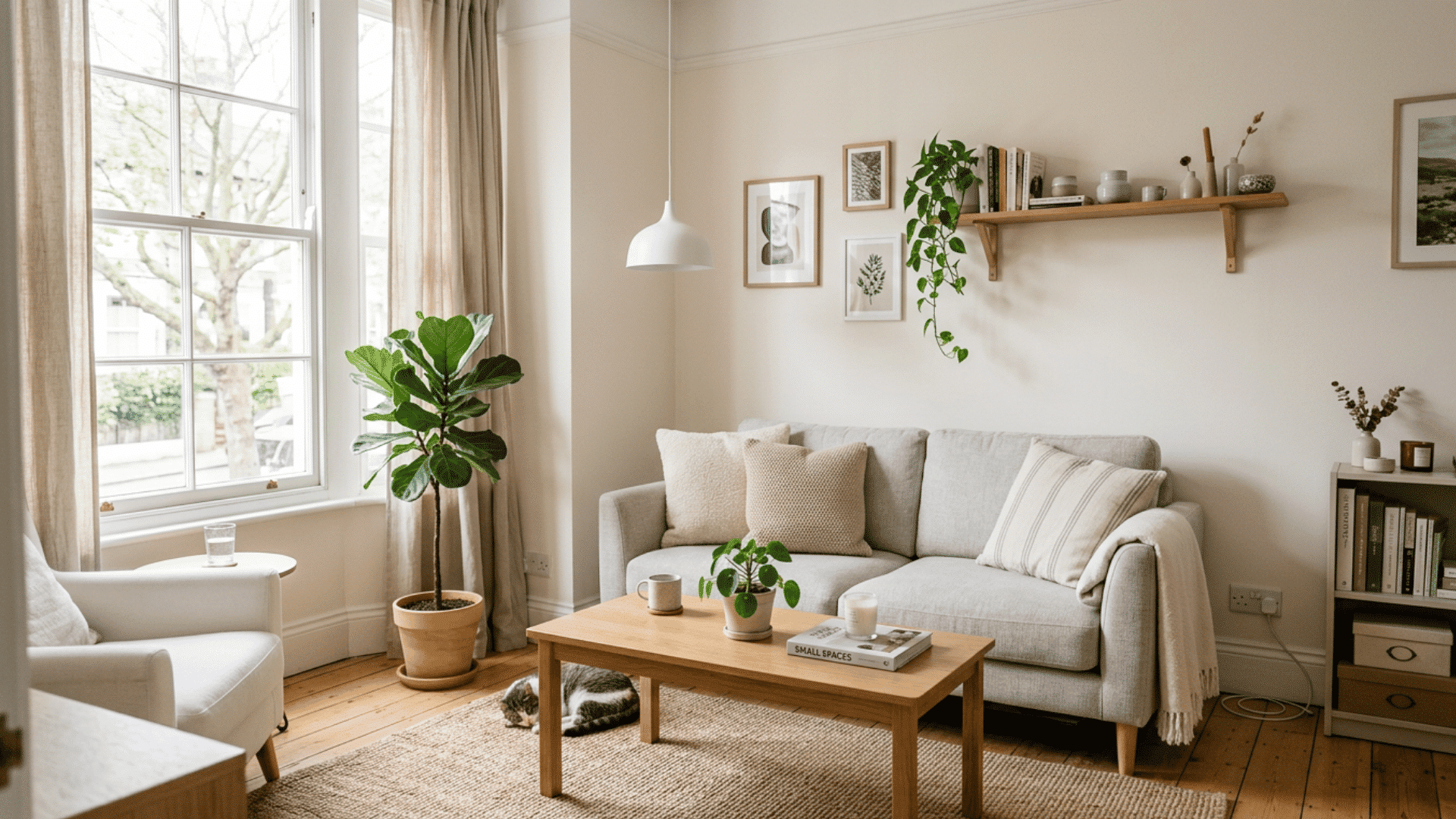
Light colors help small living rooms feel brighter and more open. Shades like white, beige, cream, and light gray reflect natural light better than dark colors.
This simple change can make your apartment feel larger without moving any furniture around.
You can use light colors on walls, rugs, curtains, or even furniture pieces. Keeping a soft color palette creates a calmer and less crowded look.
If you enjoy adding color, small accents like pillows or artwork can still bring personality into the room without making it feel busy.
3. Add Mirrors to Create Depth
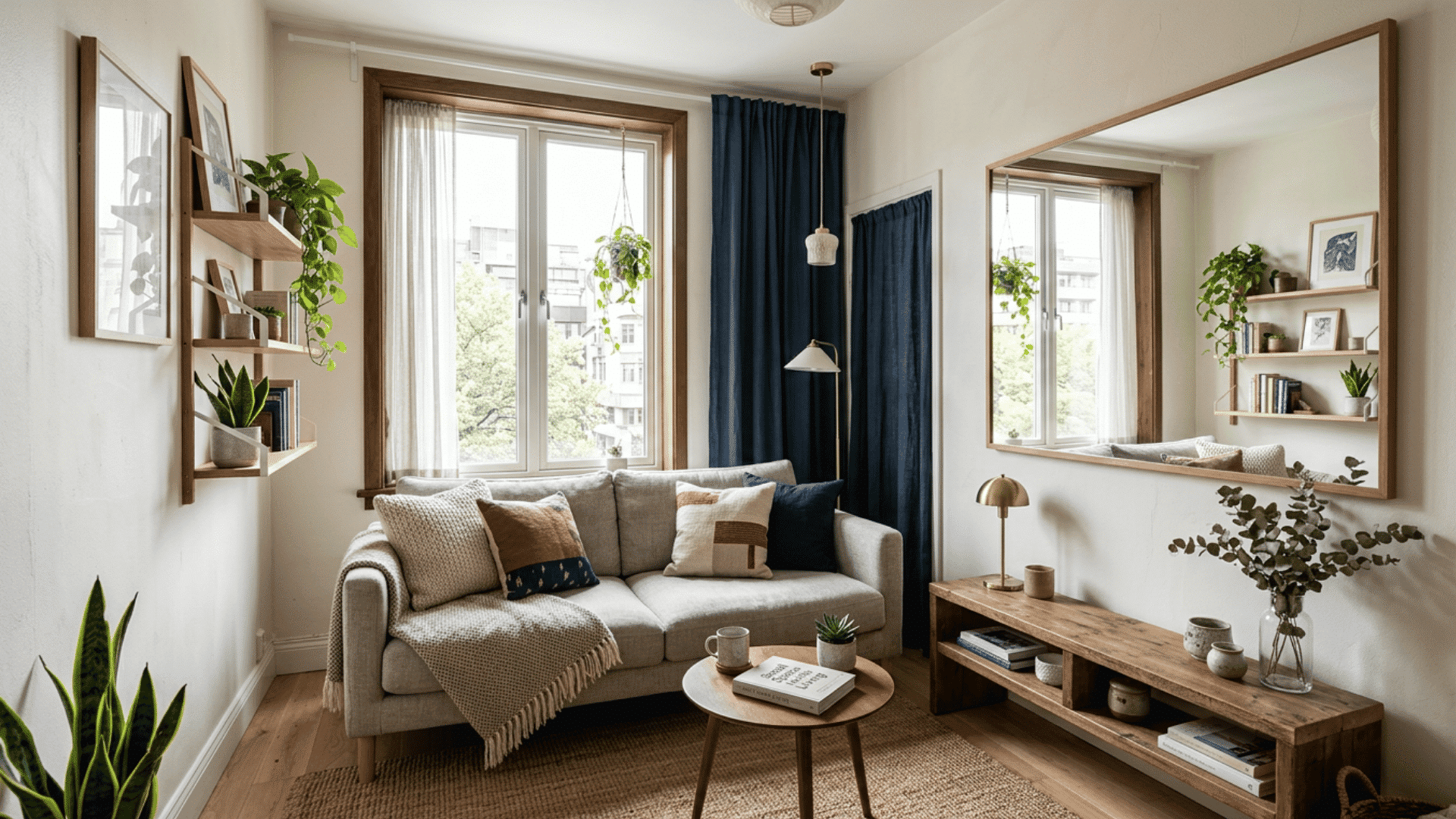
Mirrors are one of the easiest ways to make a small apartment living room appear larger.
A large mirror placed near a window can reflect sunlight, brightening the entire space during the day.
Even smaller mirrors can help create the feeling of extra depth in compact rooms. You do not need anything overly decorative for this to work well.
Simple mirror designs often blend better with small spaces while improving light and openness. I have noticed that mirrors can instantly change how narrow or closed off a room feels without requiring a big budget.
4. Maximize Vertical Storage
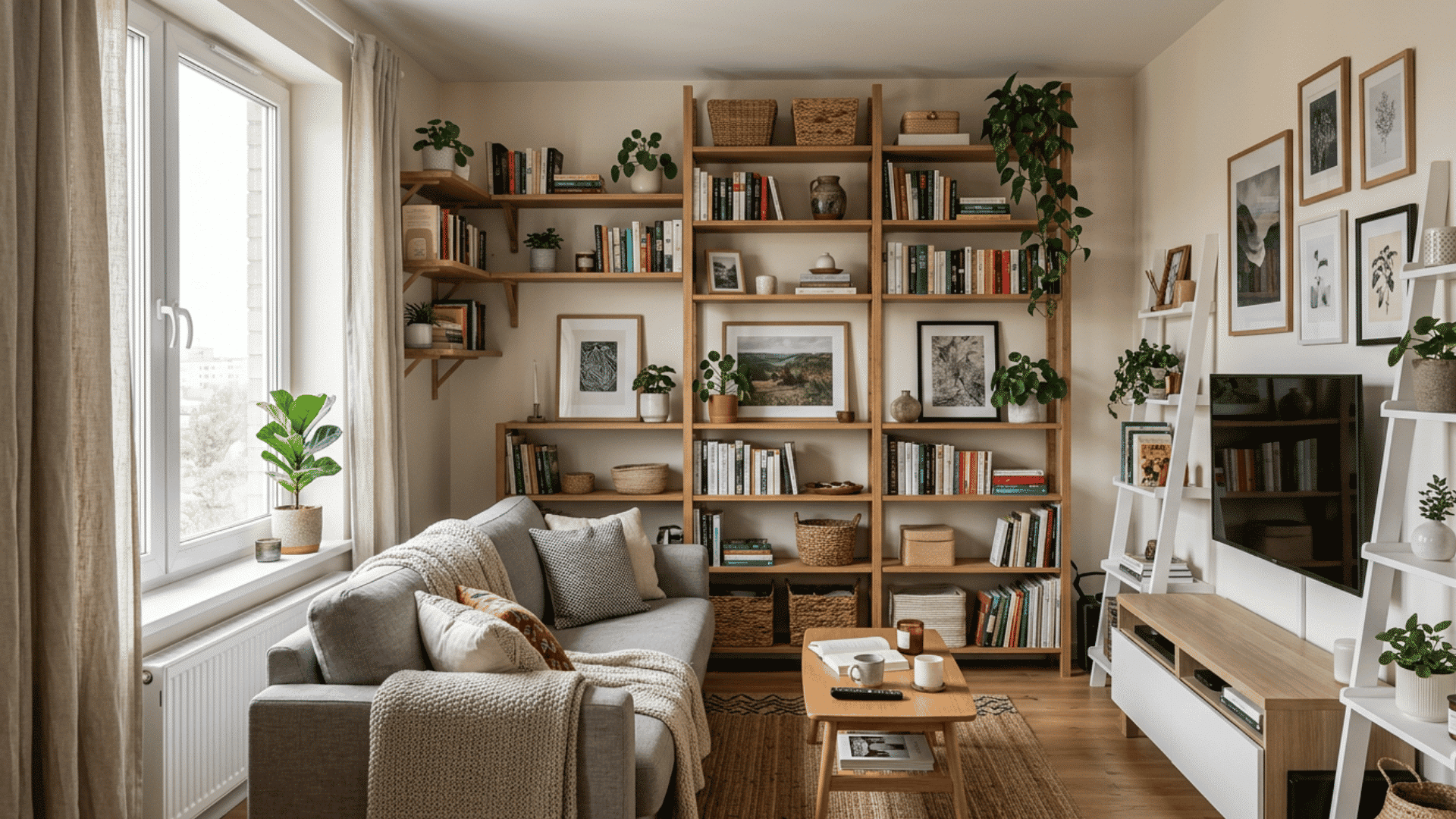
When floor space is limited, using the walls becomes important. Floating shelves, tall bookcases, and wall-mounted storage units help you organize items without taking up extra room below.
This keeps the floor area more open and easier to move around in daily. Vertical storage also works well for books, plants, baskets, or decorative pieces.
Using wall space wisely helps reduce clutter while keeping important items within reach.
Try not to overcrowd shelves, though, because too many items can make a small room feel heavier and more cramped.
5. Pick a Small-Scale Sofa
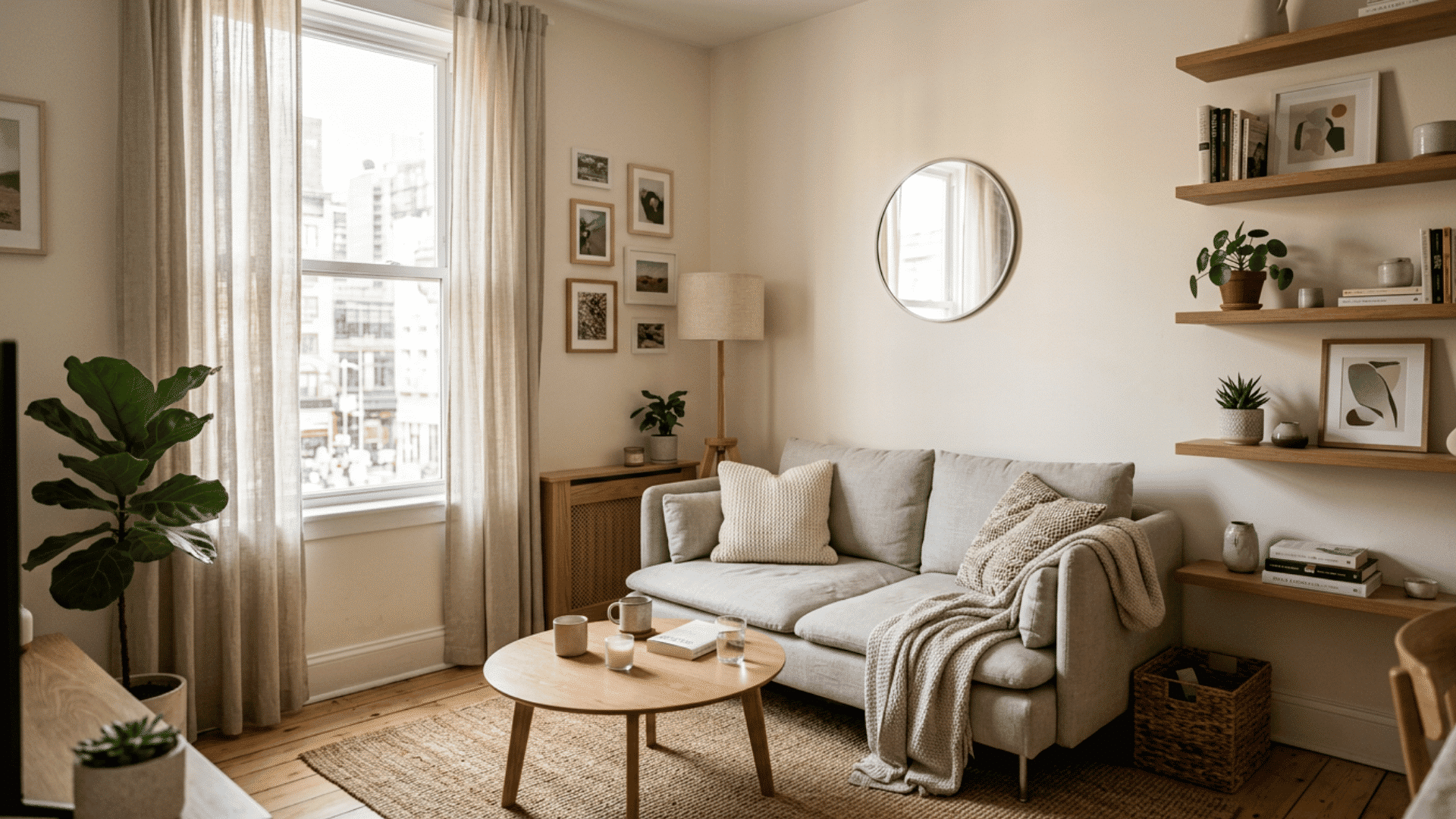
Large sofas can quickly overwhelm a small apartment living room. Instead, look for compact couches with slimmer arms and simple shapes that fit the size of the room better.
Apartment-sized seating leaves more walking space and makes the layout feel balanced. Neutral colors can also help the sofa blend naturally into the room.
A properly sized sofa improves both comfort and functionality in small spaces.
Before buying furniture, measure your room carefully so you avoid choosing pieces that block movement or make the space feel too crowded.
6. Use Foldable or Nesting Furniture
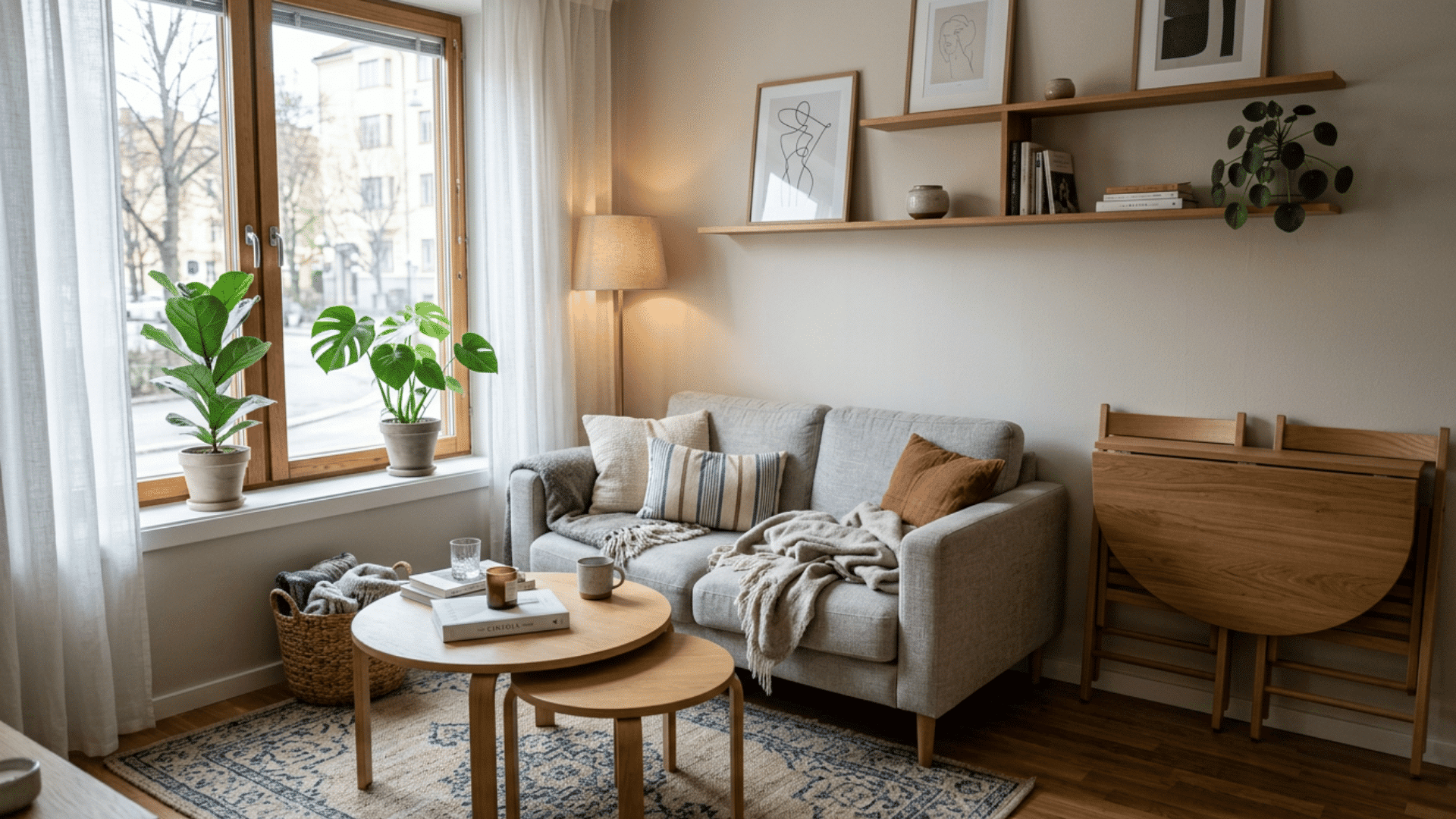
Foldable furniture gives you flexibility when you need extra space during the day.
Folding tables can be stored away after meals or work hours, while nesting tables are easy to separate or stack together when needed.
These pieces are especially useful in apartments with limited storage or shared spaces. Flexible furniture allows you to adjust your living room without adding permanent clutter.
This setup works well if you regularly switch between relaxing, working, and entertaining guests in the same room throughout the week.
7. Keep the Layout Open and Simple
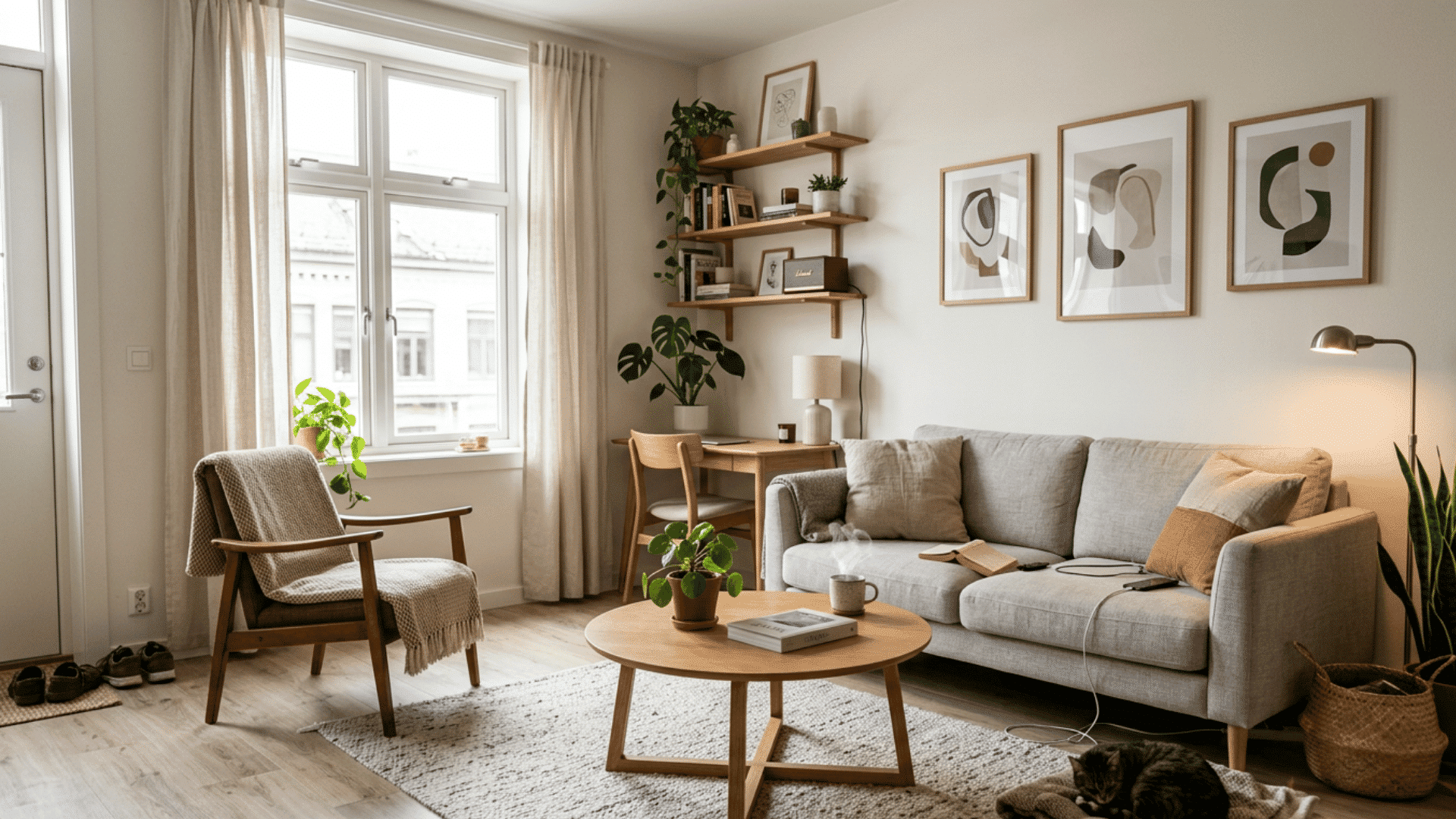
A simple furniture layout can make a small living room feel much easier to use. Avoid placing too many large pieces close together because it blocks movement and makes the space look crowded.
Leave enough room to walk comfortably between furniture items whenever possible. Keeping the center area more open often helps the room feel larger.
Good furniture placement matters just as much as the furniture itself.
Try arranging your seating around one focal point, like a window or TV, to create a cleaner and more organized layout.
8. Add Hidden Storage Solutions
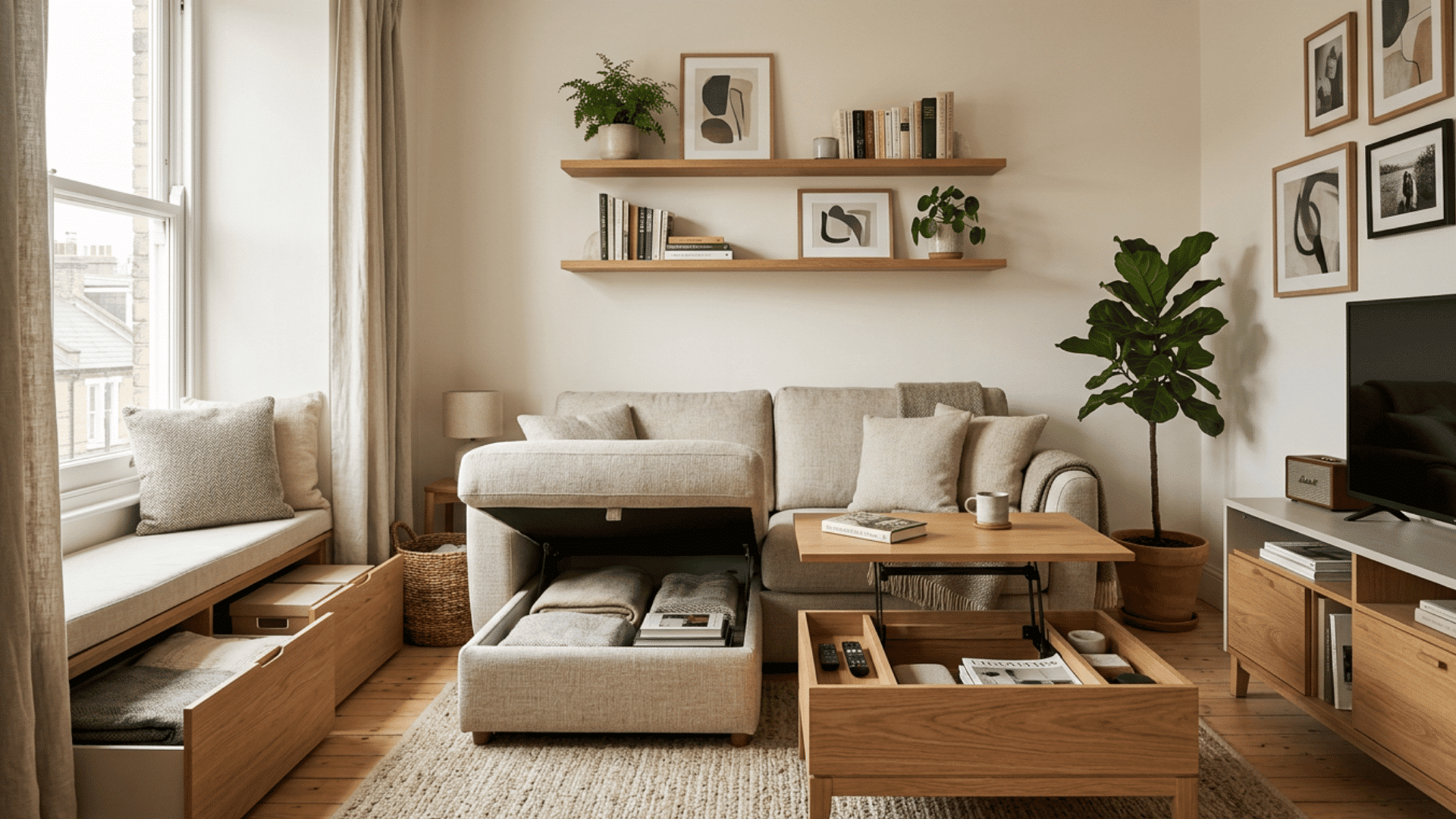
Hidden storage can help you stay organized without filling the room with visible containers or shelves.
Storage benches, coffee tables with compartments, and under-sofa bins keep extra items tucked away neatly.
This works especially well in apartments where closet space is limited. Everyday items like blankets, chargers, or magazines can stay nearby without creating clutter.
Keeping unnecessary items out of sight helps your living room feel calmer and more spacious. Even small storage additions can make daily cleaning and organizing much easier over time.
9. Hang Curtains Higher
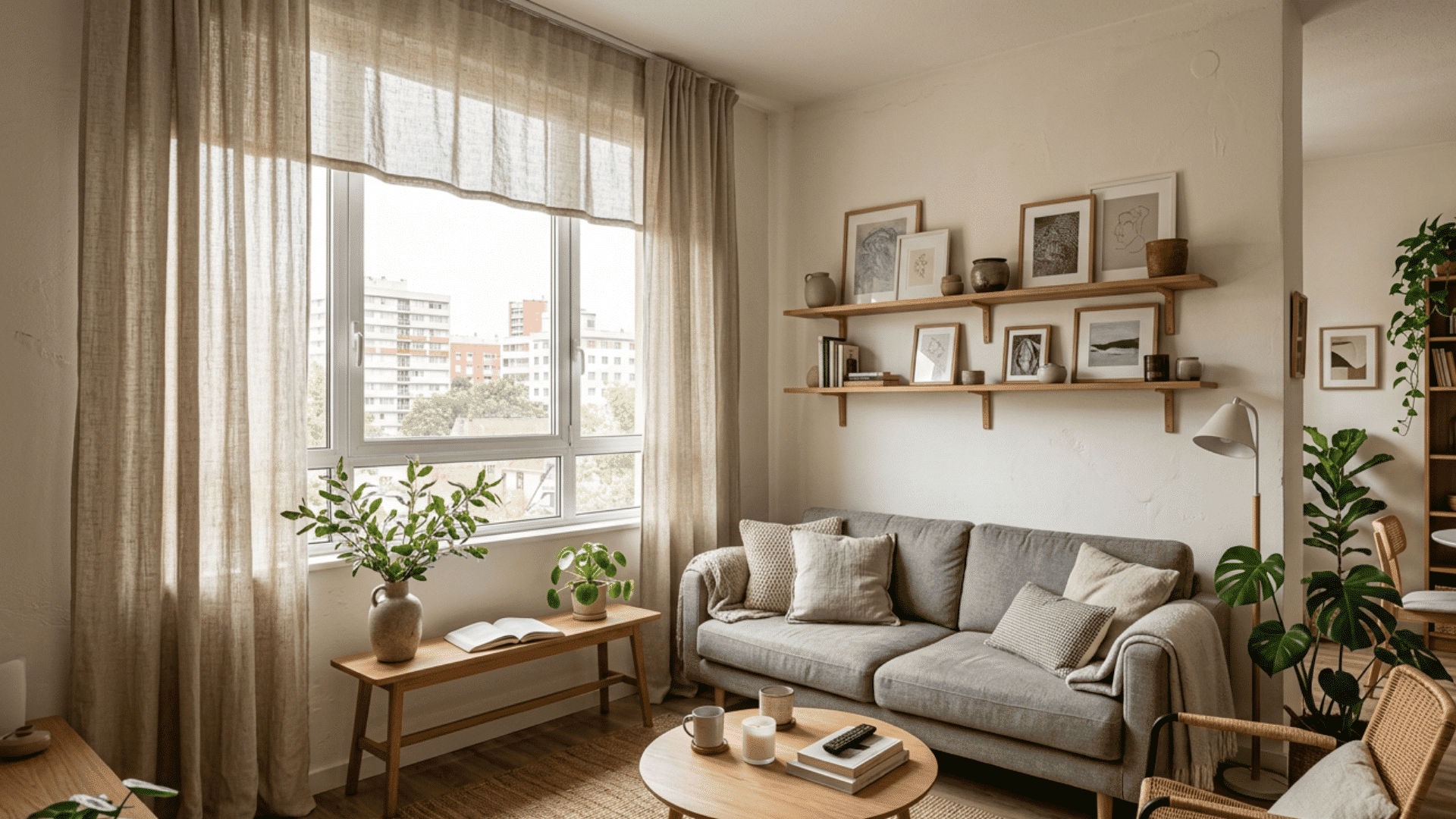
Hanging curtains closer to the ceiling creates the illusion of taller walls. This simple trick draws the eye upward and helps the room feel more open than it actually is.
Long curtains also add softness to small apartment living rooms without taking up floor space.
Light fabrics usually work best because they allow more sunlight to enter the room. Higher curtain placement can visually expand small spaces without major changes.
Try extending the curtain rod slightly wider than the window to make the area feel larger and brighter overall.
10. Create Zones With Rugs
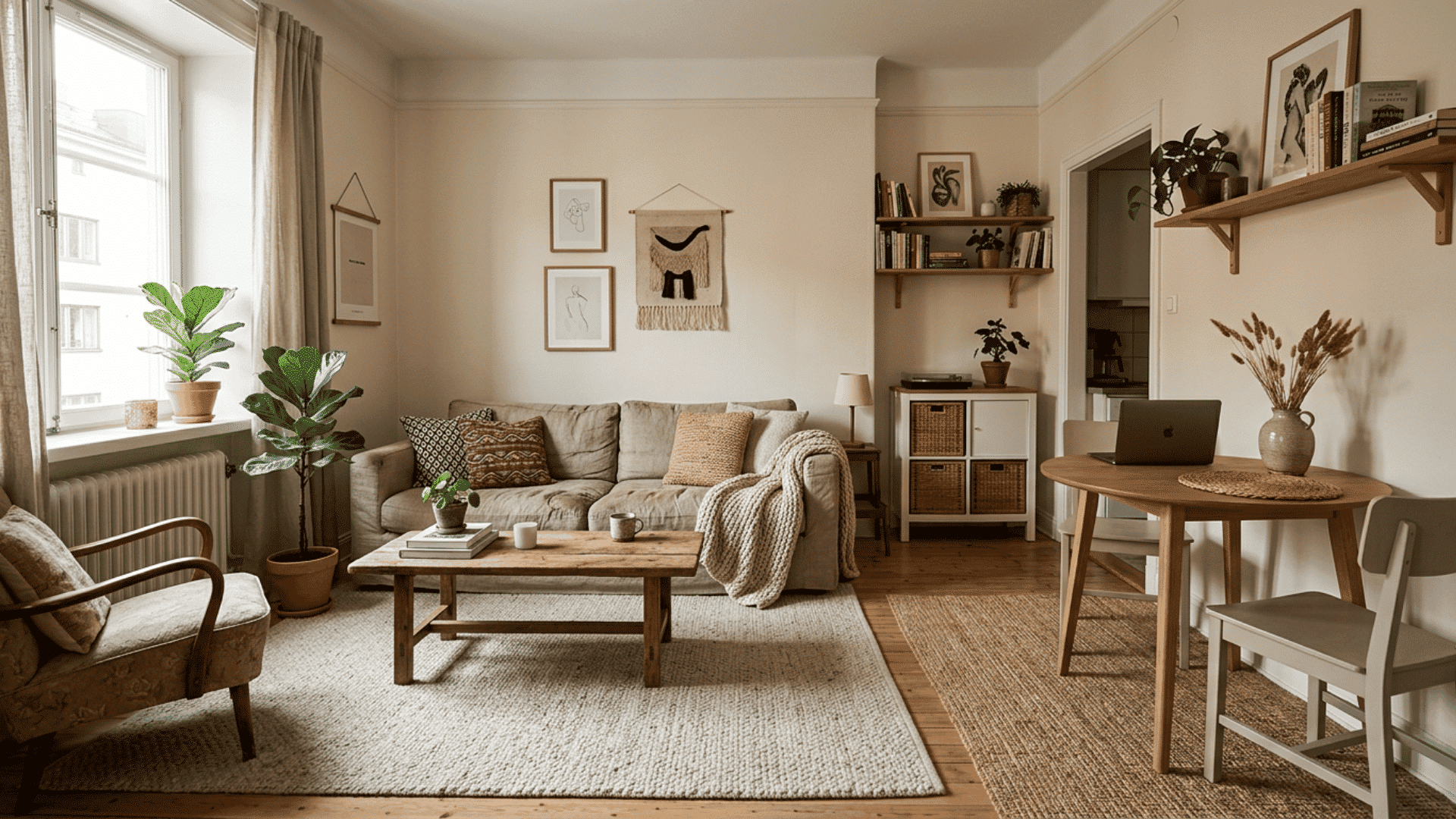
Rugs can help separate areas in studio apartments or open-plan spaces without using walls or dividers.
A rug under your seating area creates a clear living room zone while helping the space feel more organized.
This makes the apartment easier to move through visually and functionally. Choose a rug size that fits your furniture layout instead of one that feels too small.
Area rugs help define spaces while adding comfort and texture to the room. Simple patterns or neutral colors usually work best in smaller living rooms.
11. Let Natural Light In
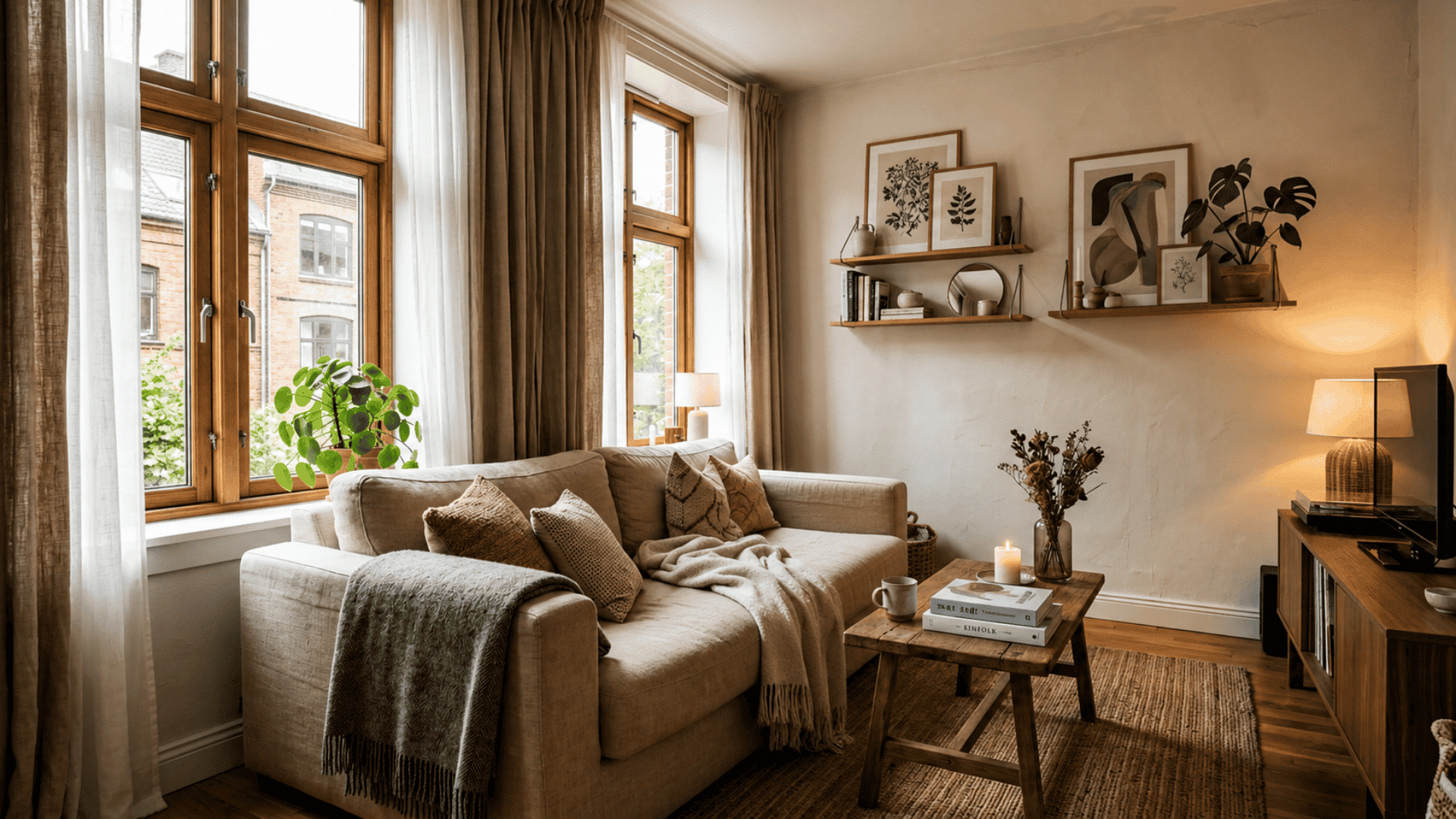
Natural light can make a small apartment feel more open and comfortable during the day.
Avoid placing large furniture directly in front of windows because it blocks sunlight from spreading across the room. Sheer curtains or lighter window coverings also help maintain brightness without removing privacy completely.
A brighter room often feels cleaner, larger, and more welcoming.
If your apartment has limited natural light, adding reflective surfaces or lighter decor can still help improve the overall feel of the space without making it look overly decorated.
12. Use Wall-Mounted Lighting
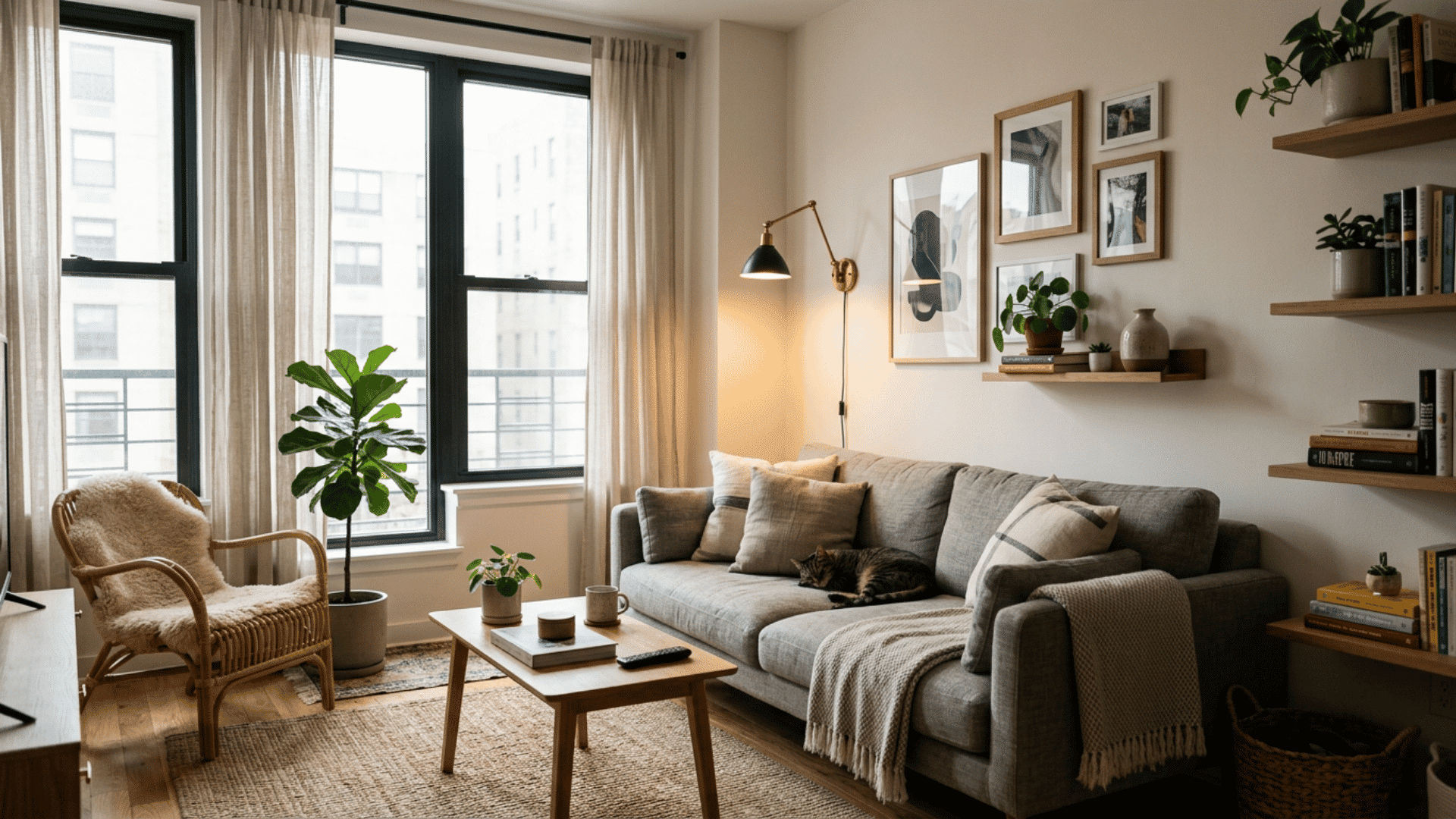
Wall-mounted lighting saves valuable floor and table space in smaller apartments.
Sconces, hanging lights, or mounted reading lamps provide enough light while keeping surfaces clear for other uses.
This setup also reduces visual clutter caused by extra floor lamps or bulky table lamps. Using wall lighting helps small living rooms feel cleaner and more functional.
You can place lighting near seating areas, shelves, or corners where extra brightness is needed most. Good lighting makes a big difference in how comfortable and practical your living room feels.
13. Decorate With Minimal Accessories
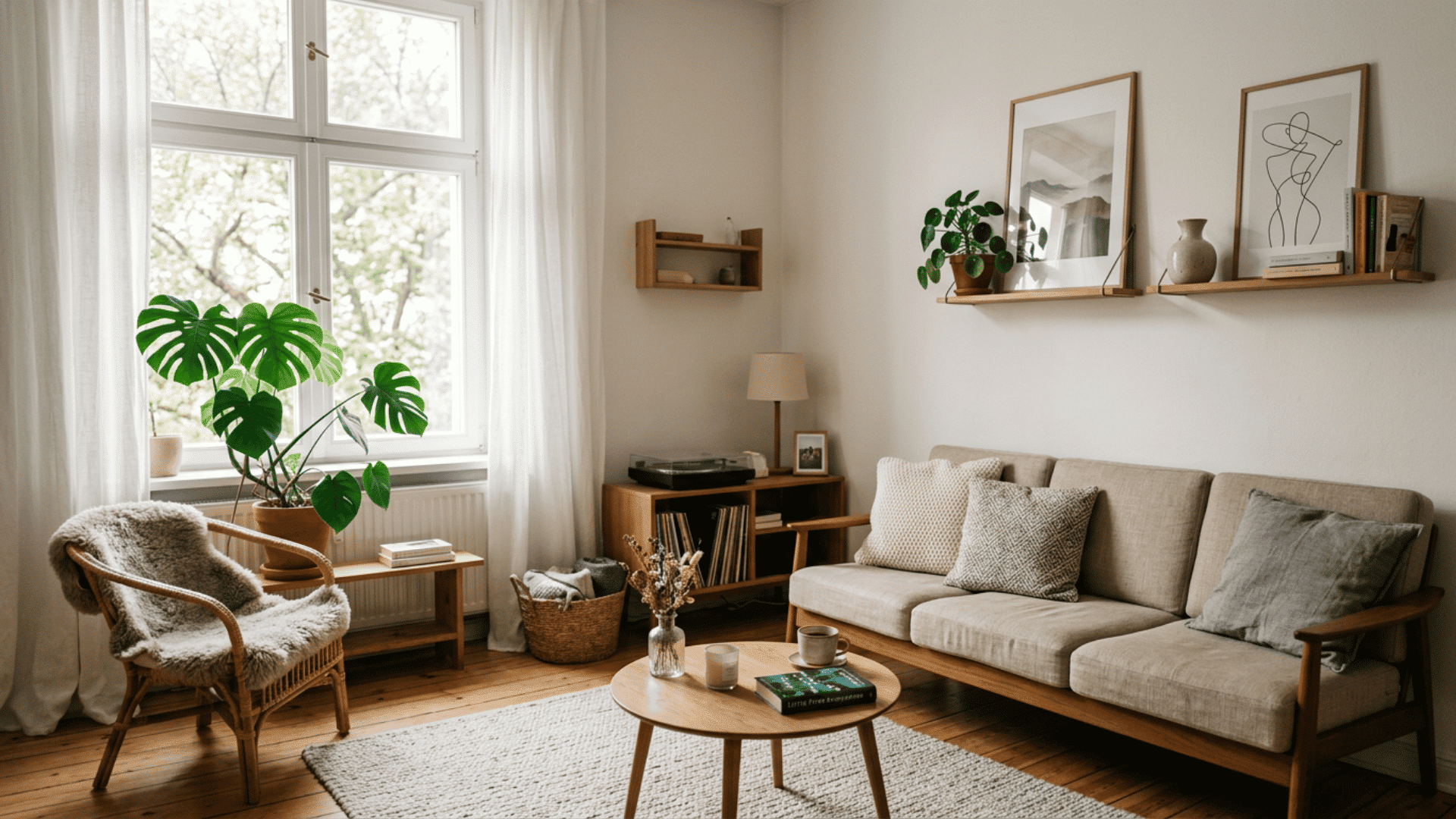
Too many decorations can quickly make a small living room feel messy or crowded.
Instead of filling every shelf or wall, focus on a few pieces that add personality without overwhelming the space.
A framed print, textured pillow, or small plant can still make the room feel inviting. Keeping decor simple helps maintain a cleaner and more balanced look.
I prefer choosing accessories that are both useful and decorative because they help small apartments feel practical while still showing personal style in a natural way.
14. Try a Minimalist Design Style
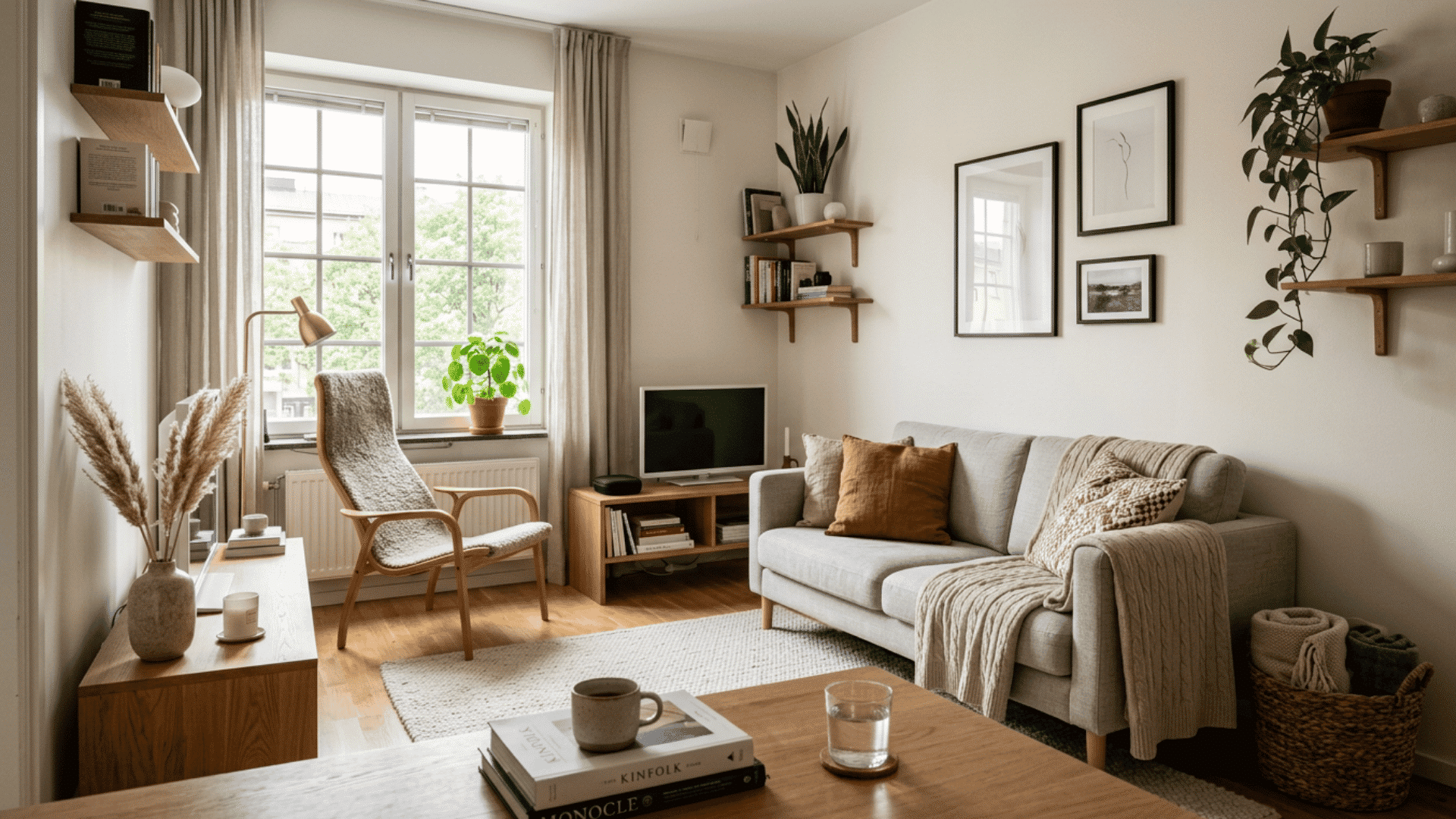
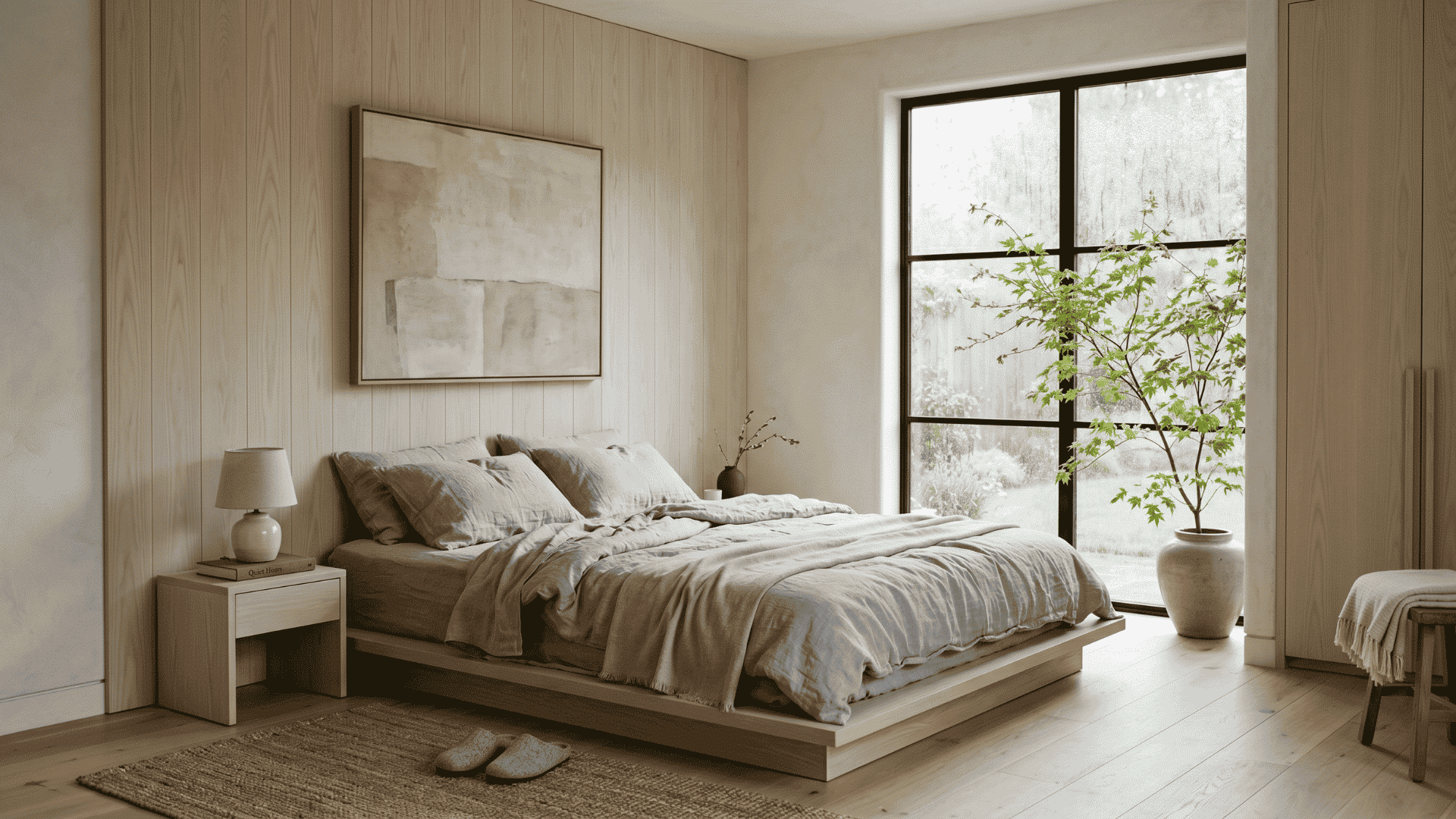
Minimalist design works well in small apartments because it focuses on simplicity and function.
Clean lines, limited decor, and organized surfaces help the room feel more open and easier to maintain daily.
This style does not mean your living room has to feel empty or cold. It simply encourages keeping only what you truly use or enjoy.
A minimalist setup reduces visual clutter and creates a more relaxing space. Neutral colors and simple furniture choices usually make minimalist living rooms feel calm, practical, and comfortable for everyday life.
15. Add Plants for a Fresh Look
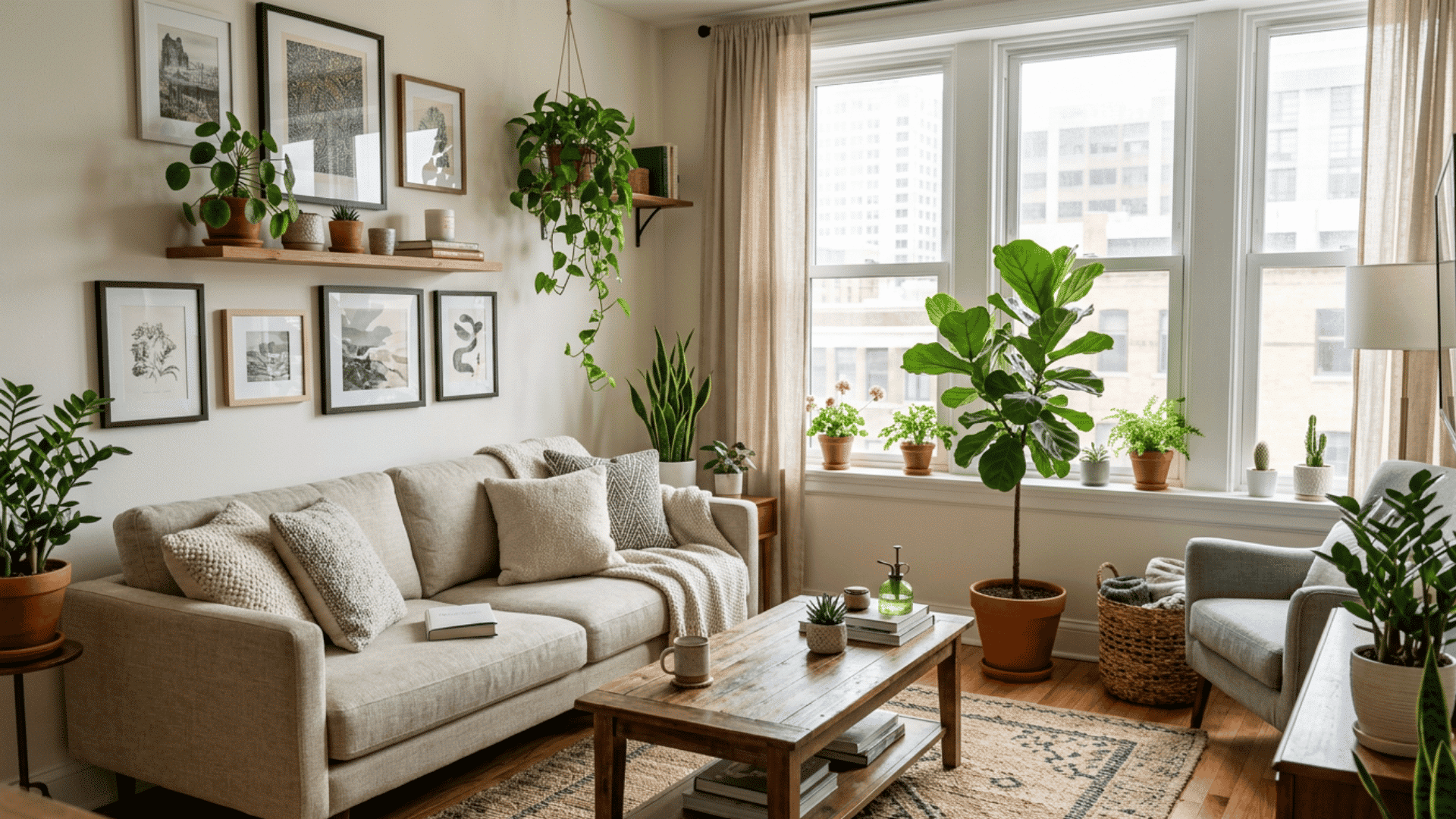
Small indoor plants can bring life into your apartment living room without taking up much space.
Plants add color, texture, and a natural feel that softens compact areas. You can place them on shelves, side tables, or window ledges, depending on the amount of light available.
Even a few small plants can make a room feel fresher and more welcoming.
Low-maintenance plants like pothos, snake plants, or succulents are good options if you want something easy to care for in a busy apartment lifestyle.
16. Use Transparent Furniture
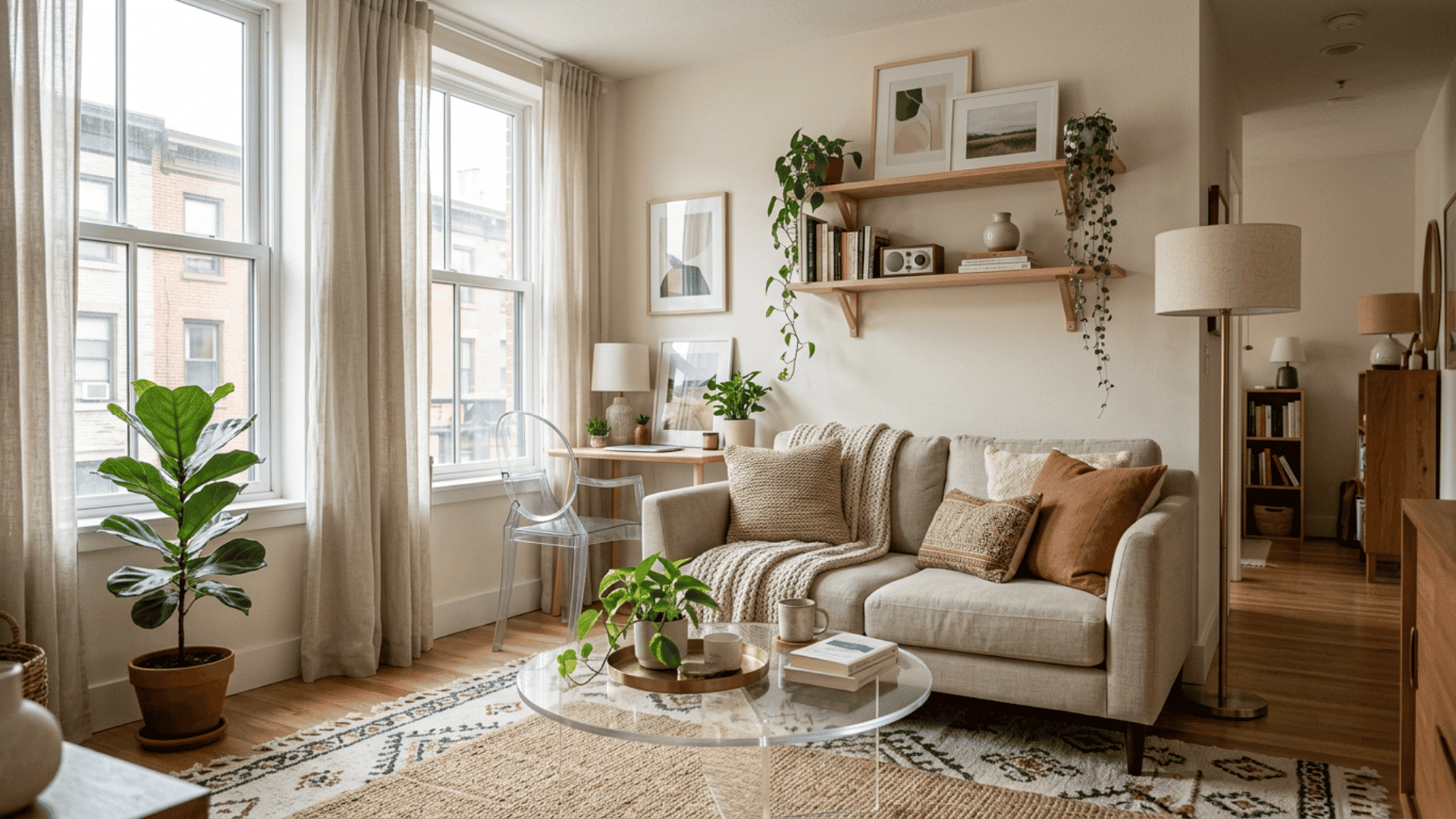
Transparent furniture can make a small living room feel less crowded because it takes up less visual space.
Glass coffee tables or clear acrylic chairs allow light to pass through, helping the room appear more open.
These pieces blend easily with many design styles and work especially well in compact apartments.
Furniture that feels visually lighter can improve the overall flow of a small room. Transparent pieces are useful when you want functionality without making the living area feel too heavy or overly packed with furniture.
17. Invest in Modular Furniture
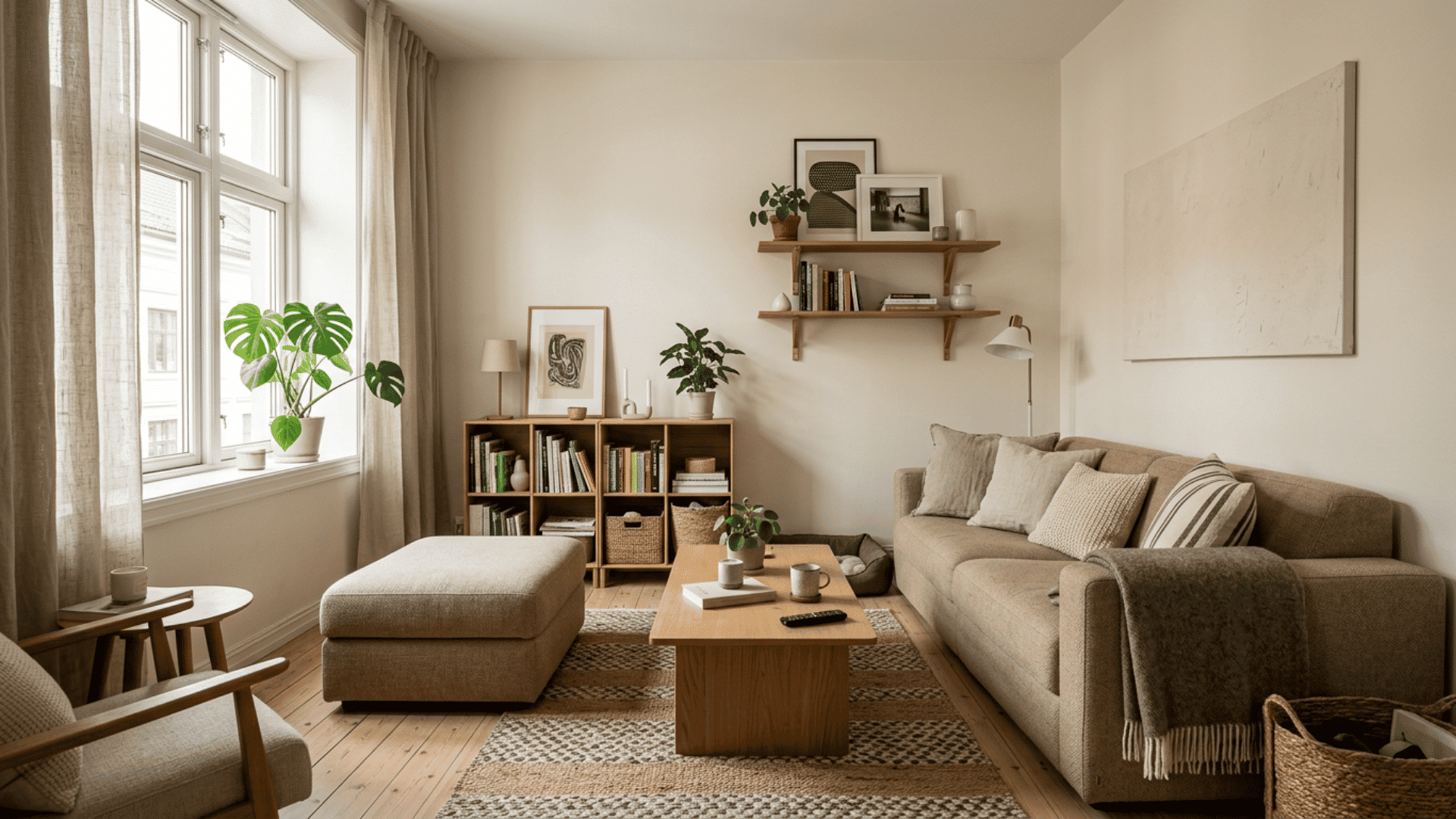
Modular furniture gives you more flexibility in a small apartment. Sectional seating, movable storage units, or adjustable tables can adapt to different layouts and daily needs.
This is helpful if you often rearrange your living room or need furniture that works for multiple purposes.
Modular pieces make it easier to change your setup without buying new furniture.
Some designs also include hidden storage or detachable sections, which add even more function to limited spaces while keeping the room organized and comfortable.
18. Utilize Corners Efficiently
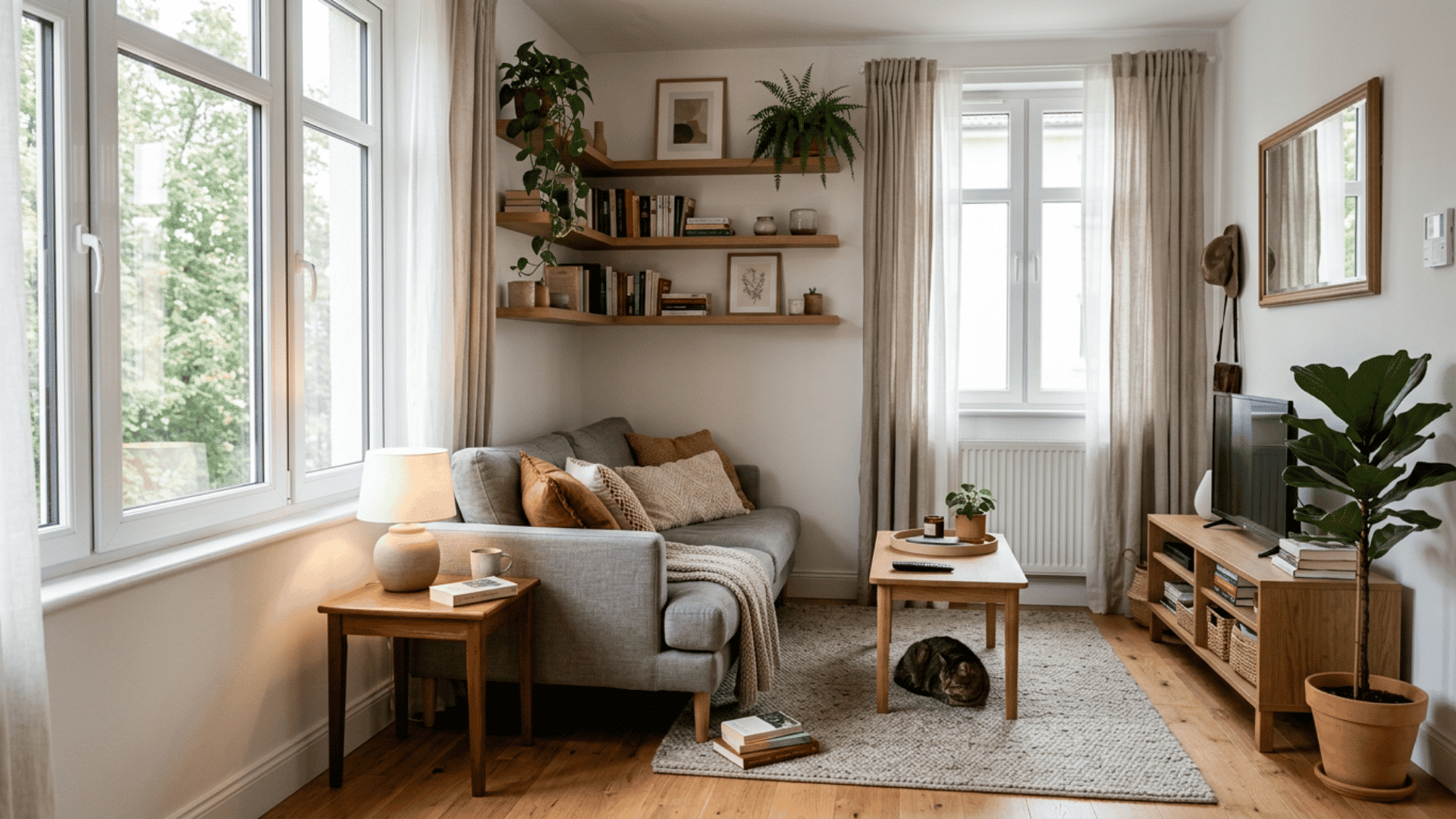
Corners are often unused in small living rooms, but they can provide valuable extra space. Corner shelves, compact desks, or small accent chairs help make better use of every part of the room.
Even a small corner table can create additional storage or display space without blocking movement. Using corners wisely helps maximize the full layout of your apartment.
Try keeping corner furniture simple and properly sized so the area still feels open instead of crowded or difficult to move around comfortably.
19. Keep Clutter Hidden and Organized
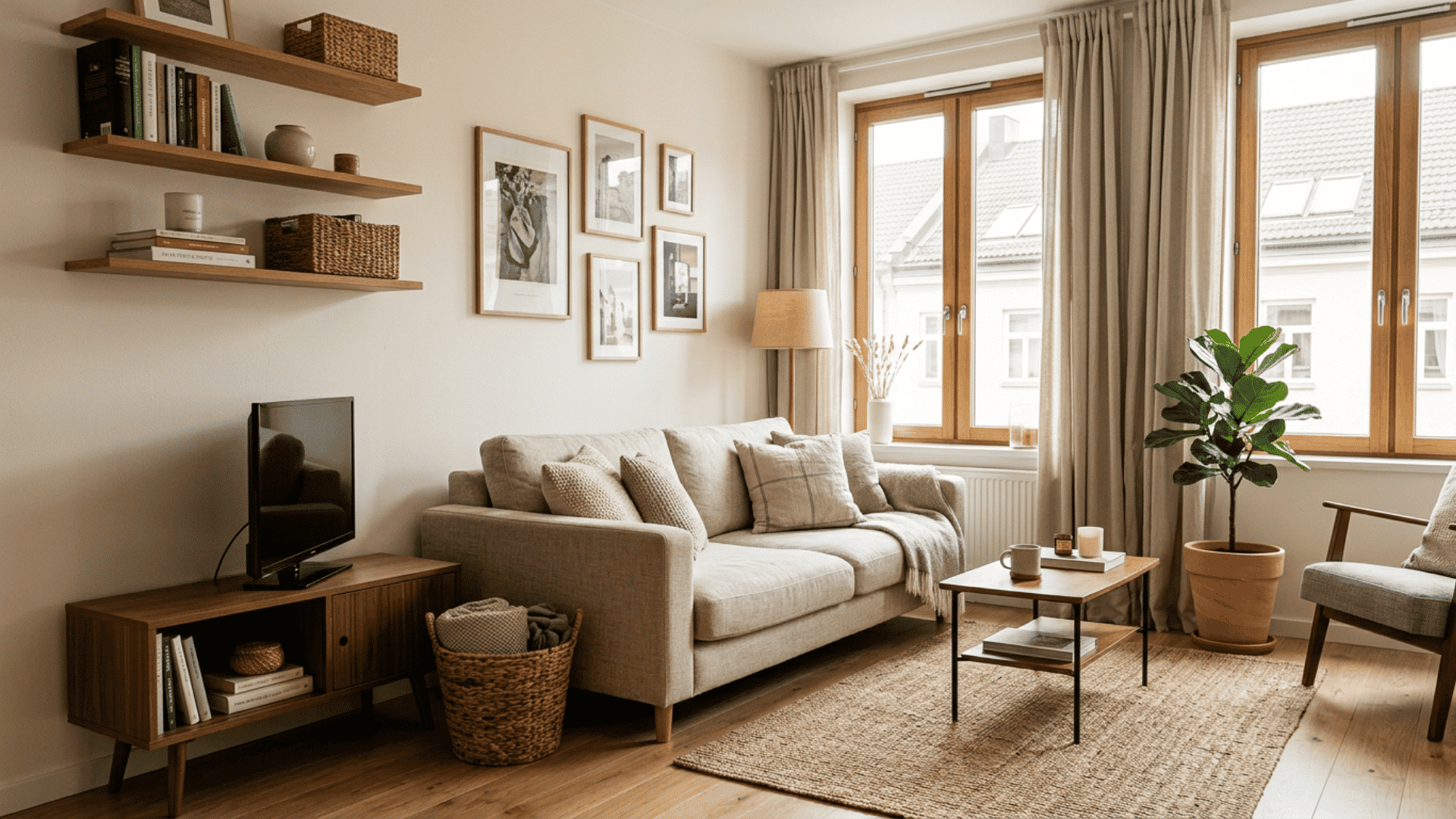
Clutter can make even a decent-sized room feel smaller and more stressful. Baskets, cabinets, organizers, and storage boxes help keep everyday items neat and out of sight.
Having a regular place for blankets, electronics, or paperwork also makes cleaning faster and easier.
An organized living room usually feels larger and more relaxing to spend time in. Small apartments work best when every item has a purpose and a storage spot.
Simple organization habits can make your space feel more comfortable every single day.
Renter-Friendly Living Room Ideas
Small rental-friendly changes can help your apartment feel more comfortable and personal.
The ideas below focus on simple updates that work well without making permanent changes.
- Removable Wall Decor: Use peel-and-stick wallpaper, removable hooks, or framed prints to decorate walls without causing damage. These options are easy to update later and work well in rental spaces.
- Lightweight Furniture: Choose compact furniture that is easy to move and fits your apartment layout properly. Smaller pieces help the room feel more open and practical.
- Layered Lighting: Add floor lamps, table lamps, or battery-powered lights to improve brightness without installing new fixtures. Good lighting makes the room feel warmer and more comfortable.
- Storage Ottomans and Baskets: Use furniture with hidden storage to reduce clutter while saving space. Practical storage solutions help keep small apartments organized every day.
- Area Rugs for Warmth: Rugs help define the living room area and make the apartment feel cozier. They also cover plain flooring without needing permanent updates.
- Curtains for a Softer Look: Hang simple curtains to add texture, privacy, and softness to the room. Light-colored fabrics can also make the space feel brighter.
- Indoor Plants: Small plants bring natural color into your apartment without taking up much room. They work well on shelves, side tables, or windowsills.
- Mirrors to Brighten the Room: Place mirrors near windows to reflect light and make the living room appear larger. This is an easy way to improve small spaces.
- Floating Shelves With No Damage Options: Use renter-friendly adhesive shelves or leaning shelves for extra storage and decor space. These help maximize vertical space without drilling.
- Neutral Color Decor: Stick to simple neutral tones for furniture and accessories to create a calm and balanced look. Light colors help small living rooms feel cleaner and more spacious.
Common Small Apartment Living Room Mistakes to Avoid
Here are some common mistakes that people make and how you can avoid them
| Mistake | How to Avoid It |
|---|---|
| Using Oversized Furniture | Choose compact furniture with slim designs that fit the size of your apartment’s living room properly. |
| Blocking Natural Light | Keep large furniture away from windows and use light curtains to allow more sunlight into the room. |
| Adding Too Much Decor | Stick to a few meaningful decor pieces instead of filling every shelf and wall. |
| Ignoring Storage Needs | Use storage ottomans, baskets, and floating shelves to keep clutter organized and hidden. |
| Choosing Dark Colors Everywhere | Use lighter wall colors, rugs, and furniture to make the room feel brighter and more open. |
| Pushing Furniture Against Walls | Leave small gaps between furniture and walls to create a more natural and balanced layout. |
| Using Tiny Rugs | Pick a rug large enough to fit under at least the front legs of your seating furniture. |
| Poor Lighting Choices | Add floor lamps, table lamps, or wall lights to create layered lighting throughout the room. |
| Overcrowding Shelves and Surfaces | Leave some empty space on shelves and tables so the room feels cleaner and less busy. |
| Ignoring Furniture Layout | Arrange furniture to keep walkways open and make movement around the room easier. |
| Using Too Many Patterns | Mix simple patterns with solid colors to avoid making the room feel visually crowded. |
| Buying Furniture Without Measuring | Measure your living room before buying furniture to avoid pieces that are too large for the space. |
| Keeping Unnecessary Items | Regularly remove items you no longer use to keep the living room organized and functional. |
| Not Using Vertical Space | Add tall shelves or wall-mounted storage to maximize space without taking up extra floor room. |
| Choosing Heavy Curtains | Use light fabrics or sheer curtains to help the room feel brighter and less closed in. |
Final Tips to Create a Cozy Apartment Living Room
A few thoughtful updates can make your apartment feel more comfortable and functional. Focus on practical choices that improve both comfort and daily use without overcrowding the space.
- Keep the Layout Open: Leave enough walking space between furniture pieces so the room feels easier to move around in and less crowded.
- Use Warm Lighting: Table lamps, wall lights, and soft bulbs help create a more comfortable atmosphere in the evening. Layered lighting makes small living rooms feel more inviting.
- Choose Comfortable Textures: Add cushions, rugs, and throws with soft fabrics to make the space feel relaxed without adding unnecessary decor.
- Stick to Simple Colors: Neutral or soft color palettes help the room feel balanced and visually cleaner. Too many bold colors can make compact spaces feel busy.
- Add Functional Storage: Use baskets, storage ottomans, or shelves to keep everyday items organized while saving space. Good storage helps your apartment stay tidy without extra effort.
- Let in Natural Light: Keep windows clear during the day to make the room feel brighter and more open.
- Use Plants Sparingly: A few small indoor plants can add freshness and texture without taking over the room.
- Avoid Overdecorating: Leave some empty space on shelves and walls so the living room feels cleaner and more comfortable.
- Focus on Everyday Comfort: Choose furniture and decor that fit your daily routine instead of filling the room with unnecessary items.
Frequently Asked Questions
What is the 2/3 Rule for a Living Room?
The 2/3 rule means furniture, artwork, or rugs should cover about two-thirds of the related space. This helps the living room feel balanced, without overcrowding it.
What are 5 Things Making a Living Room Look Dated?
Heavy curtains, bulky furniture, dark wall colors, outdated lighting, and too many matching furniture sets can make a living room feel old-fashioned.
What Makes a Living Room Look Cluttered?
Too much furniture, crowded shelves, visible cords, excessive decor, and poor storage can make a living room feel cluttered.
Can You Make a Small Apartment Living Room Look Expensive?
Yes, you can use neutral colors, layered lighting, mirrors, and textured fabrics to create a more polished look without spending a large amount on furniture or decor.
What Type of Furniture Works Best in Small Apartments?
Furniture with storage, slim designs, and multiple functions works best in compact apartments.
How Often Should You Declutter a Small Living Room?
It helps to declutter every few weeks to prevent unnecessary items from building up. Regular organization keeps your apartment feeling cleaner.
Are Open Shelves Good for Small Apartment Living Rooms?
Yes, open shelves can save space and improve storage when styled carefully. Avoid overcrowding them so the room still feels open, balanced, and visually clean.