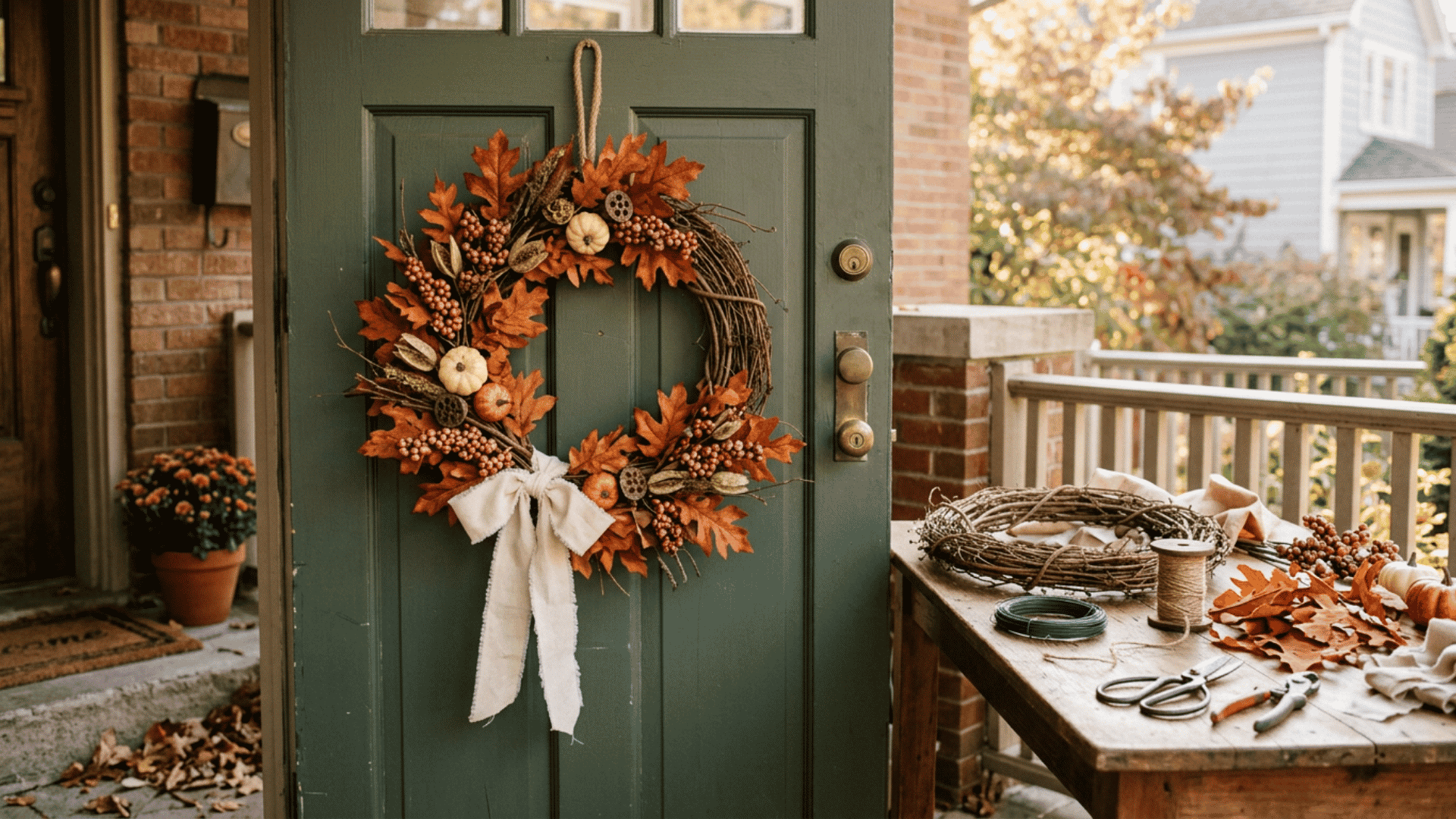
A DIY fall wreath is an easy way to bring autumn color to your home without buying expensive seasonal decor. You can make one with a grapevine base, a few fall stems, floral wire, and whatever details suit your style.
If you are a beginner, start simple. Choose two or three colors, arrange the largest pieces before attaching anything, then fill the gaps with smaller leaves, berries, flowers, or ribbon.
Below, I will walk you through the process step by step. After that, you will find 15 fall wreath ideas ranging from classic orange leaves to neutral, rustic, floral, and modern designs.
What Do You Need to Make a DIY Fall Wreath?
You do not need a long list of craft supplies to get started. A simple grapevine wreath works especially well for beginners because stems can be tucked between the vines before you secure them.
Gather these basic supplies:
- Grapevine wreath form
- Faux or dried fall stems
- Floral wire
- Wire cutters or garden snips
- Hot glue gun and glue sticks
- Ribbon, optional
- Small pumpkins, berries, pinecones, or other accents, optional
You will not need every material on this list. Choose supplies based on the wreath style you want to make.
How Do You Make a Fall Wreath Step by Step?
The easiest method is to build the wreath in layers. Start with the base and larger foliage, then add focal pieces and small details once the overall shape looks balanced.
1. Choose Your Wreath Base

A grapevine wreath is a good starting point because it already has texture and plenty of spaces for inserting stems. You can also use a wire, foam, or straw form, but these may need more wrapping or securing before decorations can be added.
For your first wreath, I would choose grapevine because you can reposition stems easily before committing to the final layout.
2. Pick a Fall Color Palette

Choose two or three main colors before attaching anything. This keeps the wreath from becoming visually busy.
Easy combinations include:
- Burnt orange, cream, and brown
- Burgundy, rust, and gold
- Sage, beige, and muted orange
- Wheat, ivory, and tan
- Deep green, copper, and burgundy
You can always add small accents later, but starting with a limited palette makes the finished design feel more intentional.
If you want more inspiration for combining rust, cream, brown, and muted green, these living room fall decor ideas show how the same autumn colors can work throughout your home.
3. Arrange the Main Stems First

Lay your largest leaves, branches, flowers, and greenery around the wreath before using glue or wire.
Move them until the shape feels balanced. You might decorate the whole wreath, concentrate everything around the bottom, or cover only one side.
Take a quick photo before attaching anything. It can help you notice areas that look too heavy or empty.
4. Attach the Greenery and Foliage

Begin with the longest greenery and leaf stems.
Tuck each stem into the grapevine base and secure loose pieces with floral wire. Work in roughly the same direction so the foliage flows naturally around the wreath.
Overlap the stems slightly. The next layer should hide most of the wire and attachment points from the previous one.
5. Add Flowers, Berries, or Small Pumpkins

Once the foliage is secure, add the pieces you want people to notice first.
These might include:
- Faux pumpkins
- Sunflowers
- Hydrangeas
- Berry stems
- Pinecones
- Dried flowers
Instead of spacing everything evenly, try grouping accents into two or three clusters. This usually looks more natural than placing one decoration at identical intervals around the wreath.
You can carry the same pumpkin and warm-toned accents into other areas using these quick fall decor updates for a more connected seasonal look.
6. Fill Any Empty Areas

Step back and look at the wreath from a few feet away. Check for exposed wire, thin areas, awkward gaps, or one side that feels heavier than the other.
Use short leaf stems, berries, dried grasses, or small flowers to fill only the spaces that need them. Do not feel pressured to cover every inch of the wreath base.
7. Add Ribbon if You Want It

Ribbon is optional, especially if your wreath already has plenty of texture.
You can use it as:
- A simple bow
- A loose trailing detail
- A hanger
- A small accent around one section
Choose a ribbon that repeats one of the wreath colors rather than introducing a completely new shade.
8. Secure Everything and Hang the Wreath

Before hanging the wreath, gently shake it and check for loose pieces.
Tighten floral wire where needed and use small amounts of hot glue for lightweight decorations that still move.
Pay extra attention to heavier pumpkins, pinecones, and thick stems. They should be secured firmly enough that opening and closing the door will not knock them loose.
I would avoid gluing every piece immediately. Tucking and wiring the main stems first makes it much easier to adjust the design if one side starts looking too crowded.
DIY Fall Wreath Ideas to Try
Once you know the basic method, you can change the entire look simply by switching the colors, foliage, and focal decorations.
1. Classic Autumn Leaf Wreath

Use maple-style leaves in burnt orange, red, golden yellow, and brown for the most traditional fall look.
Start with a full layer of foliage, then add a few berries or small pinecones for texture. Keep the strongest reds and oranges near two or three focal areas rather than spreading every color evenly.
|
Color palette: burnt orange, red, gold, and brown. |
2. Mini Pumpkin and Leaf Wreath

Add small faux pumpkins or gourds to an orange and green foliage base.
Instead of placing pumpkins all around the wreath, cluster them near the lower corner or bottom center. Surround them with leaves and berries so they look worked into the arrangement rather than attached on top.
|
Color palette: pumpkin orange, olive green, cream, and brown. |
3. Neutral Cream and Beige Wreath

Skip bright orange for a softer fall look.
Use cream leaves, wheat stems, beige ribbon, pale grasses, and a few light brown accents. Leaving some grapevine visible prevents the design from becoming too full.
This style works especially well with white, black, natural wood, or muted green doors.
|
Color palette: cream, beige, tan, and soft brown. |
4. Rustic Grapevine Wreath

Let the grapevine base become part of the design instead of hiding it.
Decorate only one-third or one-half of the wreath with rust-colored leaves, berries, small pinecones, and dried grasses. Keep the opposite side mostly bare.
The asymmetrical layout uses fewer materials while still looking intentional.
|
Color palette: rust, brown, wheat, and muted green. |
5. Dried Flower Fall Wreath

Use dried hydrangeas, strawflowers, seed heads, grasses, and preserved foliage for a softer natural look.
Keep this wreath indoors or under a covered entry where moisture will not quickly damage the flowers.
|
Color palette: dusty rose, rust, beige, and burgundy. |
6. Pinecone and Berry Wreath

Combine pinecones with deep red or burgundy berry stems for a design that works from early fall into the colder months.
Use foliage as the base, then wire pinecones securely around the lower half. Add berry stems between them to break up the brown tones.
|
Color palette: brown, deep red, olive green, and cream. |
7. Sunflower Fall Wreath

Golden sunflowers can give a fall wreath a brighter harvest look.
Use only a few large flowers as focal pieces, then surround them with rust leaves, berries, and brown stems. Too many sunflowers can make the wreath feel more summery than autumnal.
|
Color palette: mustard yellow, rust, dark brown, and muted green. |
8. Wheat and Dried Grass Wreath

Build a simple wreath with wheat stalks, pale dried grasses, and seed heads.
Arrange the stems in one flowing direction around part or all of the wreath. Keep decorations minimal so the texture of the grasses remains the main feature.
This is a good option if you prefer natural fall decor without pumpkins or bright leaves.
|
Color palette: wheat, tan, ivory, and light brown. |
9. Burgundy and Plum Fall Wreath

For a moodier autumn look, replace bright orange with burgundy and plum.
Combine dark berries, muted florals, brown leaves, and a small amount of dusty pink or cream for contrast.
This palette stands out especially well against white, light gray, or pale wood doors.
|
Color palette: burgundy, plum, brown, and muted pink. |
10. Green and Copper Wreath

Start with eucalyptus-style greenery or muted sage foliage and add copper, bronze, or rust accents.
Use metallic details sparingly. A few copper leaves, berries, or small pumpkins are enough to add warmth without making the wreath look overly shiny.
|
Color palette: sage green, copper, brown, and cream. |
11. Plaid Ribbon Fall Wreath

Make ribbon the main pattern instead of adding several decorative elements.
Choose a fall plaid in rust, cream, brown, or muted green, then pair it with simple foliage, berries, and a few pinecones.
|
Color palette: rust, cream, brown, and olive. |
12. Apple Harvest Wreath

Small faux apples create a different harvest look from pumpkins.
Cluster deep red apples with olive leaves, small branches, and a few natural brown accents. Keep the fruit concentrated around one area instead of covering the entire wreath.
This works particularly well for early fall decor.
|
Color palette: deep red, olive green, cream, and brown. |
13. Acorn and Oak Leaf Wreath

Combine oak-style leaves, acorns, pinecones, and twiggy branches for a woodland-inspired design.
Use bronze, brown, and muted orange rather than bright colors. Vary the size of the leaves and natural accents so the wreath feels textured instead of flat.
|
Color palette: bronze, brown, muted orange, and olive. |
14. Metallic Gold Fall Wreath

Use metallic details as accents rather than covering the whole wreath in gold.
Try gold-tipped leaves, bronze berries, or a few metallic pumpkins mixed with natural brown and cream foliage.
|
Color palette: gold, cream, brown, and muted orange. |
15. Minimal Half-Wreath Design

Decorate only one side or the lower section of a grapevine wreath.
Use one type of greenery, a few rust or cream flowers, and a small cluster of berries. Leave plenty of the grapevine exposed.
This is one of the easiest styles for beginners because you need fewer supplies and can focus on balancing one arrangement instead of the entire wreath.
|
Color palette: sage, cream, rust, and natural brown. |
Which Fall Wreath Color Palette Should You Choose?
If you like a wreath style but are unsure which decorations to buy, choose the color palette first. It gives you a simple filter when selecting leaves, ribbon, berries, flowers, and other accents.
|
Wreath Style |
Main Colors |
Works Well With |
|---|---|---|
|
Classic fall |
Orange, red, gold |
Black, cream, brown doors |
|
Neutral |
Cream, beige, tan |
White, wood, sage doors |
|
Rustic |
Brown, rust, wheat |
Wood and farmhouse entries |
|
Moody |
Burgundy, plum, brown |
White, gray, black doors |
|
Modern |
Sage, copper, cream |
Neutral contemporary entries |
|
Harvest |
Red, olive, brown |
Cream and natural wood doors |
Once you settle on a palette, these seasonal decor ideas can help you repeat those colors through other fall accents around the home.
You do not need to match the wreath exactly to your door. A little contrast often helps the wreath stand out.
How Can You Make a Fall Wreath on a Budget?
Start with whatever you already own before buying a completely new set of seasonal supplies.
You can:
- Reuse an old wreath form
- Remove decorations from last year’s wreath and rebuild the base
- Buy individual stems instead of large ready-made bundles
- Use pinecones, safe fallen branches, or dried garden materials
- Reuse leftover ribbon
- Decorate only half of the wreath
- Mix inexpensive faux foliage with one or two stronger focal pieces
A wreath does not need to be completely covered to look finished. A partially decorated grapevine design can use fewer materials and often looks cleaner than an overcrowded wreath.
How Can You Make a DIY Fall Wreath Last Longer?
How long your wreath lasts depends on the materials you use and where you display it.
- Choose outdoor-friendly materials: Faux leaves, berries, and weather-resistant decorations usually hold up better outside than delicate dried flowers.
- Protect delicate pieces: Keep dried flowers, untreated natural materials, and moisture-sensitive ribbon indoors or under a covered porch.
- Check attachment points: Tighten loose floral wire and reglue lightweight pieces if the wreath hangs on a frequently used door.
- Keep it dry before storage: Remove dust and make sure the wreath is completely dry before packing it away.
- Store it without crushing the shape: Use a wreath box or sturdy container that protects the foliage, ribbon, and decorations until next fall.
Final Thoughts
Making a DIY fall wreath becomes much easier once you stop thinking of it as one complicated craft.
Choose a wreath base, limit your palette, arrange the largest stems first, then build the design gradually with foliage, flowers, berries, pumpkins, or ribbon.
You can use the same method to create a classic orange wreath, neutral dried design, rustic grapevine style, or modern half-wreath.
If this is your first attempt, I recommend starting with a grapevine base and decorating only part of it. You will need fewer supplies, and repositioning the stems is much easier while you learn.
Which of these fall wreath ideas would you make for your home? Share your favorite in the comments.
Frequently Asked Questions
What is the Easiest Fall Wreath for Beginners?
A grapevine wreath with faux leaves, berries, and ribbon is easy because stems can be tucked into the base and repositioned before securing them.
How Long Does It Take to Make a Fall Wreath?
A simple wreath may take less than an hour, while fuller designs take longer depending on how many stems and decorations need arranging.
Can You Make a Fall Wreath Without a Hot Glue Gun?
Yes. Floral wire can secure many leaves, stems, pinecones, and decorations, especially when you are working with a grapevine or wire base.
How Do You Keep a Fall Wreath From Falling Apart?
Wire heavier pieces securely, reinforce loose stems, check attachment points before hanging, and avoid relying only on small amounts of glue for heavier decorations.
Can a DIY Fall Wreath Be Used Outdoors?
Yes, but faux weather-resistant materials generally last better outdoors. Dried flowers and untreated natural elements are better suited to covered entries or indoor display.