Moving large furniture by yourself is not always easy, especially when you are trying to protect your floors and avoid hurting your back.
I have dealt with heavy couches, dressers, and tables in tight spaces, and I know how stressful it can feel without extra help. The good part is that the right tools and simple moving methods can make the job much easier.
In this guide, I’ll show you how to move heavy furniture without help, using safe, practical steps.
You’ll learn how to prepare your space, protect your floors, lift furniture the right way, and use tools that reduce strain.
I’ll also cover some mistakes to avoid and tips for moving furniture through hallways and small rooms. These ideas can help you move heavy items safely while saving time and effort.
Can You Move Heavy Furniture by Yourself?
Yes, you can move heavy furniture by yourself if you use the right tools and safe moving methods. Moving furniture alone becomes much easier when you plan ahead and avoid rushing the process.
Simple items like furniture sliders, moving blankets, lifting straps, and dollies can reduce the amount of lifting needed.
It is also important to clear the path, measure doorways, and protect your floors before moving anything heavy.
Large furniture should be moved slowly while keeping it balanced at all times. You should avoid twisting your back or lifting furniture suddenly, as this can cause injury.
Some oversized items may still require extra help, especially on stairs or thick carpet.
Furniture under 150 pounds on hard flooring is manageable solo with sliders. Pieces between 150 and 250 pounds on carpet require additional friction-reduction tools like plastic slider discs.
Anything over 250 pounds, or any item going up stairs, should involve a second person, regardless of how prepared you feel.
Taking your time and using safe techniques can help you move furniture more safely while avoiding damage.
How to Prepare Before Moving Furniture?
Preparing the area before moving furniture can make the process safer and much easier. A few simple checks can help prevent injuries, floor damage, and blocked movement paths.
- Clear the Path: Remove rugs, cords, toys, and small objects from the floor before moving furniture.
- Measure Doorways: Check doorways, hallways, and corners to make sure the furniture can fit through easily.
- Empty Drawers and Shelves: Take out heavy items from dressers, cabinets, and shelves to reduce weight.
- Check the Furniture Bottom: Look underneath for nails, screws, or rough edges that may scratch the floor.
- Protect the Floors: Place moving blankets, sliders, or cardboard on delicate flooring surfaces.
- Wear Proper Clothing: Use gloves and closed-toe shoes for better grip and foot protection.
- Disassemble Large Parts: Remove legs, shelves, or cushions when possible to make moving easier.
- Plan the Route: Decide where the furniture will go before lifting or sliding anything.
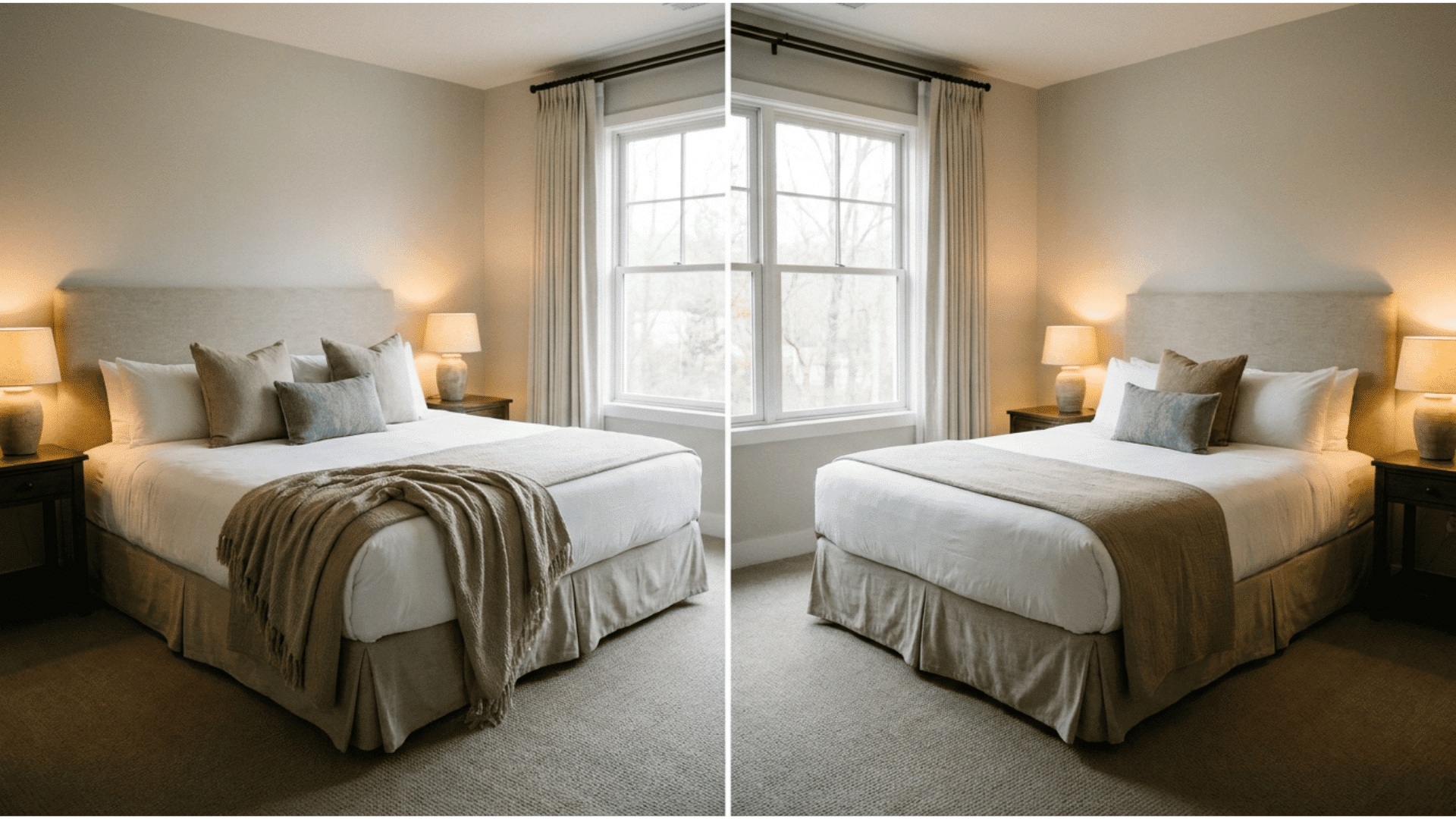
- Photograph the Current Position: Take a quick photo of the room before you start. If a piece needs to be returned to its original spot, you will have a clear reference without guessing.
Tools and Materials Required
Using the right moving supplies can make heavy furniture easier and safer to handle on your own. These items help protect your floors, improve movement, and reduce the chance of damage.
- Thick moving pad
- Furniture sliders
- Work gloves
- Closed-toe shoes
- Measuring tape
- Lifting straps (optional)
- Dolly or hand truck (optional)
- Screwdriver
- Flashlight
How to Move Heavy Furniture without Help?
Moving heavy furniture alone can feel hard, but the right methods make it safer and easier. With simple tools and careful movement, you can protect your floors and avoid injuries.
Step 1: Inspect the Bottom of the Furniture
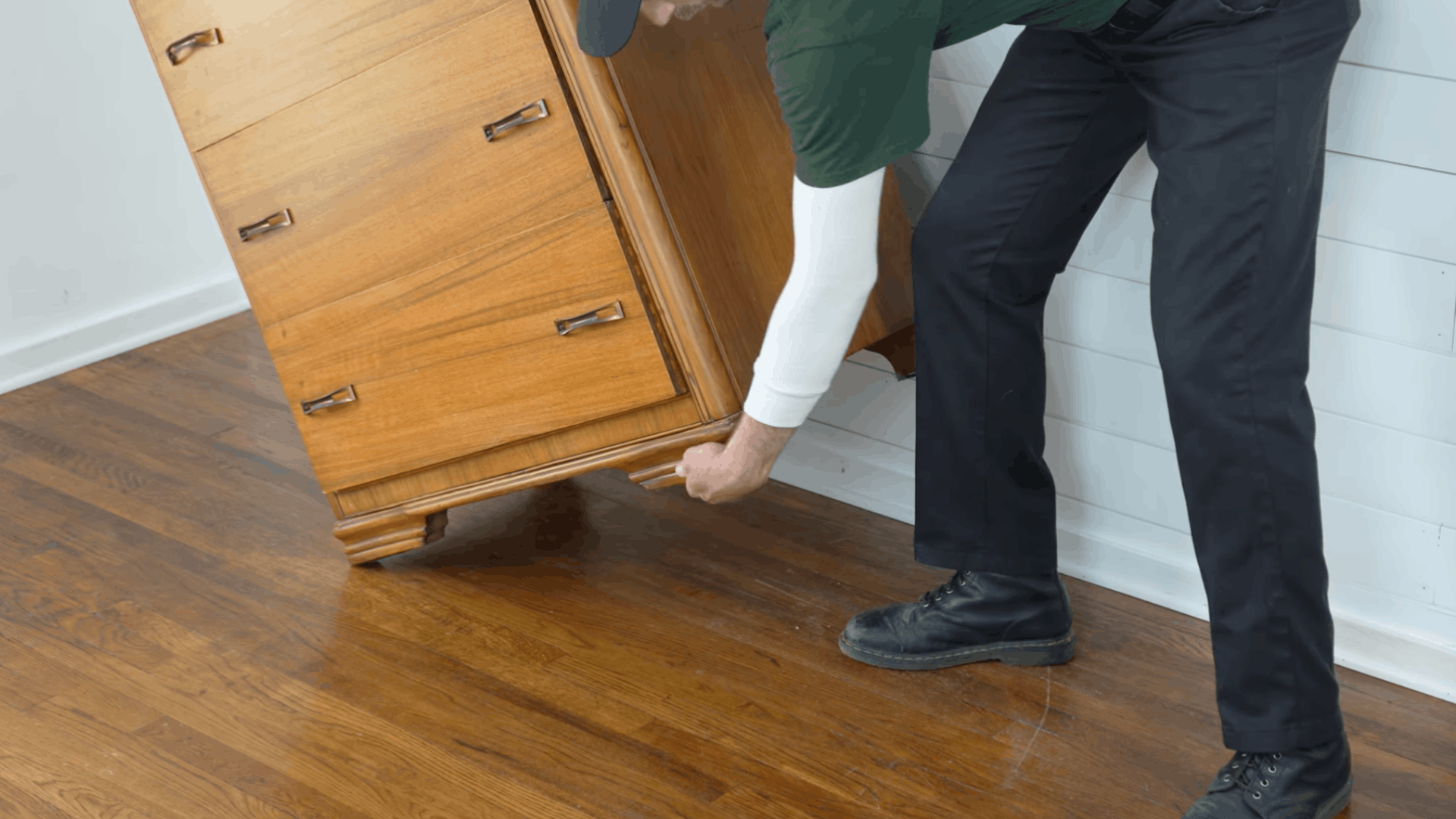
Before moving anything, check the bottom area carefully. Sharp nails, loose staples, cracked wood, or rough edges can scratch hardwood, tile, or vinyl flooring while sliding the item.
Slightly lift one side and run your hand underneath to feel for anything sticking out.
If you notice damage, remove or cover it first. This small check can prevent costly floor marks and help the furniture move more smoothly across the room.
Step 2: Prepare a Thick Moving Pad
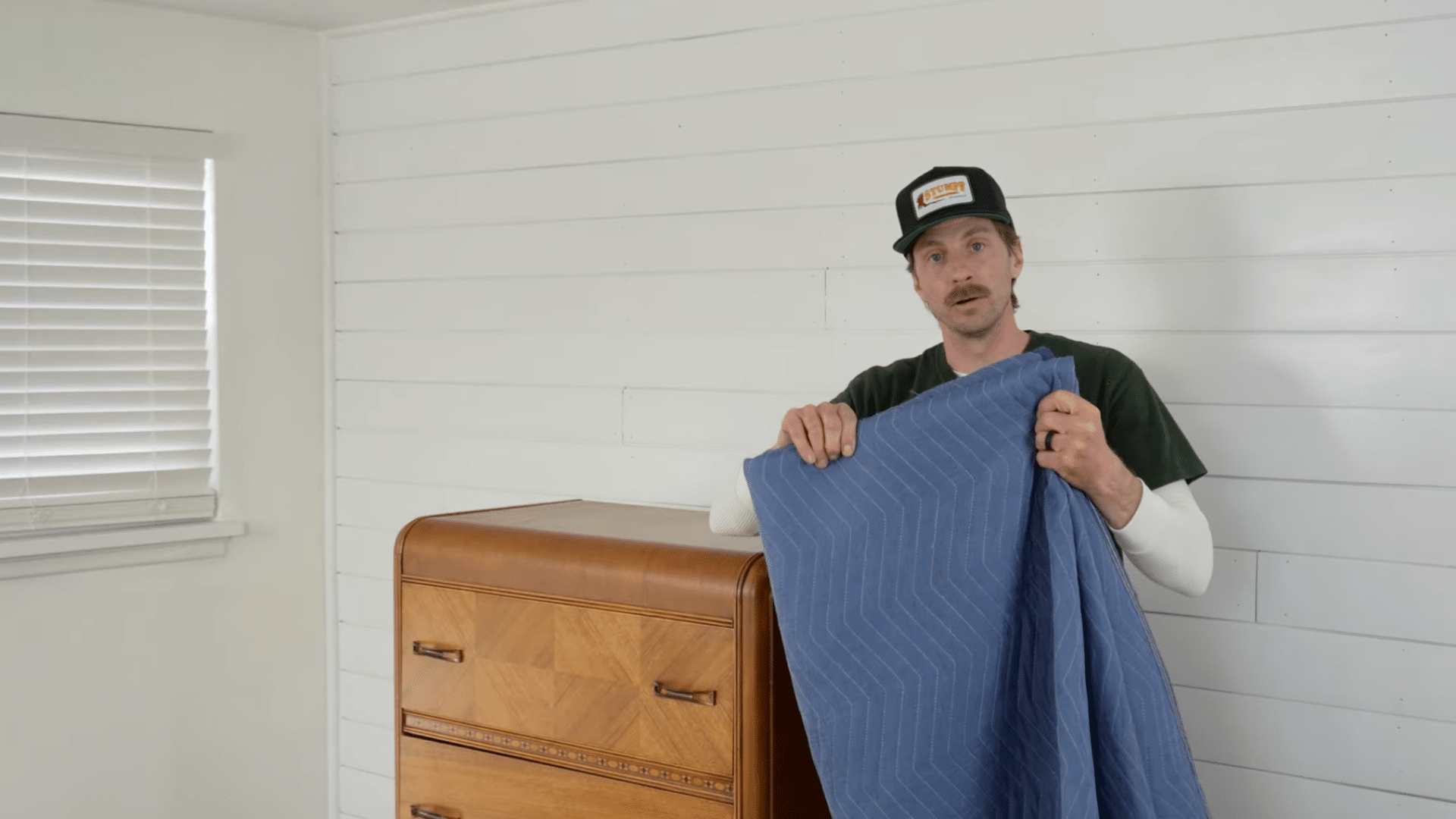
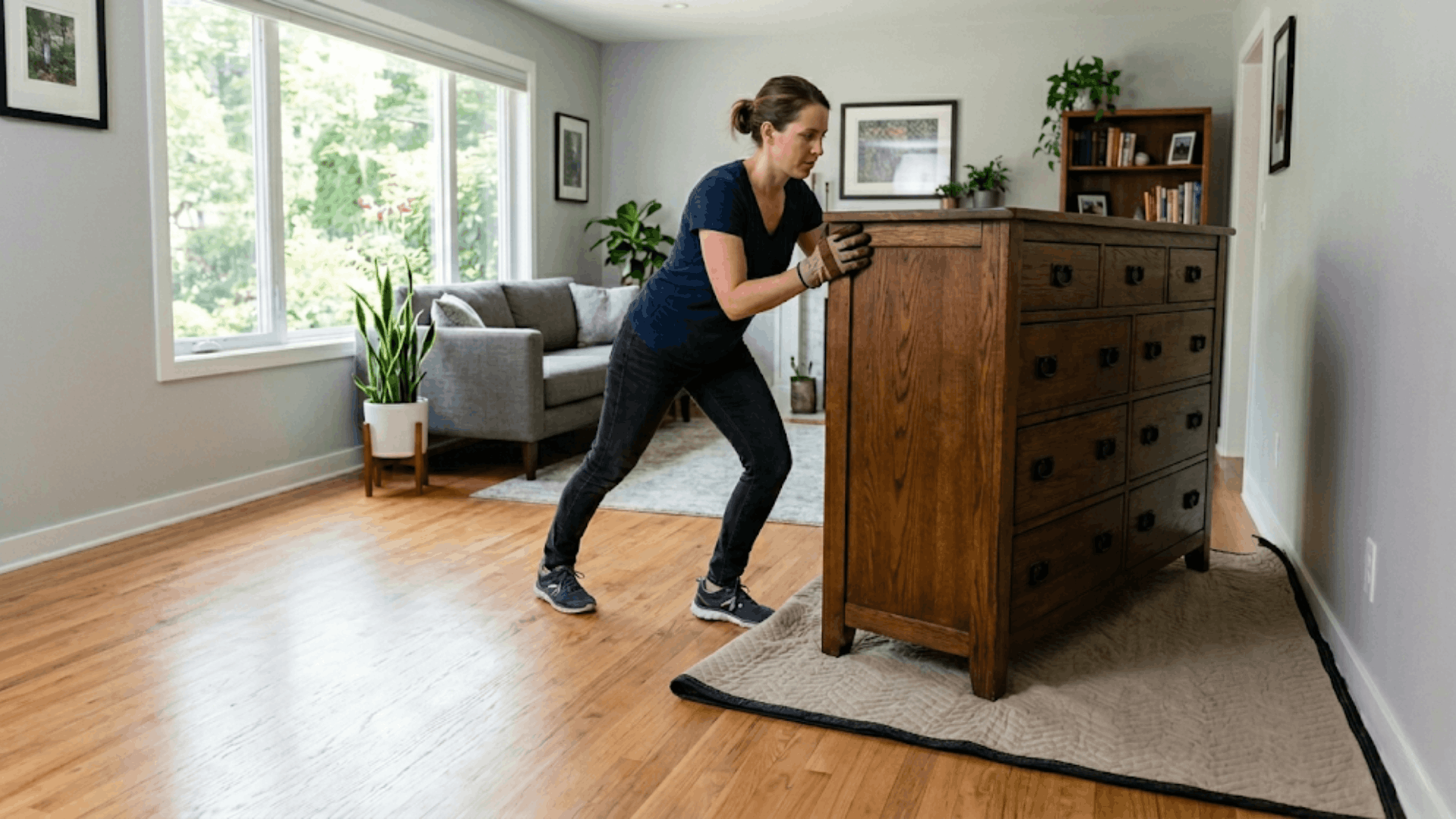
Place a thick moving blanket or furniture pad near the item you want to move. Fold the pad once lengthwise to make it stronger and easier to slide underneath.
Position the folded side close to the furniture with a small section sticking upward near the edge.
This setup creates a smooth sliding surface, reducing direct contact with the floor. It also helps lower friction, so large furniture pieces become easier to move without dragging harshly.
Step 3: Slide the Pad Under the Furniture
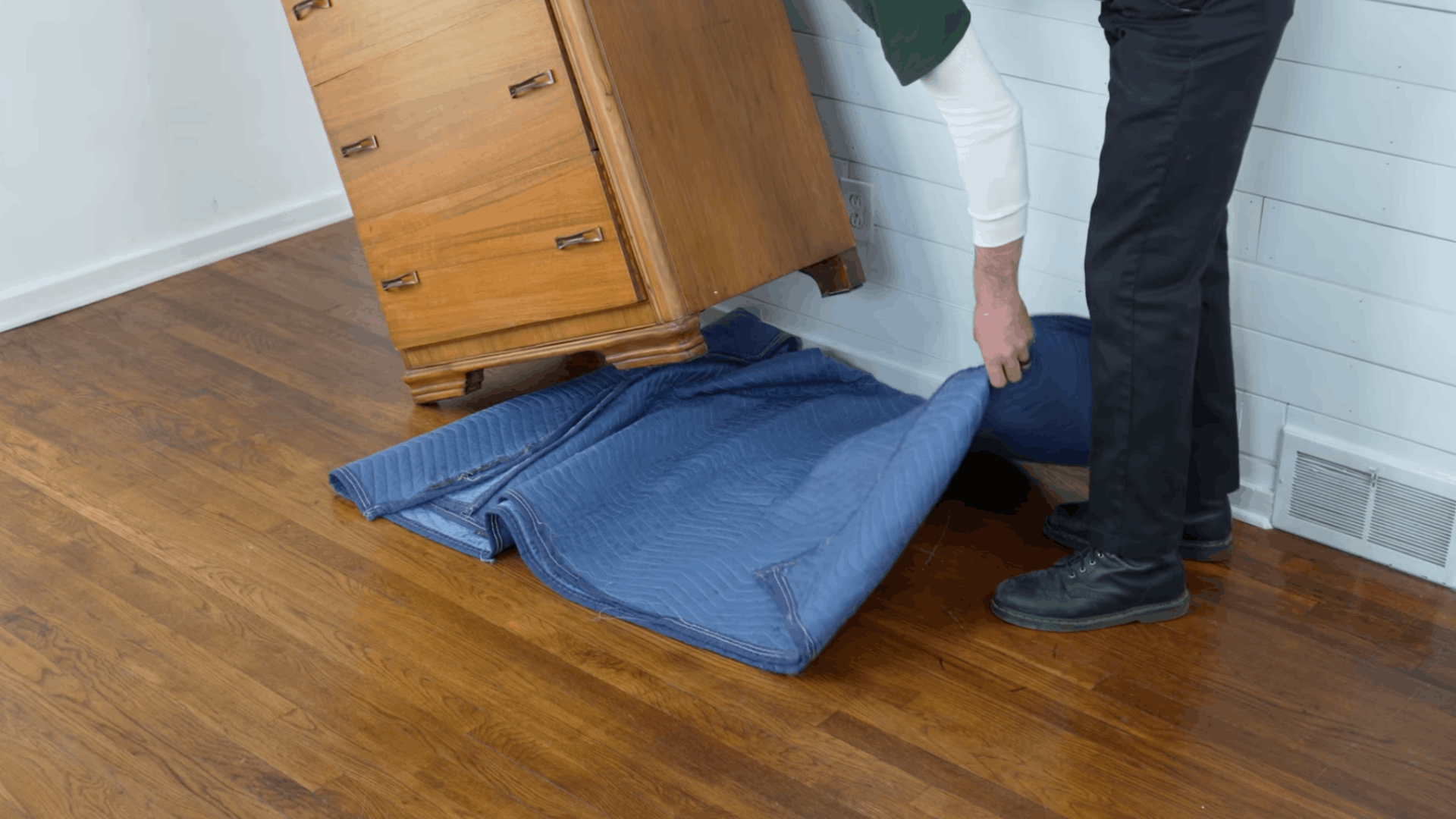
Carefully lift one side of the furniture while keeping your back straight and bending your knees. Use your foot or hand to slowly push the folded pad underneath as you lift.
Keep adjusting until most of the furniture legs rest on top of the pad.
Make sure the material stays flat without wrinkles or bunching because uneven folds can make the furniture harder to control during movement across the floor.
Step 4: Adjust the Pad on All Sides
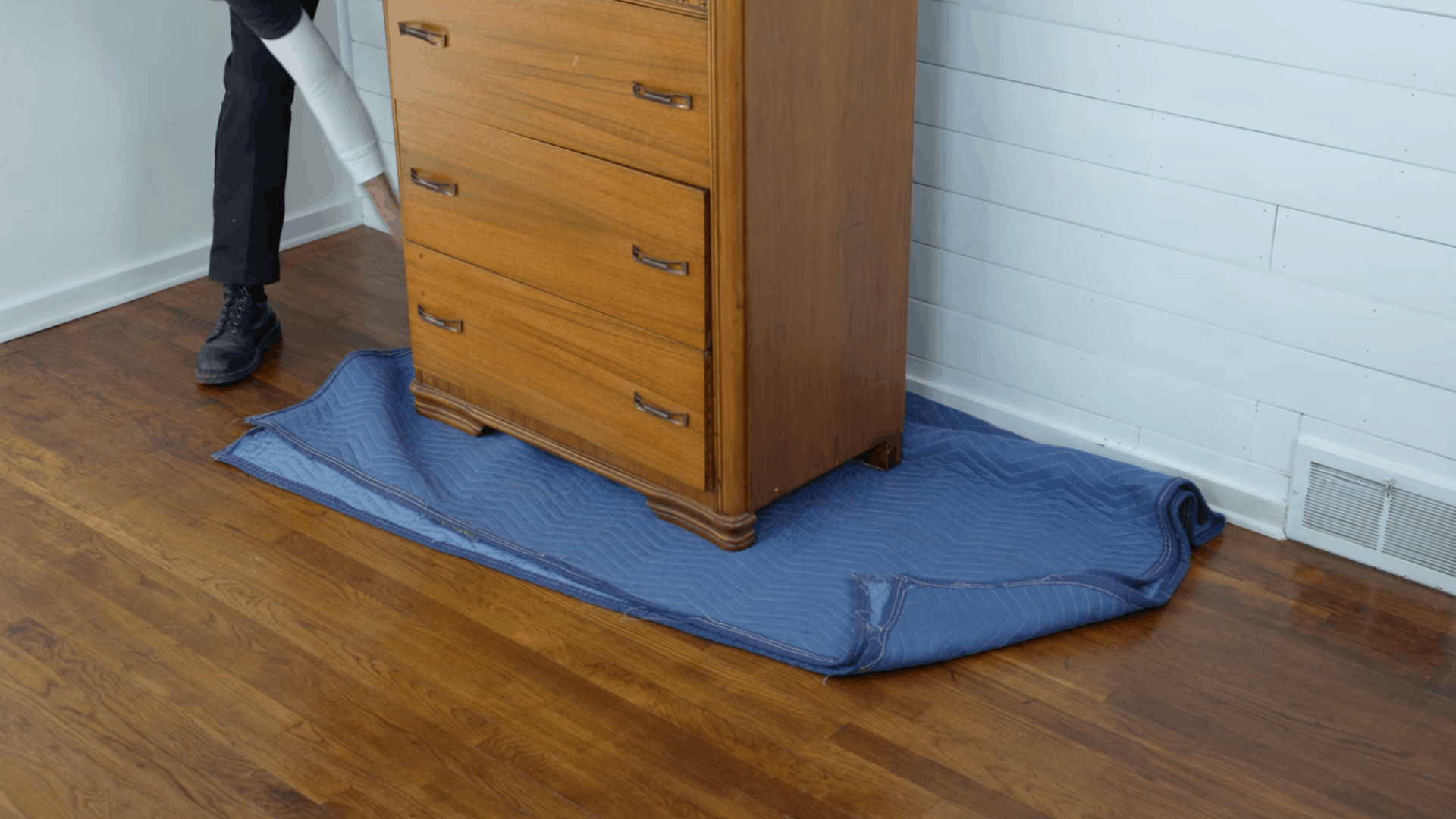
Move to the opposite side and pull the extra fabric outward until all furniture legs sit fully on the pad. This helps evenly distribute the weight and keeps the furniture balanced during sliding.
If one side hangs off the pad, the furniture may tilt or become difficult to guide.
Taking a few extra seconds here can make the rest of the moving process smoother and safer, especially when handling dressers, cabinets, or large tables alone.
Step 5: Clean the Path Before Moving
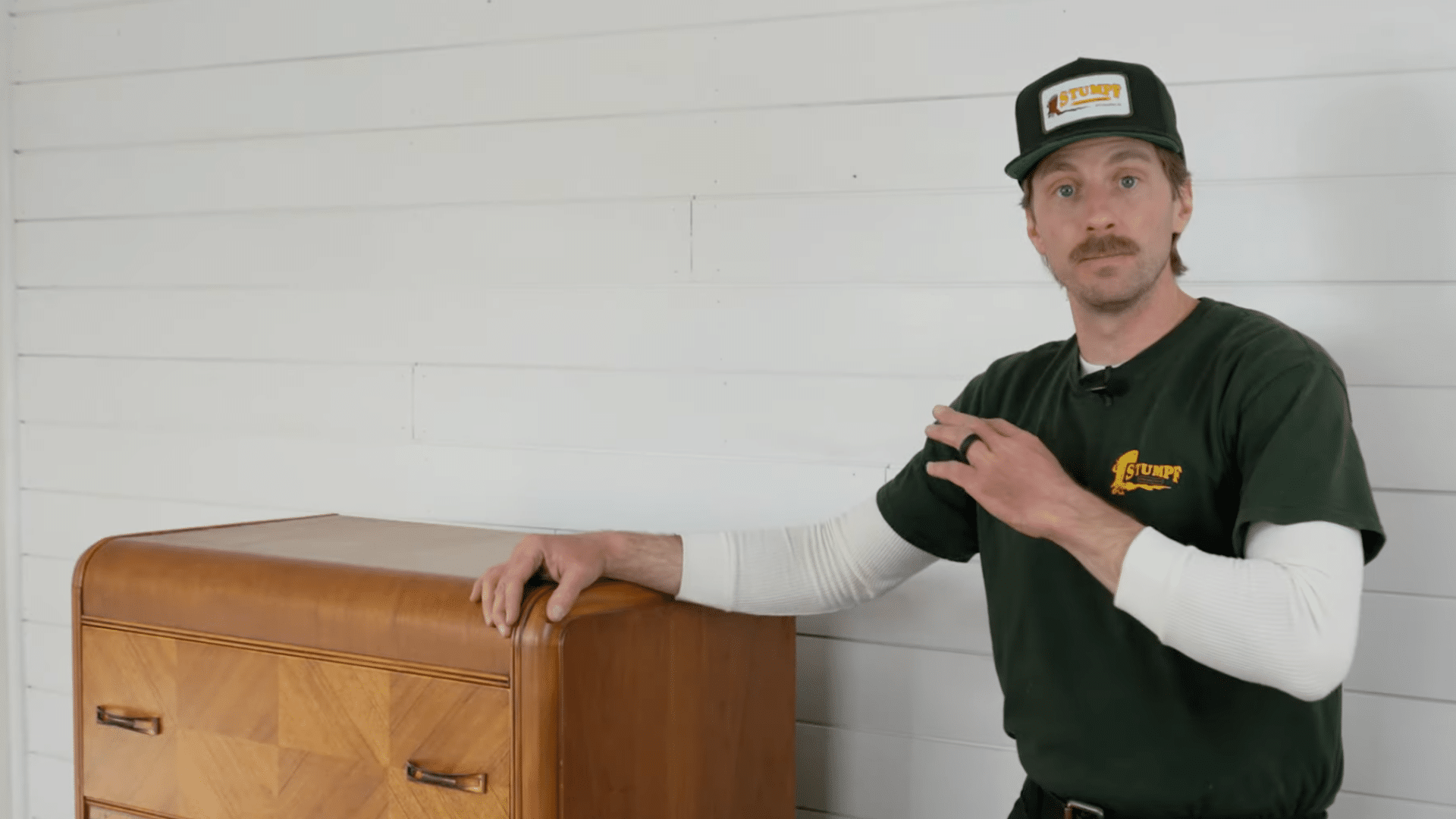
Always check the floor before you start pulling the furniture. Small pebbles, dirt, screws, or other debris trapped under the pad can leave scratches behind.
Sweep or vacuum the path so the furniture can slide easily without resistance.
A clean surface also helps you stay in control during movement.
This step becomes even more important on hardwood or polished tile floors, where even tiny objects can leave visible marks after heavy pressure.
Step 6: Pull Slowly and Keep Control
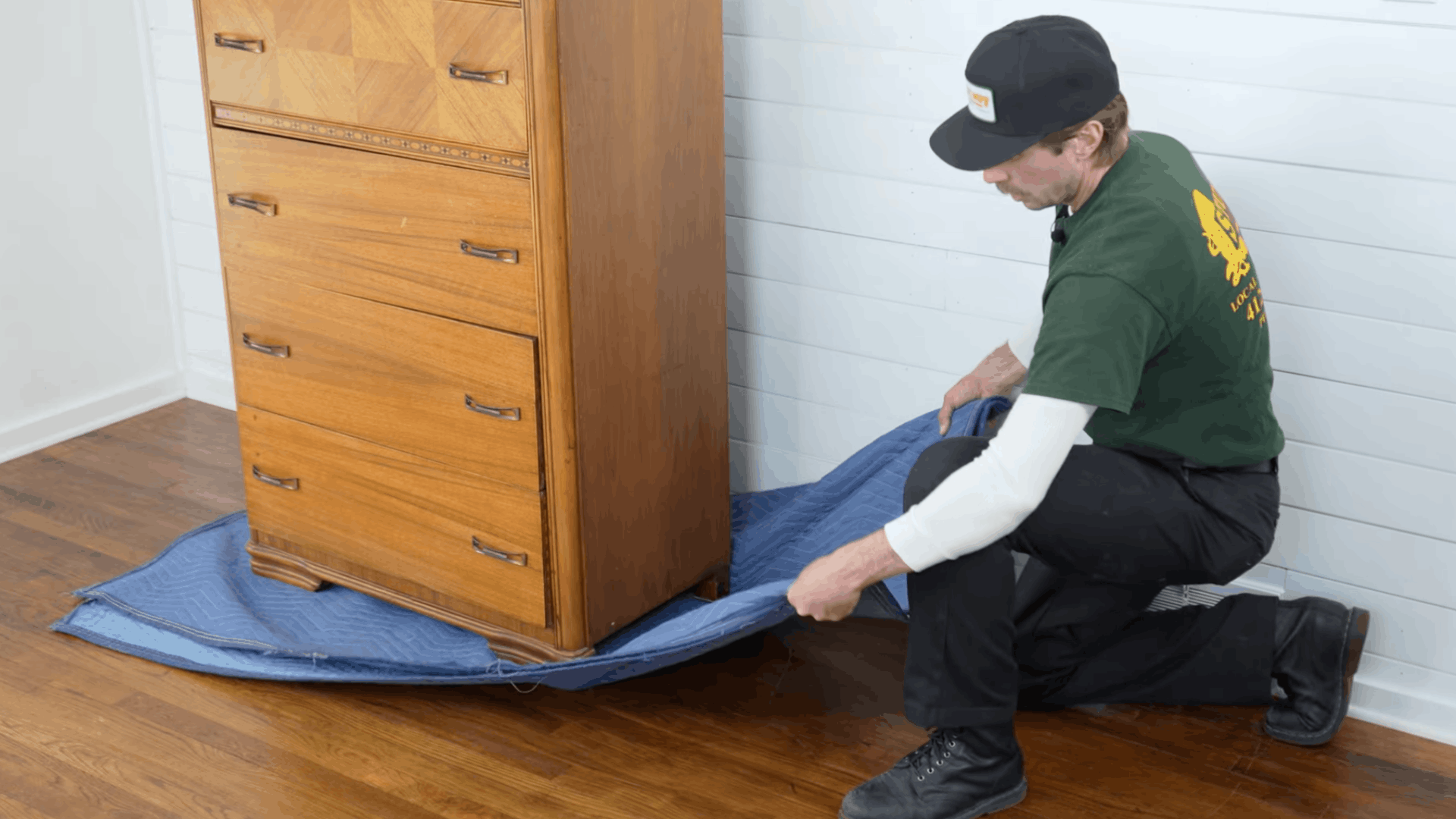
Use the extra section of the moving pad as a handle and pull outward rather than upward. Pulling too high can cause the furniture to tip or lose balance during movement.
Keep your movements slow and steady as you guide the item across the room.
Large furniture pieces can shift suddenly if moved too quickly. Staying patient helps protect nearby walls, door frames, and flooring while also reducing strain on your arms and lower back.
Step 7: Turn Carefully in Tight Hallways
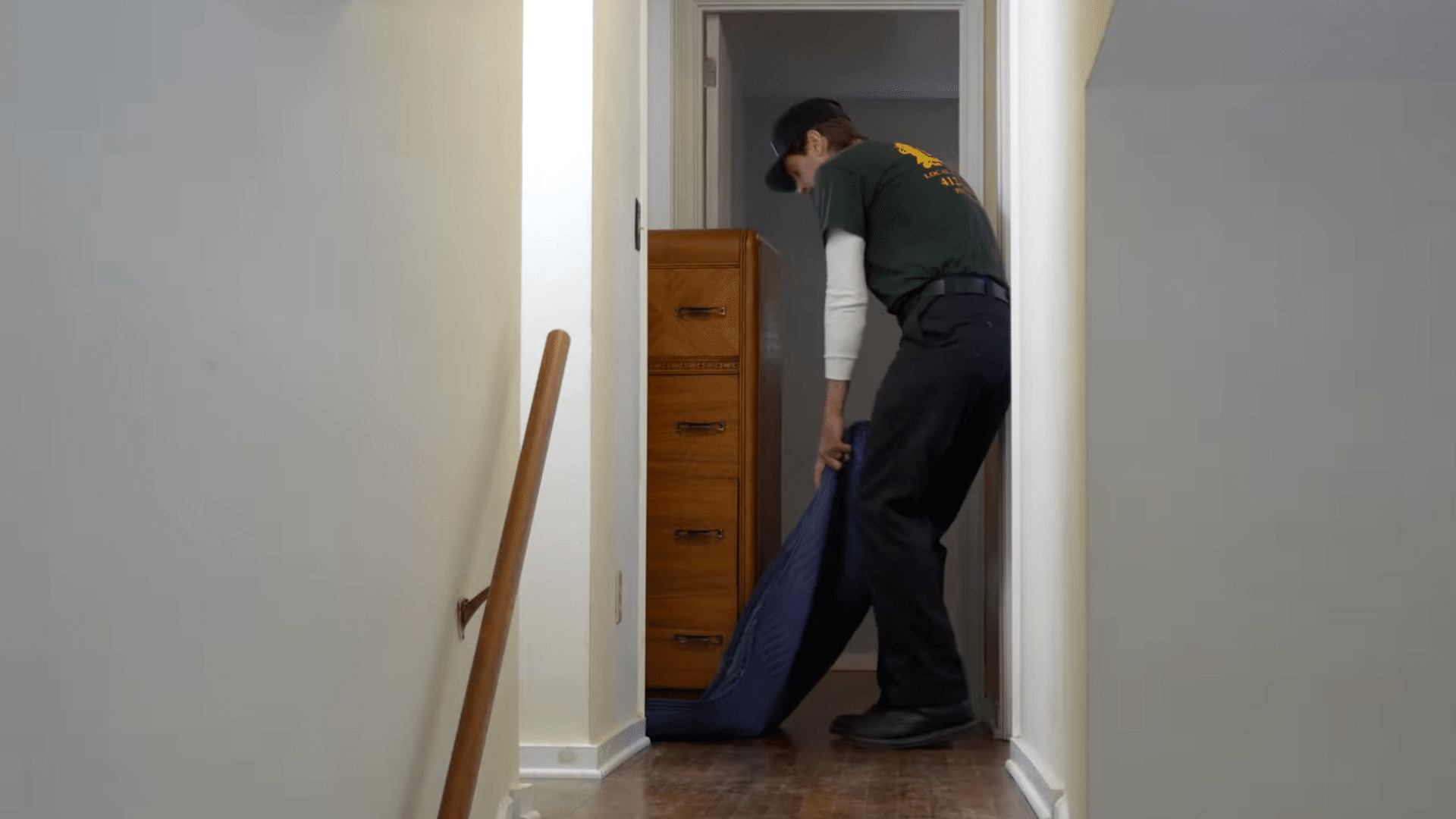
Narrow hallways and corners require extra care because large furniture can easily hit walls or door frames.
Move slowly while adjusting the angle a little at a time. You may need one hand to guide the furniture and the other to pull the pad forward. Small controlled movements work much better than fast turns.
Staying patient in tight spaces helps avoid chipped paint, scratched furniture edges, and accidental damage while moving oversized pieces alone.
Step 8: Push or Rotate the Furniture When Needed
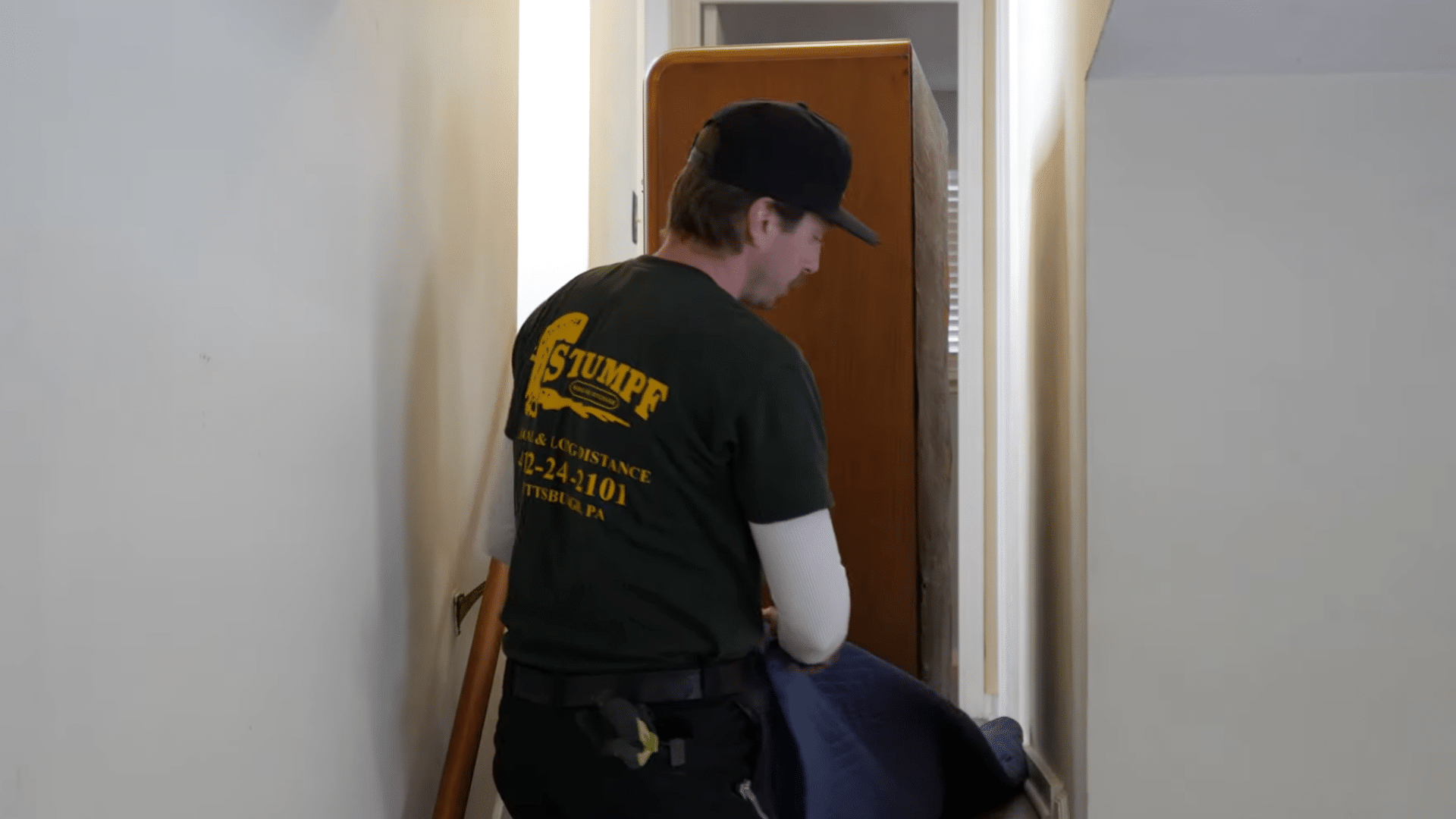
Once the furniture sits fully on the pad, you can also push or rotate it into position instead of only pulling. This works well when moving furniture into another room or lining it up against a wall.
The smooth surface under the furniture reduces resistance, making turning easier without lifting the full weight.
Slow movements still matter here because sudden pushing can shift the furniture unevenly or move the pad out from underneath.
This tutorial is based on a helpful video by StumpfMovingandStorage. You can check out the original video on their YouTube channel here or watch it below.
Common Mistakes to Avoid when Moving Furniture
Small moving mistakes can lead to damaged floors, broken furniture, or painful injuries. Avoiding these common problems can make moving heavy furniture safer and easier.
- Lifting With Your Back: Lifting heavy furniture with your back rather than your legs can strain muscles and cause serious injuries. Always bend your knees and keep your back straight while lifting.
- Moving Too Fast: Rushing while moving furniture increases the chance of hitting walls, dropping furniture, or losing balance. Slow movements help you stay in control and avoid damage.
- Skipping Floor Protection: Dragging furniture directly across the floor can leave scratches and marks. Use sliders, blankets, or cardboard to protect hardwood, tile, or vinyl surfaces.
- Not Measuring Doorways: Large furniture can easily get stuck in narrow hallways or doorways without proper measurements. Measuring the space first can save time and prevent damage.
- Ignoring Sharp Edges Under Furniture: Nails, screws, or rough wood beneath furniture can scratch floors when furniture is moved. Always check the bottom of the furniture before sliding it across the room.
- Pulling Furniture Upward: Pulling furniture upward rather than outward can cause it to tip over unexpectedly. Keep the furniture balanced and pull slowly in the direction you want to move.
Floor-Specific Considerations Before You Start
Different floor types react differently when you move heavy furniture. Using the wrong method can leave scratches, dents, cracked tiles, or damaged carpet fibers.
1. Hardwood and Engineered Wood Floors
Hardwood and engineered wood floors scratch very easily under heavy weights.
Felt-padded furniture sliders are usually the safest choice because they spread the pressure evenly and move smoothly across the surface without damaging the finish.
I always recommend sweeping the entire path before moving anything because even tiny dirt particles can leave long scratches.
Avoid rubber-bottomed sliders since they grip the floor too tightly and may cause the furniture to jerk suddenly, increasing the chance of scratches, dents, or tipping accidents during the move.
2. Tile and Stone Floors
Tile and stone floors are strong, but grout lines can create small bumps that make furniture legs catch while moving. Hard plastic sliders work best because they glide over grout more smoothly than soft materials.
Moving blankets are not ideal on tile since they can bunch into grout grooves and create uneven movement.
Before starting, inspect the floor carefully for cracked or loose tiles.
Heavy furniture crossing a weak tile can easily cause it to break, especially under concentrated weight near furniture legs or corners.
3. Carpet and Thick-Pile Rugs
Carpet creates much more friction than hard flooring, so standard hard-floor sliders usually do not work properly here.
Smooth plastic carpet sliders are the better option because they reduce drag and help furniture move more evenly across the surface. Thick-pile rugs make moving even harder because furniture legs sink into the fibers.
In many cases, a sturdy furniture dolly works best since it spreads the weight and rolls instead of dragging.
Clear the path fully before starting because small obstacles hidden in the carpet can stop movement suddenly.
4. Luxury Vinyl Plank (LVP) and Laminate
Luxury vinyl plank and laminate flooring resist scratches better than hardwood, but they can still develop dents from heavy concentrated weight.
Felt sliders are usually the safest choice because they allow furniture to glide while reducing direct pressure on the surface. I recommend keeping the furniture moving steadily instead of stopping repeatedly in the same spot, which can leave marks over time.
Avoid leaving heavy items resting on felt pads for long periods because the compressed material may create visible impressions that become difficult to remove later.
Easy DIY Methods for Moving Heavy Furniture
Simple moving methods can make heavy furniture easier to handle without extra help. Using the right technique can also protect your floors, walls, and furniture from damage.
| DIY Method | How It Helps | Best Used For |
|---|---|---|
| Use Furniture Sliders | Helps heavy furniture glide smoothly across floors while reducing strain during movement. | Hardwood floors, tile floors, couches, and beds |
| Try the Moving Blanket Method | Protects floors and makes large furniture easier to slide across the room. | Dressers, cabinets, and short-distance moves |
| Use a Furniture Dolly | Carries most of the furniture’s weight and helps move heavy items more safely. | Appliances, large cabinets, and heavy boxes |
| Remove Heavy Parts First | Reduces furniture weight and makes large pieces easier to control and carry. | Dressers, desks, shelves, and entertainment units |
| Use Lifting Straps | Helps spread weight evenly and lowers pressure on your back and shoulders. | Large furniture and lifting heavier items |
| Slide Furniture on Cardboard | Protects flooring surfaces and helps furniture move more smoothly without scratches. | Hardwood, vinyl, and tile flooring |
| Tilt and Pivot Large Furniture | Makes it easier to move furniture through tight hallways and small doorways. | Couches, mattresses, and oversized furniture |
| Wrap Furniture for Protection | Prevents scratches, dents, and damage while moving heavy furniture around the house. | Wooden furniture and delicate surfaces |
What Is the Preferred Technique for Moving Heavy Furniture?
The preferred technique for moving heavy furniture is sliding it carefully with moving pads or furniture sliders instead of lifting the full weight.
The method reduces pressure on your back and lowers the chance of dropping the furniture or damaging the floor.
Before moving anything, check the bottom of the furniture for sharp edges or nails that could leave scratches.
Place a moving blanket, drag pad, or furniture sliders underneath the item to create a smoother surface for movement. Pull or push the furniture slowly while keeping it balanced and under control.
Large furniture should also be turned carefully around corners and through narrow hallways to avoid hitting walls.
If the furniture feels too heavy to manage safely, stop and get help instead of forcing the movement. Slow and controlled movement is always safer than rushing.
Safety Tips for Moving Furniture Alone
Moving heavy furniture alone can become risky without the right safety steps. Simple precautions can help prevent injuries, floor damage, and furniture accidents.
- Lift With Your Legs: Bend your knees and keep your back straight while lifting furniture to reduce strain on your lower back.
- Wear Proper Footwear: Closed-toe shoes with a good grip can help prevent slipping and protect your feet from injuries.
- Use Moving Tools: Furniture sliders, dollies, and lifting straps can make heavy items easier and safer to move.
- Protect Your Floors: Use blankets, cardboard, or sliders to prevent scratches on hardwood, tile, or vinyl floors.
- Check Furniture Stability: Make sure drawers, doors, and loose parts are secured before moving furniture.
- Avoid Twisting Your Body: Turn your whole body rather than twisting your back when carrying or sliding furniture.
- Take Breaks When Needed: Stop and rest if the furniture feels too heavy or difficult to control safely.
- Ask for Help if Necessary: Some oversized or extremely heavy furniture pieces may require another person for safe movement.
When to Stop and Call Professional Movers?
Some furniture moves become unsafe or too difficult to handle alone. Knowing when to call professionals can prevent injuries, floor damage, and broken furniture.
1. Extremely Heavy Furniture Pieces
Some furniture is simply too heavy to move safely without professional equipment and multiple trained movers.
Large safes, stone-top tables, pianos, and oversized sectionals can place dangerous strain on your back and joints during lifting.
I have seen people damage floors and injure themselves by trying to move oversized furniture with basic household tools. If the furniture cannot be lifted evenly or feels unstable while moving, it is usually safer to stop immediately.
Professional movers use lifting straps, dollies, and team coordination to handle extreme weight safely.
2. Tight Staircases and Narrow Hallways
Narrow staircases and tight hallways create serious risks when moving large furniture pieces through confined spaces. Furniture can become wedged between walls, damage railings, or suddenly shift weight while turning corners.
This situation becomes even more dangerous when moving items downstairs because gravity increases momentum and makes control harder.
Professional movers know how to angle, pivot, and secure heavy pieces safely in tight spaces.
If you find yourself forcing furniture through an opening or struggling to maintain balance, it is usually time to call experienced movers before damage occurs.
3. Fragile or High-Value Furniture
Expensive or fragile furniture deserves extra caution during any move. Antique cabinets, glass-top tables, custom-built pieces, and delicate wood furniture can crack, chip, or loosen under improper handling.
I always recommend professional movers when replacement costs would be difficult or impossible to recover. Professionals use protective wrapping, lifting techniques, and specialized equipment designed for delicate furniture.
If a piece contains glass panels, marble tops, or fragile joints, attempting a DIY move can quickly become risky.
Paying for professional help is often cheaper than repairing or replacing damaged furniture later.
4. Lack of Proper Moving Equipment
Moving heavy furniture without the right equipment increases the chance of injuries and property damage very quickly.
Basic household items are often not enough for safely handling large or awkward furniture pieces.
Professional movers use furniture dollies, lifting straps, stair rollers, protective pads, and heavy-duty sliders designed for different surfaces.
Without these tools, furniture may drag unevenly, tip suddenly, or damage floors during movement.
If you do not have access to proper moving equipment or enough capable helpers, hiring professionals is usually the safest and most practical decision.
Conclusion
Moving heavy furniture alone can feel difficult, but the right setup can make the process much easier and safer.
I have noticed that simple things like clearing the path, using sliders, and moving slowly can save a lot of time and prevent damage to floors or walls.
Small safety steps also help reduce strain on your back and make large furniture easier to control.
The most important part is staying patient and not forcing furniture through tight spaces too quickly. With the right tools and careful movement, many heavy items can be moved safely without extra help.
I hope these tips help you handle your next move with more confidence.
If you have your own furniture moving tricks or experiences, share them in the comments below.
Frequently Asked Questions
How to Move 300 lb Furniture?
Heavy furniture around 300 pounds is usually safest to move with a dolly, lifting straps, and floor protection pads.
What Do Professional Movers Hate to Move the Most?
Pianos, large safes, pool tables, and oversized appliances are often the hardest items to move safely.
What Is the Hardest Room to Pack when Moving?
Garages and kitchens are usually the hardest rooms because they contain heavy, fragile, and oddly shaped items.
What Is the Most Inexpensive Way to Move?
Using DIY moving methods, borrowed equipment, and recycled packing supplies can help lower moving costs.
What Is the Easiest Way to Slide Heavy Furniture on Carpet?
Plastic furniture sliders or smooth plastic sheets help reduce friction and make carpet movement easier.