I’ve seen many people wonder if they can save time or money by mixing leftover paints. Others skip mixing entirely and simply use exterior paint indoors, which brings a different set of problems.
You might be in the same spot, looking at half-used cans and wondering whether to combine them.
But can you mix interior and exterior paint without causing problems? The simple answer is no.
In this guide, I’ll share what really happens when you try it, the risks involved, and when it’s okay to do so. I’ll also share better options so you can get a clean, lasting finish. This can help you avoid common paint mistakes.
I’ll also explain things in a way that’s easy to understand, even if you’re new to painting.
By the end, you’ll know exactly what to do before you pick up that brush, so your project turns out the way you expect.
Can You Mix Interior and Exterior Paint?
No, you should not mix interior and exterior paint, as it can lead to poor results and a finish that doesn’t last.
The same is true for using interior paint outside; both shortcuts tend to fail faster than expected.
While it might seem like an easy way to use leftover paint, it often leads to poor results. These two types of paint are made for different purposes, so their formulas don’t always work well together.
When you mix them, you may get uneven coverage, weak adhesion, or a finish that doesn’t last long. The paint can peel, crack, or fade faster than expected.
To achieve a smooth, durable result, it’s always best to use the right type of paint for your surface.
What Happens When You Mix Interior and Exterior Paint?
Mixing these paints may seem harmless at first, but it often yields uneven, short-lived results. Since they are made for different uses, the final finish can be unpredictable.
- Different Formulas React Poorly: Interior paint is made for smooth indoor use, while exterior paint handles weather. When mixed, their ingredients may not bond well.
- Poor Adhesion: The paint may not adhere properly to the surface. This can cause it to wear off faster than expected.
- Peeling and Cracking Over Time: Mixed paint can break down quickly, leading to peeling or cracking. This is more common in areas with moisture or heat.
- Uneven Finish and Texture: You might notice patchy color or rough texture. The finish may not look clean or professional.
- Shorter Lifespan of Paint: The paint may not last as long as expected. You may need to repaint sooner, which adds extra time and cost.
- Indoor Air Quality Issues: Exterior paints contain higher VOC levels and biocides like mildewcides that are not rated for enclosed indoor spaces. Mixing even a small ratio of exterior paint into an interior formula raises the VOC concentration of the entire batch.
Pros and Cons of Mixing Paint Types
Mixing paint types might seem like a quick fix, especially when you have leftover paint. However, it comes with both small benefits and noticeable drawbacks you should be aware of.
| Pros | Cons | Overall Impact |
|---|---|---|
| Can help use leftover paint | May cause poor adhesion | The surface may not hold paint well |
| Saves a little money upfront | The finish may look uneven | Results may look unprofessional |
| Reduces paint waste | Paint can peel or crack early | Shorter lifespan of the paint job |
| Useful for small projects | Not suitable for long-term use | Needs repainting sooner |
| Quick solution in some cases | Results are often unpredictable | Hard to control the final outcome |
| Works for temporary fixes | May not handle moisture well | Risky in kitchens or bathrooms |
| Easy to mix at home | Can affect color and texture | Final look may differ from expected |
Is It Safe to Combine Interior and Exterior Paint?
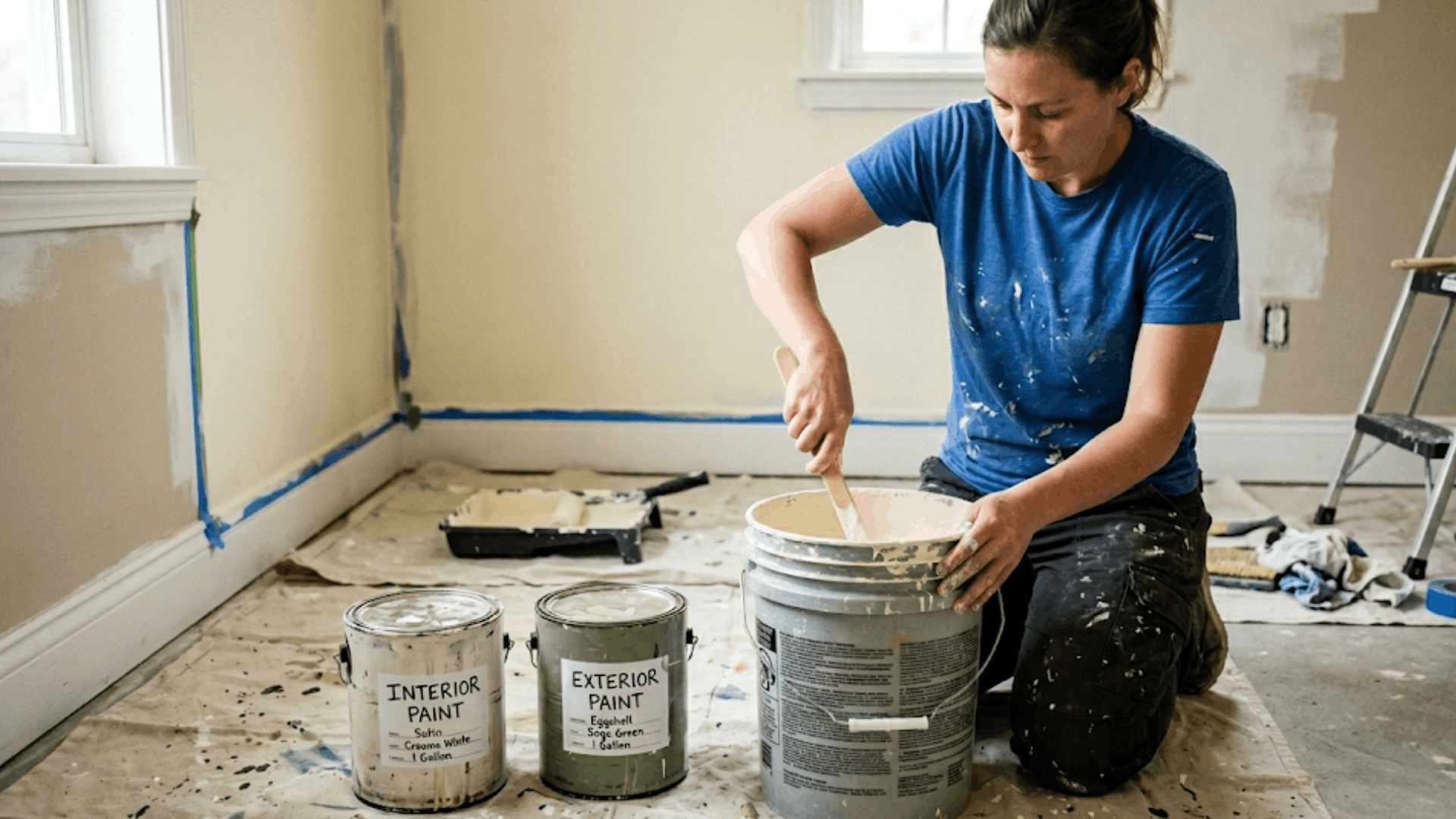
Mixing interior and exterior paint is generally not recommended if you want a reliable, long-lasting finish. The core issue comes down to the difference between interior and exterior paint and how differently they are formulated.
These paints are formulated with different ingredients for different environments, so combining them can affect their performance.
Exterior paint often contains stronger chemicals to handle weather, which may not be suitable for indoor air quality.
At the same time, interior paint lacks the durability needed for outdoor surfaces. When mixed, the paint may not stick well, may wear out faster, or fail to protect the surface properly.
You might also notice changes in texture, smell, or drying time. While it may seem harmless for small or temporary use, it is not a good choice for most projects where quality and safety matter.
When Mixing Paint Might Work?
In some cases, mixing paint might seem okay, especially for quick or low-risk tasks. However, it should only be done with care and clear expectations.
- For Small or Low-Use Areas: Mixing paint may work on surfaces that don’t get much wear. This includes storage rooms or low-traffic spaces.
- For Temporary Fixes: If you need a quick touch-up, mixed paint can be used for a short-term solution. It’s not meant for long-lasting results.
- When Paint Types Are Similar: Mixing may work better if both paints have a similar base, like water-based paints. This can reduce major issues.
- For Practice or Test Surfaces: You can use mixed paint on scrap surfaces or for practice. This helps avoid wasting fresh paint on trials.
- For Non-Visible Areas: It may be used in hard-to-reach spots, such as behind furniture or in closets. Appearance and durability matter less in these areas.
- For Budget-Limited Projects: If you are trying to cut costs on a minor project, mixing paint can be a short-term option. Just expect less consistent results.
Better Alternatives to Mixing Interior and Exterior Paint
Instead of mixing paints and risking poor results, there are safer and more reliable options. These choices help you get a clean finish that lasts longer.
1. Use the Right Paint for Each Surface
The best option is to use paint made for the specific area you are working on.
Interior paint works well for walls, ceilings, and low-moisture spaces, while exterior paint is designed to handle sun, rain, and temperature changes.
Using the correct type gives you better coverage, stronger adhesion, and a smoother finish. It also helps your paint job last longer, so you don’t have to repaint too soon.
2. Buy Small Quantities or Sample Sizes
If you are worried about waste, consider buying smaller cans or sample sizes instead of mixing leftover paint. Many brands offer affordable options for small projects or touch-ups.
This way, you get the right formula without spending too much.
It also lets you test the color and finish before committing to a larger purchase, helping you avoid mistakes and extra costs later.
3. Store Leftover Paint Properly
Proper storage can help you reuse paint later without needing to mix it. Keep the lid tightly sealed and store the paint in a cool, dry place away from sunlight.
Label each can with the room or surface where it was used.
This makes it easier to find and reuse the same paint for touch-ups, giving you consistent color and finish without any mixing issues.
4. Use Multi-Surface or All-Purpose Paint
Some paints are designed to work on various surfaces and under different conditions. These multi-surface paints can be used both indoors and outdoors, depending on the application.
They are made to balance durability and finish, making them a safer choice than mixing two different types.
Always check the label to make sure it suits your project. This option saves time while still giving you a reliable result.
How to Choose the Right Paint for Your Project?
Choosing the right paint depends on where and how the surface will be used. A simple match between paint type and conditions can make a big difference in the final result.
| Situation | Best Choice | Why |
|---|---|---|
| Painting an interior room with normal humidity | Interior latex paint | Low odor, smooth finish, and easy to clean surfaces |
| Painting exterior siding or trim | Exterior acrylic or alkyd | Handles sunlight, rain, and temperature changes well |
| Painting a garage, basement, or covered porch | Multi-surface or porch & floor paint | Made for areas that face both indoor and outdoor conditions |
| Touch-up on an existing exterior paint job | Same exterior formula as the original | Helps match color, finish, and avoid bonding issues |
| Using leftover paint on small, hidden areas | Mixed paint (same base only) | Works only for low-visibility spots and short-term use |
What to do with Leftover Paint Instead of Mixing It?
Leftover paint often prompts people to mix it to avoid waste. However, there are better ways to use or manage it without affecting your project quality.
One option is to check for local paint recycling programs, where unused paint can be safely dropped off.
Many community stores or donation centers also accept paint in good condition. If the paint is usable, it can be shared with neighbors or local groups who may need it.
Before deciding to throw it away, stir the paint well and test it on a small surface.
Even if a layer has formed on top, the paint underneath can still work well for small touch-ups.
Mistakes to Avoid When Mixing Interior and Exterior Paint
Mixing paints can seem simple, but small mistakes can lead to poor results. Knowing what to avoid can help you save time and effort.
- Mixing Different Paint Bases: Combining water-based and oil-based paints can cause separation. This leads to uneven texture and poor finish.
- Ignoring Surface Type: Using mixed paint on the wrong surface can reduce durability. It may not stick well or last long.
- Skipping a Test Patch: Not testing the mixed paint first can lead to surprises. A small test helps check color, texture, and adhesion.
- Using It in High-Moisture Areas: Mixed paint may not handle moisture well. This can cause peeling in kitchens or bathrooms.
- Expecting Long-Term Results: Mixed paint is not built for durability. It often needs repainting sooner than expected
Final Thoughts
Mixing paint can feel like a simple way to save time or make use of leftover cans. I’ve also considered doing this during small projects, thinking it might not make much difference.
However, as you’ve seen, the results are often unpredictable and may not last as expected.
Using the right type of paint for each surface helps you get a smoother finish and better durability over time. It may take a little more planning, but it can save you from repainting sooner than you’d like.
If you’ve ever tried mixing interior and exterior paint, I’d be interested to know how it worked for you.
Did you face any issues, or did it turn out fine? Share your experience in the comments below!
Frequently Asked Questions
Can Interior Paint be Used Outside if Mixed with Exterior Paint?
Interior paint will still lack weather resistance even after mixing, so it is not suitable for outdoor use.
Does Mixing Paint Change Drying Time?
Yes, mixed paint can dry unevenly or take longer to dry due to differences in formula.
Will Mixing Paint Affect Color Accuracy?
Mixing can slightly change the final color, making it look dull or inconsistent.
Can Mixing Paint Cause Strong Odors Indoors?
Yes, exterior paint in the mix may release stronger fumes, which are not ideal for indoor spaces.
Does Mixed Paint Require Extra Coats?
Often, yes, because coverage may be weak, leading to the need for additional coats.